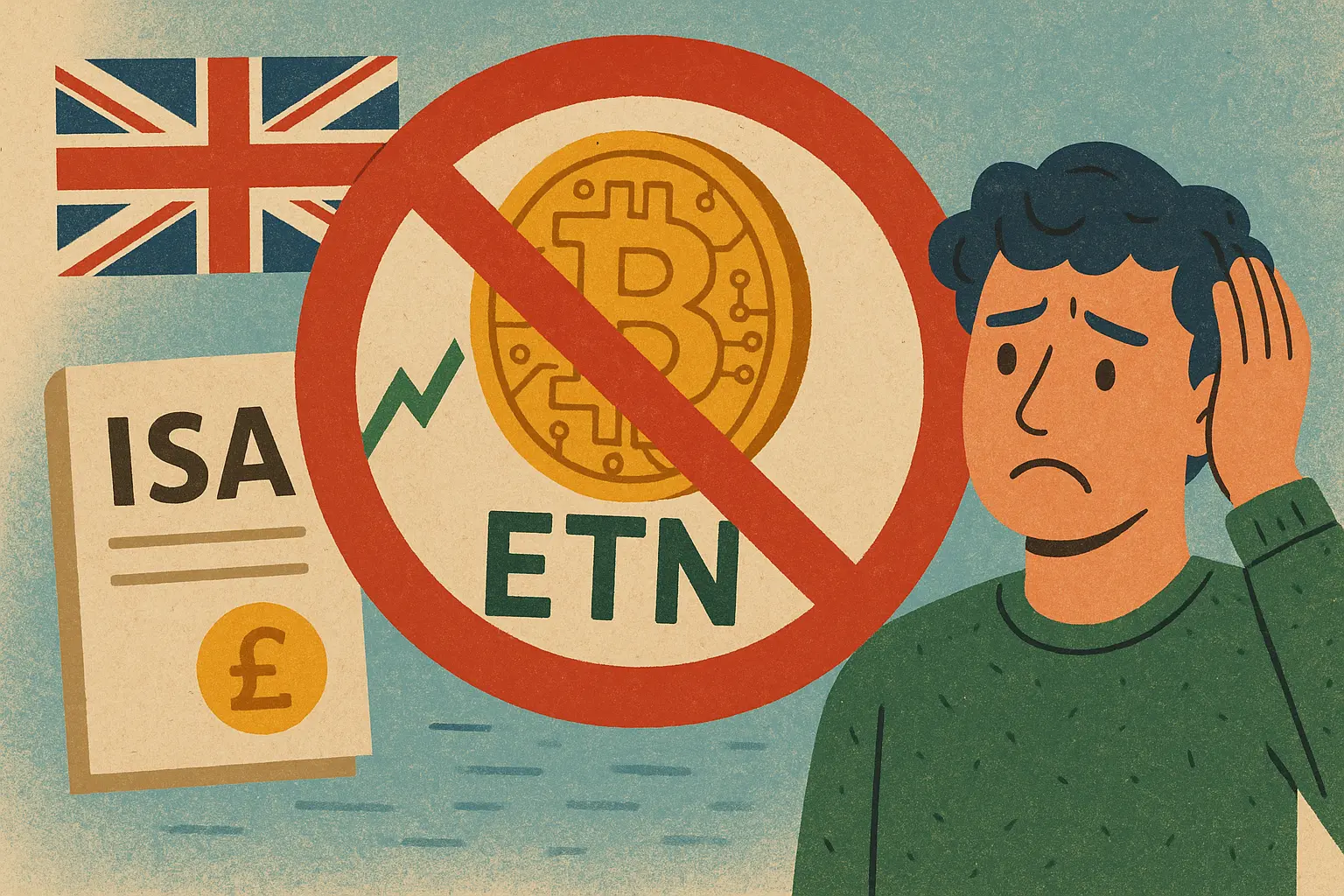
The UK Individual Savings Account (ISA) cryptocurrency investment channel will officially close in April 2026. HMRC’s regulatory policy adjustments have reclassified cryptocurrency exchange-traded notes (ETNs) as securities that do not qualify as ISA accounts, resulting in major investment platforms no longer legally offering such products within ISA accounts.
HMRC Reclassification: The Core Mechanism of Policy Shift
Individual Savings Accounts (ISAs) are the core tax-advantaged investment vehicles in the UK, allowing investors to exempt their capital gains and gains from taxation. For many years, eligible stocks, funds and certain exchange-traded products have been held within the ISA.
Crypto ETNs are exchange-traded notes that track the price of digital assets such as Bitcoin or Ethereum, and investors can buy them through traditional brokerage accounts without directly holding digital tokens, combining compliance convenience with crypto exposure. However, HMRC’s reclassification shattered the assumption that some investors expected ISA tax benefits for such products.
The key implications of this regulatory adjustment are as follows:
Disqualification: Crypto ETNs are classified as a category of securities that do not comply with the current ISA rules, and platforms cannot legally provide such services within the framework of the ISA
Tax implications: Investors who purchase crypto ETNs outside of ISAs are subject to tax declaration and tax at the standard rate
Alternative gap: There are currently no alternative packaging structures on the market that can restore crypto ETN ISA qualifications
Platform compliance obligations: Investment platforms that originally provided crypto ETNs in ISA accounts must stop such services by April
Real-World Implications for UK Retail Investors: From Financial Planning to Market Participation
For long-term investors, ISAs’ tax benefits have a compounding effect, and the tax-free framework can significantly enhance capital accumulation efficiency. The removal of crypto ETNs from ISAs changes the basis for risk-return assessment for investors who originally planned to deploy digital assets in a structured manner.
Of particular note is the young investor group. There is a growing interest in digital assets among younger generations in the UK, and many are turning to ISAs as their primary investment vehicle. This ban limits their path to incorporating crypto investments into long-term financial planning, which may indirectly prompt some investment activities to shift to overseas platforms or direct token purchases, thereby entering areas with more limited regulatory coverage.
Traditional assets (stocks, funds, bonds) remain eligible for ISA, allowing investors to adjust their existing asset allocation while closely monitoring policy directions.
Policy controversy: protecting retail investors or weakening competitiveness
The ban reflects the long-standing divergence in direction of UK regulators on digital asset policy.
Supporting HMRC’s reclassification argues that the cryptocurrency market remains volatile and regulated tax-exempt accounts should not provide tax subsidies for high-risk assets, a move that can reduce the systemic risk of retail investors over-allocating without adequate risk awareness.
Critics point out that crypto ETNs are regulated exchange-traded products, and their transparency and risk management standards are much higher than those of direct token purchases. Excluding such regulated products from ISAs may instead divert investment activity to less regulated channels, which is counterintuitive to protect investors.
The broader competitiveness concern lies in the UK’s crypto ETN ISA ban against the backdrop of the approval of spot Bitcoin ETFs in the United States and the continued opening of institutional crypto investment channels in several major markets, and the UK’s crypto ETN ISA ban is seen by some observers as a signal of regulatory conservatism that could weaken the attractiveness of the UK financial market in the global digital asset ecosystem.
Frequently Asked Questions
What options do UK investors still have for holding crypto ETNs after the ISA ban goes into effect in April?
Investors can still hold crypto ETNs through a standard taxable brokerage account, but they must report the corresponding gains in accordance with UK capital gains tax rules and maintain complete transaction records for tax filing. Some investors can also choose to hold Bitcoin or Ethereum directly on regulated exchanges, or wait for future adjustments to the regulatory framework.
What crypto-related investments for ISA accounts are still compliant?
Currently, crypto ETNs in ISAs are not eligible, but obtaining indirect crypto asset exposure by holding shares in relevant listed companies is still within the scope of permission from many ISA managers. Investors are advised to seek confirmation from their platform service providers or financial advisors on a specific basis.
Is it possible that this ban will be revoked or adjusted?
There is currently no official signal of revision of regulatory policies, but industry discussions on relevant policies continue. If the cryptocurrency regulatory environment becomes clearer globally and is accompanied by local political or market pressures, the possibility of future policy framework adjustments cannot be ruled out. Investors should pay close attention to relevant announcements from HMRC and the Financial Conduct Authority (FCA).
Disclaimer: The information on this page may come from third parties and does not represent the views or opinions of Gate. The content displayed on this page is for reference only and does not constitute any financial, investment, or legal advice. Gate does not guarantee the accuracy or completeness of the information and shall not be liable for any losses arising from the use of this information. Virtual asset investments carry high risks and are subject to significant price volatility. You may lose all of your invested principal. Please fully understand the relevant risks and make prudent decisions based on your own financial situation and risk tolerance. For details, please refer to
Disclaimer.
Related Articles
CME Data: The probability that the Federal Reserve will keep interest rates unchanged in April is 93.8%.
Gate News: According to CME "FedWatch" data on March 21, the probability of the Federal Reserve raising rates by 25 basis points in April is 6.2%, while the probability of maintaining current rates is 93.8%.
GateNews40m ago
CLARITY Act’s Stablecoin Yield Deal Near as SEC Redefines Tokens
Lawmakers and regulators are making progress on crypto policy, with a stablecoin yield proposal anticipated soon. The SEC and CFTC classified most crypto assets as non-securities, designating several as digital commodities.
CryptoFrontNews40m ago
CFTC Allows Bitcoin and Ethereum as Margin Collateral
CFTC permits Bitcoin, Ethereum, and stablecoins as margin collateral with strict valuation haircuts and risk controls applied.
Stablecoins receive lower capital charges than BTC and ETH, reflecting reduced volatility in margin calculations.
Firms must meet reporting, cybersecurity, and
CryptoFrontNews3h ago
HSBC: Maintains Expectation of Unchanged Fed Interest Rates in 2026-2027
HSBC指出,美联储在3月会议上将政策利率维持在3.50%-3.75%不变,未来将采取观望态度。随着通胀和地缘政治风险的增加,预计美联储将在2026年和2027年持续保持利率不变。能源价格的波动和地缘政治因素将增加避险需求,推动美元走强。
GateNews4h ago
Next Week Macro Data from US and Europe to Be Released Intensively, Energy Trends Remain Focus Amid Iran War Impact
As the Iran conflict enters its fourth week, markets are focusing on energy price trends and upcoming macroeconomic data releases from the US and Europe, including US construction spending and CPI, to assess their impact on consumer prices and the overall economy.
GateNews5h ago
Weekly Report: Gold Breaks Below $4,500! Crude Oil Surges Past $110, But Bitcoin Rallies and Outperforms Gold
Escalating tensions in the Middle East and the Federal Reserve's hawkish stance have impacted global financial markets. Gold plummeted more than 10% this week, marking its worst performance since 1983, while oil prices surged to historic highs. In contrast, Bitcoin rose against the trend, indicating a flow of capital toward crypto assets. The market continues to face uncertainty, and volatility in risk assets may persist.
動區BlockTempo10h ago


