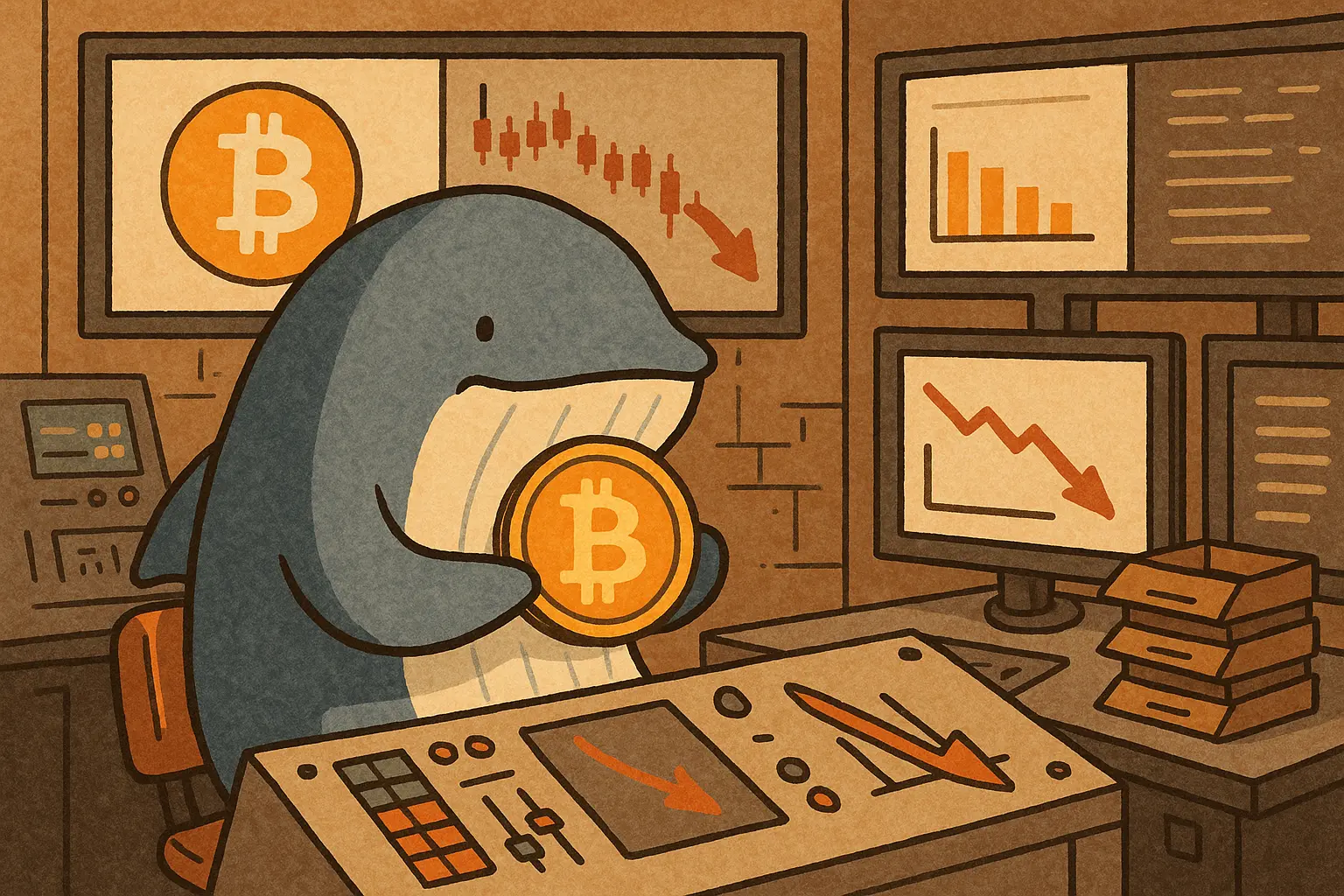
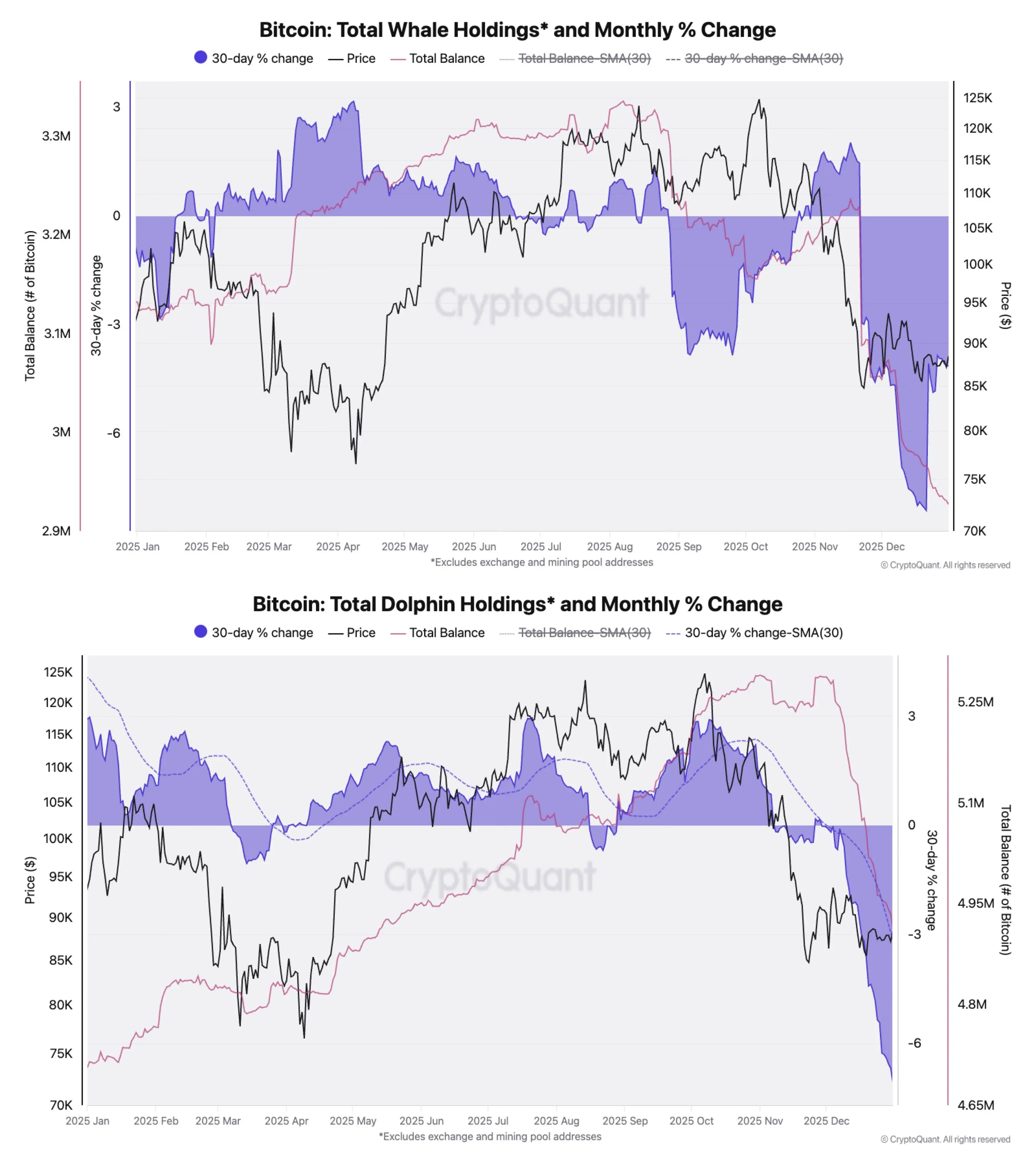
CryptoQuant Research Director Julio Moreno revealed on January 2nd that recent on-chain signals interpreted as “Bitcoin whale” buying are actually internal asset transfers within exchanges. Excluding technical transfers, whales were net sellers in December, reducing their holdings from 3.2 million to 2.9 million BTC. Glassnode confirmed that net capital flows have turned negative, ending two years of positive inflows.
Market Illusions Created by Exchange Cold Wallet Consolidation
(Source: CryptoQuant)
Julio Moreno explained that the apparent asset accumulation is mainly driven by cryptocurrency exchanges consolidating assets. Exchanges frequently reorganize their digital vaults, transferring funds from hundreds or thousands of smaller deposit addresses to a few large cold storage wallets. This operation is standard security practice aimed at reducing management costs and enhancing asset security.
However, from the perspective of on-chain data tracking tools, these large transfers are marked as “whale buy-in” signals. When an address suddenly receives thousands or tens of thousands of BTC, tracking algorithms classify it as active buying by large investors. This misinterpretation creates false positive signals in the market, leading retail investors to believe that smart money is entering.
More complex is that exchanges rarely disclose their cold wallet address lists. Therefore, blockchain analysis firms find it difficult to accurately distinguish genuine whale buy-ins from internal accounting transfers within exchanges. Only professional organizations like CryptoQuant, with extensive address tagging databases, can cross-verify and identify these technical transfers.
This misreading is especially prone to occur during bull markets. When market sentiment is optimistic, investors are more inclined to believe the “whale buy-in” narrative and use it as a reason to chase prices higher. But in reality, the true whales may be quietly selling, with these sell-offs masked by internal transfer signals from exchanges. This asymmetry of information puts retail investors at a significant disadvantage.
The Harsh Reality of December’s Whale Net Selling of 300,000 BTC
After excluding internal exchange transfers, Moreno found that large holders showed a bearish trend. Whales holding over 1,000 BTC were net sellers throughout December. Their total holdings decreased from about 3.2 million BTC at the beginning of December to just below 2.9 million, a drop of 300,000 BTC, before slightly rebounding to 3.1 million.
A net sell-off of 300,000 BTC is substantial. At an average December price of around $90,000, this equates to approximately $27 billion in capital outflows. Such a scale of selling usually signals clear market cues: either whales are losing confidence in the market’s future, or they need to realize profits or meet liquidity needs.
Mid-sized investors exhibit similar behavior. Wallets holding between 100 and 1,000 BTC also decreased their holdings, stabilizing at 4.7 million BTC. This group is often considered part of the “smart money,” less prone to panic than retail investors and less likely to have access to privileged information like super whales. Their collective reduction indicates that professional investors are cautious about the December market environment.
Key Data on Bitcoin Capital Outflows in December
Whale Holdings Changes
· Held about 3,200,000 BTC at the start of December
· Dropped to 2,900,000 BTC mid-month (net outflow of 300,000 BTC)
· Rebounded to 3,100,000 BTC by month-end (still a net outflow of 100,000 BTC)
Mid-sized Investor Trends
· Wallets holding 100-1,000 BTC decreased to 4,700,000 BTC
· Professional investors reduced holdings simultaneously
· “Smart money” remains cautious about the market outlook
Price and Capital Flows Divergence
· Price fell from $94,297 to $84,581
· Glassnode data shows net capital inflow turned negative in late December
· Ending a two-year streak of positive inflows since late 2023
Long-term Holder Behavior
· Realized losses hit record highs
· Signs of “investor fatigue” and capitulation
· The traditionally resilient group begins locking in losses
This withdrawal aligns with independent data from blockchain analytics firm Glassnode. Their data indicates that in late December, net monthly capital inflows into the Bitcoin network turned negative. This reversal ended a two-year period of continuous positive inflows since late 2023, marking a significant shift in market structure.
Warning Signs of Capitulation Among Long-term Holders
(Source: Glassnode)
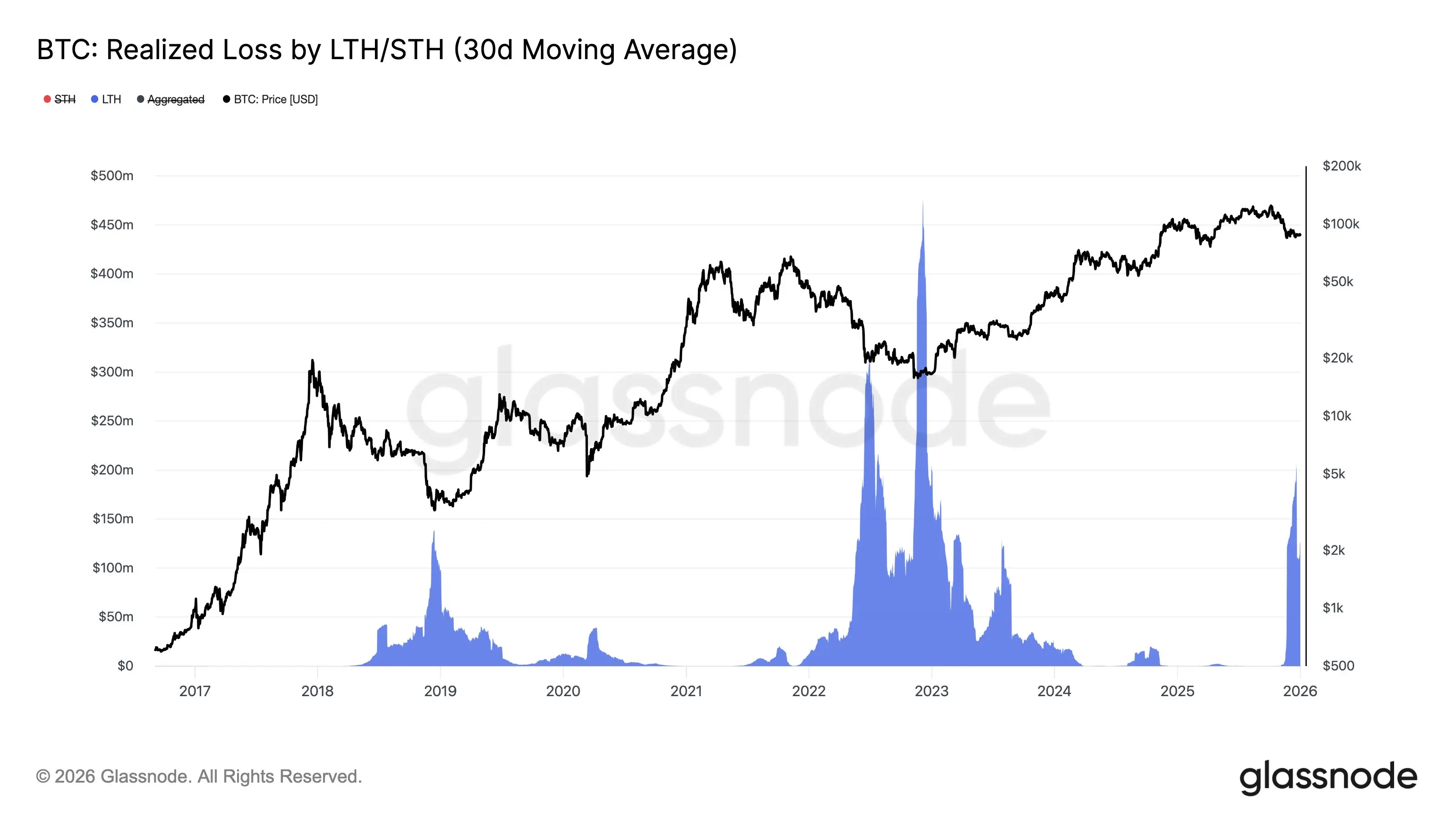
Even more concerning is the change in behavior among long-term holders. Investors who typically hold through market volatility are now locking in losses at a record pace for early 2024. Glassnode data shows that long-term holders have realized losses at an all-time high.
Realized losses refer to the actual amount of losses confirmed when investors sell assets. The surge in this indicator suggests that the most resilient market group is experiencing “investor fatigue” and capitulation. These long-term holders have gone through multiple market cycles; their collective capitulation often signals market bottoms but may also indicate deeper corrections.
This sell-off coincides with volatile Bitcoin price movements. According to BeInCrypto data, Bitcoin experienced a sharp correction in December, falling from a high of $94,297 to a low of $84,581, a decline of about 10%. When prices break key support levels, long-term holders face tough choices: continue holding and endure larger unrealized losses, or cut losses and lock in realized losses.
This behavior resembles past bear market bottoms. After the FTX collapse in November 2022, long-term holders also experienced a similar capitulation. But after that capitulation, Bitcoin bottomed around $15,000 and then entered a year-long bullish cycle. Whether this current capitulation will replicate that pattern or signal a deeper correction depends on macro liquidity conditions and regulatory developments.
Disclaimer: The information on this page may come from third parties and does not represent the views or opinions of Gate. The content displayed on this page is for reference only and does not constitute any financial, investment, or legal advice. Gate does not guarantee the accuracy or completeness of the information and shall not be liable for any losses arising from the use of this information. Virtual asset investments carry high risks and are subject to significant price volatility. You may lose all of your invested principal. Please fully understand the relevant risks and make prudent decisions based on your own financial situation and risk tolerance. For details, please refer to
Disclaimer.


