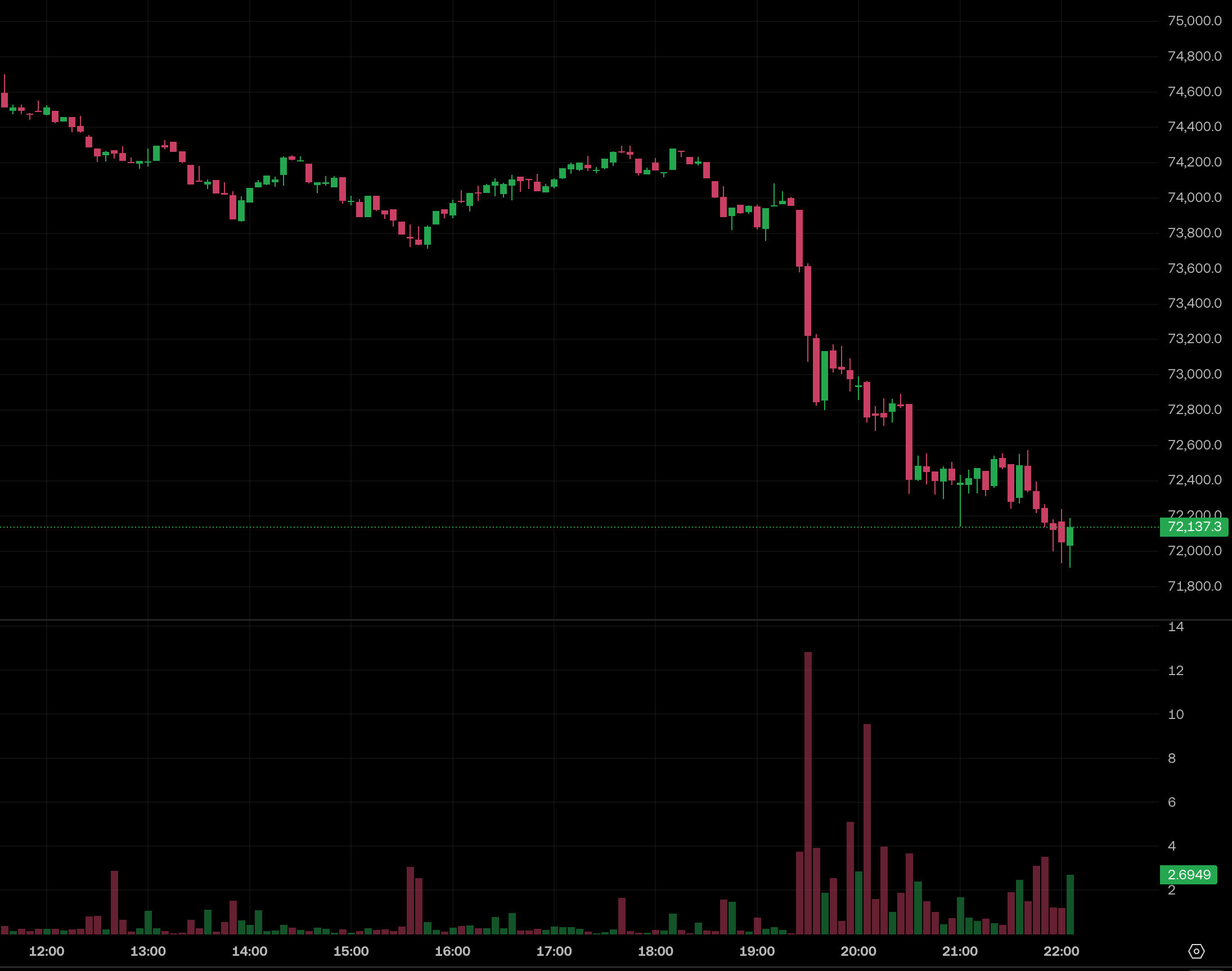
The crypto market is anything but calm tonight. Around 10 PM Taiwan time on March 18, Bitcoin (BTC) and Ethereum (ETH) both plunged sharply. According to CoinGlass data, this “flash crash” wiped out nearly $300 million in global funds within 24 hours, with over 100,000 leveraged traders liquidated.
(Background: Israel announces “elimination” of Iran intelligence chief! Netanyahu authorizes indefinite targeted killings, Bitcoin drops below $73,000, Ethereum loses $2,300)
(Additional context: Inflation ghost returns! US February PPI soars 3.4% year-over-year, rebounding in goods sector and hitting rate cut expectations)
Just as market sentiment was beginning to warm, the market once again showed its ruthless side. Around 10 PM Taiwan time on March 18, Bitcoin experienced intense short-term volatility, quickly falling from a high and dropping below $72,000; Ethereum (ETH) was also dragged down, dipping to $2,200, catching many bulls off guard.
100,000 People Liquidated, Total Liquidation Nears $300 Million
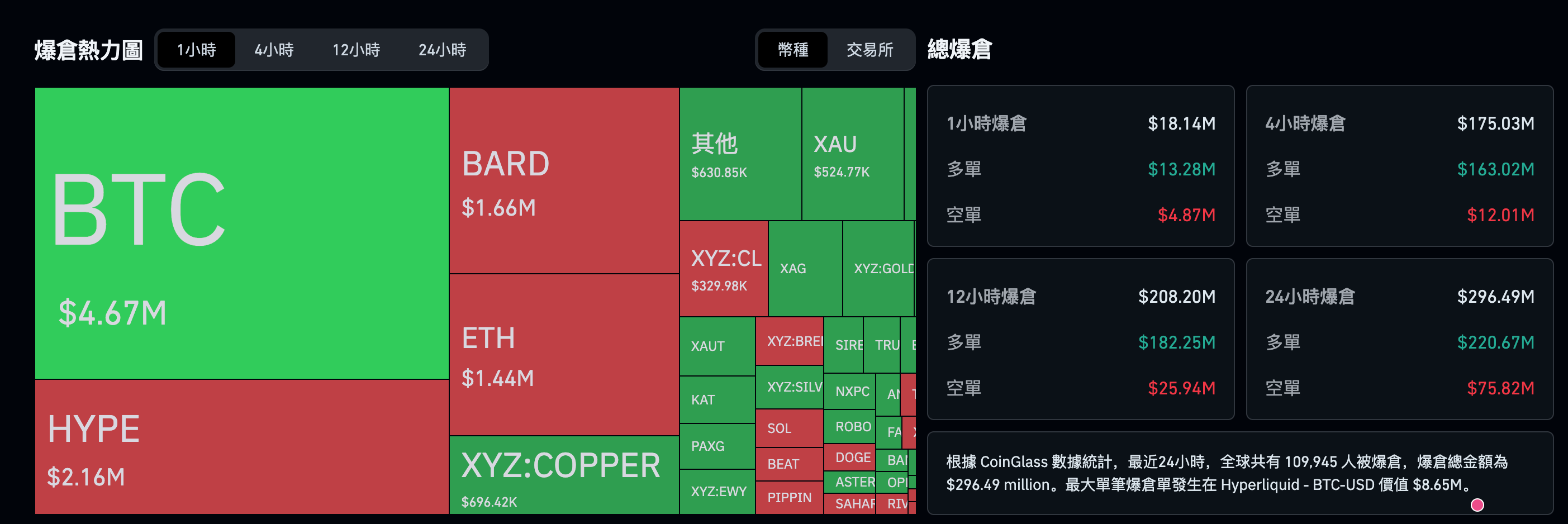
Severe price swings are often accompanied by chain reactions of leverage liquidations. According to the latest CoinGlass data, in the past 24 hours, a total of 109,651 traders were forcibly liquidated, with total losses reaching $294.38 million (about NT$9.3 billion).
Analysis indicates that recent market sensitivity to Fed interest rate policies and geopolitical tensions led bulls to accumulate large leveraged positions above $74,000. Once prices broke key support levels, a cascade of long liquidations was triggered.
“Whales” Can’t Escape Liquidation Either! Hyperliquid Reports Single Loss of $8.65 Million
Among tonight’s liquidation wave, the most notable was a single forced liquidation on the decentralized perpetual contract platform Hyperliquid. Data shows a long BTC-USD position was forcibly closed, resulting in a loss of $8.65 million (about NT$270 million). This was not only the largest single liquidation of the day across the entire network but also a stark reminder that even large leverage trades on DEXs carry extreme risk during volatile times.
Bitcoin remains around $72,000, and with open interest (OI) decreasing after the massive liquidations, short-term market pressure has eased somewhat, but volatility remains high. Investors should closely monitor upcoming Fed policy statements and manage their positions cautiously.

Disclaimer: The information on this page may come from third parties and does not represent the views or opinions of Gate. The content displayed on this page is for reference only and does not constitute any financial, investment, or legal advice. Gate does not guarantee the accuracy or completeness of the information and shall not be liable for any losses arising from the use of this information. Virtual asset investments carry high risks and are subject to significant price volatility. You may lose all of your invested principal. Please fully understand the relevant risks and make prudent decisions based on your own financial situation and risk tolerance. For details, please refer to
Disclaimer.


