NFTs no longer need to be restricted to one network, they can go where they need to go.
**Written by **WILLIAM M. PEASTER
Compiled by: Shenchao TechFlow
As we look back on 2023, it’s clear that NFTs have just survived a difficult bear market. However, exploring through hardships has always been synonymous with Web3. Due to new technologies and new driving forces, many NFT projects not only survive here, but also thrive. This article takes you to review the NFT market in 2023.
1.The rise of NFT L2
When I first started researching NFTs in 2019, the L2 scenario for NFTs did not exist yet. This year, we started to see various NFT-friendly L2 developments.
Forerunners like Arbitrum and Optimism are starting to gain more minting activity and are seeing their evolving technology stacks being used to launch new cultural hub rollups such as Xai and Redstone.
Industry giants such as Coinbase and Zora have also joined the fray, deploying Base and Zora Network respectively.
New up-and-comers are also jumping on board, such as Frame, an L2 that integrates NFT royalties and more directly into its network.
In other words, the era of NFT expansion has officially begun!
2.PFP new capabilities
The profile picture (PFP) sector of NFTs has been particularly hard hit by this bear market, with most projects seeing a decline in attention and floor prices in the first three quarters of this year.
However, some NFT series have bucked the trend and become dark horses in the PFP category, namely Openens and Pudgy Penguins.
Launching Set 001 in May 2023, Jack Butcher’s Openens provides a new blueprint for how to release a collectively curated collection of NFTs over time, sparking the imagination of thousands in the process.
As for Pudgy Penguins, the project will be upgraded to Blue Chip PFF in 2023 after a series of major developments, the most important of which is the placement of Pudgy Toys in 2,000 Walmart stores.
3. Development of game NFT
The entire NFT gaming scene has come a long way in 2023, but it’s safe to say that the dominant games in the space - Axie Infinity and Parallel - are still performing well.
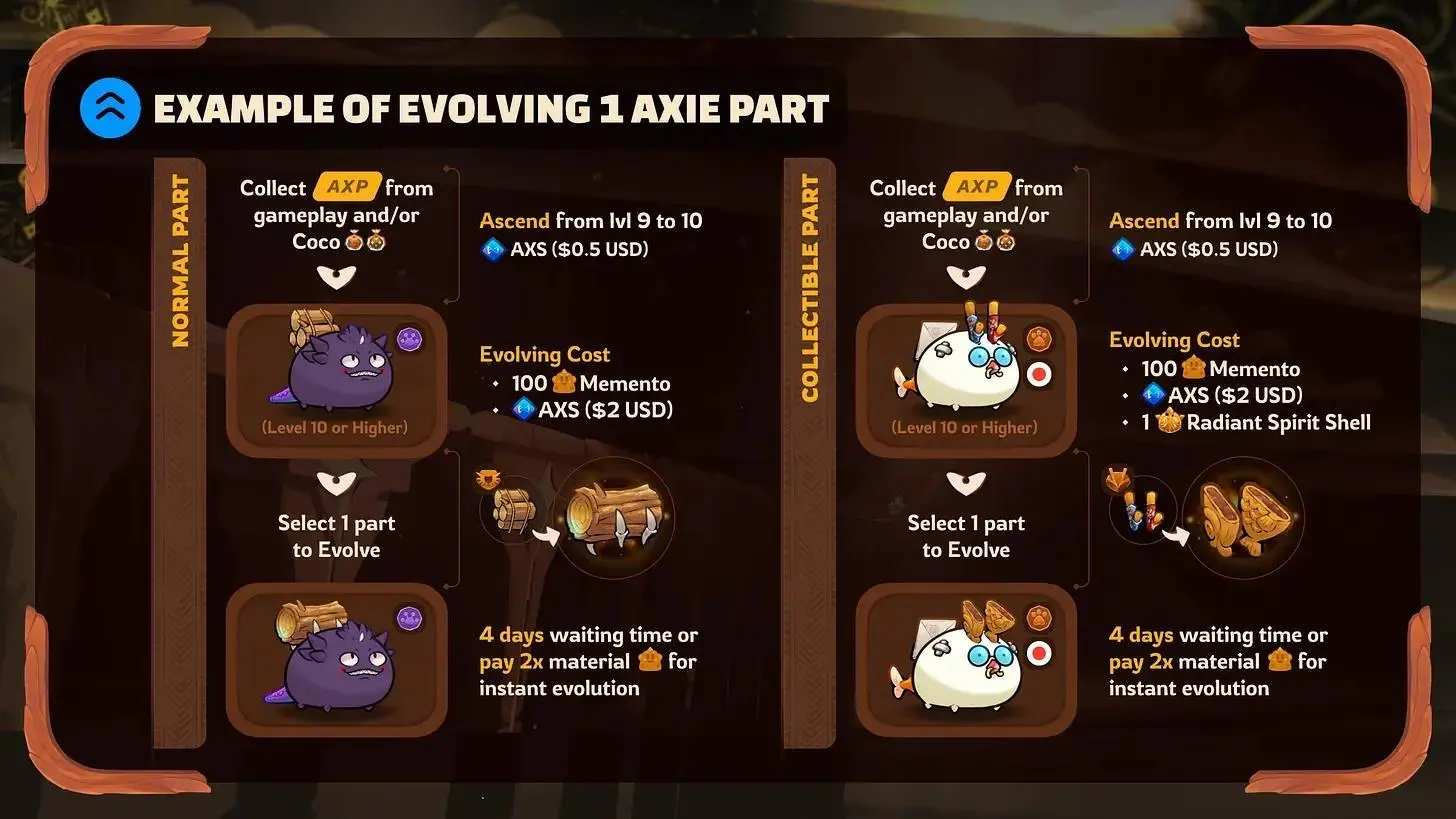
Not only is the Axie ecosystem growing with a number of new games based on Axie, but the main game in the series has also received huge upgrades, such as the arrival of Axie Experience Points (AXP) and the Axie Parts Evolution system.
Parallel, on the other hand, released a new starter deck this year and launched a beta version of its game that was met with widespread acclaim.
Both games are better than ever, with more great content coming in 2024!
4. Infrastructure revitalization
2023 has seen an incredible explosion of infrastructure surrounding NFTs.
For example, Nouns V3 has just open sourced the first DAO native forking mechanism.
ENS name wrappers have also been released, providing ENS name holders with unprecedented flexibility and functionality.
In addition, Zora, it launched Protocol Rewards, a system that rewards Zora users with ETH.
But these are just the tip of the iceberg. ERC-6551 just turned every NFT into a wallet, mint.fun made minting easy, Privy introduced user-friendly embedded wallets, and more.
Long story short, now is a great time to build around NFTs!
5. Multiple forces

While Ethereum now accounts for the vast majority of all NFT activity, Bitcoin and Solana NFT joined the NFT camp in a big way in 2023.
Since the launch of Ordinals in January, the Bitcoin NFT scene has been revitalized with a surge in activity. Likewise, Ordinals quickly inspired the standardization of other alternative Bitcoin tokenization methods, such as Stamps, which has only accelerated the pace of recent Bitcoin NFT activity.
As for Solana, the network has emerged as the next big airdrop frontier and has seen its SOL token and activity statistics surge in recent months, attracting a slew of new users who have flocked to the chain’s top projects such as NFTs Markets such as Magic Eden and Tensor.
Therefore, Ethereum, Bitcoin and Solana are now the current mainstream of NFT, and this trend will continue in the foreseeable future.
6. On-chain revival
In 2023, there will be a resurgence of on-chain NFTs and on-chain experiments.
For example, the minting of Chaos Roads and recent Terraforms updates have pushed the boundaries of what is possible in blockchain art. Additionally, projects like BasePaint and Party are paving new ways for people to coordinate and co-create on-chain.
Of course, “on-chain” is not inherently better than “off-chain”. It’s just that blockchain is a new medium + infrastructure combination, and the horizons created here have never been so open and full of potential!
7. The boom of crypto social
Crypto social applications stand out in 2023, with Warpcast and Lens being prime examples.
As applications proliferate, NFTs have received new attention as these projects highlight and promote NFT minting.
So now it’s easier to find the NFTs your friends are minting and share with them the NFTs you minted at any time.
In short, this year’s rising crypto social scene has made NFTs more social in general!
8. The arrival of AI

In 2023, we witnessed the first important projects combining AI and NFT.
In the metaverse realm, Upstreet (an NFT-integrated multiplayer game world designed for interaction between humans and AI agents) released a 28-page ChatWorld exploring various potential applications for the AI agents in Upstreet.
In addition, game experiments like Parallel Colony introduce the idea of “1.5 player games” where humans will passively guide autonomous AI agents to perform various tasks, blurring the line between the end of the human game and the beginning of the AI game.
Although these efforts are still in their early stages, they indicate that the combination of artificial intelligence and NFT may change dramatically in the future.
9.RWA Tokenization
RWA stands for “real world assets” on the blockchain, and they can be anything from real estate to physical trading cards.
One of the main ways to bring off-chain assets onto the chain is to use NFTs to represent them!
In fact, in 2023, we learned about the RWA model supported by NFT in a high-profile manner through the example of Courtyard’s tokenized Pokémon cards.
This is just one example of culture, but more experiments, both cultural and financial, are coming gradually.
10. Cross-chain development
2023 is also the year when cross-chaining NFTs from one blockchain network to another becomes more feasible than ever.
This is largely due to the rise of projects like LayerZero, which is pioneering cross-chain NFTs for transferring between blockchains, and Holograph, which develops hologram NFTs that can be used virtually on all Ethereum Maintain a consistent ID across the machine (EVM) environment.
In addition, Chainlink’s Cross-Chain Interoperability Protocol (CCIP) was also launched this year, paving another solid path for projects to achieve NFT interoperability on a series of chains.
Therefore, NFTs no longer need to be limited to one network. They can go where they need to go, which is a newer possibility that will be widely developed in the next few years!


