Many people first came into contact with cryptocurrencies to get rich, but then they stayed and became fervent believers in building a more open and decentralized world.
Written by: Vitalik Buterin
Compiled by: Luffy, Foresight News
One of my most cherished memories from ten years ago was a pilgrimage to a place in Berlin known as Bitcoin Kiez: an area in Kreuzberg with a dozen shops hundreds of meters apart from each other, all Accepts Bitcoin payments. The heart of the area is Room 77, a restaurant and bar run by Joerg Platzer. In addition to accepting Bitcoin, it also serves as a community activity center, where various open source developers and political activists of different factions often gather.

Room 77, source: my 2013 article in Bitcoin Magazine
Two months ago, I had a similar memory: PorcFest, a libertarian gathering in the woods of northern New Hampshire. During this period, we ate at small fast-food restaurants called Revolutionary Coffee and Provocative Soups, Salads and Smoothies, which of course also accepted Bitcoin. Here, we discuss both the deeper political significance of Bitcoin and how to use it in our daily lives.
I mention these because they remind me of the deeper vision behind cryptocurrencies: we are not just here to create isolated tools and games, but to comprehensively build a more free and open social and economic system, In which different parts such as technology, society and economy fit into each other.
The same goes for early visions of “Web 3,” which moved in a similarly idealistic but slightly different direction. The term “Web3” was originally coined by Ethereum co-founder Gavin Wood as a different way of thinking about what Ethereum is: Gavin didn’t think of Ethereum as “Bitcoin + smart contracts” as I originally did, Rather, think of it more broadly as a set of technologies that come together to form the foundational layer of a more open internet stack.
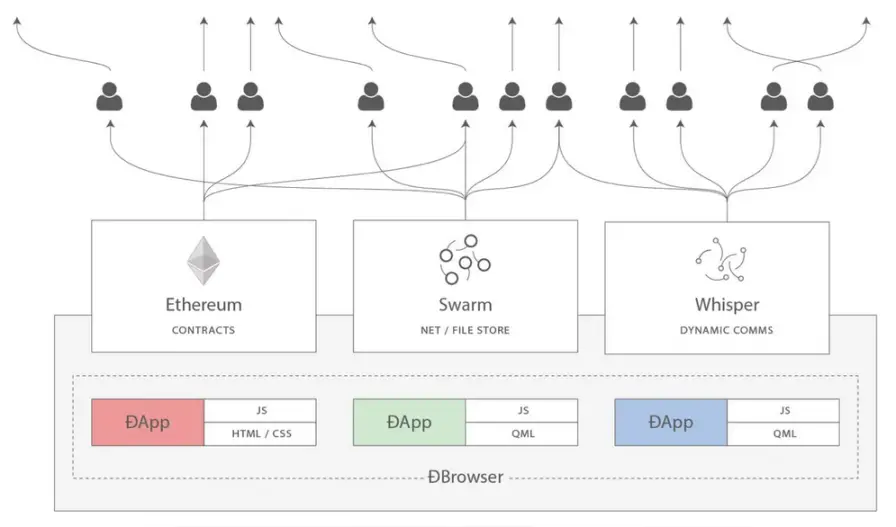
Diagram used by Gavin Wood in many of his early talks
When the free and open source software movement took off in the 1980s and 1990s, the software was simple: it ran on your computer and read and wrote files on your computer. But today, most of our important work is collaborative, often at scale. Even though the underlying code of the app is open and free, your data is routed through a centralized server run by a company that can read your data, change your rules, or deplatform you at any time. So if we want to extend the spirit of open source software into today’s world, we need programs to be able to access shared hard drives that store content that multiple people need to modify and access. What is Ethereum, and what are things like peer-to-peer messaging (Whisper then, Waku now) and decentralized file storage (only Swarm then, IPFS now)? A public decentralized shared hard drive. This was the original vision that gave birth to the now ubiquitous term “Web3”.
Unfortunately, since 2017, these visions have faded into obscurity. There is very little talk about consumer crypto payments, the only non-financial application that is really being used on-chain at scale is ENS, and there is a big ideological divide, with large parts of the non-blockchain decentralized community viewing the crypto world as as a distraction rather than a like-minded spirit and powerful ally. In many countries, people do use cryptocurrencies to send money and save, but they usually do so through centralized means: either through internal transfers from centralized exchange accounts or through USDT trading on Tron.
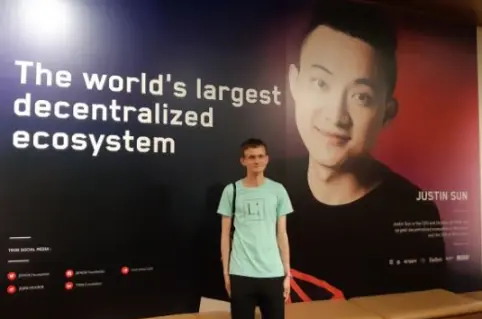
Background: Humble TRON founder and decentralization pioneer Justin Sun courageously leads the world’s coolest, most decentralized crypto ecosystem
Through it all, I blame rising transaction fees as the root cause of this shift. When the cost of writing to a blockchain is $0.001, or even $0.1, you can imagine people building all kinds of applications using blockchain in all sorts of ways, including non-financial ways. But when transaction fees exceed $100 (as they did at the peak of the bull market), only one group is still willing to participate, and in fact becomes more willing to participate due to the increase in coin prices: degen gamblers.
Moderate degen gamblers may be fine, I spoke to many people at events who joined crypto for the money but stayed for the ideals. But when they become the largest group using blockchain, it’s bound to change public perception and the internal culture of the crypto world, and lead to many of the other negative impacts we’ve seen over the past few years.
Now, fast forward to 2023. Whether it’s the core challenge of scaling, or the various “side tasks” that are crucial to building a viable cypherpunk future world, we’ve actually made good progress:
- The real Rollup begins to take the stage.
- After a temporary lull in the wake of the regulatory crackdown on Tornado Cash, second-generation privacy solutions such as Railway and Nocturne are beginning to see the light of day.
- Account abstraction begins.
- The long-forgotten light client starts to really exist.
- Zero-knowledge proofs, a technology we once thought were decades away, are now here and increasingly developer-friendly, with consumer applications in this space on the horizon.
These two points: the growing recognition that uncontrolled centralization and over-financialization cannot be the “essence of cryptocurrencies,” and the achievements of the above-mentioned key technologies, together provide us with an opportunity for things to move in a different direction. . That is, making at least part of the Ethereum ecosystem truly the permissionless, decentralized, censorship-resistant open source ecosystem we originally desired.
Some values
Many of these values are shared not only by many in the Ethereum community, but also by other blockchain communities and even non-blockchain decentralized communities, although each community has its own unique combination of values and different emphasis degree.
- Open global participation: Anyone in the world should be able to participate on the basis of maximum equality as a user, observer or developer.
- Decentralization: Minimize the application’s dependence on any single participant. In particular, the application should be able to continue working even if the core developers disappear forever.
- Censorship resistance: Centralized actors have no authority to interfere with the operations of any user or application, and concerns about bad actors should be addressed higher up the stack.
- Auditability: Anyone should be able to verify the application’s logic and its ongoing operations (e.g., by running a full node) to ensure that it is operating according to the rules claimed by the developers.
- Trusted neutrality: The infrastructure should remain neutral and can be proven neutral by any individual who does not trust the developers.
- Build tools, not empires. Empires seek to capture and trap users within walled gardens; tools fulfill their mission to interoperate with the wider open ecosystem.
- Collaborative mentality: Even when there is competition, projects within the ecosystem collaborate on shared software libraries, research, security, community building, and other valuable areas. Projects achieve positive sums with each other and the wider world.
It is entirely possible to build something in the crypto ecosystem that does not adhere to these values. One could build a system called “Layer 2”, but it is actually a highly centralized system protected by multi-signatures, and it has no plans to switch to a more secure system. One can build an account abstraction system that tries to be “simpler”. Than ERC-4337, but at the cost of introducing trust assumptions and ultimately eliminating the possibility of a public memory pool, making it harder for new builders to join. One could build an NFT ecosystem where the content of the NFT is stored on a centralized website, making it more fragile than storing these components on IPFS. One could build a staking interface that directs users to the already largest staking pool.
Resisting these pressures is difficult, but if we don’t do it, then we risk losing the unique value of the crypto ecosystem and recreating clones of the existing Web2 ecosystem in an inefficient manner.
The crypto world is cruel

The crypto space is a cutthroat world in many ways. This was vividly expressed in an article about MEV published by Dan Robinson and Georgios Konstantiopoulos in 2021. They believed that Ethereum is a dark forest, and on-chain traders are easily exploited by front-running bots, which themselves are also easily exploited by other Bot exploits, and more. The same goes for other situations: smart contracts are frequently hacked, user wallets are frequently hacked, and even more thrillingly, centralized exchanges fail, and so on.
This is a huge challenge for users in the crypto world, but it also presents an opportunity: it means we have a space to experiment, incubate, and receive real-time feedback on various security technologies to address these challenges. We have seen challenges successfully met in a variety of situations:
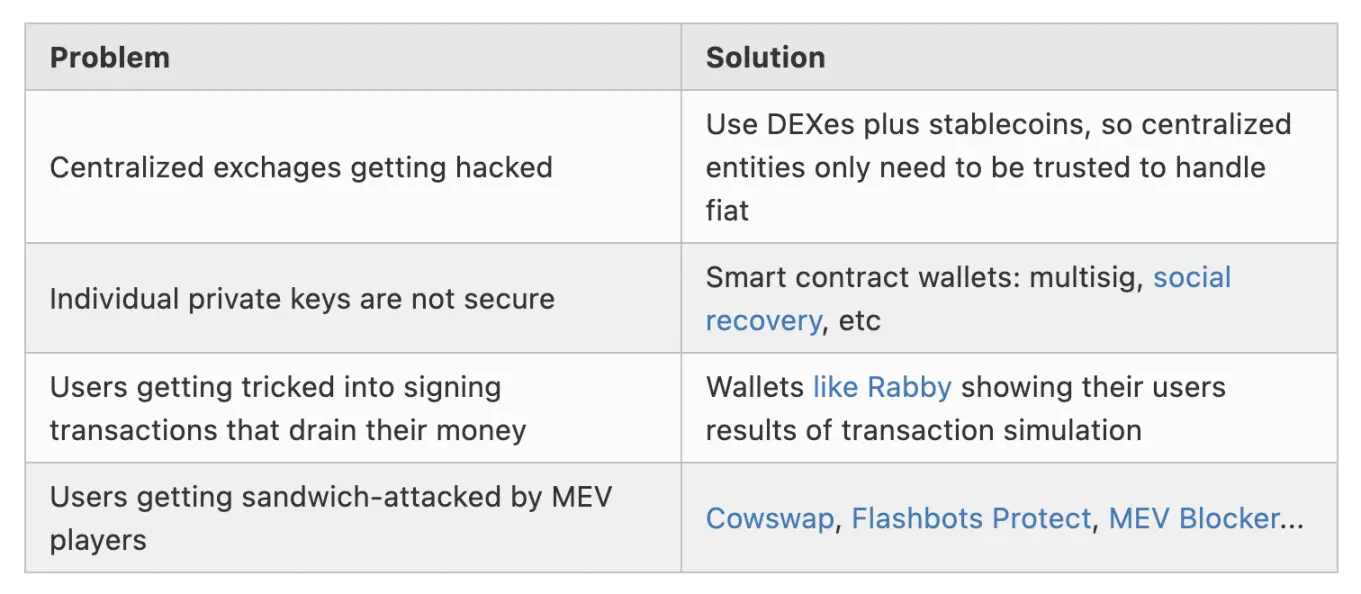
Everyone wants the internet to be safe. Some seek to secure the Internet by promoting approaches that force reliance on a single specific actor (corporate or government) who can serve as a central anchor of security and truth. But this approach sacrifices openness and freedom and leads to the tragedy of an increasingly fragmented Internet. People in the crypto space place a high value on openness and freedom. High financial risks mean that the cryptocurrency world cannot ignore security, but various ideological and structural reasons force it to fail to use centralized methods to achieve security. At the same time, the cryptocurrency space is at the forefront of powerful technologies such as zero-knowledge proofs, formal verification, hardware-based key security, and on-chain social graphs. Together, these facts mean that when it comes to cryptocurrencies, an open approach is the only way to improve security.
All of this goes to show that the crypto world is a perfect proving ground for applying open and decentralized security approaches to real-world high-stakes environments and maturing them to the point where they can be partially applied to the wider world. This is one of my visions of how the idealistic parts of the crypto world and the chaotic parts of the crypto world, and the crypto world as a whole and the mainstream world more broadly, can turn their differences into symbiosis rather than constant tense confrontation.
Ethereum as part of a broader technology vision
In 2014, Gavin Wood launched Ethereum as one of a set of tools to build upon, along with Whisper (decentralized messaging) and Swarm (decentralized storage). The former received a lot of attention, but unfortunately the latter turned to financialization around 2017 and received much less attention. That said, Whisper still exists in the form of Waku and is actively adopted by projects such as the decentralized messaging application Status. Swarm is still evolving, but now we have IPFS.
Over the past few years, with the rise of decentralized social media (Lens, Farcaster, etc.), we’ve had the opportunity to revisit some of these tools. Additionally, we have another very powerful new tool to add to this holy trinity: zero-knowledge proofs. These techniques are most widely used to improve Ethereum scalability, such as ZK Rollups, but they are also useful for privacy protection. In particular, the programmability of zero-knowledge proofs means we can move beyond the binary choices of “anonymous but dangerous” and “KYC but safe” and have both privacy and authentication.
An example for 2023 is Zupass. Zupass is a system based on zero-knowledge proof incubated in Zuzalu. It is used not only for live event authentication, but also for online authentication of the voting system Zupoll, Zucast similar to Twitter, etc. The main feature of Zupass is that you can prove that you are a resident of Zuzalu without revealing who you are. Each Zuzalu resident can only have one randomly generated cryptographic identity for each application instance they log into (such as voting). Zupass was so successful that it will be rolled out to Devconnect for ticket sales later this year.
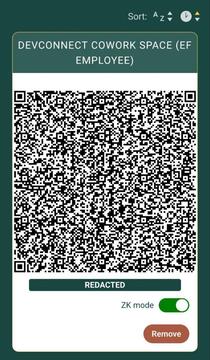
Zero-knowledge proof technology proves that I can access the Devconnect coworking space as a member of the Ethereum Foundation
Perhaps the most practical use of Zupass so far is voting. Zupass has been used as an anonymous voting platform in a variety of polls, some of which involve politically controversial or highly personal topics where people have a strong need to protect their privacy.
Here we begin to see the outlines of the cypherpunk world of Ethereum, at least on a purely technical level. We can hold assets in the form of ETH and ERC20 tokens or various NFTs and use a privacy system based on stealth address and privacy pool technology to protect our own privacy while preventing known bad actors from benefiting from the same anonymity set. Whether in our DAO, to help decide changes to the Ethereum protocol, or for any other goal, we can use a zero-knowledge voting system that can use a variety of credentials to help identify who has the right to vote and who No voting rights: In addition to voting with tokens like in 2017, we can also vote anonymously by those who have contributed enough to the ecosystem, participated in enough activities, or implemented a one-person-one-vote system.
Face-to-face and online payments can be made via ultra-cheap transactions on L2, which leverages data availability space (or off-chain data protected with Plasma) as well as data compression to provide users with ultra-high scalability. Payments from one Rollup to another can be made through decentralized protocols such as UniswapX. Decentralized social media projects can use various storage layers to store activities such as posts, retweets, and likes, and use ENS as usernames. We can achieve seamless integration between on-chain tokens, personally held off-chain proofs, and zero-knowledge proofs through systems like Zupass.
Quadratic voting, cross-chain consensus discovery, and prediction markets can be used to help organizations and communities govern themselves and stay informed, while blockchain and ZK-proof-based identities can make these systems secure against centralized censorship from within and from the outside. conspiracy to manipulate. Sophisticated wallets can provide protection as people participate in DApps, user interfaces can be published to IPFS and accessed as .eth domain names, and hashes of HTML, java, and all software dependencies are updated directly on-chain through the DAO. Smart contract wallets, created to help people avoid losing tens of millions of dollars in cryptocurrency, will expand to protect people’s “identity roots,” creating a more secure identity provider than even centralized identity providers like Sign in with Google. system.
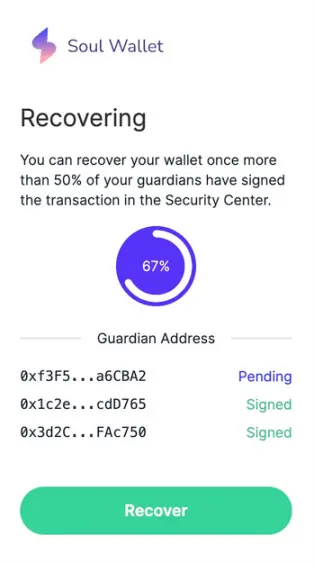
Soul wallet recovery interface. I personally would now rather entrust my funds and identity to such a system than a centralized Web2 solution
We can think of the greater Ethereum universe (or “Web3”) as an independent technology protocol stack that is competing with traditional centralized protocol stacks. Many people mix the two, and there are often clever ways to match them: with ZKEmail, you can even turn an email address into a keeper for your social recovery wallet! However, there are also many synergies that can arise from using different parts of a decentralized stack simultaneously, especially if they are designed to integrate better with each other.
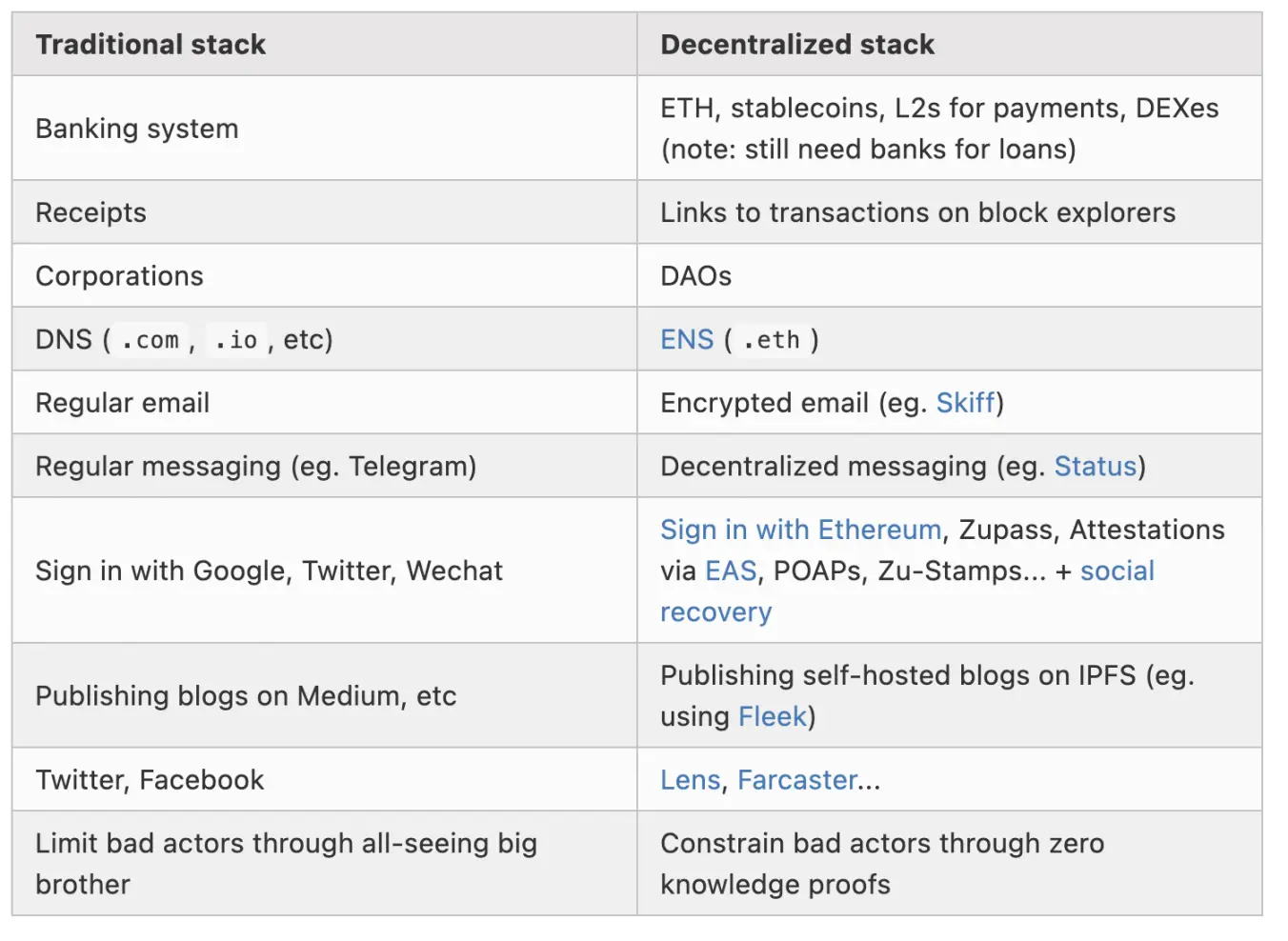
One of the benefits of thinking of it as a stack is that it fits well with Ethereum’s diverse ethos. Bitcoin attempts to solve one problem, or at most two or three. Ethereum, on the other hand, has many sub-communities with different focuses, and there is no single dominant narrative. The goal of the stack is to achieve this diversity, but at the same time strive to enhance interoperability between this diversity.
Social layer
“These people who do X have a corrupting influence, these people who do Y are the serious ones.” It’s easy to say something like this, but it’s a lazy response. To truly succeed, we not only need a vision for the technology stack, but also the social part of the stack.
In principle, the strength of the Ethereum community is that we take incentives seriously. PGP hoped to put encryption keys into everyone’s hands so that we could actually have encrypted email within a few decades, but it largely failed. Then we had cryptocurrencies, and suddenly millions of people had keys publicly associated with them, and we could start using those keys for other purposes: including encrypted email and messaging. Non-blockchain decentralized projects are often chronically underfunded, and a blockchain-based project received $50 million in Series B funding. We get people to stake ETH to secure the Ethereum network, not out of the benevolence of the stakers, but out of their own self-interest: we get $20 billion to secure the economy.
At the same time, incentives are not enough. DeFi projects often start out modestly, collaboratively, and maximally open-source, but sometimes abandon these ideals as they scale. We can incentivize stakers to participate with very high uptime, but incentivizing stakers to decentralize is very difficult and may not be possible at all using purely within-protocol methods. Many key parts of the “decentralized stack” described above do not have viable business models. The governance of the Ethereum protocol itself is clearly non-financial, making it more robust than other governance ecosystems. This is the value of Ethereum’s strong social layer, which actively emphasizes values where pure incentives cannot, but without creating the concept of “Ethereum alignment,” which becomes a new form of political correctness.

There needs to be a balance between these two aspects, although the correct term is not balance, but integration. Many people first enter the cryptocurrency space with the intention of getting rich, but later they become familiar with the ecosystem and become fervent believers in the quest to build a more open and decentralized world.
How do we actually achieve this integration? This is the key question, and I think the answer lies not in one magic bullet but in a series of iteratively derived techniques. The Ethereum ecosystem has been more successful than most in encouraging a collaborative mentality among Layer 2 projects purely through social means. Large-scale public goods funding, especially Gitcoin Grants and Optimism’s RetroPGF round, is also very helpful as it creates an alternative revenue channel for developers who need to sacrifice their values for traditional business models. These tools are still in their infancy, and there is still a long way to go to improve them and to find and develop other tools that may be better suited to specific problems.
This is where I see the unique value of Ethereum’s social layer. Pay attention to incentives without being consumed by them. A community that values warmth and cohesion is a unique combination, but at the same time remember that what feels “warm and cohesive” from the inside can easily feel “oppressive and exclusive” from the outside, and values neutrality, open source and hard norms of censorship, as a way to guard against the risk of placing too much emphasis on community-driven development. If this combination works well, it will be the best option to realize its vision on both an economic and technical level.
*Special thanks to Paul Dylan-Ennis for his feedback and review. *


