Looking back on 2023, the cryptocurrency and blockchain fields present a series of major developments, challenges and innovations.
Written by: Haiyi, Juliet, Gigi, Jenny
Our journey:
2023 marks an era of change for Huobi. On the occasion of the company’s 10th anniversary, our brand name was changed from “Huobi”, which everyone is already familiar with, to “HTX”. This change is more than just a name change, it is a renewed commitment to our core values. Among them, H represents the inheritance of Huobi, T represents the focus on TRON, and X represents the dynamic characteristics of the platform. For HTX Ventures, 2023 also means a series of structural upgrades (such as the integration of incubation and research departments) to further optimize resource allocation and strengthen the support system for investment and ecological partners.
Founded in 2018, HTX Ventures empowers projects that leverage the cutting-edge potential of Web 3.0 and cryptography. The company’s business covers DeFi, real world assets (RWA), ZK Roll-up, infrastructure, NFT, digital identity (DID), SocialFi, education, GameFi, AI, Layer 1 and Layer 2 projects and many other fields. We are committed to continuing to stay ahead in technological advancement and innovation through diversified investments.
HTX Ventures adheres to three core spirits: business innovation, strong business model, and operational excellence. These guiding principles are critical in developing our investment strategy, ensuring that we not only support projects at the forefront of technological innovation, but also projects that demonstrate sustainable and scalable business models. Through a combination of technology foresight and commercial strategic acumen, we are able to identify and nurture projects with the potential for lasting impact and growth.
Our comprehensive investment strategy, including direct investment and fund investment, has led to significant expansion of our investment portfolio, which now covers more than 200 entrepreneurial projects. This investment strategy not only diversifies our investment areas, but also enriches our ability to drive meaningful change in various fields. Every investment is evidence of our unwavering commitment to driving innovation, sustainability and excellence in the dynamic landscape of Web 3.0 and beyond.
2023 Market Overview and Outlook
Looking back on 2023, the cryptocurrency and blockchain space presents a series of significant developments, challenges, and innovations.
Infrastructure
2023 is a year of explosive growth for infrastructure. Looking at the entire infrastructure ecosystem, facing more and more Web3 use cases and users, a variety of solutions and technical routes are emerging. These The plans and routes are intertwined again, waiting for the test of the market. In any case, these solutions always focus on three key points: faster transaction speed, more decentralized form, and safer architecture. The ultimate goal is to create a more user-friendly blockchain network. There is a lot to talk about about infrastructure, and here we have selected some infrastructure topics worth reviewing in 2023 as a summary.
5 infrastructure topics worth reviewing in 2023:
1. Ethereum development route
As the largest public chain, Ethereum is an important part of the blockchain infrastructure. A large amount of infrastructure relies on the operation of Ethereum, including various Rollup second-layer networks, as well as new technologies such as account abstraction. Even though Ethereum’s current total lock-up value (TVL) and number of users rank first among all public chains, before the goal of large-scale application of blockchain in the future, Ethereum and the various Layer 2s attached to Ethereum still face throughput issues. Insufficient, transaction costs are not suitable for small-amount high-frequency transactions and other issues. Therefore, Ethereum has been improving its own performance through upgrading forks. In mid-2022, Ethereum completed the first milestone of its expansion plan: The Merge, which transformed Ethereum from POW consensus to POS consensus. More importantly, it opened Ethereum’s transformation to an expansion route with Rollup as the core. change of direction.
In 2023, Ethereum has undergone a major execution layer upgrade: the Shanghai upgrade. The core upgrade content is to allow stakers to receive their pledged ETH and rewards. Popular predictions at the time were that the Ethereum price might take a hit due to the large number of pledge withdrawals, but instead, Ethereum showed strong upward momentum after the upgrade was completed, and more importantly, the entire network after the upgrade Maintaining stable operation, while the pledge volume rebounded after a slight decline, marking the return of validator confidence.
The next important node of Ethereum is the “Cancun Upgrade” expected to be implemented in Q1 of 2024, which marks the next important goal of Ethereum: sharding expansion. One of the important proposals, Pro-Danksharding (EIP-4844), introduces Blob data blocks to bring cheaper data availability when Rollup interacts with Layer1, thus reducing Layer2 transaction costs.
Vitalik also raised the topic of “Exit games for EVM validiums: the return of Plasma” in the second half of the year, trying to call on people to re-examine this forgotten expansion technology. Although it has caused heated discussions in the community, there is no doubt that Rollup expansion is still the mainstream route in the main development plot of Ethereum. In the future, we are likely to see an Ethereum world with Layer 2 as the main execution layer. The Ethereum main chain retreats behind the scenes more as a consensus layer and data availability layer, providing underlying support for numerous Layer 2 networks.
2. Layer 2 Summer
Layer2 is a track that will develop rapidly and attract much attention in 2023. There are many Layer2s on the market today. According to data provided by L2Beat, there are currently 32 active Layer2 networks in the market, among which Optimistic Rollup and ZK Rollup are the main ones. Judging from TVL data, the overall volume of Layer 2 will nearly triple in 2023. From the perspective of TVL distribution, Arbitrum One and OP Mainnet, which use Optimistic Rollup as a solution, occupy the majority of the market share, with Arbitrum ONE TVL accounting for 52% and Op Mainnet accounting for 26.5%. The main reasons include Arbitrum taking the lead in implementing EVM compatibility, allowing Ethereum and other Layer 1 projects to achieve seamless deployment. Secondly, Arbitrum and OP were the first to issue coins, which stimulated the rapid growth of ecological projects. In March this year, with the completion of the Arbitrum token airdrop, its ecological TVL ushered in a nearly 2-fold increase. The public chain of ZK Rollup is obviously slower in currency issuance and EVM compatibility, resulting in the growth of ecological projects being slower than that of the Optimistic Rollup series Layer 2.
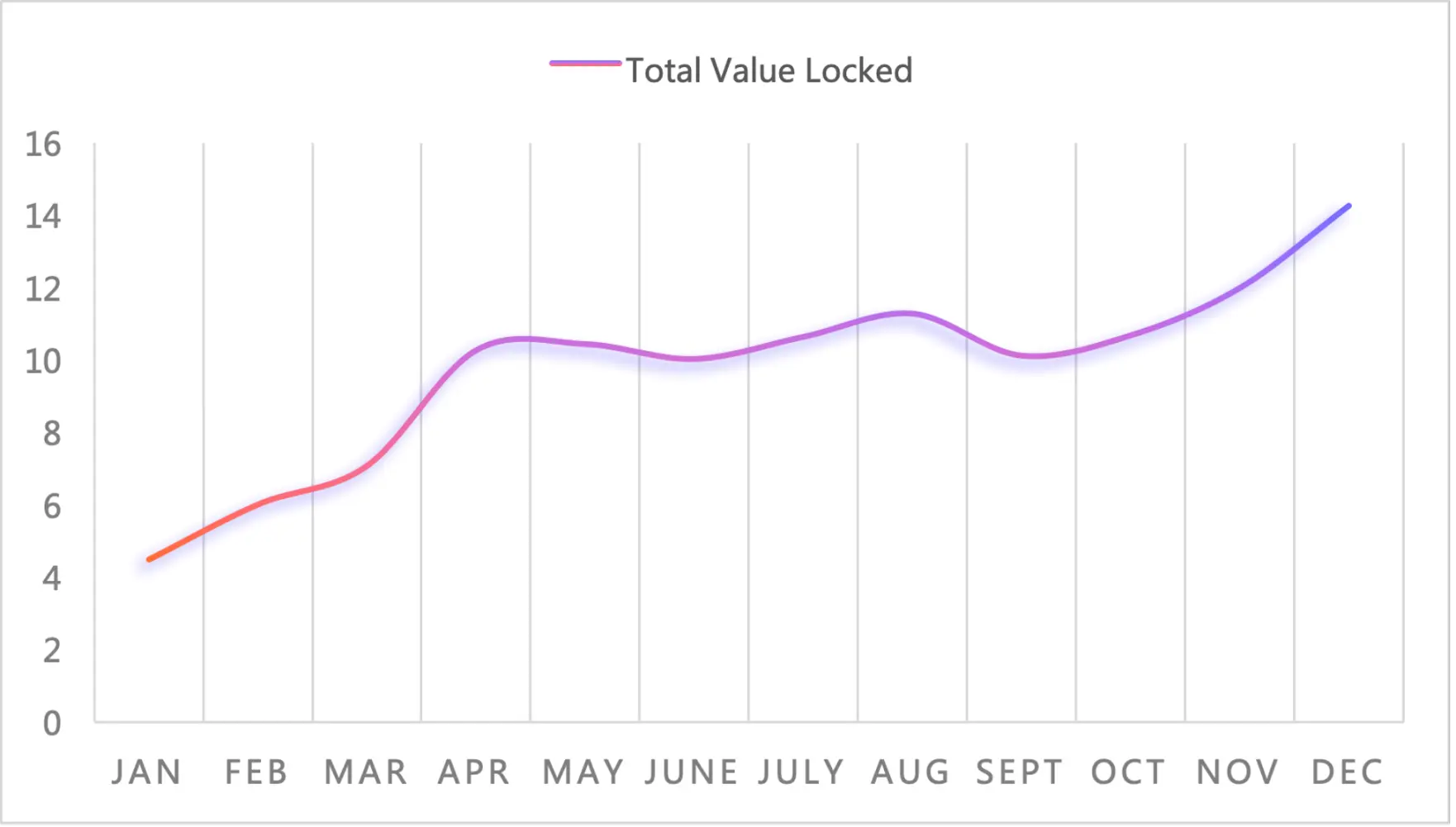
Figure 1: Layer 2 Lockup Value
In this year when Layer 2 networks are flourishing, we have also observed some problems faced by Layer 2 networks. What has to be mentioned is whether its data growth truly reflects the prosperity of the network, or is just an illusion. Most projects incentivize users to interact with the network by releasing airdrop expectations. We have observed that more and more projects are spending energy designing short-selling rules, including how to combat Sybil attacks and how to attract high-standard users. However, what we want to say is that airdrops and token incentives, as a “prescription”, can effectively work when they are taken, but if the project does not truly gain user trust in the product, the effect will be in the airdrop or token incentives. Disappears quickly after it’s over. At the same time, current Web3 users are still far from meeting the standards of mass users. The reason why we say this is because we believe that mass users are relatively lazy and have little willingness to move among multiple ecosystems. However, they are currently willing to migrate to Layer 2 networks. The users who interact have more or less knowledge and operational skills, which results in an increase in the customer acquisition and retention costs of the ecosystem itself, or involution. User loyalty to a certain public chain can easily be reduced by competitors’ short expectations and liquidity mining incentives. The best example is Blast, launched in Q4 by Paradigm and Blur founder Pacman. As a Layer 2 network that incorporates the concept of native revenue, it continued the popularity of Layer 2 until the end of the year. In just a few weeks after its launch, it reached $300 million TVL. At the same time, as a project supported by a star development team and a star organization, it highlights the community gameplay in track selection and takes Product-Market Fit to the extreme, which happens to give the current Layer 2 competitive landscape a different touch of color. When other Layer 2 still have When competing for technology and user quality, Blast quickly captured the market’s attention and funding by using simple functions that are most in line with community awareness.
Generally speaking, we are optimistic about the future development of Layer 2. As EIP-4844 further completes the improvement of Layer 2 performance, we have the opportunity to see innovative products on Layer 2 including DeFi and other non-financial Dapps in 2024.
3. Modular technology opens up blockchain bottlenecks
While most public chains continue to develop towards the goal of being faster and cheaper, trying to compete for the most “mainstream” public chain, there is another solution that is often mentioned in 2023, and that is the modular blockchain. Strictly speaking, Rollup itself is also a modular technology that focuses on the execution layer of the blockchain, that is, the user interaction layer. This year, we’ve seen more development of modular blockchains focused on the data availability (DA) layer, such as Mantle and Celestia. The former, as a modular rollup, uses its self-built data availability layer to liberate the problem of Layer 2 data availability limited by Ethereum. Celestia, for example, has created a general modular blockchain. The blockchain built on Celestia can integrate Celestia As a data availability layer. We believe that modular technology brings greater freedom. Applications or Layer 2 do not have to be bound by the performance of the main chain. Through this technology, we can gain greater autonomy and customization rights. There is a lot of room for imagination. big. Although there are currently not many actual use cases for modular blockchains such as Celestia, we are clearly optimistic about the development in this direction.
Of course, we cannot ignore the complexity and security issues brought about by the advancement of modular technology. This is not only reflected from the user’s perspective, because it is very easy to understand the performance of a single blockchain, but users of modular blockchains , you also need to understand the other modularity levels with which it interacts. At the same time, for developers, modular blockchains expose more risks in terms of security issues because they involve the interaction of multiple chains.
4. Current status of application chain
After the last round of DeFi Summer, application chains were proposed as a new idea to deal with network congestion and lack of autonomy, and the decentralized perpetual contract dYdX, which was originally deployed on Starkware, took a precedent. We saw the mainnet launch of dYdX V4 in October this year, marking the official transition of dYdX from an application to an application chain. In terms of architecture, dYdX chose the Cosmos SDK, which is the current mainstream application chain architecture. It gives the application chain the possibility to customize the consensus mechanism according to actual needs, and complete cross-chain interaction with other chains in the Cosmos network through the IBC protocol. At present, more than 70 application chains have deployed mainnets on Cosmos, becoming the mainstream application chain implementation solution in the market.
Applications develop their own application chain. The main advantages include:
- Performance improvement: If it is an application chain built on the Cosmos network, it can perfectly unleash the 10,000 TPS speed advantage of Cosmos. At the same time, since there is no need to compete with other applications for block space, the environmental impact of the application itself will be minimized.
- Cost reduction: In terms of transaction costs, application chains also have huge advantages. Taking dYdX as an example, an important change in V4 is the redesign of the gas fee. Users do not have to pay a fixed gas fee. Instead, the protocol will charge a corresponding proportion of fees based on the user’s transaction volume. The transaction experience is more like It is traded on a centralized exchange.
- Improvement of autonomy: The improvement of autonomy includes many aspects, such as smart contract upgrades, data availability, sorter settings, etc. The application chain has the ability to customize solutions in these aspects according to the needs of the application.
But equally, applications will face some challenges when developing towards application chains, including:
- Liquidity isolation: An independent application chain will make it more difficult for external protocols to interact with applications. You must know that in Ethereum or other individual blockchains, the cost and threshold for interaction between applications are very low. However, the application chain is independent of other ecologies, making cross-chain the only way to interact with other ecologies.
- Security: The consensus security of a smart contract application is directly affected by the security of the blockchain it is deployed on. The so-called security in theory essentially depends on the market value of the public chain. For the application chain, its own market value determines Whether its protocol has the ability to carry the above assets. This is not friendly enough for some small-market value projects.
Therefore, we believe that application chain is not a development route suitable for all applications. For example, for projects that often need to interact with other contracts and have a small market value, it is a wiser choice to stay on a safe and prosperous public chain. However, for those who need a fast and low-cost transaction experience, they are not satisfied with the public chain. For projects that are limited and have a certain user base, the application chain is indeed a way to maximize the value of the protocol itself.
5. Account abstraction opens the door to 300 million Web users
The concept of account abstraction first appeared in 2022. With the update of EIP-4337: Account Abstraction Using Alt Mempool (an account abstraction proposal that completely avoids consensus layer protocol changes, but relies on higher-level infrastructure), many The team started building the product around the account abstraction. In terms of terminal products, the current direction mainly includes smart contract wallets that implement social login, social recovery, gas payment, batch processing of transactions and other functions through integrated account abstraction. In this regard, many teams have already delivered products in 2023, including Argent, Avocado, Unipass, etc. have all made great innovations in user experience. According to Dune data, there are currently nearly 1.4 million accounts created based on EIP-4337 across the entire chain, resulting in nearly 7 million transactions (UserOps). As of the publication of this article, there are more than 400,000 monthly active smart contract accounts.
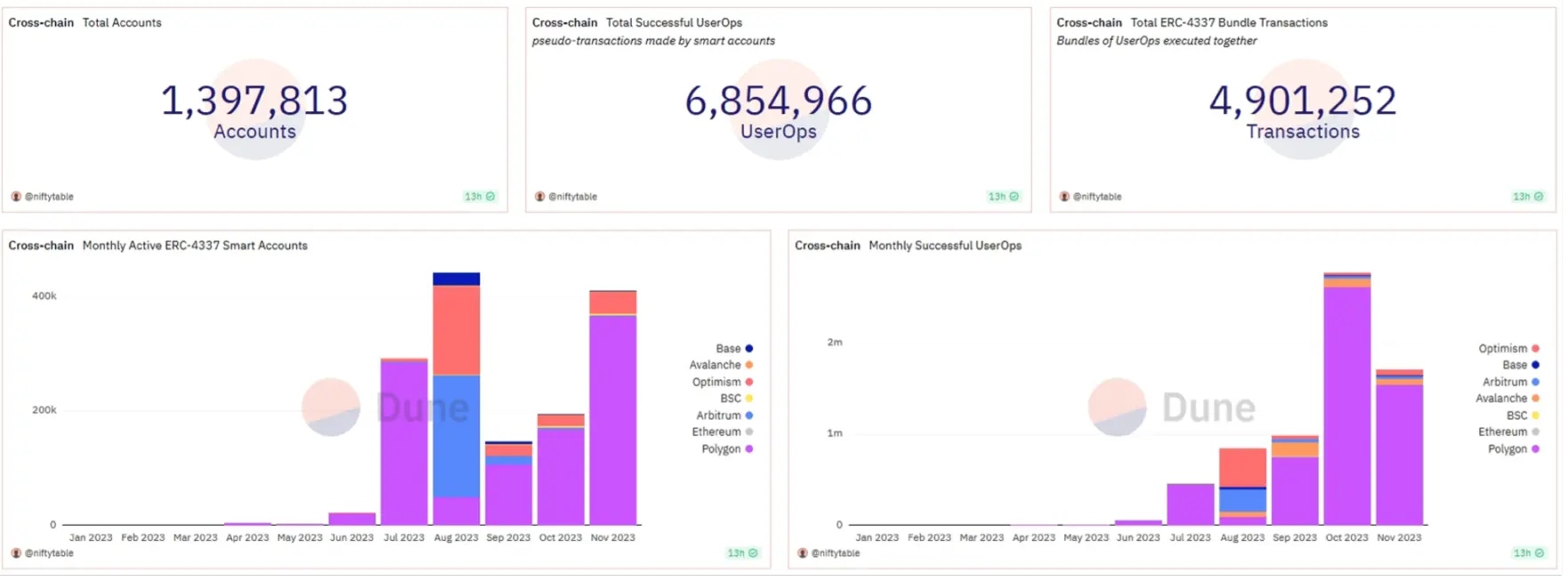
Figure 2: ERC-4337 smart account adoption, source: Dune.com
For the future, we believe that account abstraction can open the door to large-scale applications of Web3, but at the same time account abstraction still faces some challenges, including increased security risks caused by more complex technology stacks, rising gas fees, etc., so we also believe Low-cost public chains such as Layer2 are the best soil for developing account abstraction technology.
DeFi articles
Compared with the many thunderstorms in 2022, 2023 is a period of stable development for decentralized finance (DeFi). In terms of protocol types, there are currently more than 30 DeFi protocols. Compared with last year, the market is more segmented and professional. The narrative of LSD and RWA has brought new users and attention to DeFi. Below we have selected some DeFi topics that we think are worthy of attention.
3 DeFi topics worth reviewing in 2023:
1. Current status of DeFi protocols
DeFi has shown a stable trend in terms of total locked value in 2023. As of the publication of this article, $47 billion in value has been locked in DeFi contracts, an increase of 23.6% from $38 billion on December 31, 2022.
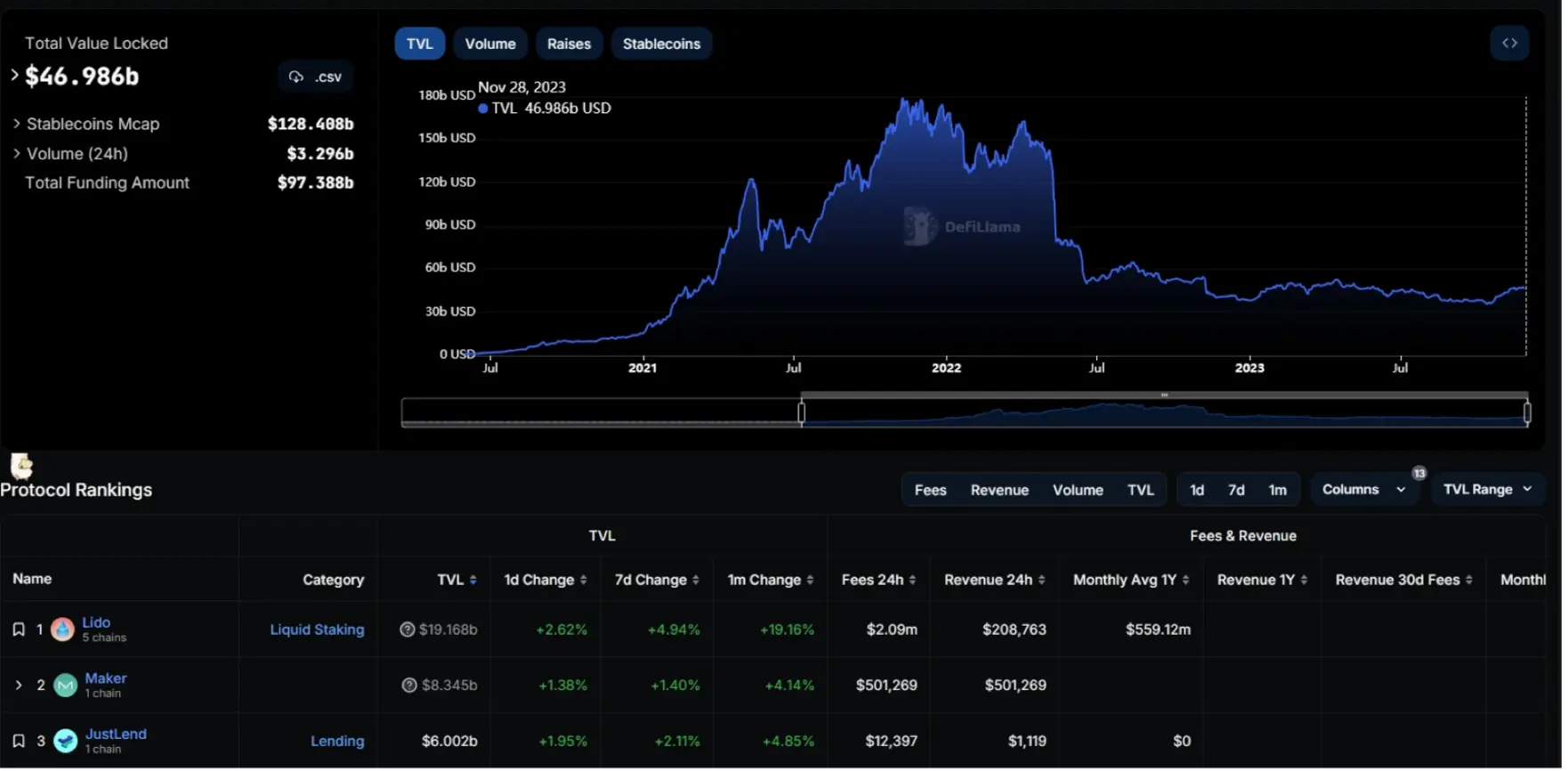
Figure 3: Total Locked Value, Source: Defillama.com
In terms of the proportion of public chains, Ethereum accounts for 56%, occupying an absolute advantage, and TRON accounts for 16%, ranking second. In terms of projects, Lido, Maker and Justlend rank among the top three in terms of TVL, with Lido’s TVL accounting for 41% of the TVL of the entire chain.
In terms of income, Maker ranks first with a daily income of US$500,000. Among the top twenty revenue-generating projects, eight are exchanges or derivatives exchanges, and three are lending protocols. Exchanges and lending are still the leading protocol types for obtaining value in DeFi, and of course the competition is also the fiercest. According to statistics, there are currently more than 1,000+ decentralized trading protocols distributed on 234 public chains.
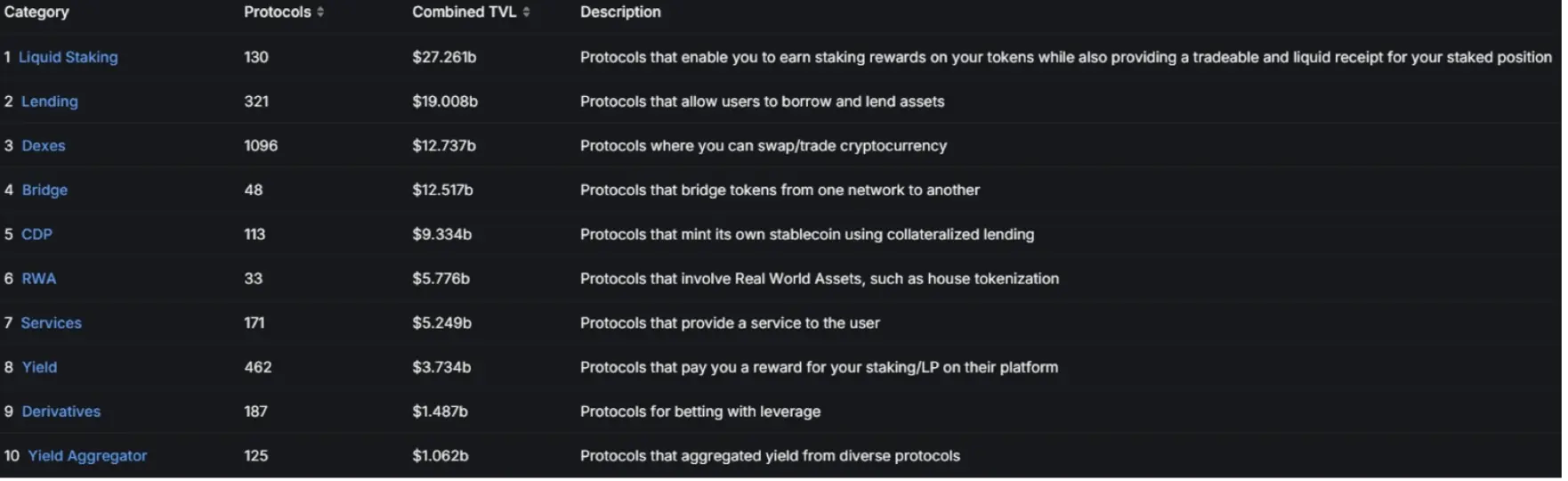
Figure 4: DeFi category, source: Defillama.com
2. Real World Assets (RWA)
RWA (Real-World Assets) - Real-world assets are a new DeFi theme that must be mentioned in 2023. It has attracted a lot of attention in the relatively sluggish market. Generally speaking, RWA mainly focuses on integrating real-world assets through The off-chain and on-chain rights are confirmed to realize the transfer of off-chain assets and their accompanying benefits to the chain. As a legal stablecoin of RWA, it has shown its important use cases in the cryptocurrency market, and RWA assets bound to other real-world assets have exploded in 2023. Here, MakerDAO’s US Treasury bond RWA has reached 2.8 billion. The scale of US dollars has taken the first step in the large-scale application of RWA. Avalanche also tries to provide a good on-chain platform for traditional institutional capital by developing the RWA ecosystem.
The macro background here is that the Federal Reserve is raising interest rates and U.S. Treasury yields are rising to 5%. In 2023, when the overall revenue of the DeFi market is at a low level, real-world revenue is transferred to the chain, which is also a smooth process. Of course, the advancement of RWA in the future requires a large amount of off-chain infrastructure, the improvement of supervision, and the advancement of on-chain oracles, wallets, and cross-chain technology. However, in any case, the door to real assets on the chain has been opened, and we have the opportunity to 2024 sees the potential for more RWA assets.
3. Decentralized Stablecoin
For the mainstream stablecoins USDT and USDC in the market, one voice has always been to criticize them for the risk of being too centralized. Currently, USDT and USDC occupy more than 90% of the market share, and the USDC de-anchoring incident in March has increased In addition to the market discussion on the risks of centralized stablecoins, the crypto market has been trying to create a crypto-native stablecoin that is as far away from the risks of the traditional world as possible from the beginning. As of now (November 29), there are more than 120 stablecoins issued using over-collateralization (CDP) on the market. At the same time, a trend we will see in 2023 is that major DeFi protocols are developing their native decentralized stability. Coins that have been launched include crvUSD issued by Curve and GHO issued by AAVE. CrvUSD currently has a circulation of 140 million, and AAVE has minted 3.48 million GHO on Ethereum. Although there are many challenges that have not yet been solved in the development process of decentralized stablecoins. For example, GHO has never reached the price anchored at 1 US dollar since its launch. However, in the future we expect to see the emergence of more native crypto stablecoins, reducing the need for Dependence on USDT and USDC.
Bitcoin Track
As 2023 comes to an end, Bitcoin has regained its strong momentum, especially breaking through the $40,000 mark for the first time since October last year. The market has sent clear bullish signals for Bitcoin and its related assets. But here’s the question: Can this momentum continue into next year? Or is it just short-term hype driven by expectations of ETF approval? Today, we will delve into the basic driving factors of Bitcoin’s current rally and share our views on the future development of the Bitcoin ecosystem.
Key factors driving Bitcoin’s growth:
1. Favorable macro environment
At the end of 2023, Bitcoin showed strong momentum compared to traditional TMT stocks. That said, the market has already priced in factors that will lead to lower interest rates in the coming months, and investors expect that the economic recovery may take longer to be reflected on corporate balance sheets. At the same time, investors have been actively seeking various means to hedge against geopolitical conflicts and economic crises in 2023. Due to its inherent value storage properties, Bitcoin has gradually evolved into “digital gold” and is regarded by investors as a new alternative asset.
2. Expected institutional fund inflows
In Bitcoin trading, a key factor driving market sentiment is the active use of Bitcoin spot ETFs by various traditional asset management companies. This reflects the traditional market’s acceptance and recognition of the investment value of Bitcoin. On the other hand, the approval of the Bitcoin spot ETF is expected to bring new capital inflows and liquidity from the institutional market (participants include authorized participants and market makers), thereby promoting further active trading activities in the Bitcoin market and improving capital efficiency. further improvement.
In addition, traditional financial institutions such as Standard Chartered Bank, Nomura Securities (Laser Digital), United Overseas Bank, and JP Morgan Chase have also taken the lead in promoting the adoption of Web3 by formulating Web3 strategies and establishing Web3 investment departments. This further strengthens the bullish sentiment of traditional financial institutions towards Bitcoin and the broader crypto ecosystem, and brings potential new capital inflows.
3. Bitcoin Halving
Bitcoin’s next halving will occur in the second quarter of 2024. The halving event occurs every four years, and the block reward for each Bitcoin mining is cut in half. This mechanism significantly reduces Bitcoin’s inflation rate. Based on historical trajectory, the market generally expects Bitcoin prices to reach an all-time high within half a year after the halving. Driven by expectations of capital inflows from traditional institutions, demand in the Bitcoin market has significantly exceeded supply, further pushing up the price of Bitcoin.
4. Innovative breakthroughs in the Bitcoin ecosystem
Bitcoin’s POW blockchain was originally designed for value transfer and lacked composability. The latest breakthroughs in technical architecture brought by new standards such as taproot and ordinarys have improved Bitcoin’s composability, programmability and transaction efficiency, further unleashing Bitcoin’s capabilities in trustless pledges, complex DeFi strategies and even games. potential. Bitcoin, an already widely penetrated blue-chip cryptocurrency, is expected to gain wider adoption in the near future, aided by technological advancements.
Based on the above factors, we are optimistic about Bitcoin’s growth in the coming year. The past year of active product development shows that there are several key areas of the Bitcoin ecosystem worthy of attention:
- Developer SDK and Marketplace: Oyl, Unisat
- ZK Rollups:Bison、Chainway、Alpen Labs
- EVM L2/scaling solutions: Botanix Labs, B2 Networks, Bitcoin Wizard
- Side chain: Liquid Network, Threshold Network
- Pledge: Babylon
Collectively, these developments and initiatives demonstrate that the Bitcoin ecosystem presents a dynamic and ever-changing landscape, laying the foundation for continued growth and innovation in the foreseeable future.
SocialFi Track
Starting in 2021, the SocialFi track will gradually enter the field of vision of users in the encryption field. Similar to the social and entertainment attributes of chain games, it is considered to be a phenomenal track that can bring a large amount of new Web3 user traffic. Compared with the relatively cold situation of the entire track in 2021-2022, some gameplay and design innovations in the SocialFi track in 2023 have gained a lot of traffic. As shown in the figure below, the entire SocialFi track has experienced good development in the past year. The cumulative wallet interactions of mainstream projects are close to more than 4 million times, and new projects such as Galxe, Friend.Tech, and Sismo have also gained a lot. flow.
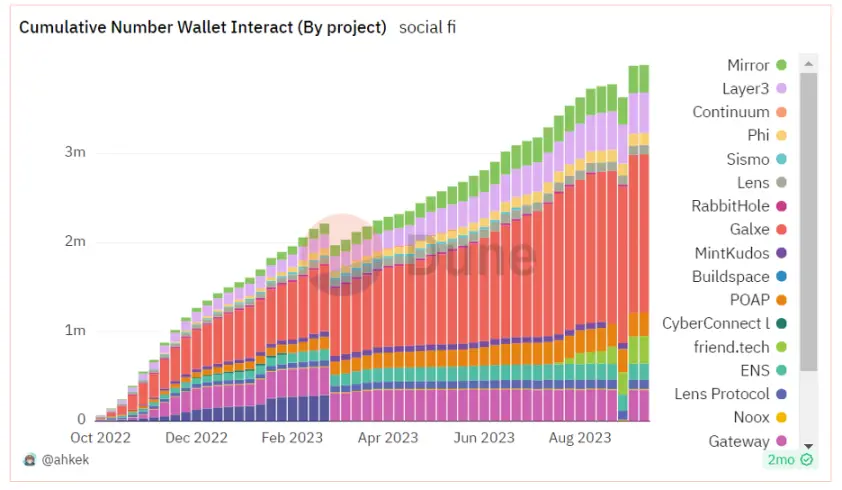
Figure 5: Cumulative number of wallet interactions for each project, source: dune.com
From the perspective of specific chains, the current main SocialFi project interactions are concentrated on Polygon and Base chains, and other chains currently receive less traffic in the social field. In addition to providing stable network, fast computing speed and low interaction costs, Polygon has actively developed various games, NFT and other application projects in the ecosystem in the past 1-2 years, while expanding its audience base and cooperating with Web2 The cooperation with large IP institutions has harvested a large amount of traffic from both inside and outside the encryption field, showing continued and stable traffic growth in the entire SocialFi track. Base benefits from the large amount of traffic brought by Friend.Tech and currently accounts for half of the traffic on the SocialFi track. Community-related traffic growth for other chains such as Ethereum and BNB is relatively slow.
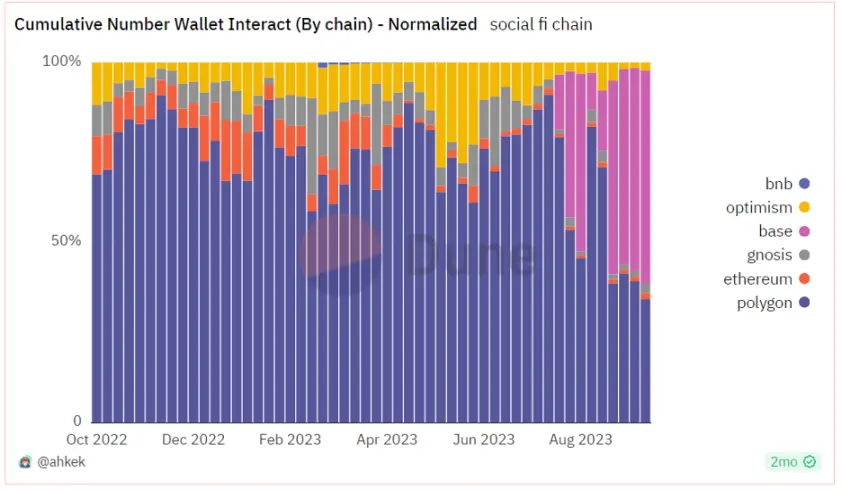 Figure 6: Cumulative number of wallet interactions for each chain, source: dune.com
Currently, projects on the SocialFi track are mainly divided into three mainstream development directions:
1. Social Infrastructure
Social infrastructure is the basic construction and common tool of the entire SocialFi track. A unified, simple, and convenient infrastructure will help lower the user threshold, reduce usage barriers between different Dapps, and accumulate more users and data. Projects such as Galxe, Lens, and CyberConnect cut in from various dimensions, connect users and undertake Dapp products in many aspects, and have become the traffic entrance and interface of the Web3 SocialFi track. As ecological projects further mature and explode, this track is expected to usher in periodic traffic growth opportunities.
2. Social Dapp
Social Dapp is currently the largest project category in the entire SocialFi ecosystem, showing a development trend of hundreds of flowers blooming. From the perspective of project types, it includes post forums, fan platforms, video streaming media, social games, social identities and other types and gameplay methods. Dapp is the type of ecological project that has the most direct binding and contact with users. In 2023, some projects have achieved good development results, among which Friend.Tech’s ecological development results are the most eye-catching. It has successfully achieved traffic breakthroughs through ingenious economic design and capital bonus and other factors, which has also laid the foundation for subsequent developments. The development and design of social projects provide better reference samples and design routes. At present, the main development direction of social Dapp is focused on the traffic growth caused by decentralized censorship resistance and interesting gameplay, which respectively meet the attribute needs of social privacy and social games. This track currently has a large number of project developers and active players, nurturing the Alpha projects of the SocialFi track for the next round of bull market. Some other projects such as Facaster, Nostr and RepubliK also have a certain amount of discussion in the market. Generally speaking, most of the current social Dapps are in the middle stage of development, and the products have been launched or are in test operation. In the future, with the launch of infrastructure projects, Dapps may have a concentrated wave of project launches or token launches.
3. Social robot
Social robots are another project type attracting market traffic on the SocialFi track in 2023. It mainly includes three categories: trading robots, harvesting robots and question and answer robots. Representative projects include Unibot, Banana Bot, Wagie Bot and LootBot, etc. The project is mainly created based on Telegram, and implements business-type applications such as encrypted transactions on this social network platform with 800 million monthly active users worldwide. Strictly speaking, social robots are derived from the Web3 project type derived from Web2 social. Its convenience greatly reduces the entry threshold for users and effectively uses the advantages of the platform to expand a large number of new cryptocurrency users. This type of Web2-friendly projects has a broad market. needs and development prospects. Similar to games and social Dapps, social robots are also one of the incremental tracks for the next bull market.
In general, the Web3 SocialFi track is in the early to mid-stage of development and relies on the maturity of other infrastructure construction, including but not limited to cross-chain information transmission, data storage, reduction of transaction costs, and compliance issues. The current SocialFi track project types mainly include social infrastructure, social Dapp, social robots and other social tools. Among them, social Dapp has the largest number and widest categories, and is the track Alpha product that is most likely to breed the next round of bull market. Currently, a large number of developers are developing Web3 social products, and capital is gradually paying attention to and investing in this track. With the launch of some popular projects and token issuance, the market popularity of the SocialFi track is gradually increasing. While the SocialFi track presents opportunities, one should also be fully aware of the imperfect infrastructure construction, new user growth bottlenecks, and potential compliance issues faced by the track. Generally speaking, the encrypted social track is expected to have a concentrated number of mature projects, launches and currency issuances in 2024, with good investment potential and development prospects.
GameFi
In 2021, the game track received a large amount of traffic and capital support, and then the industry suffered a cold spell in 2022. The shrinking wealth effect caused the game track that relied on gold to gain user growth to suffer a Waterloo-like cold spell. The overall performance of the game track in 2023 is relatively stable. As a traffic-based track born in the bull market, issued currency chain games have experienced a long period of consolidation during the entire bear market. A large number of chain game projects financed at the end of the bull market have also basically entered the market. At the end of development, it is expected that the game track will still have good traffic effects and project performance during this cycle.
Judging from the data in the chart below, game projects will continue to grow in 2023. Currently, according to project data statistics from Footprint Analytics (data as of December 1, 2023), there are currently more than 2,600 blockchain game contracts in the market, the circulating market value of issued currency projects exceeds US$6.5 billion, and the single-day transaction volume exceeds US$6 million. , the number of daily active addresses exceeds 1 million, and the overall market still maintains a certain degree of activity in the bear market.
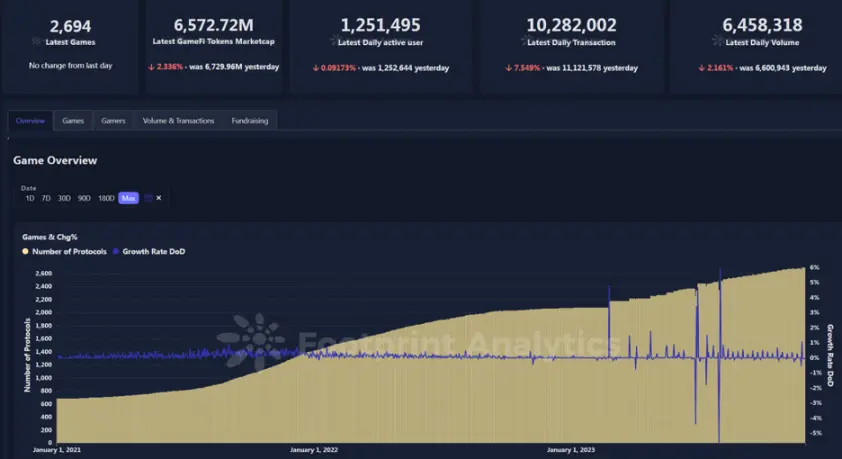 Figure 7: Number and growth rate of game protocols, source: footprint.network
From a specific ecological perspective, the current number of daily active addresses in the entire market exceeds one million, and absolute traffic is concentrated on the Wax chain. Thanks to its low interaction costs and fast settlement experience, Wax has maintained its highest market share despite the bulls and bears. Other public chains such as Near, Celo and Polygon also have certain market shares.
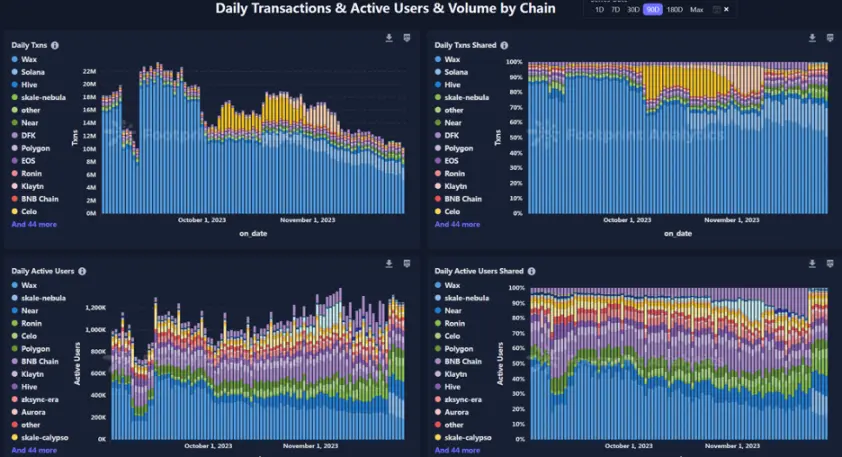
Figure 8: Number of daily transactions, number of active users and transaction volume of each chain, source: footprint.network
As far as the development of the GameFi project is concerned, in general, thanks to the development and maturity of entrepreneurial projects in the last bull market, the growth of game projects in 2023 has increased compared with 2022. BNB is still the ecology with the most game projects at present, with Polygon, Ethereum, Wax follows closely behind and has a certain market share in the deployment of game ecological projects.
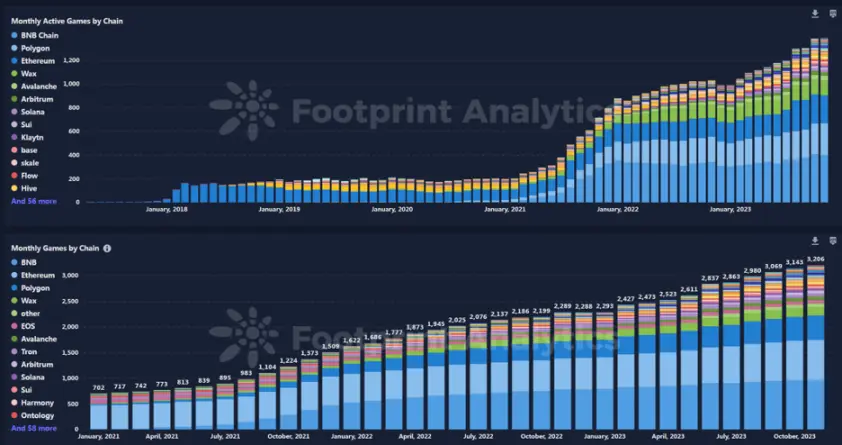 Figure 9: Number of monthly active games on each chain, source: footprint.network
The overall ecosystem of chain games will show a steady development trend in 2023, and this track is expected to still perform well in the next bull market. Different from the last bull market driven by token economics, the driving factor of the next bull market may return from gold farming to entertainment itself, and the long-term entertainment attributes of games will be priced. As the most anticipated user traffic track in the Web3 field, the next round of bull market is expected to achieve a breakthrough in convenience in user access thresholds, helping more web2 users to seamlessly experience chain games. In addition, in terms of game types, in addition to traditional on-chain games, well-made 3A games and full-chain games have become the key development routes of this bear market. 3A games are expected to achieve significant user growth with their large production and playability , and the exploration of full-chain games is expected to realize the interaction of new asset types and the upgrade of gameplay, achieving richer game design and experience.
2024 Outlook Summary
As 2024 approaches, HTX Ventures is at the forefront of change in the blockchain and cryptocurrency circuit, with optimism for the future and a clear vision. Key trends and developments that will impact the crypto landscape in the year ahead include:
- Trading innovation: The birth of mature trading robots and new trading infrastructure has witnessed the continuous innovation of trading mechanisms, implying more dynamic and efficient market interaction.
- Layer 2 evolution: Fierce competition among Layer 2 solutions, driven by the highly anticipated Cancun upgrade, could lead to significant advances in scalability and efficiency, further solidifying the track’s critical role.
- Web3 and X-Fi dynamics: The move to true Web3 projects (e.g., the success of platforms like Friend.tech) signals a more comprehensive approach to integrating social and gaming elements into the crypto space.
- Convergence with traditional finance: The discussion surrounding Bitcoin ETFs and real world assets (RWA), especially regarding the possibility of a Bitcoin spot ETF breakout, highlights the increasing integration of traditional finance and crypto industries, which is expected to mark market growth and mainstream A new era of recognition.
In 2024, HTX Ventures remains committed to leading these advances, leveraging our expertise and insights to support and enhance projects that are not only at the forefront of technological innovation, but are strategically positioned for long-term impact and success. We remain optimistic about next year as we believe in the potential of these trends to catalyze meaningful progress and create new opportunities in the ever-changing crypto landscape.
References:
stablecoins
_date-79658=past90days~


