2024 will be a turning point for the crypto industry.
Source: Decrypt
Compiled by: BitpushNews Yanan
For years, U.S. regulators have mostly had bad words and an unfriendly attitude toward the crypto industry. In 2023, they finally started to get serious.
After crypto giant FTX collapsed in November 2022 due to chaotic management and criminal offenses, Wall Street’s top regulator, the U.S. Securities and Exchange Commission (SEC), had good reason to crack down on a company filled with “scammers, fraudsters and “Scammers’ industry” - in the words of SEC Chairman Gary Gensler.
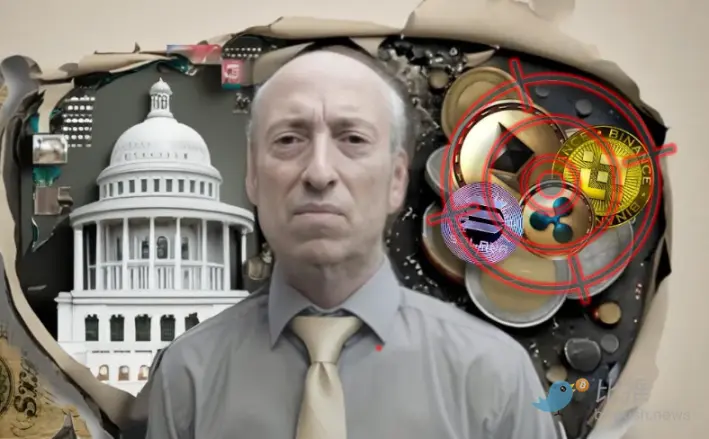
But has the crackdown gone too far?
Some U.S. lawmakers, including pro-cryptocurrency Majority Whip Tom Emmer, have criticized regulators for “stifling innovation in the world’s largest economy.”
Republican Patrick McHenry accused Gensler of wanting to “kill” the crypto industry. Even the court criticized the SEC for “arbitrarily and capriciously” rejecting the application submitted by crypto asset fund management company Grayscale to convert its cryptocurrency fund into an ETF.
Anthony Glukhov, a partner at Ramo Law PC, said in an interview with the media: “The SEC’s crusade against many crypto exchanges appears to be a deliberate plan to exploit the opacity of the law and advance through enforcement. political agenda, but this may not be consistent with the Commission’s purported protection of consumer interests.”
But it’s not just the SEC going after major crypto companies: the Commodity Futures Trading Commission (CFTC) and the U.S. Department of Justice are also aggressively pursuing compliance responsibilities against alleged violators in the crypto-asset space.
Gensler said in 2021 that the crypto industry needs to protect consumer rights. When FTX suddenly went bankrupt in November and its now-convicted boss Sam Bankman-Fried was arrested a month later, regulators quickly stepped up their crackdown.
In January 2023, regulators filed the first wave of enforcement actions against Genesis and Gemini. As of late November, Changpeng Zhao (CZ), founder of the world’s largest cryptocurrency exchange, has resigned as CEO of Binance and pleaded guilty to money laundering violations.
A series of regulatory duels are summarized as follows:
January: SEC fires first shot in annual regulatory battle
The SEC moved quickly at the start of the new year, charging crypto lending firm Genesis and crypto-asset exchange Gemini with raising billions of dollars worth of cryptocurrency from hundreds of thousands of investors in unregistered securities offerings.
Gemini CEO Tyler Winklevoss responded that the SEC’s action was “totally counterproductive.”
Genesis, a subsidiary of Digital Currency Group (DCG), filed for bankruptcy later that month, exposing its ties to failed crypto venture fund Three Arrows Capital. The company was the provider of the Gemini Earn program, but after FTX collapsed in 2022, it froze platform withdrawals.
Later that month, stablecoin giant Circle announced it was abandoning plans to go public through a $9 billion SPAC merger—a sign that the regulatory environment for crypto-asset companies was beginning to deteriorate. However, a spokesperson for Circle told the media that the company did not blame the SEC for the failure of the transaction and insisted that Circle never expected the process to be “quick and easy.”
In late January, crypto lending company Nexo took center stage. This is one of the last surviving crypto asset lenders after the collapse of Celsius and BlockFi. On January 19, the SEC reached a settlement with Nexo over the charges. Nexo agreed to pay a $45 million fine for allegedly classifying its loan products as unregistered securities.
February: Kraken escapes danger for now
Kraken was next.
On February 9, the SEC accused the major U.S. cryptocurrency exchange of violating securities laws by failing to register the issuance and sale of its crypto asset pledge services. Kraken paid a $30 million fine but did not admit or deny the SEC’s charges.
A few months later, in an interview with the media, the exchange’s chief legal officer Marco Santori said that working in the crypto industry, being targeted by regulators is expected. He said: “If the SEC or federal regulators never come to you, then maybe you are not trying hard enough.” However, this is not the last time the SEC will knock on Kraken’s door in 2023.
In the same month, the SEC also issued a Wells Notice to the financial technology company Paxos. SEC communicates and negotiates), warning the company that the SEC will take legal action against its involvement in the minting of the Binance USD (BUSD) stablecoin. The SEC alleges that the digital token is a security, which Paxos vehemently denies. Paxos subsequently stopped minting the token and said it would terminate its cooperation with Binance in preparation for the lawsuit.
March: CFTC files first lawsuit against Binance
The CFTC is the first U.S. regulator to file a lawsuit against Binance, the world’s largest crypto exchange. It accused Binance boss Changpeng Zhao and his company in federal court of violating trading and derivatives rules by allowing Americans to trade cryptocurrency options since July 2019.
At that time, Changpeng Zhao used his now-famous number “4” for the first time to refute the accusations, calling them FUD (Fear, Uncertainty, and Doubt).
During this year, Zhao Changpeng often used the number “4”, including when facing “unfavorable” media reports. At that time, the Wall Street Journal and other newspapers cited text messages saying that Binance deliberately avoided tracking and supervision by the US government.
The CFTC’s action marks a critical moment in the regulator’s crackdown on the crypto industry’s largest players. Subsequently, criminal charges will be filed at the U.S. federal level against Binance and its founder.
April: Bittrex becomes another target
In April, the SEC filed a lawsuit against the cryptocurrency exchange Bittrex, accusing it of failing to register as a securities dealer, exchange and clearing agency, and of obtaining at least US$1.3 billion in illegal income between 2017 and 2022.
The move is significant because it marks the first time regulators have singled out some familiar assets in the crypto space as unregistered securities. OMG Network (OMG), Dash (DASH), Monolith (TKN), Naga (NGC), Real Estate Protocol (IHT) and Algorand (ALGO) have all been included in the “blacklist”.
Bittrex said in a statement that it had previously asked the SEC to clarify which currencies were securities, but had received no response. In March, the company shut down its U.S. operations. In August, the exchange agreed to a settlement, but that was only the beginning of its downfall. By November, the exchange will cease operations globally.
June: SEC hits hard
Come summer, the crypto regulatory landscape heats up. After the CFTC sued Binance in March, the SEC launched a lawsuit against the two giants in the encryption industry in June, targeting Binance and Coinbase.
Although the facts alleged in the two lawsuits are different—notably the regulator accused Binance of fraud but not Coinbase on the same count—it’s probably no coincidence that the two lawsuits were filed in the same week.
Another key difference is that in Binance’s lawsuit, Changpeng Zhao is mentioned as the main defendant; while Coinbase CEO Brian Armstrong is mentioned only once in his exchange’s indictment.
In its lawsuit against Coinbase, the SEC alleged that the exchange failed to register itself as a national securities exchange, broker-dealer and clearing agency and offered and sold unregistered securities through its staking service. The company responded that it had “demonstrated a commitment to compliance” and that the SEC’s “enforcement-without-regulation approach” was “harming U.S. economic competitiveness.”
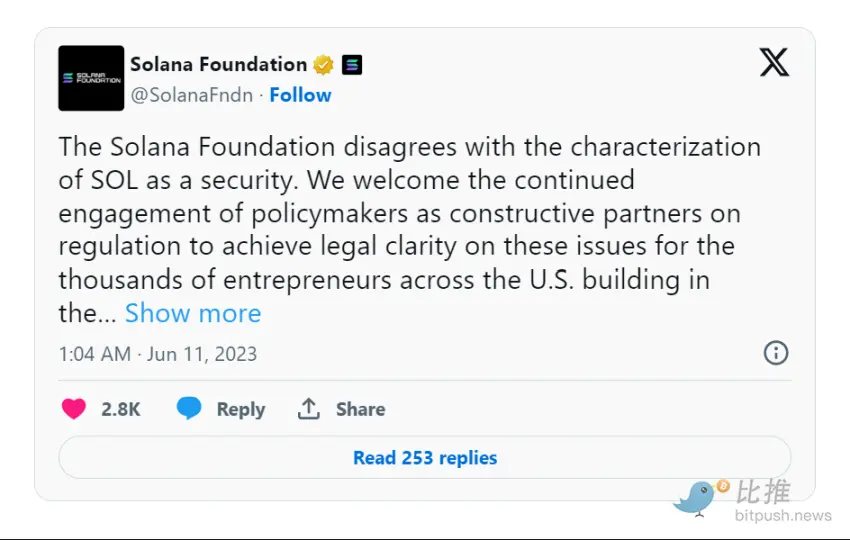
As with its lawsuit against Bittrex, the SEC is once again targeting individual digital assets in its case against Coinbase, only this time, it is naming some of the largest cryptocurrencies for the first time. The list of allegedly illegal tokens includes Polygon (MATIC), Solana (SOL), Filecoin (FIL) and Cardano (ADA).
The SEC also listed Cosmos Hub (ATOM), The Sandbox (SAND), Decentraland (MANA), Algorand (ALGO), Axie Infinity (AXS) and COTI (COTI) as unregistered securities in the lawsuit.
Affected by this, the Solana Foundation stood up to defend itself and strongly denied the SEC’s move to characterize Solana as a security. Polygon Labs also issued a statement saying that MATIC “can be widely used, but only outside the United States.”
The lawsuits have caused an uproar in the crypto industry, especially the attack on Coinbase. A group of blockchain advocacy groups issued an open letter claiming that regulators were trying to “usurp the power of Congress” and asked the judge presiding over the case to dismiss the case. .
Wall Street star Cathie Wood said that the SEC “tried to treat Coinbase and Binance as the same type of target, but in fact they are different in many ways” and claimed that Coinbase’s lawsuit was not that serious.
Cathie Wood’s above-mentioned remarks are also justified-Binance has been targeted by the authorities for some time. The SEC made serious accusations against Binance in its lawsuit, making one point clear: it was involved in fraud and commingling of funds.
Most shockingly, the SEC also claimed that billions of dollars in customer funds flowed into bank accounts of companies controlled by Changpeng Zhao.
Binance and Changpeng Zhao later settled with the CFTC and will face more serious criminal charges.
July: Celsius and LBRY in regulatory spotlight, but Ripple gets a moment of respite
Nearly all regulators went after crypto lending company Celsius in July, a year after its collapse. The company’s former CEO Alex Mashinsky was arrested and released on $40 million bail.
The U.S. Department of Justice, SEC, Federal Trade Commission (FTC) and CTFC have all filed lawsuits against Mashinksy. In short, according to the lawsuit, Mashinksy allegedly lied and repeatedly misled investors about the health of his crypto company, enriching himself in the process. He had been arrested before but was released after agreeing to pay a $40 million personal recognizance bond. His assets have since been frozen and he is awaiting trial next year.
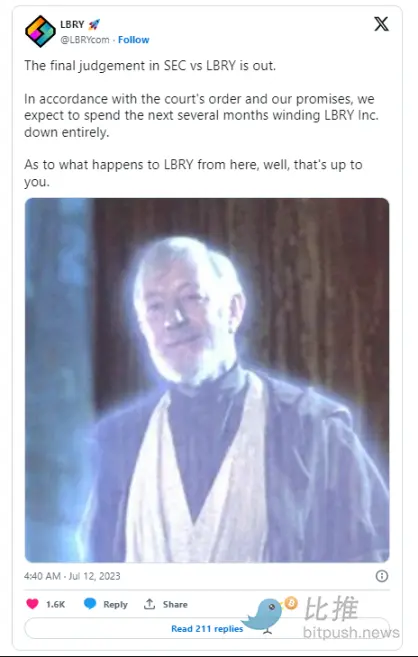
LBRY, Inc. (the project owner of the blockchain publishing platform of the same name) had to cease operations after a long battle with the SEC. Regulators expressed displeasure at the company’s sale of its tokens to finance its projects, arguing that this violated securities laws.
However, the “crypto regulation battle” is not entirely one-sided. In July, the industry witnessed the SEC’s first major setback in its attempt to “regulate through enforcement.”
Ripple is a crypto payments startup whose founders also launched the XRP cryptocurrency—still one of the largest cryptocurrencies by market capitalization. On July 13, Ripple achieved a heartening victory in its battle with the SEC.
Previously, the SEC filed a $1.3 billion lawsuit against Ripple in 2020, accusing the financial technology company of allegedly misleading investors and selling unregistered securities in the form of XRP in 2020. However, the judge ruled in favor of Ripple. Federal District Judge Analisa Torres determined that the programmatic sale of XRP to retail investors (i.e., Ripple’s sale of XRP to ordinary cryptocurrency users on a cryptocurrency exchange) did not constitute a securities transaction.
At the same time, the judge also ruled that the institutional sales contract worth $728 million did constitute an unregistered securities sale, so Ripple was not completely off the hook. Nonetheless, the victory was celebrated by the company and XRP holders around the world. Major cryptocurrency exchanges that had previously delisted XRP relisted the currency, and the price of the coin soared.
Ripple’s chief legal officer Stu Alderoty said he expects U.S. banks to return to the fintech company’s On-Demand Liquidity (ODL) product (Translator’s Note: ODL is a blockchain technology-based solution provided by Ripple , which allows financial institutions to implement cross-border payments and liquidity management more quickly and at low cost.).
August: Grayscale vs. SEC
A month later, the SEC lost yet another court battle with another crypto company — a new situation for the regulator, which has won many battles before.
Grayscale emerged victorious in its long-running tug-of-war with the SEC.
The cryptocurrency fund management company applied to the SEC to convert its Bitcoin Trust into an exchange-traded fund (ETF), but was rejected. Grayscale subsequently sued the SEC in 2022.
In late August, the courts sided with Grayscale, when a U.S. Court of Appeals for the District of Columbia Circuit judge overturned the SEC’s decision to block its ETF plan. The judge said the rejection of Grayscale’s application was “arbitrary and capricious” because regulators had already approved a similar product - a crypto futures ETF.
The crypto market viewed the ruling as positive, and the price of Bitcoin rose as a result. Analysts said the move would help lead to the approval of the industry’s long-awaited Bitcoin ETF.
Meanwhile, Bittrex agreed to pay a $24 million fine to settle SEC charges that it allegedly sold unregistered securities. Bittrex has neither admitted nor denied the allegations.
September: Binance Strikes Back
In September, Binance and its owner Changpeng Zhao fought back against the SEC, demanding that its June lawsuit be dropped. In short, Binance’s legal counsel believes that the SEC has never given clear guidance on the crypto industry and therefore exceeded its regulatory authority.
The exchange also argued that the regulator was trying to “expand its global jurisdiction.” The SEC said that U.S. customers are still using Binance’s global services—even though this is not allowed.
Braden Perry, a former CFTC trial lawyer, said: “Wall Street’s top regulator ‘often takes the view’ that companies must comply with U.S. regulations regardless of where they are located if they provide services to U.S. residents or if their activities have a significant impact on U.S. markets. Securities Law.”
October: Genesis’ regulatory controversy continues
The New York Attorney General’s Office filed a lawsuit against Genesis Global Capital, Gemini Trust and Digital Currency Group (DCG) in October, accusing the three companies of “deceiving investors and attempting to conceal losses of more than $1 billion.”
New York State Attorney General Letitia James said in a statement that “middle-class investors suffered losses” as the three companies allegedly defrauded 232,000 customers worth $1 billion.
A spokesman for DCG said they would fight the charges.
November: Goodbye, Zhao Changpeng
Last month, the U.S. government finally convicted FTX founder Sam Bankman-Fried and Binance founder Changpeng Zhao, two tycoons in the encryption industry, and the battle over encryption regulation reached a climax.
On November 3, a jury convicted Bankman-Fried of seven counts of fraud and conspiracy. Although Bankman-Fried’s lawyers vowed to appeal the verdict and continue to fight the charges, the verdict brings an end to a series of FTX regulatory dramas.
Weeks later, Binance CEO Changpeng Zhao agreed to resign from his role at the crypto company following a settlement with the U.S. Department of Justice. This follows a years-long investigation by the U.S. Department of Justice into the company. Changpeng Zhao agreed to pay a $4.3 billion fine and pleaded guilty to money laundering charges.
At the same time, the SEC filed a second lawsuit against Kraken this year, accusing the San Francisco-based cryptocurrency exchange of commingling customer assets with company funds — and even diverting customer accounts to pay some bills.
Regulators also say Kraken allegedly sold unregistered securities — something the exchange vehemently denies — and put investor funds at risk. Kraken said it would “defend its position.”
December
The past year has been extremely difficult for Changpeng Zhao, the former boss of Binance. A US judge has barred the disgraced crypto tycoon from leaving the country, saying his departure posed a “substantial flight risk” due to his “extreme wealth abroad.” Zhao Changpeng’s sentencing will take place next year.
But what happens next? Not everyone thinks the crypto industry will continue to face difficulties in 2024. Kristin Smith, CEO of the Blockchain Association, said the crypto space is likely “moving towards core regulatory issues.”
“FTX’s decision and the Department of Justice’s settlement of the Binance case should clear the air for Washington,” she said.
“2024 will be a turning point for the crypto industry,” she added.


