Runes protocol, proposed by Ordinals founder Casey Rodarmor. Despite facing challenges from imitation disk projects such as Rune Alpha, Runes has attracted widespread attention in the Bitcoin community, demonstrating its technical potential and application prospects.
Written by: Trustless Labs
1. The debate between real and fake Runes
1.1 Runes Origin
The Runes protocol was proposed by Casey Rodarmor, founder of the Ordinals protocol, on his blog.
Casey said that although he is skeptical about the creation of a fungible token protocol on the Bitcoin network, because of its popularity and no sign of letting up, coupled with the significant transaction fee revenue it can bring to Bitcoin , attracting developer attention and the advantages of user groups, he tried to settle for the next best thing and create a simpler and more efficient alternative token protocol. The protocol promises to optimize token operations in the Bitcoin ecosystem through a simplified UTXO model and an efficient token transfer mechanism.
The Runes protocol supports token issuance, allowing the creation of any number of tokens, as well as setting human-readable symbols and decimal places. Its transfer mechanism is based on tuples of integer sequences involving token ID, output index and allocation amount.
1.2 Runes protocol “fresh” design
Runes protocol features
- You can specify divisibility (the effect is equivalent to decimal), supply, symbol (only supports one length of unicode characters) and rune name when registering.
- The name characters must be uppercase letters, and the length is not fixed. The registration of shorter length runes will be gradually released as the block height increases.
- The name cannot be repeated. There is a unique number starting from 0 according to the deployment order, and a unique id encoded by height and deployment order at the current height. For example, 173940/256 represents the 256th rune deployed at the height of 173940.
- You can add . or • in the name as a separator for name display, which only affects name display and does not affect registration. For example, if you have registered CASEY·RUNES·EVERYTHING, you cannot register CASEYRUNES·EVERYTHING or CASEYRUNESEVERYTHING again.
- The distribution mechanism is to be determined: According to the current code, all supplies will be sent to the registrant’s wallet address during registration, and there should be changes in the future.
Advantages of Runes over BRC-20 protocol
- UTXO-based model: The Runes protocol adopts a UTXO-based system, which is more consistent with Bitcoin’s native architecture. It avoids dependence on off-chain data and has no need for native tokens, which makes the user experience smoother.
- Use OP_RETURN for transfer: The transfer of Runes is implemented through the OP_RETURN script, making the distribution and transfer of tokens more efficient.
- Issuance mechanism: The issuance of Runes is defined through a specific message format, which makes the token flow and distribution process more transparent and clear.
- Higher efficiency: The Runes protocol solves the problems of UTXO proliferation and inefficiency in the BRC-20 protocol. It simplifies the operation process, and only one transaction is required for registration and transfer, thereby improving overall efficiency.
- Reduce on-chain footprint: Runes aims to minimize its on-chain footprint, reducing the generation of bad UTXOs.
- Lightning Network Compatibility: Runes are compatible with the Lightning Network, which opens up new use cases and possibilities for developers and users.
- Destruction mechanism: runes entered into transactions containing invalid protocol information will be destroyed
1.3 Runes imitation disk——Rune Alpha
Due to its theoretical orthodoxy and advanced nature, the Runes protocol has attracted much attention from the Bitcoin community since it was proposed. However, its slow and lagging development progress has also given imitators the opportunity to imitate its ideas to build momentum and make profits.
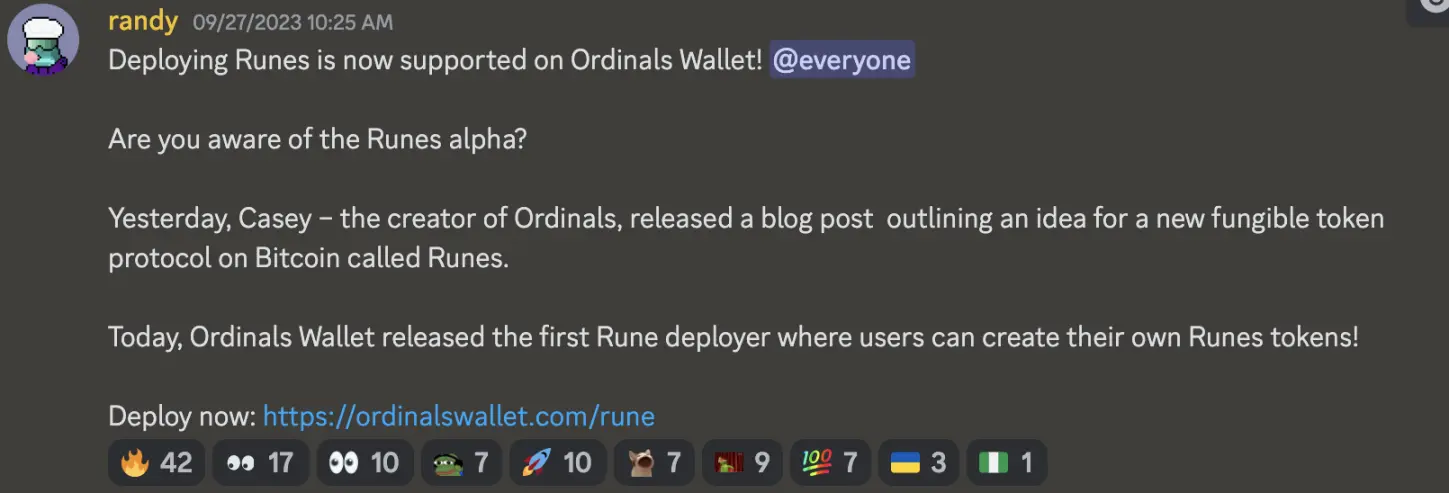
Runes Deployer by Ordinals Wallet
As early as the day after Casey released the concept of Runes protocol, Ordinals Wallet started to deploy “Runes” following its popularity, and at the same time launched an all-round publicity in the community, social media and media. Although Ordinals Wallet captured the first wave of traffic of the Runes concept, as its popularity faded, progress stagnated, and everything came to nothing.
Rune Alpha
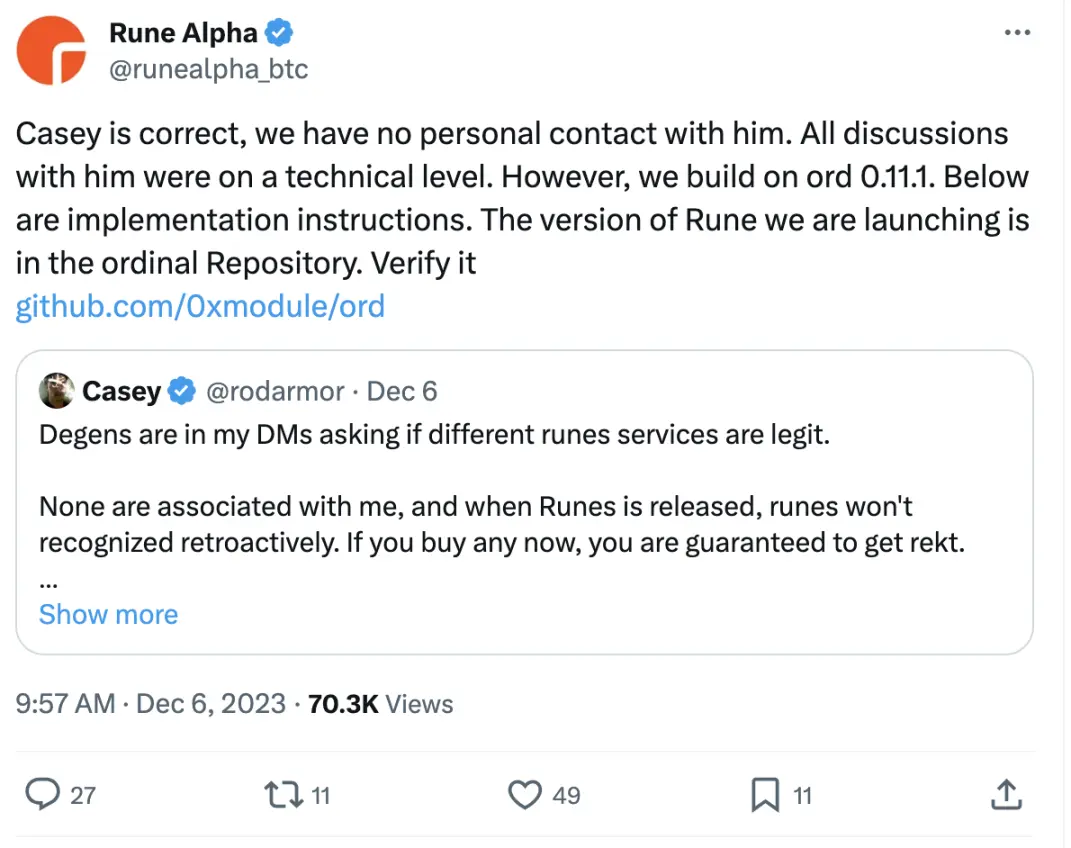
On December 5, the Bitcoin network inscription project Rune Alpha was officially launched, and the first token issued on its main network was $COOK. According to Rune Alpha officials, they have had technical exchanges with Casey. Rune Alpha is built on ord 0.11.1 and written into the Ordinals repository.
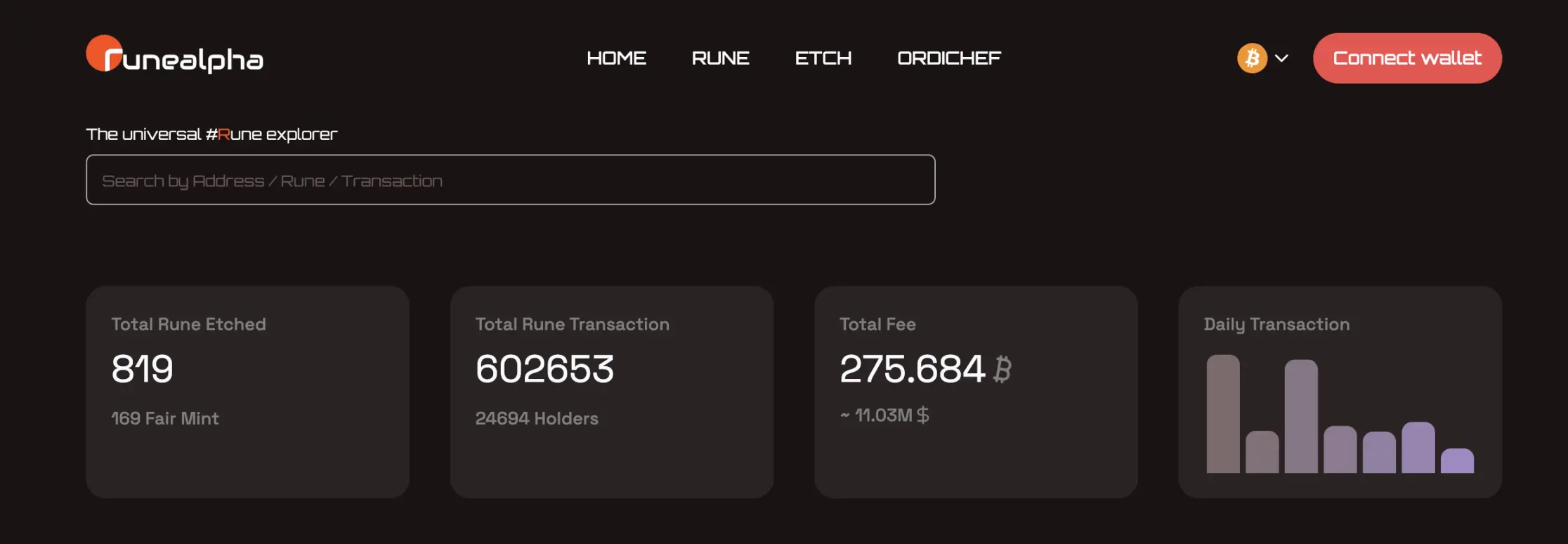
Some users in the Bitcoin community who have been eagerly awaiting the Runes protocol mistook it for the Runes protocol proposed by Casey because the name of the project was highly consistent with Runes. Coerced by the rising market FOMO sentiment, they poured into Rune Alpha to participate. Casting.
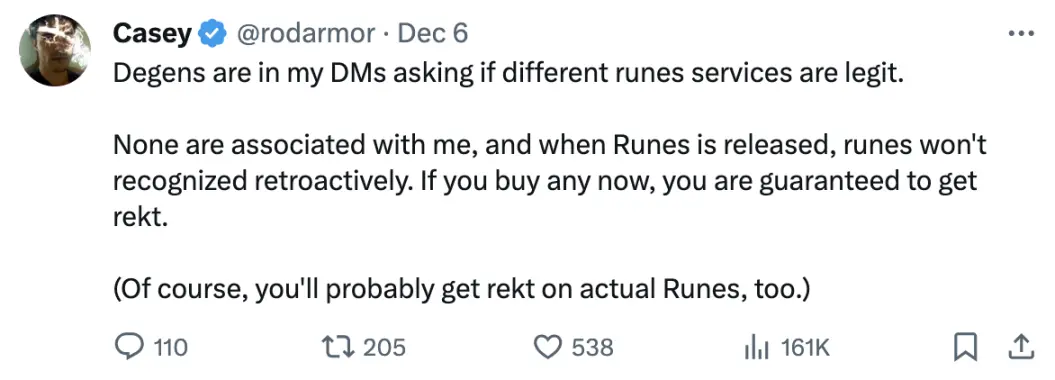
On December 6, Casey tweeted, stating that various Runes-related protocols and services have nothing to do with him. At the same time, when the official Runes protocol is launched, he will not retroactively identify these imitation disks. At the same time, some users said that problems such as assets being transferred and inscriptions being burned as gas occurred during the interaction. According to Rune Alpha, it was due to improper user operation that caused problems with the wallet. “The user has been warned in the Discord community.” .
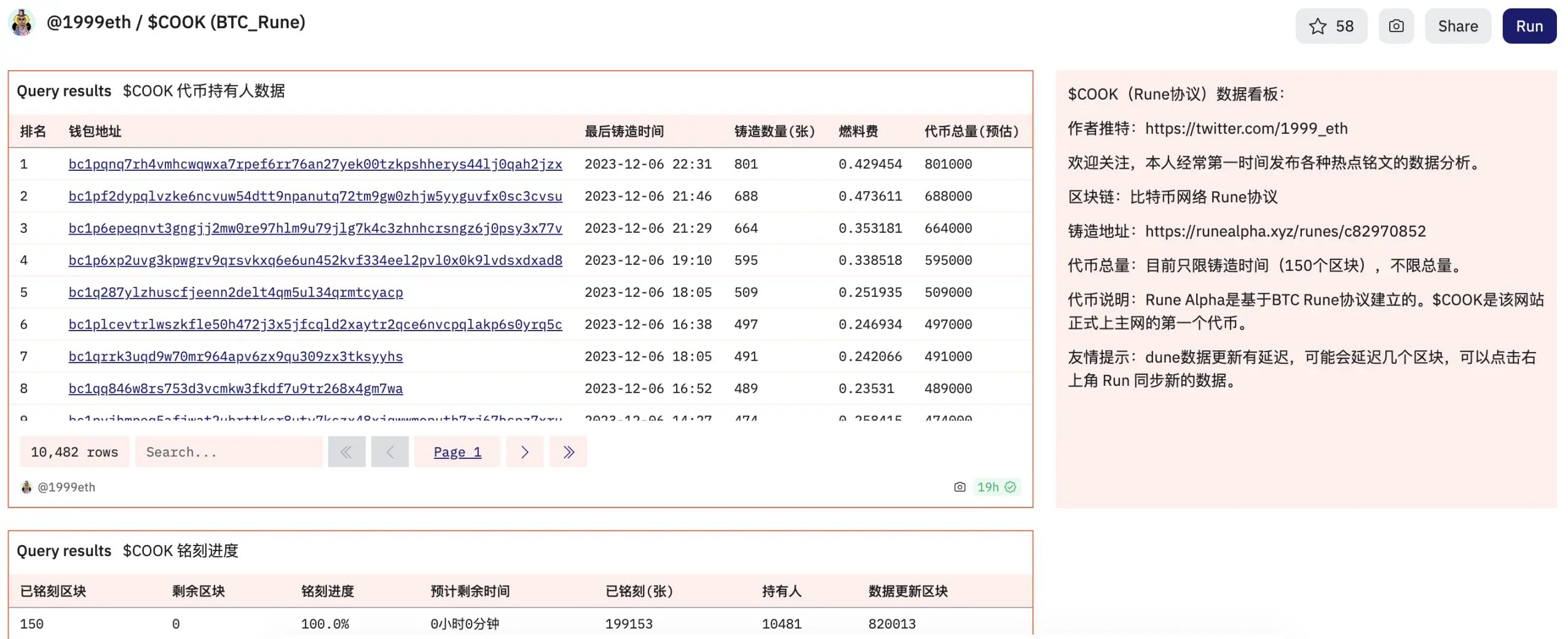
Although Rune Alpha can no longer rely on the “legitimacy” narrative to continue marketing, the market’s FOMO and speculative sentiment still prevail. Rune Alpha’s inscription casting feature is “limited time and no limit”: users can mint within 150 blocks between 819863 and 820013. Each mint can be minted 1,000 pieces, and there is no limit on the total amount. According to dune dashboard data, as of now (12.22 20:50), $COOK has been inscribed in all 150 blocks, with 199,153 pieces inscribed and 10,481 holders.
After Casey’s official Runes protocol was launched on the Bitcoin test network signet, Rune Alpha also responded quickly, deploying tokens on the signet, and tried to prove that Rune Alpha could be used through screen recording operations, data analysis and other evidence. ord 0.13.1 The new version of the official Runes protocol is recognized and indexed. At the same time, Rune Alpha is actively building its Marketplace in response to calls from its community.
However, according to the current code, the official Runes protocol mainnet will start parsing at the block height when Bitcoin is halved, and will only issue blocks after the halving height and comply with Runes protocol standards* *Tokens are indexed.
2. Voice of the community
Warm hug
- Ordinals official community Ordicord
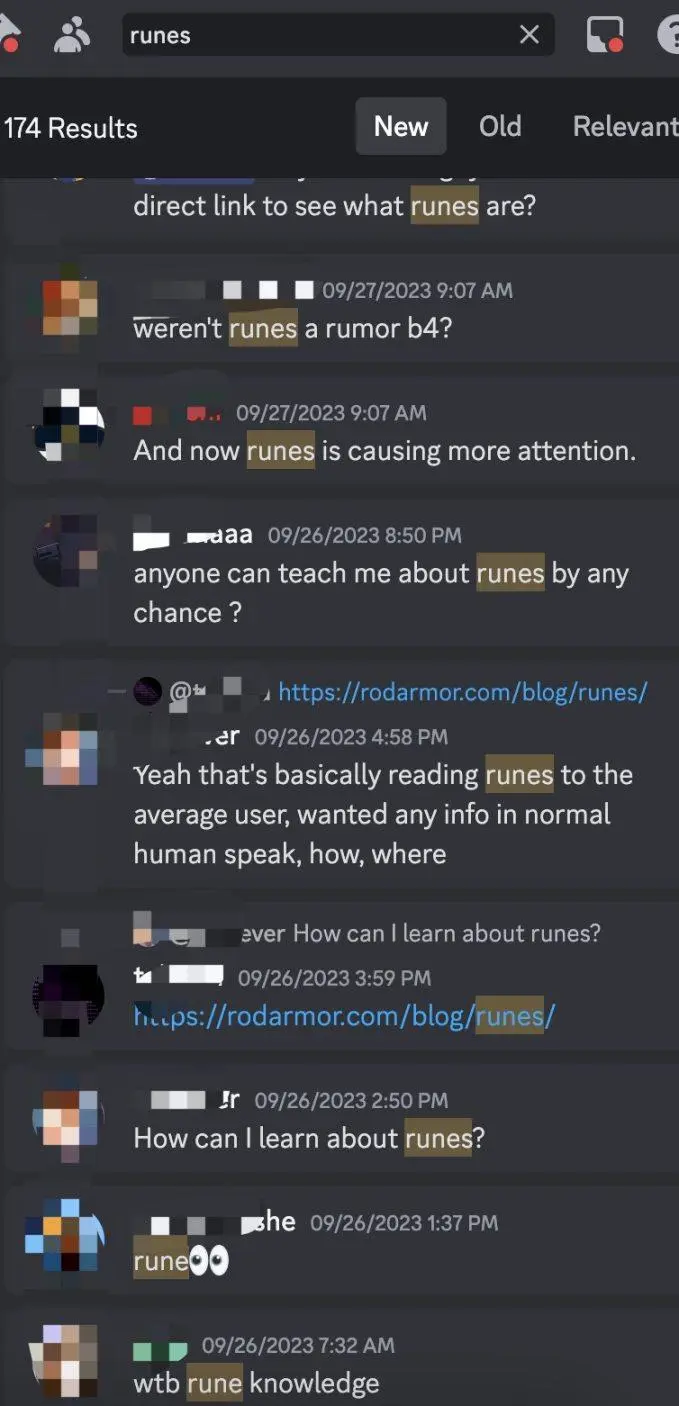
- Beginning in late September, community discussions about Runes began to increase.
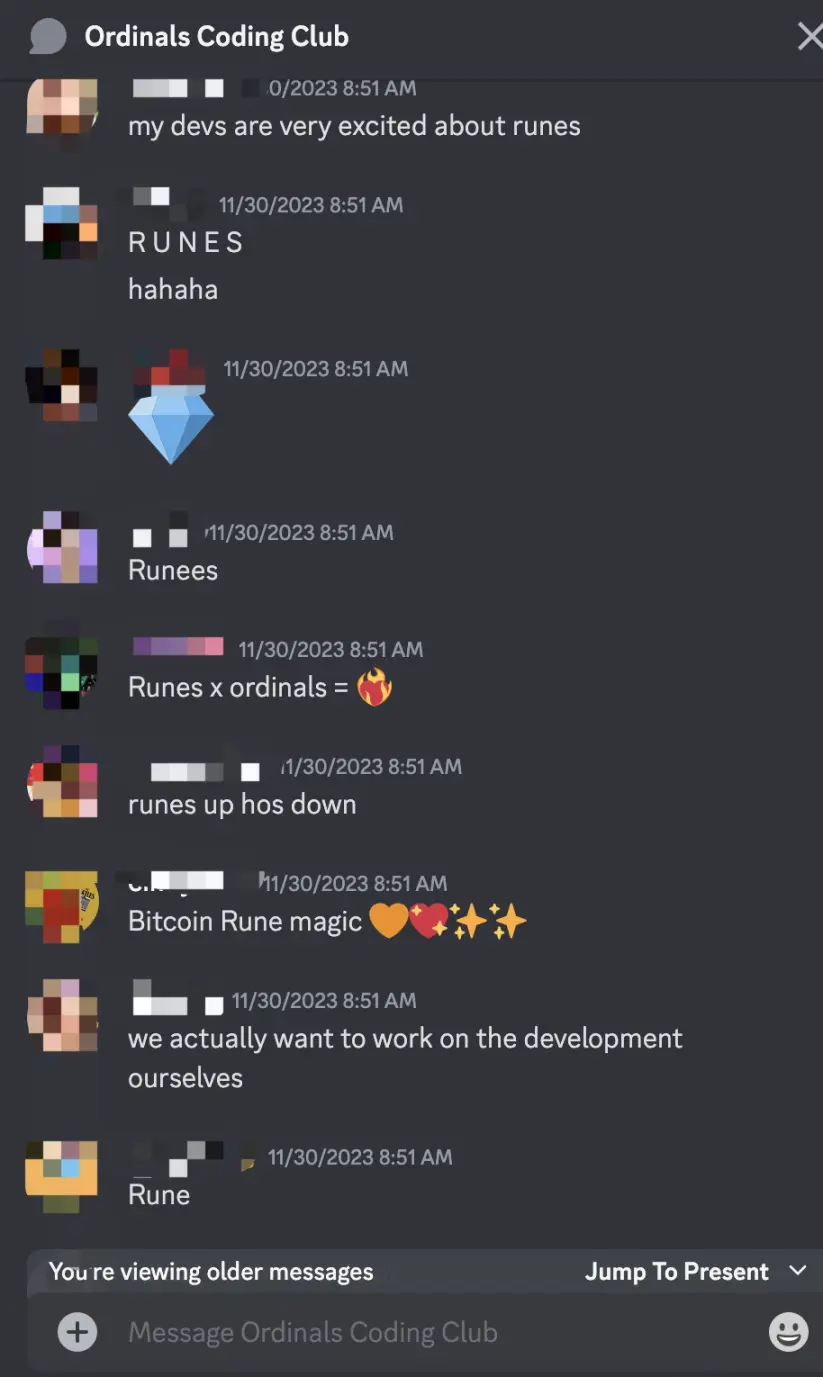
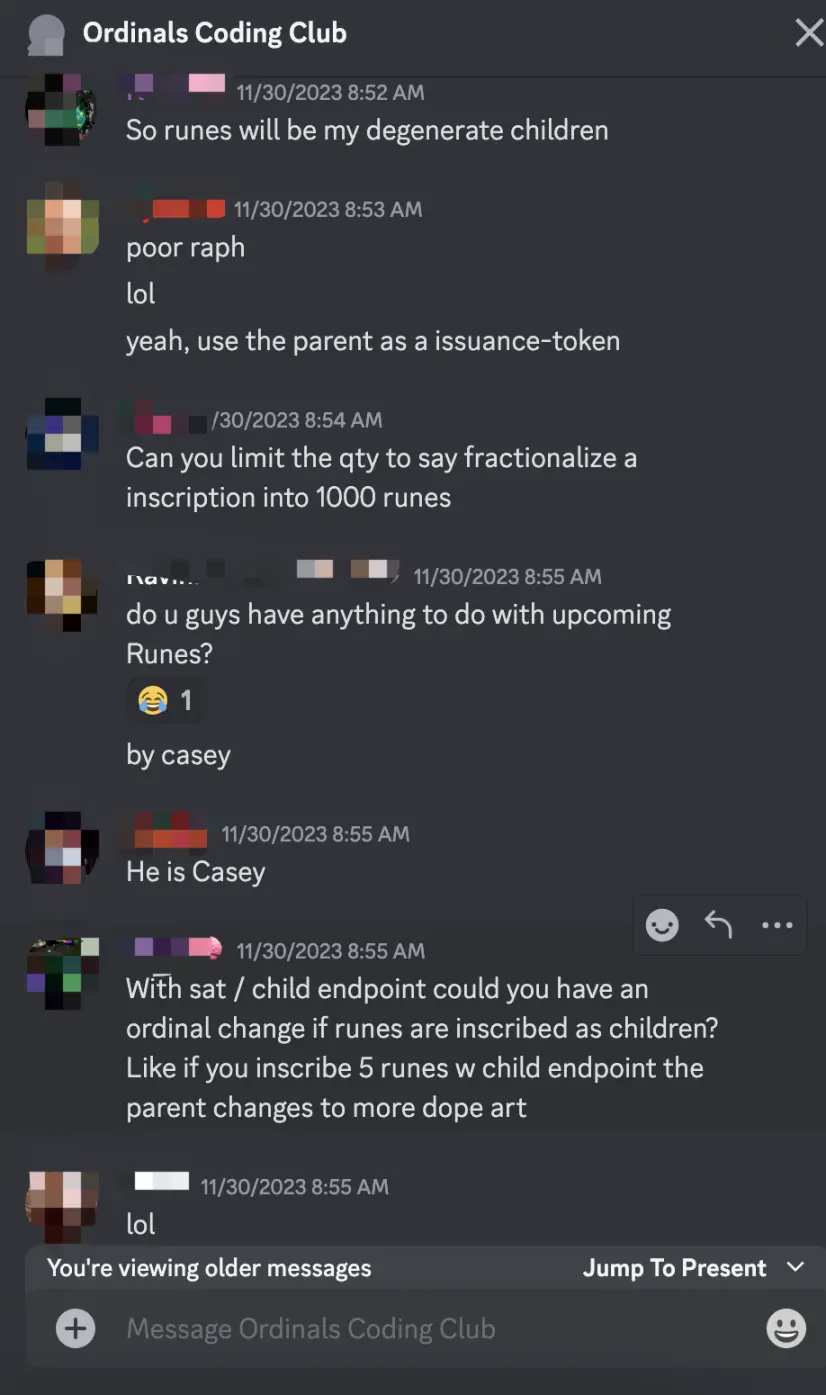
- Since November, there have been a lot of discussions in the community about Runes technology implementation and disk imitation. Users in the Ordinals ecology believe that Runes is an upgraded version based on the Ordinals protocol. They are generally optimistic and full of expectations for the technical progress of the official team. They have a high voice.
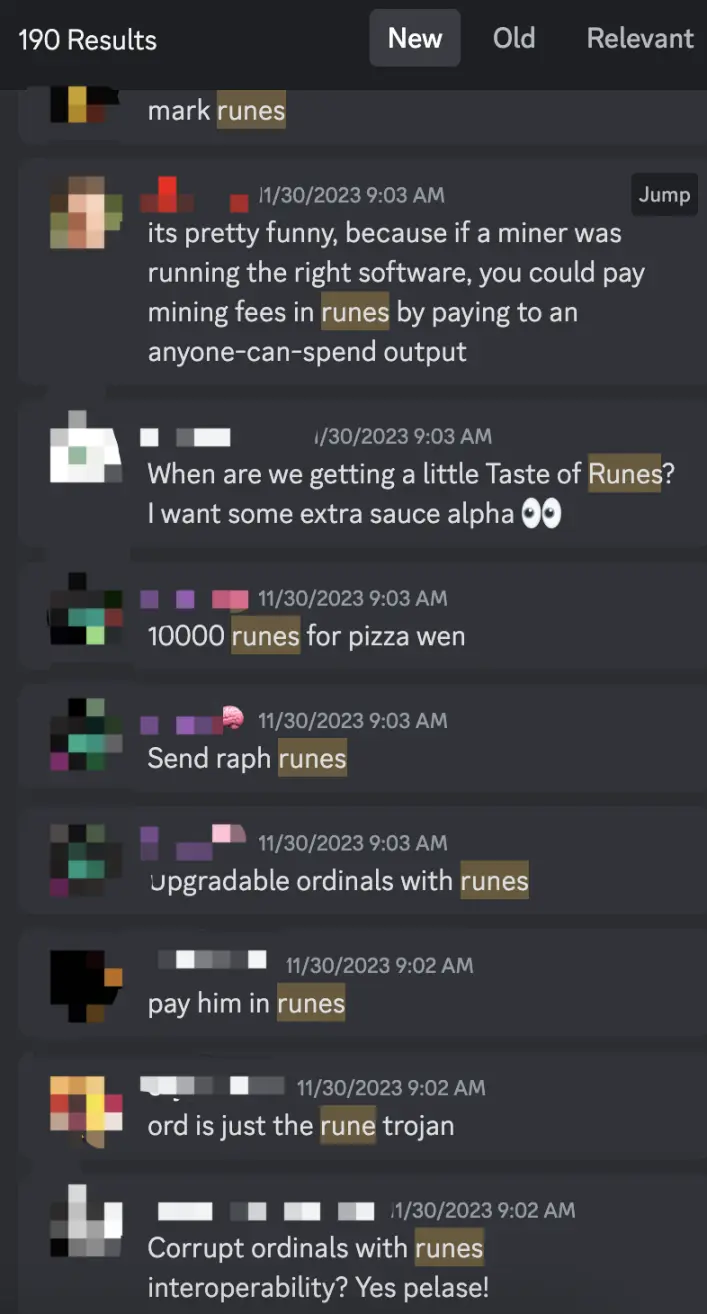
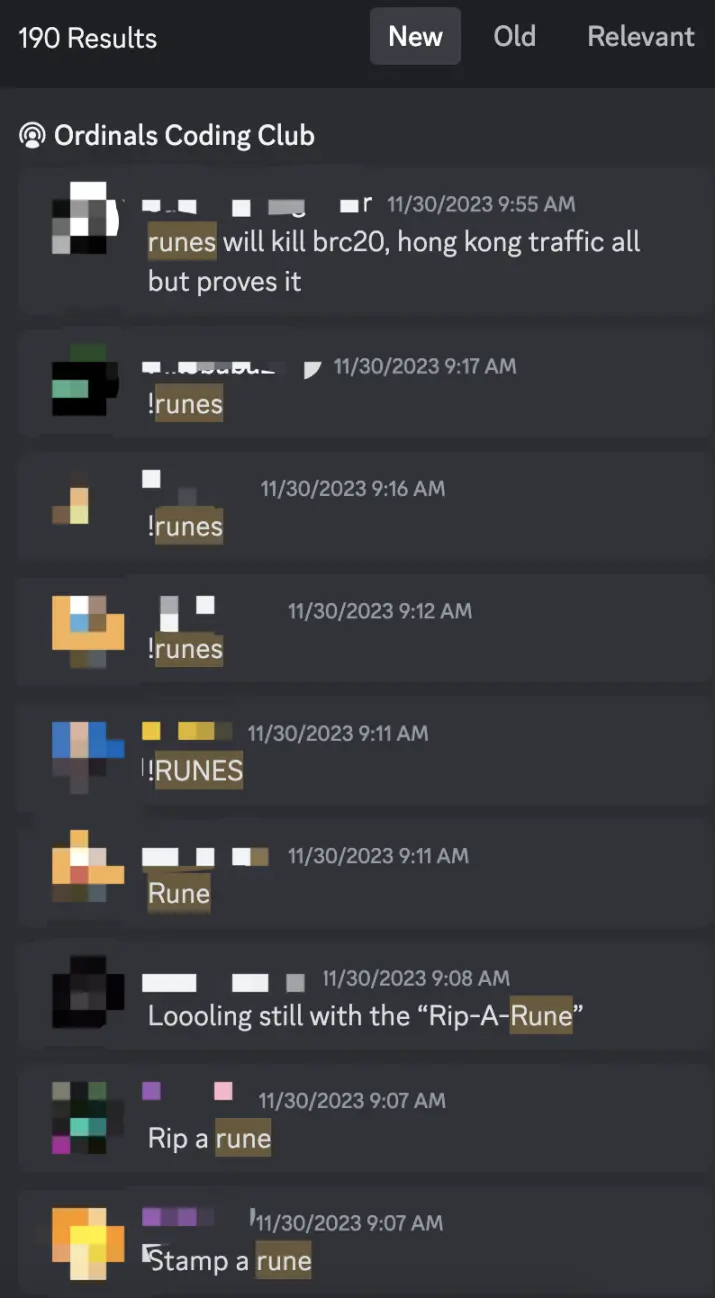
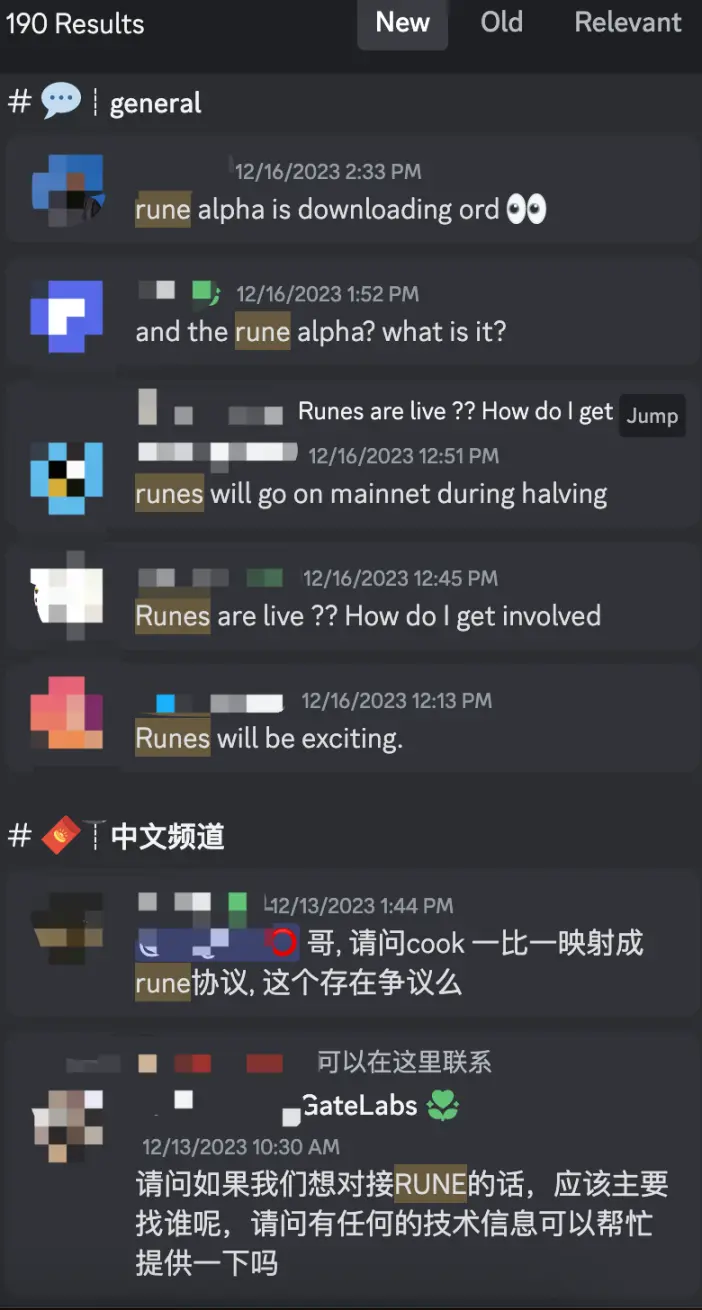
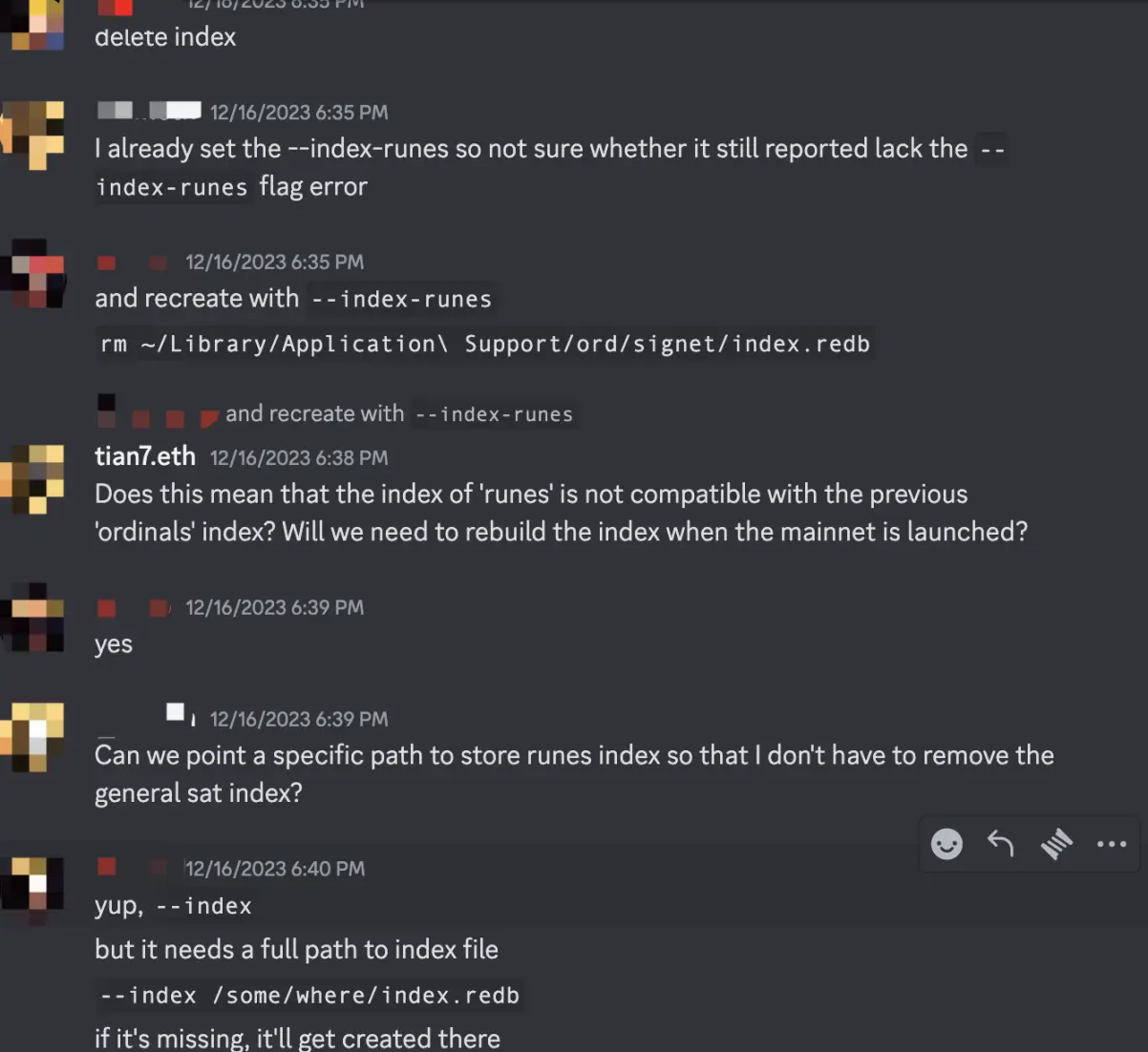
- 12.16 Following Runes’ roadshow at Taipei Blockchain Week, a new wave of discussion emerged in the community. Community users began to notice the imitation disk Rune Alpha, and at the same time asked whether Cook, the first token deployed based on this protocol, could be mapped to Doubts arise over the official Runes protocol.
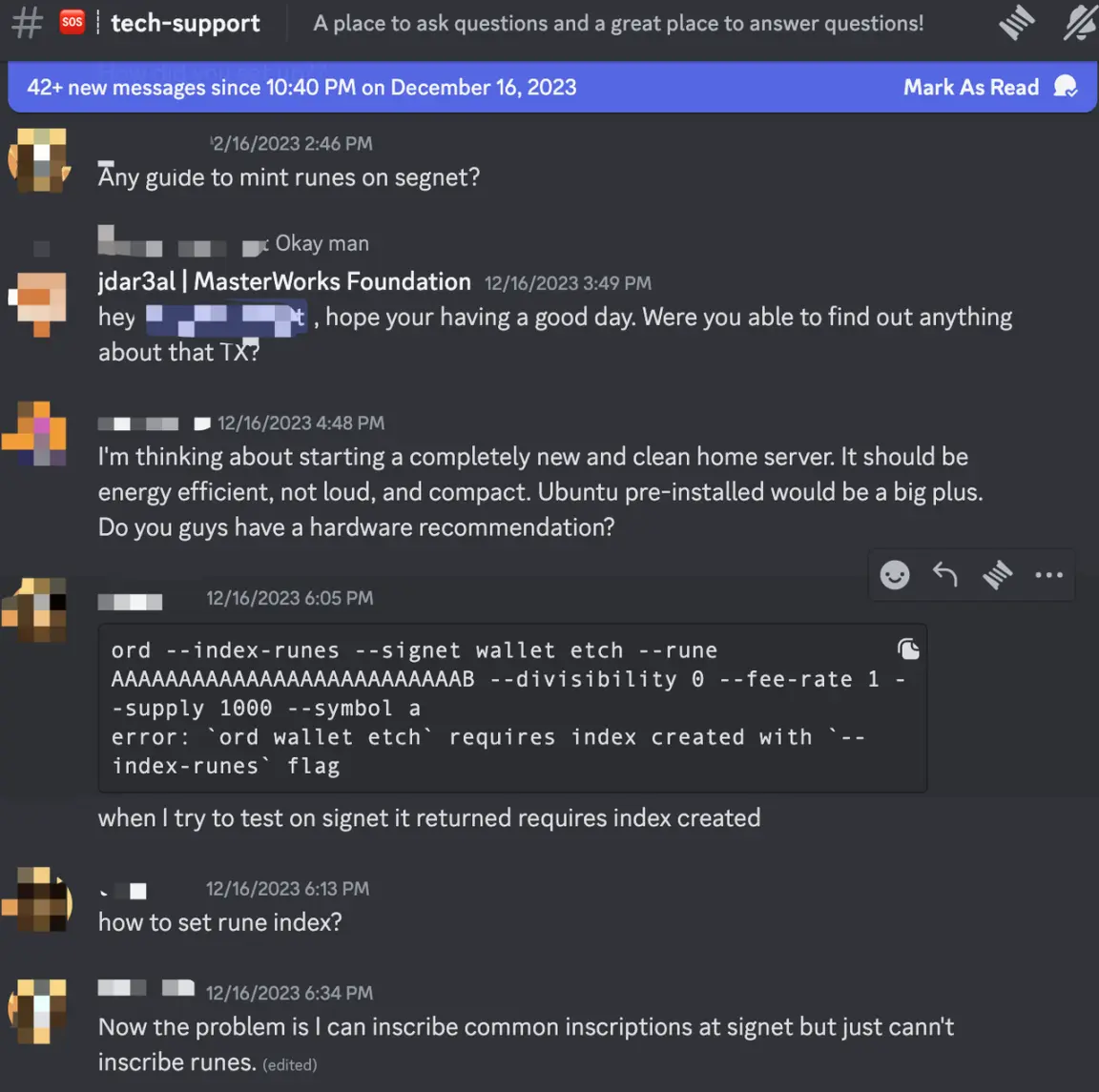
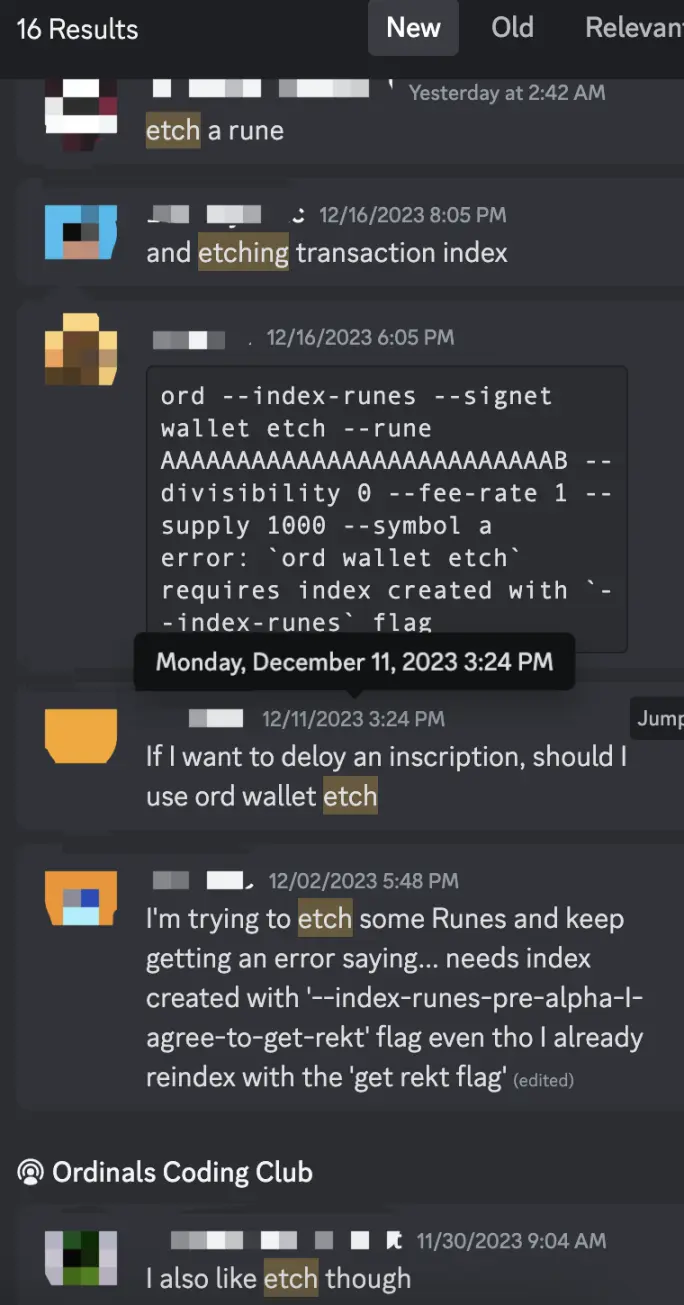
- Users began to actively go to the Bitcoin testnet signet to experience the Runes protocol, and community managers actively assisted users in solving problems.
- Referring to community conversations, it can be seen that the indexes of Runes and Ordinals on the testnet signet are currently incompatible with each other. After Runes is officially deployed to the Bitcoin mainnet, users need to rebuild a unified index.
*Compared with descriptions such as “inscription” and “inscribe” in previous protocols, the Runes protocol uses new terms such as “rune” and “etch”. The subtle changes in the description language also reflect the higher accuracy and lighter weight of the Runes protocol to a certain extent.
- OrdinalHub
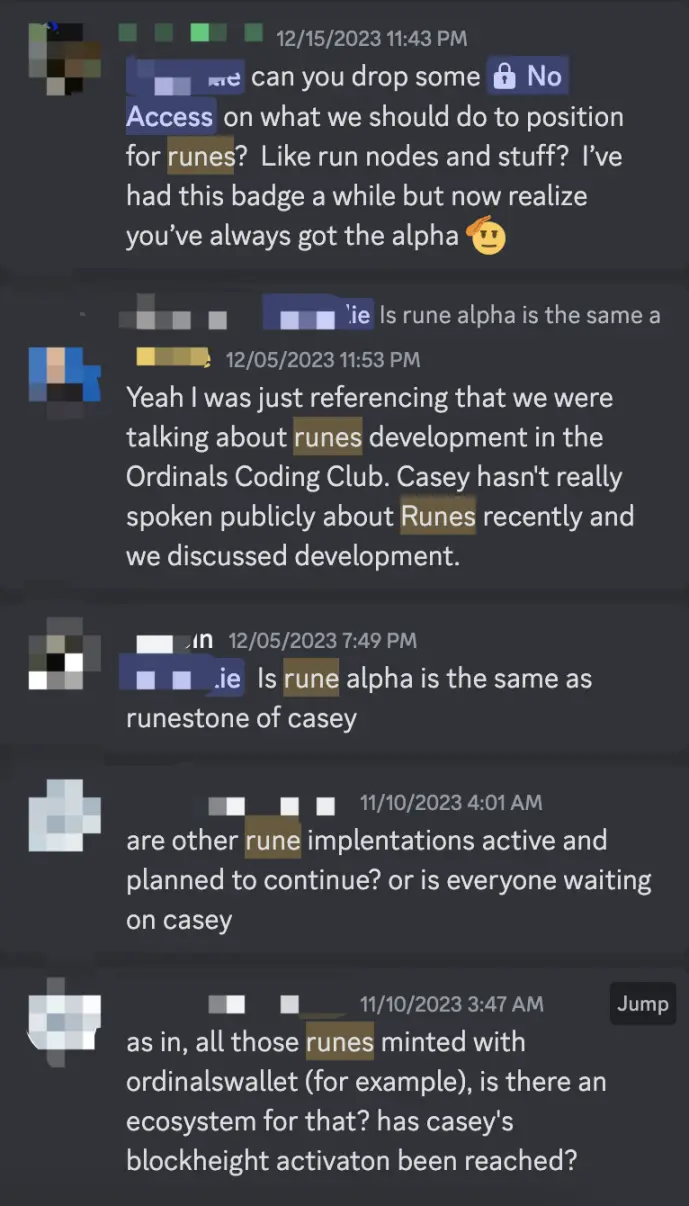
- Users in the OrdinalHub community are also full of recognition and expectations for Runes, and want to actively make their own contributions. However, due to the slow development progress of Runes and the lack of information, they feel somewhat helpless.
- sating.io
Opposition and boycott
UniSat Community
- The UniSat official team expressed great interest in Runes, will keep an eye on the progress of the agreement, and will be fully prepared for technical support.
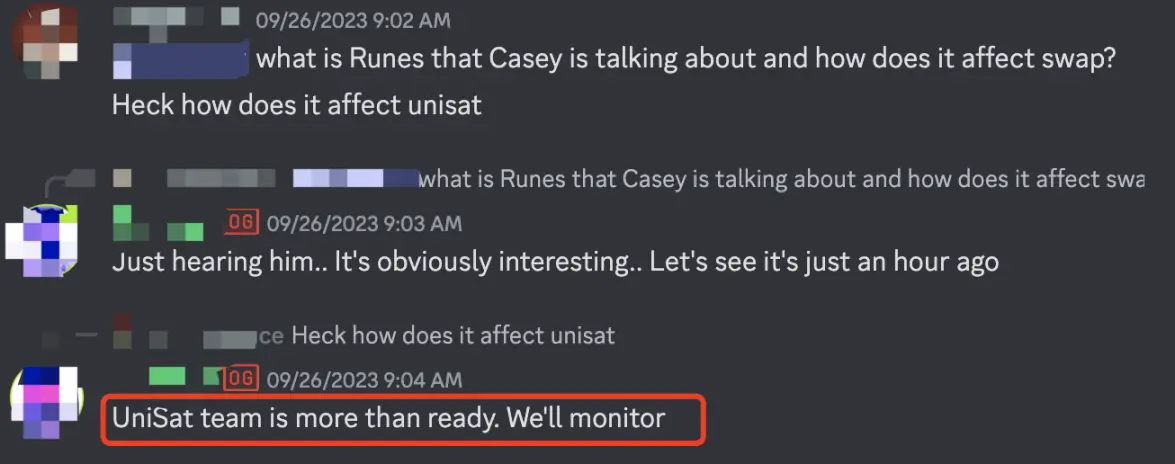
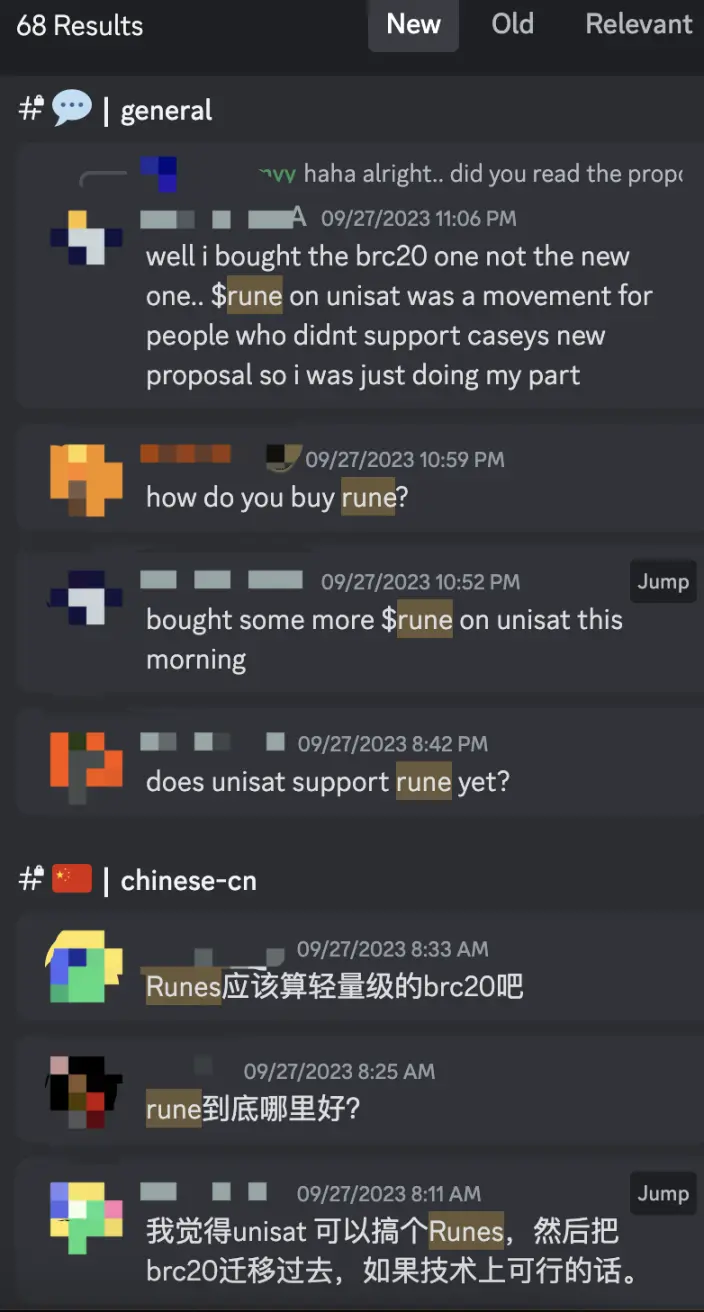
- Subsequently, UniSat added the Runes module, and the BRC-20 protocol added the token $rune.
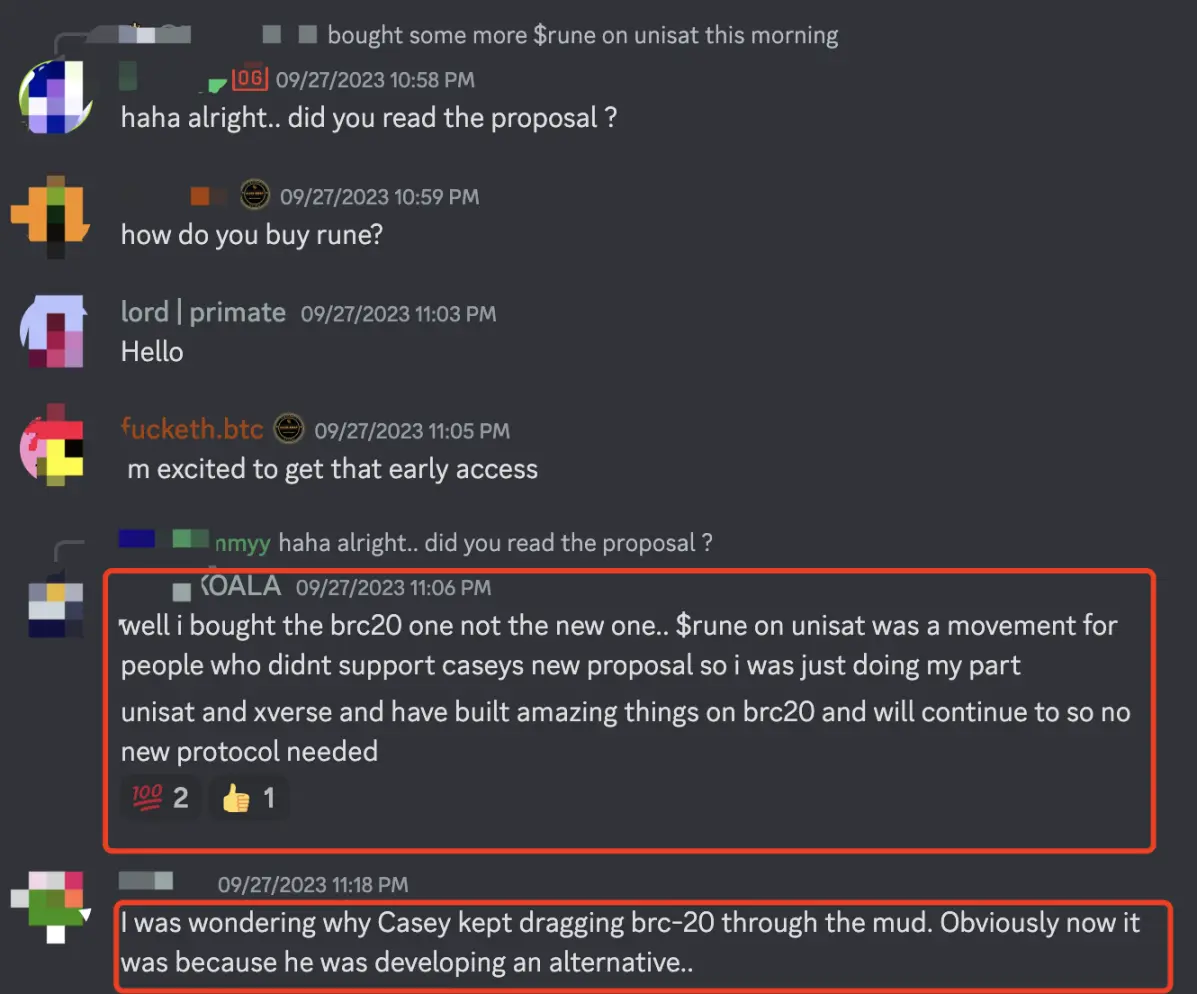
- Some BRC-20 ecological users in the UniSat community have taken sides: “BRC-20 > Runes”. Individual interested BRC-20 “die-hard fans” firmly support the BRC-20 protocol, saying that the protocol is the most orthodox, decentralized, fair, and irreplaceable, and purchased the BRC-20 protocol token $rune to express their dominance over Casey. Resistance to the Runes protocol. (UniSat officials responded with a “like” gesture to this comment) At the same time, they questioned that Casey had been “slandering” the BRC-20 protocol because he wanted to develop a new protocol.
Neutral wait and see
- row
The leader of the ordinex community said at the end of October that ordinex began to pay attention to Runes. As a homogeneous token protocol, Runes is theoretically better than BRC-20; but he also retained a cautious attitude, saying that ordinary users would not pay much attention to a protocol. The technical logic behind the protocol, so for competition between different protocols, large-scale adoption in the market is the way to win.
2023.10.22
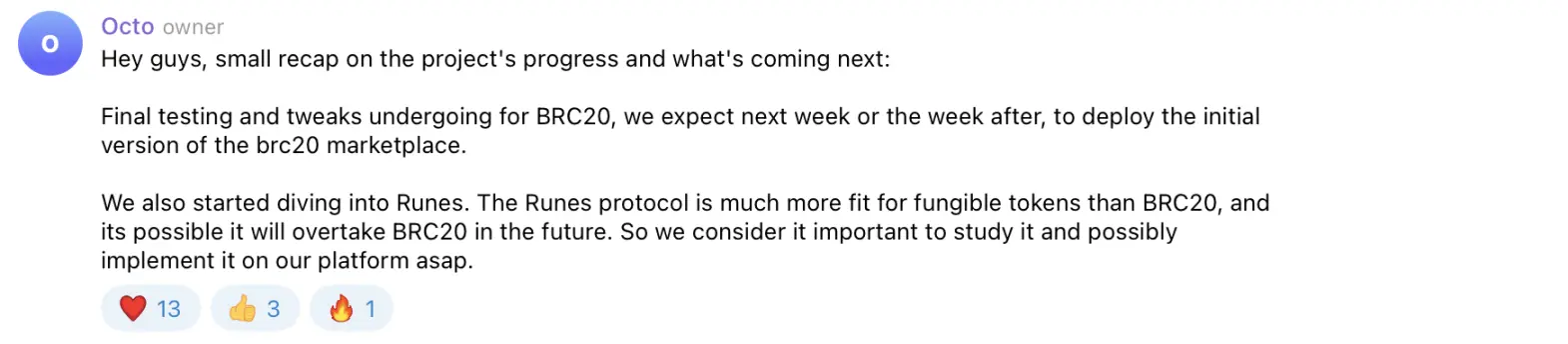
2023.10.23

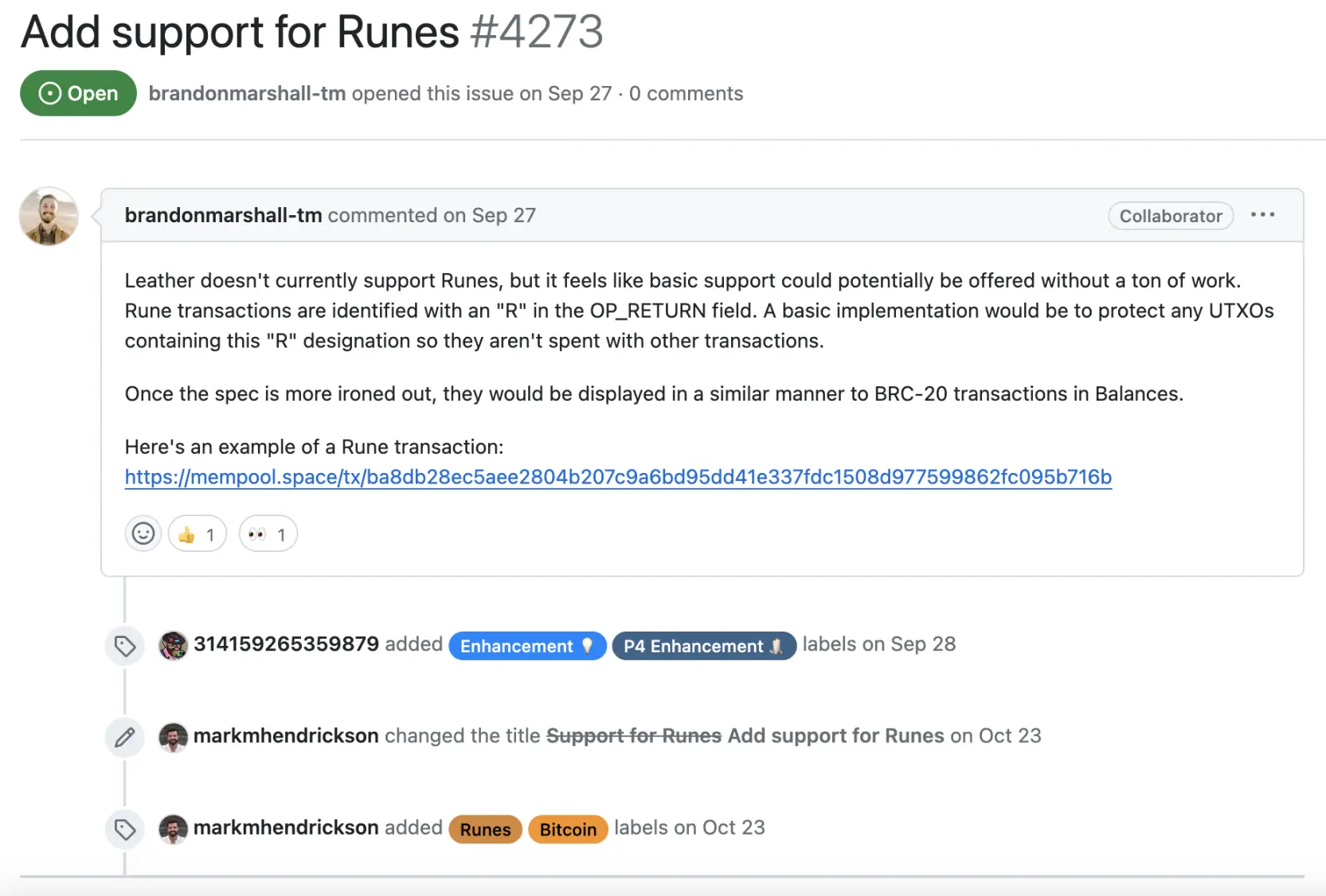
- Leather
The developer of Leather wallet has added basic support for Runes in its github:
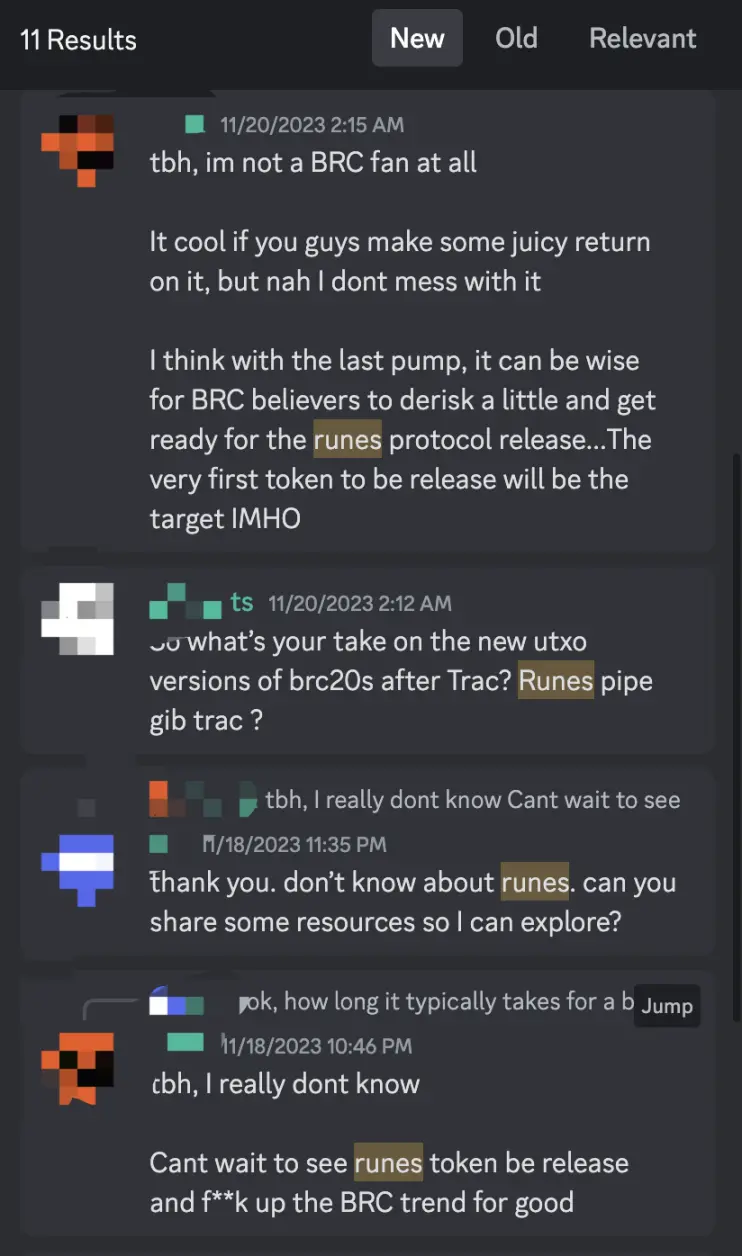
- Trac
Positive opinions on Runes over BRC-20:
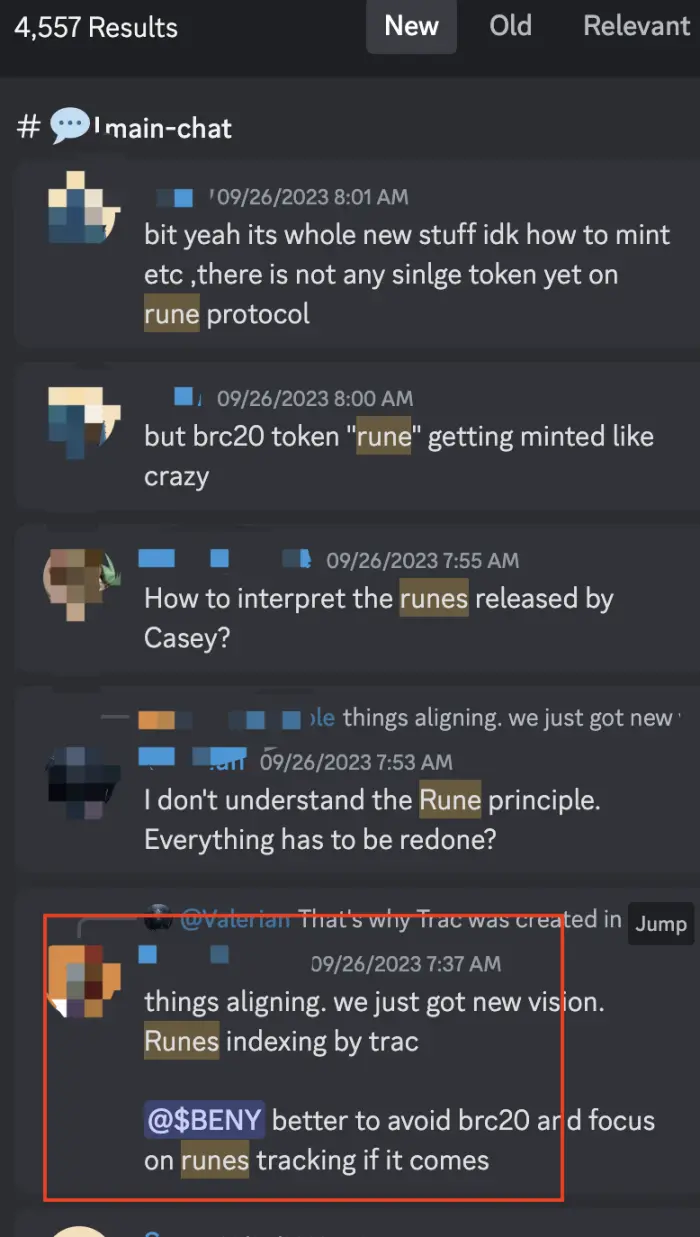
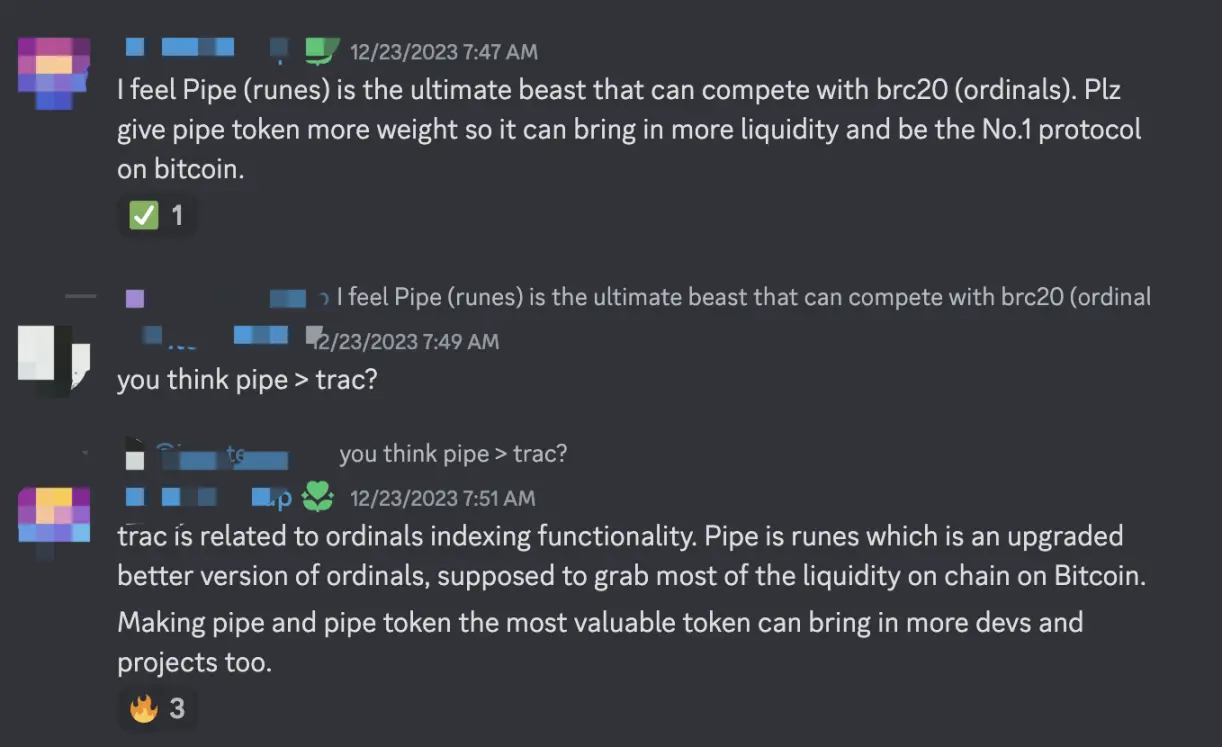
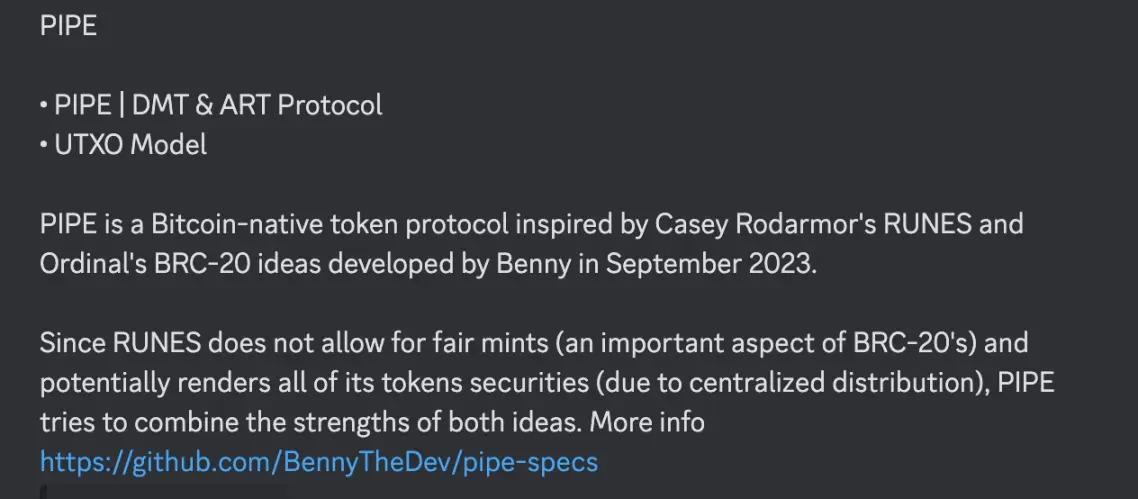
According to the uncompleted Runes code, the current mechanism is not “fair mint”. All supplies will be transferred to the registrant’s wallet address during registration. Subsequent changes are not yet clear. This is one of the reasons why many BRC-20 supporters criticize Runes. Some users in the Trac community believe that the Pipe protocol combines the advantages of BRC-20 and Runes protocols.
in conclusion
1. Innovation and application value of Runes protocol:
The Runes protocol demonstrates the possibilities of implementing token functionality within the Bitcoin ecosystem. Its simplified UTXO model and efficient token transfer mechanism bring new power and scalability to the Bitcoin network. This marks a major expansion of Bitcoin’s capabilities, adding new application layers while maintaining its original features.
2. Comparison between Runes and BRC-20 protocols:
In terms of efficiency and user experience, the Runes protocol shows significant advantages over the BRC-20 protocol. Based on the UTXO model, Runes avoids dependence on off-chain data and the need for native tokens, providing a smoother user experience. In addition, the transparency of Runes’ issuance mechanism and token transfer process provides users with a clearer and safer operating environment.
3. Community response and acceptance:
The Runes protocol has attracted a lot of attention in the Bitcoin community. Despite the relatively slow progress of development, the community remains optimistic about the potential and application prospects of its technology. At the same time, the community has shown mixed reactions to the emergence of imitation disk projects such as Rune Alpha, which reflects the complex interests and diverse perspectives within the cryptocurrency field.
4. Future prospects and challenges:
The main challenge facing the Runes protocol is how to further improve its feasibility and acceptance in practical applications while maintaining its core advantages. In addition, competition with other protocols and the market’s ability to adapt to new technologies are also important factors for its future development.
To sum up, the Runes protocol, as an innovative attempt on the Bitcoin network, has demonstrated its potential in optimizing token operations. Although facing challenges from the community, market and technology, the emergence of Runes has undoubtedly injected new vitality and possibilities into the development of the Bitcoin ecosystem. In the future, as the technology matures and the market becomes more recognized, Runes is expected to play an even more important role in the cryptocurrency field.


