2024 will be the “Year of Parallel EVM”.
Written by: David, Shenchao TechFlow
The narrative of crypto markets always follows a cycle of cause and effect.
In recent months, as Inscription continues to explode in the Bitcoin ecosystem, capital spillovers and FOMO sentiment have also caused Inscription to bloom on other chains, but the results have also brought negative effects:
Several blockchain networks, including Arbitrum, Avalanche, Cronos, zkSync, and The Open Network, subsequently experienced performance overwhelm due to the sheer number and variety of inscriptions.
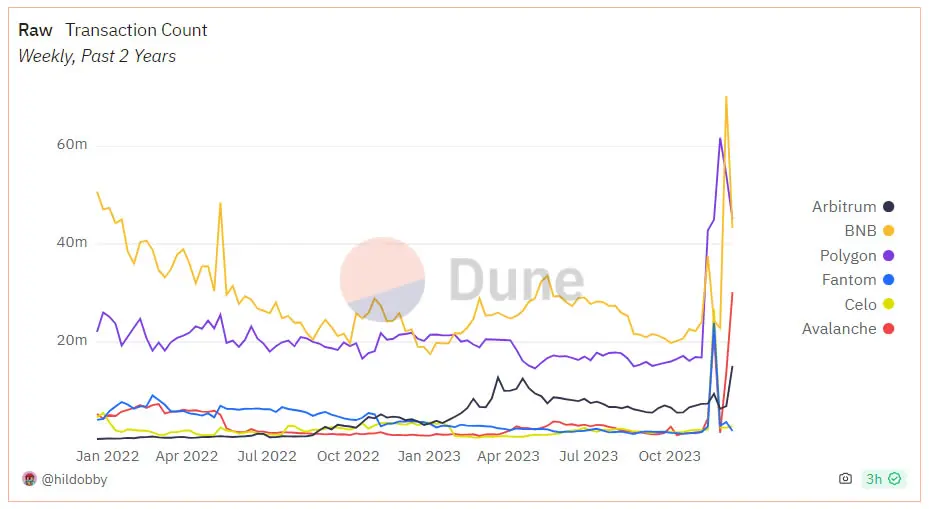
So because of the inscription craze, the market began to re-examine the performance issues of EVM.
At the same time, a new narrative related to optimizing EVM performance began to emerge - Parallel EVM (Parallel EVM).
Former Polygon co-founder JD recently stated on social media that he has a premonition that every L2 will rebrand itself in 2024 and label it “Parallel EVM”;

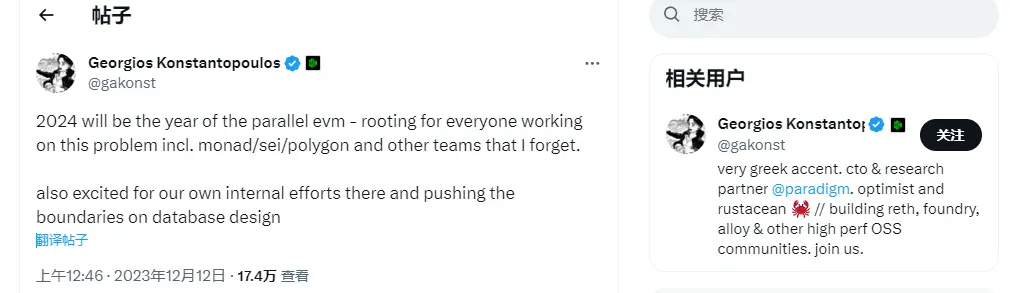
Paradigm’s CTO Georgios also believes that 2024 will be the “year of parallel EVM”, and said that Paradigm is also exploring and designing related technologies internally.
Why is everyone so optimistic about parallel EVM?
In addition to the direct trigger of inscriptions exacerbating the performance burden of the EVM chain, optimizing EVM is an ongoing theme in the encryption world - new public chains, OP series L2, ZK series L2, etc. are all narratives derived from optimizing EVM. and projects, the market valuation will be higher.
However, the above narrative is relatively mature, and there is not much room for speculation in related projects. Therefore, parallel EVM, a new method of optimizing EVM performance, can easily attract market attention in the bull market.
Back to the concept itself, what exactly is parallel EVM? What is the specific implementation method? What other related projects are worth paying attention to in advance?
In this issue, we try to answer the above questions.
Parallel, more efficient
So, what is parallel EVM?
Parallel EVM (Ethereum Virtual Machine) is a concept designed to improve the performance and efficiency of existing EVM.
As we all know, the EVM is the core of Ethereum and is responsible for running smart contracts and processing transactions.
In order to maintain network consistency and security, the current EVM has a very important feature in its design:
Transactions are executed sequentially.
Sequential execution ensures that transactions and smart contracts are executed in a deterministic order, making it easier to manage and predict the state of the blockchain. This design choice prioritizes safety and reduces potential complexities and vulnerabilities associated with parallel execution.
However, when faced with high load, network congestion and delays may result.

Think of the original design of EVM as vehicles moving forward one after another on a single lane. Each vehicle must travel at the speed of the vehicle in front. Once a vehicle (transaction) is congested, all other subsequent vehicles will be blocked on the road;
Parallel EVM is like extending this one-way street into a multi-lane highway, allowing multiple vehicles to drive at the same time.
From a technical perspective, parallel EVM allows different independent transactions or smart contracts to be conducted simultaneously, greatly improving the EVM processing speed and system throughput.
So, what are the ways to implement parallel EVM?
We do not intend to do a particularly in-depth technical explanation. Here we can first give a general parallel EVM processing method:
- Partitioning or sharding: Partition or group transactions so that they can be executed in parallel. This means that different transactions can be executed on different processing units at the same time, rather than one after another. In addition, Solana’s SVM adopts similar processing logic.
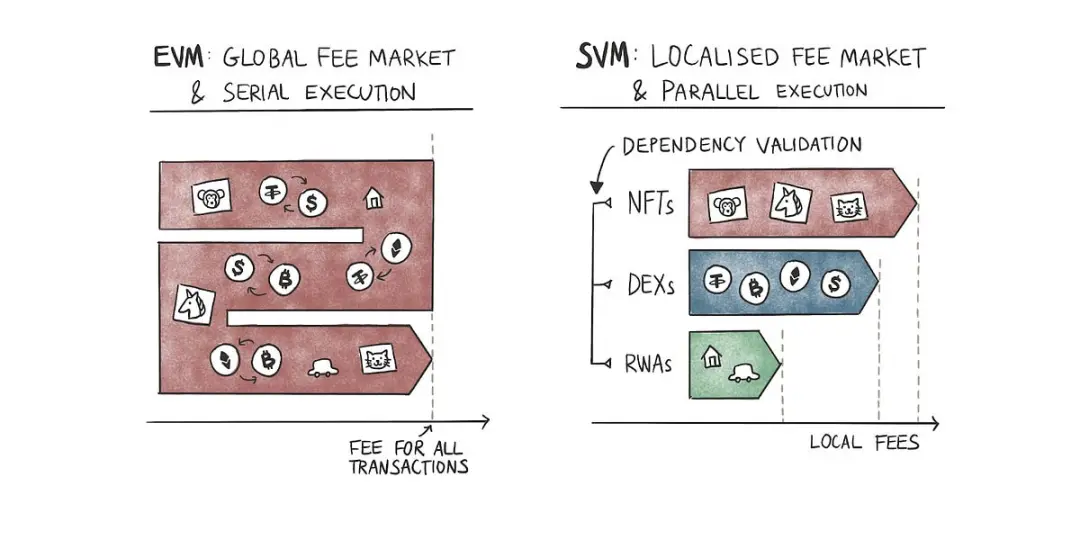
- Optimization algorithms: Develop new scheduling algorithms and optimization techniques to effectively manage and execute parallel tasks while maintaining the correctness and sequence of transactions.
- Security and consistency guarantee: Implement complex synchronization mechanisms and consistency models to ensure that the security and data consistency of the entire system can be maintained even in the case of parallel processing.
In short, by processing transactions in parallel, EVM can process more transactions at the same time, significantly improve TPS, reduce network congestion, and improve scalability.
Currently, there are some projects on the market that have begun to explore the design of parallel EVM, but the implementation methods have their own characteristics. Next, we will give a detailed introduction and inventory of related projects.
Independent faction: self-built L1, designed as parallel EVM
Since the current transactions of Ethereum’s EVM are executed sequentially, the first idea of executing parallel EVM is very straightforward:
Put down Ethereum and start from scratch to make an independent Layer1 to run parallel EVM.
Representative projects: Monad and Sei.
Monad: L1 with built-in parallel EVM
Monad is a blockchain project dedicated to solving the scalability problem of traditional EVM. It adopts a parallel execution strategy, is compatible with Ethereum, and aims to optimize blockchain performance by increasing transaction processing speed and system efficiency.
By achieving parallel execution, Monad aims to significantly increase transaction throughput and solve the congestion problem of the existing EVM chain under high load. Its ultimate goal is to reach the physical bandwidth limit of 400,000 TPS.
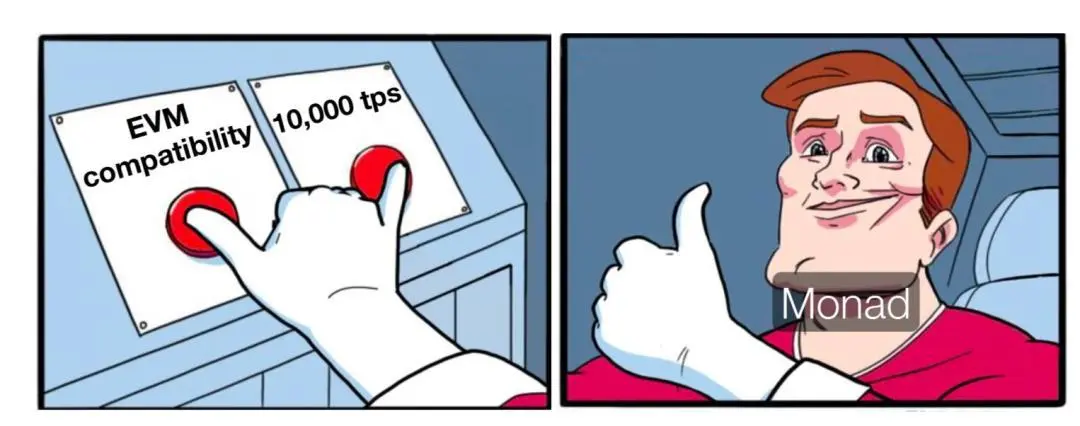
It is worth mentioning that if you search directly on Twitter with the keyword “Parallel EVM”, the first project that comes out in the popular category is Monad, which also reflects the project’s ability to fit the parallel EVM narrative. Marketing actions.
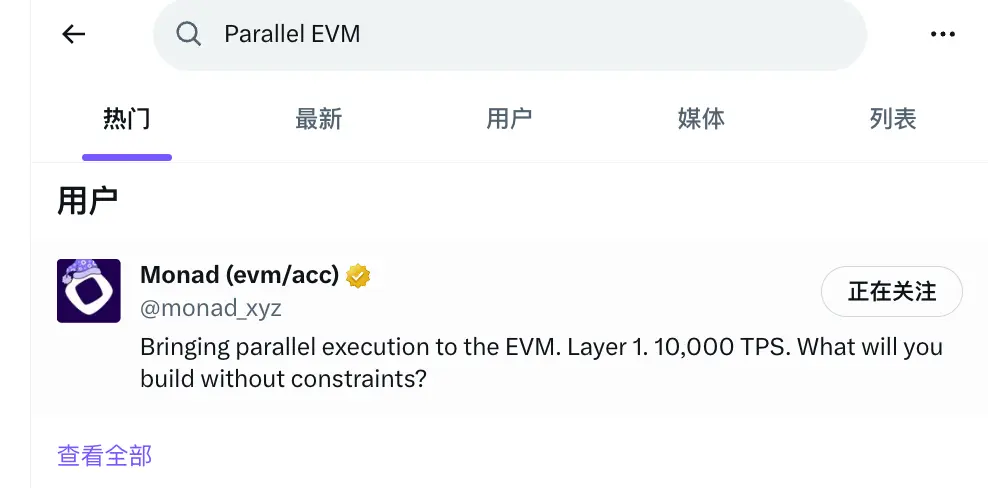
So how does Monad implement parallel processing of transactions?
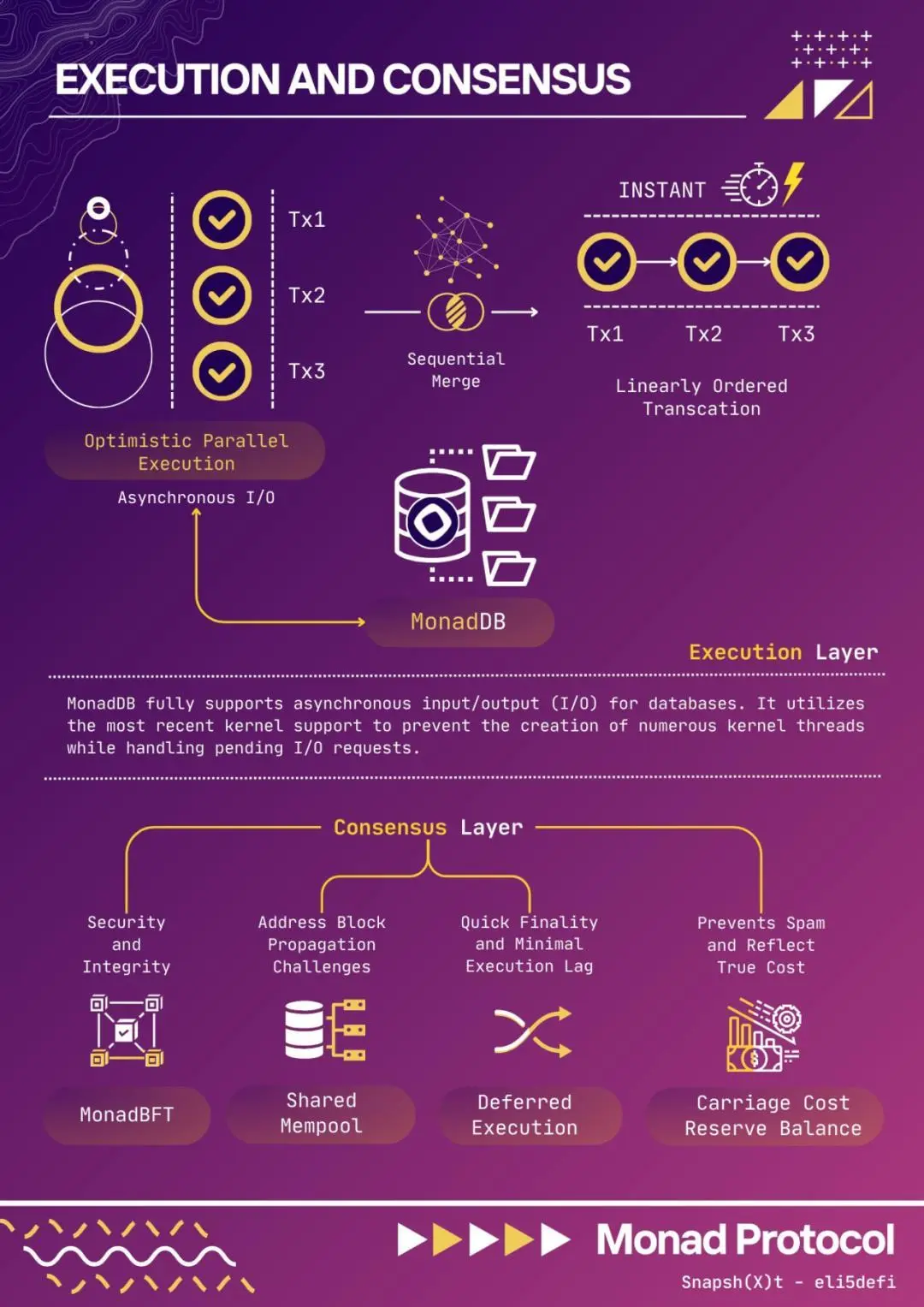
The core of Monad’s parallel execution strategy is its ability to identify and execute transactions in parallel that have no common dependencies. Although both Monad and Ethereum’s blocks are linearly ordered collections of transactions, Monad allows transactions to proceed in parallel without affecting the final result through optimized execution strategies. This parallel execution strategy includes the following key technologies:
- Optimistic ution: Start executing subsequent transactions before the previous transaction is completed. This method may lead to transaction dependency errors, but by tracking input and output comparisons, once data inconsistencies are found, the system will re-execute the transaction to ensure correct execution results.
- Scheduling and Dependencies: In order to reduce unnecessary repeated execution, Monad predicts the dependencies between transactions through a static code analyzer and intelligently schedules transaction execution to optimize the efficiency of parallel execution.
- State Merging: Although transactions are executed in parallel, the state updated by each transaction ultimately needs to be merged sequentially to ensure the state consistency of the entire block.
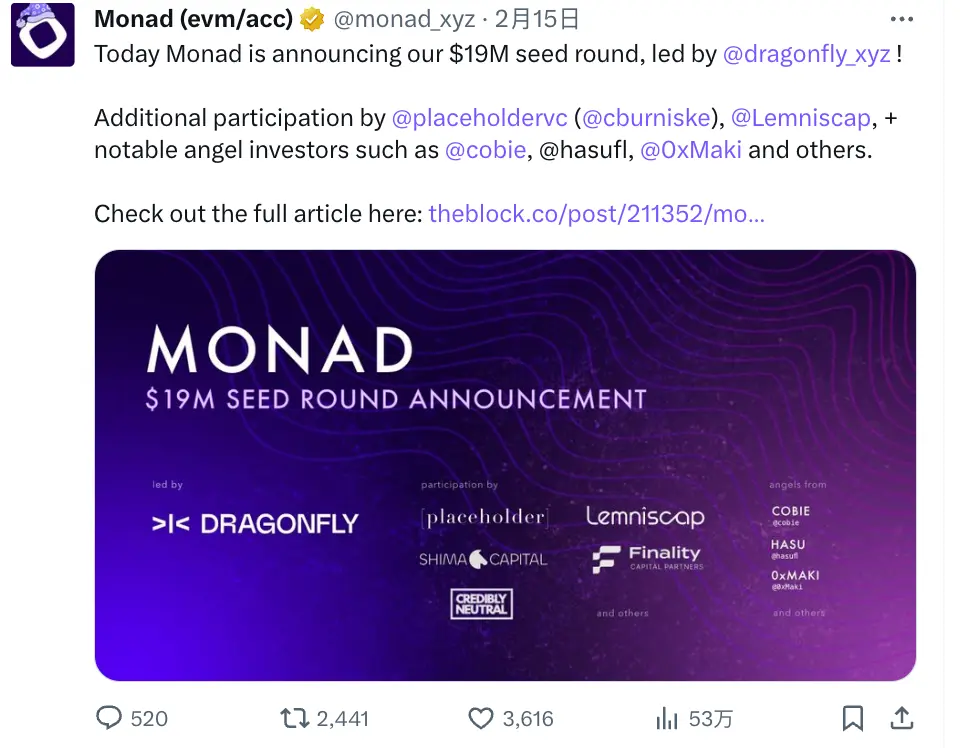
In terms of financing, Monad also performs well. In February this year, its official tweet also announced a $19 million seed round of financing led by Dragonfly. Individual investors also include well-known figures in the industry such as Cobie and Hasu.
At the same time, the founder of the project is Keone Hon, the former head of research at Jump Trading. Since the project has not yet issued a token, considering Jump Trading’s experience in trading and market making, its token performance may be worth looking forward to.
In September this year, Monad Labs released the project’s technical documentation, which revealed that the project’s native token is called MON. But then the introduction of MON in the document was deleted, and it is speculated that the token may have another name.
Large amounts of financing, market maker background, new public chain and parallel EVM…these few factors combined, are destined to attract widespread attention and expectations for Monad.
However, the performance of its parallel EVM still needs testnet data and mainnet operation before it can be verified.
SEI: V2 version will put parallel EVM on the agenda
Sei is an open source Layer 1 blockchain specifically designed for transaction optimization and committed to providing advanced infrastructure for various trading applications, including DeFi, NFT markets, and game DEX.
As we all know, Sei is hardly a new project. Its mainnet was ready in August this year, and in the previous V1 version, it has implemented functions specifically optimized for transactions, such as mechanisms to prevent front-running transactions and functions to support order batch processing, aiming to improve transaction security. sex and efficiency.
In the design of the latest V2 version (expected to be implemented in the first half of 2024), Sei has put parallel EVM on the agenda.
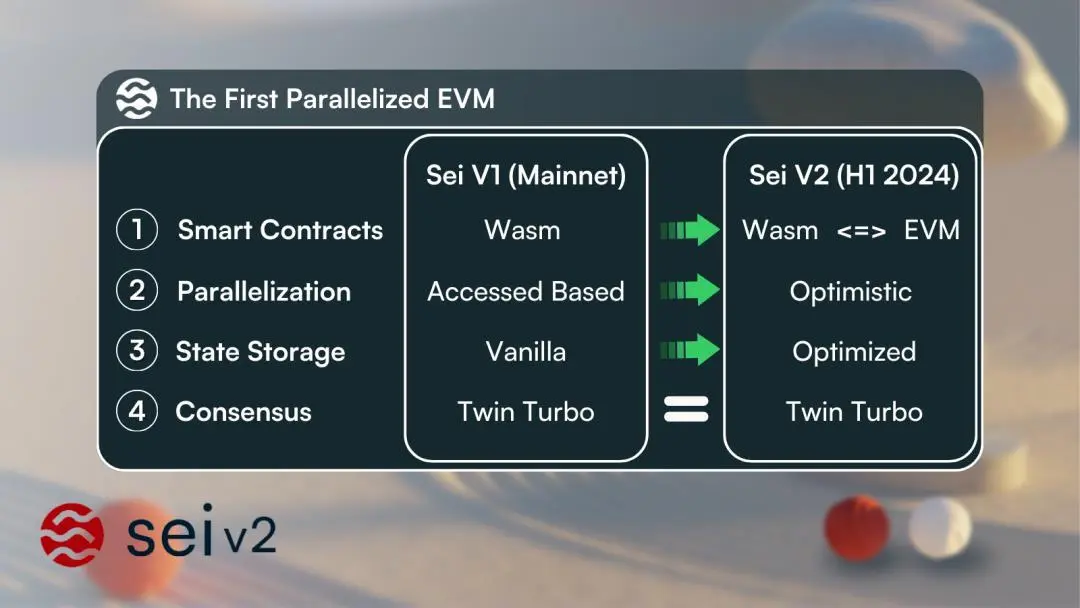
- Optimistic parallelization: Sei also adopts an optimistic parallelization strategy, allowing the chain to execute all transactions in parallel. When transactions hit the same state, the system keeps track of the portion of storage each transaction touches, and conflicting transactions are re-executed in sequence until all conflicts are resolved.
- Geth compatibility: As part of the core Sei binary, Sei nodes will automatically import Geth, the Go implementation of the Ethereum Virtual Machine, to handle Ethereum transactions and make any resulting updates through the special interface Sei created for the EVM.
- SeiDB storage optimization: Sei redesigns the storage interface, uses more efficient data structures and databases, optimizes read and write performance, and reduces state expansion.
These technologies together form the core of Sei v2, making it not only a fully parallelized EVM, but also highly performant and compatible; at the same time, Sei provides a diverse A standardized execution environment further expands its scope of application and appeal.
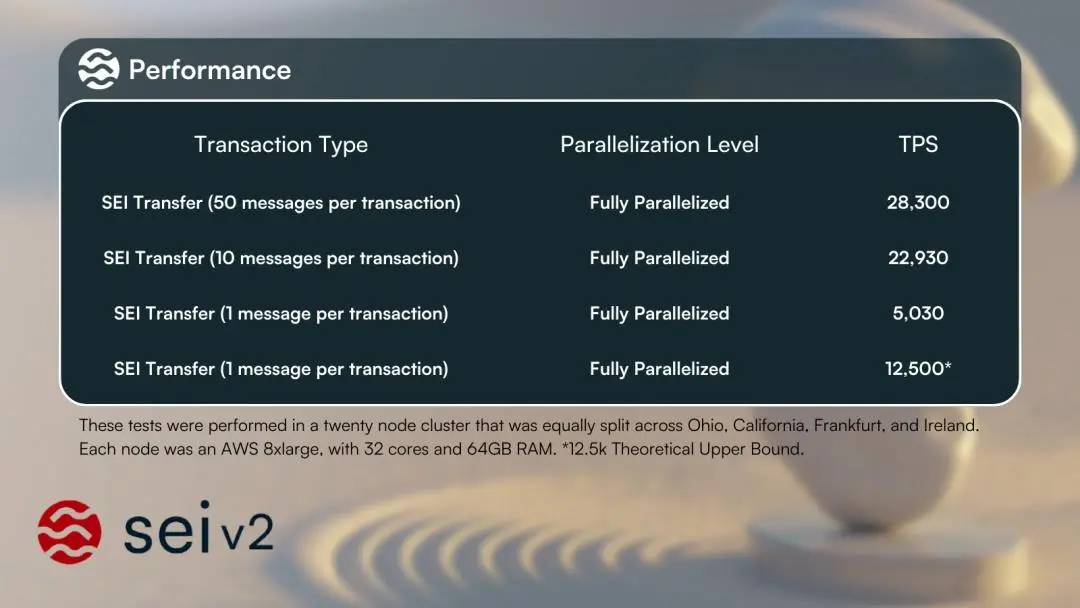
Judging from the test data given in the document, when Sei processes transactions in parallel, the peak test TPS reaches about 28,300. Judging from the theoretical test values only, the efficiency of parallel EVM is significantly stronger than the current various types of L1. We also hope not to make too many discounts when it is actually implemented.
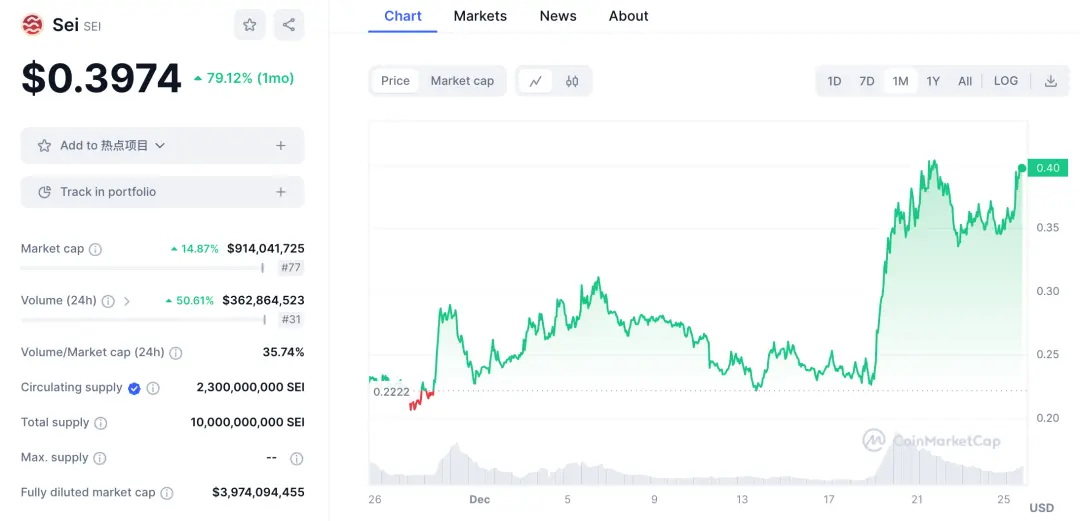
In terms of tokens, SEI has increased by 80% in the past month. Considering the high market value of the project, such an increase is already very impressive. As the parallel EVM narrative continues, the token may still see a rise, but it will be more of a Beta gain.
Compromise: Become L2 and combine the capabilities of other chains with EVM
Different from the above L1 self-contained ideas, there are also some L2 projects that have other solutions on parallel EVM:
Borrow the performance of other chains or virtual machines to assist the execution of Ethereum transactions.
Representative projects: Neon, Eclipse, Lumio.
Neon: Introducing EVM into L2 of Solana ecosystem
Neon EVM is the first parallelized Ethereum virtual machine built on the Solana blockchain, designed to improve blockchain efficiency and scalability through parallel transaction processing.
The biggest feature of this project is its cross-ecological operation: it allows developers to use Solana’s parallel execution architecture to expand Ethereum dApps, and optimize network efficiency through parallel execution, increase transaction speed, and reduce costs, while maintaining compatibility with the EVM environment.
In terms of specific implementation, Neon converts Ethereum transactions into Solana transactions, and then submits them to the Solana validator, which executes on Solana and updates the status of the Neon program. The specific process can be simply understood as:
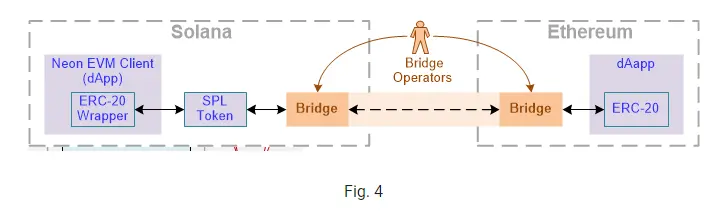
- The user signs the transaction, which is sent to the agent. An agent is an account on Solana that runs the EVM emulator and is responsible for executing Neon-txn.
- The agent will request the blockchain status from Solana and test launch Neon-Txn on the Solana status.
- Based on the received data, the agent forms a new txn (transaction) according to Solana rules and sends it to Solana together with the packaged data for data processing.
- Finally, according to eth rules, the transaction is sent back to Neon for signature checking, and once verified, is executed in parallel on Solana.
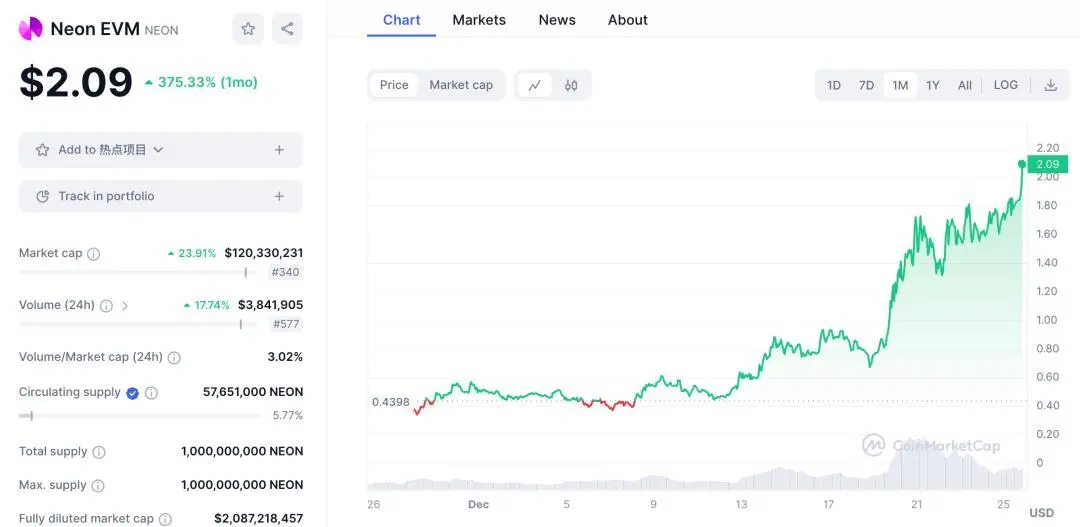
In terms of token performance, NEON has tripled in the past month, but its total market value is significantly lower than SEI. Considering the recovery of the Solana ecosystem and the related token craze, NEON, as the only parallel EVM in the Solana ecosystem, still deserves attention for its subsequent market performance.
Eclipse: Introducing SVM into L2 of the Ethereum ecosystem
Facing the problem of insufficient performance caused by the sequential execution of EVM, Neon’s idea is to introduce EVM into Solana; but conversely, introducing SVM into Ethereum is also a choice with the same goal.
Eclipse Mainnet is such a general L2 solution that introduces SVM to Ethereum, combining multiple technologies such as Ethereum’s settlement, Solana Virtual Machine (SVM) execution, Celestia’s data availability, and RISC Zero’s zero-knowledge proof.
The project goal is to provide a massively parallel execution environment that allows multiple operations to be performed simultaneously, thereby increasing network throughput and efficiency while reducing congestion and transaction fees. Through this structure, Eclipse aims to improve the scalability and user experience of dApps.
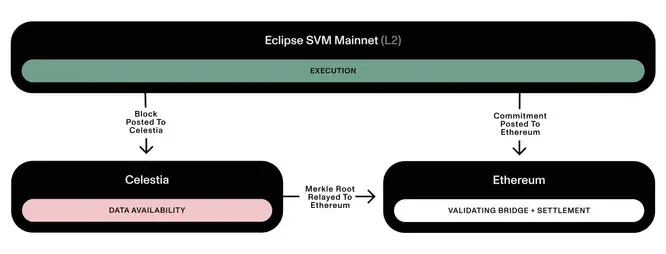
In terms of specific implementation, Eclipse implements parallel EVM through the Solana Virtual Machine (SVM) and its Sealevel runtime.
SVM allows different transactions to execute in parallel, especially when these transactions do not affect overlapping states. In this way, SVM scales performance directly as the number of hardware cores increases, enabling optimized parallel execution. This design enables Eclipse to significantly increase processing speed and network throughput while reducing congestion and transaction costs.
Simply put, the design logic of Eclipse is that transaction execution is in Solana’s SVM, and transaction settlement is still on Ethereum.
In terms of project background, Eclipse will complete US$15 million in financing in 2022, with investors including Polychain, Polygon Ventures, Tribe Capital, Infinity Ventures Crypto, CoinList, etc.
Eclipse co-founder & CEO Neel Somani has previous experience in Airbnb, Two Sigma, Oasis Labs and other companies. Chief Commercial Officer Vijay was the former business development director of Uniswap and dYdX teams.
On December 13, the Eclipse testnet has been launched, and the first 1,000 developers who deploy contracts on the testnet will receive commemorative NFT rewards. At the same time, since the project has not released tokens yet, considering its high financing background, it would be a good choice to actively interact and pay close attention to the project’s social media updates to obtain airdrop opportunities.
Lumio: Introducing Move and Aptos to handle L2 of transactions
The recently released Lumio is also an L2, and has a certain integration with parallel EVM in product design.
Lumio is committed to using Aptos as Ethereum L2, which is an L2 based on OP Rollup. In terms of product features, Aptos is used to process transactions and Ethereum is used to settle transactions.
Compared with other L2, Lumio’s official materials give a performance comparison:
- Gas cost is 3-4 orders of magnitude lower than existing L2 ($0.1 vs $0.0006);
- TPS is 1-2 orders of magnitude higher than existing L2 (1K vs 30K);
- A high-performance and secure execution layer suitable for enterprise-level applications, a good choice for transitioning traditional Web2 applications to Web3;
- Move and EVM are called across virtual machines.
In terms of financing background, in 2021, Pontem, the organization behind the project, received US$4.5 million in financing led by Mechanism Capital and Kenetic Capital, and also attracted participation from institutions such as Animoca and Bixin. The new Lumio L2 is said to have new financing announced in the near future.
In addition, Pontem focuses on building Move and EVM compatible products. During the Libra period within Facebook, Pontem has been using Move for application development and is also the earliest project party in the Aptos ecosystem.
As other public chains recover, if Aptos can be affected by capital spillover, Lumio, which is related to the parallel EVM narrative, may also receive attention. At the same time, Pontem and Lumio currently do not have tokens; as the Lumio testnet goes online, there may be airdrop opportunities for active interaction.
Polygon Miden: Old L2, new virtual machine
Polygon Miden is a zero-knowledge (zk) Rollup under development that runs on the Miden VM. This virtual machine design focuses on zero-knowledge friendliness, prioritizing these aspects over direct EVM compatibility. As a zk Rollup, it is designed to enhance transaction privacy and scalability for the Polygon network.
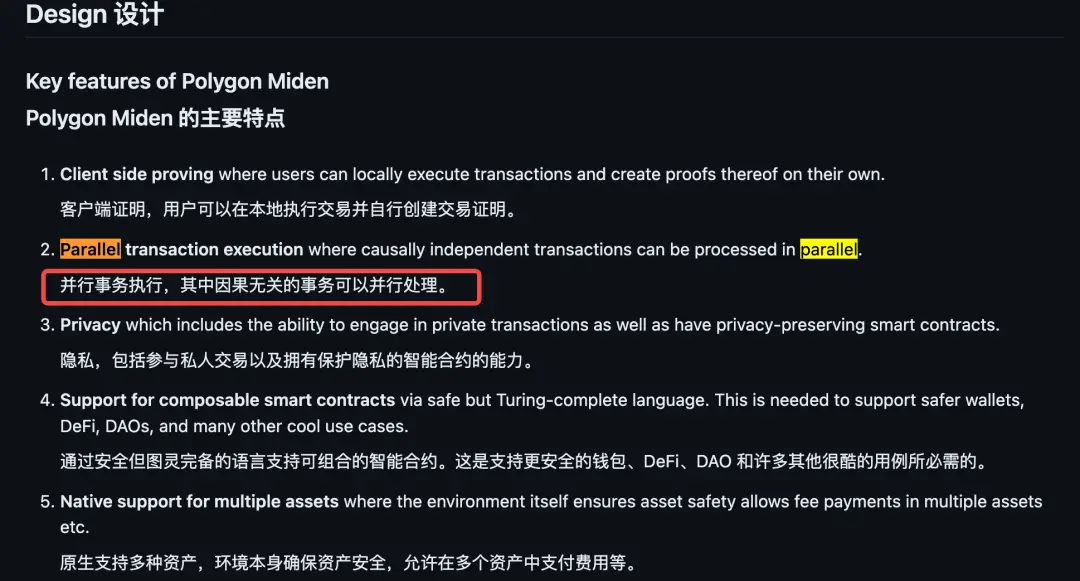
Judging from Polygon Miden’s Github page, it mentions parallel transaction execution, that is, the ability to process causally independent transactions in parallel.
How is this achieved?
Specifically, Miden achieves verifiability by changing the transparency requirements of traditional blockchains, leveraging zero-knowledge proofs to allow users to execute smart contracts locally and create proofs that can then be quickly verified by the network.
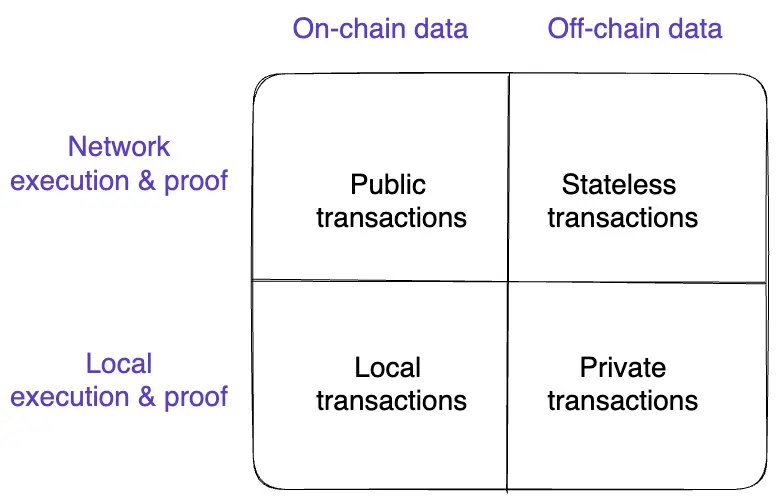
This method reduces the computational burden and allows transactions to be naturally parallelized, improving overall processing efficiency and speed.
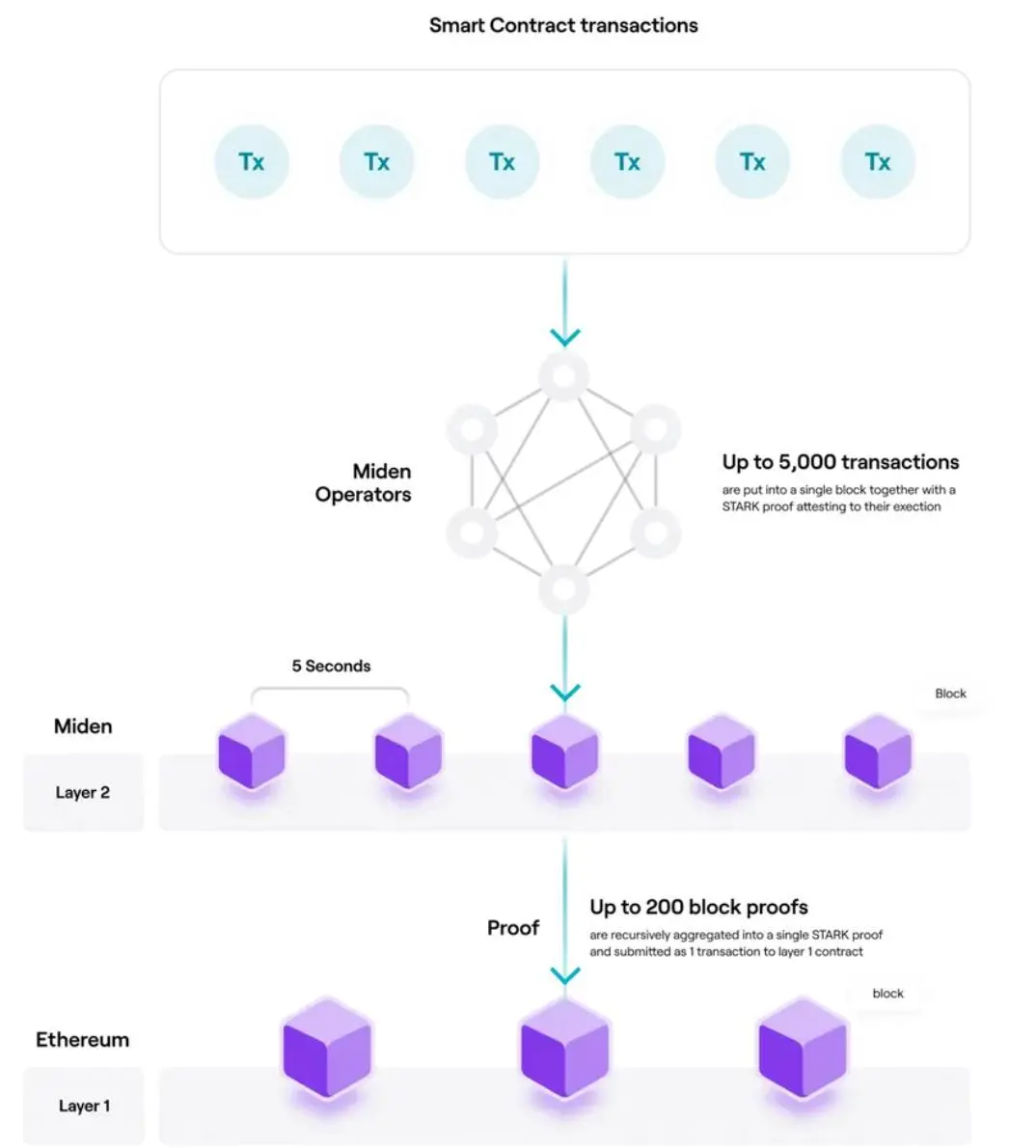
At the same time, the project Twitter shows that Miden is still in the development stage, and less relevant information has been disclosed. However, judging from the overall design of Polygon’s L2, it has a variety of technical solutions such as side chains, zk-STARK and SDK, and parallel EVM is not its most important direction.
Considering that Polygon has been value-discovered as a successful L2, the author of Miden’s design believes that it can only be technically related to the narrative of parallel EVM. However, Polygon itself has not taken the initiative to ride on this narrative heat. In addition, Matic tokens have been unable to obtain Alpha benefits. , so Matic may not be fully related to the parallel EVM narrative in terms of token performance.
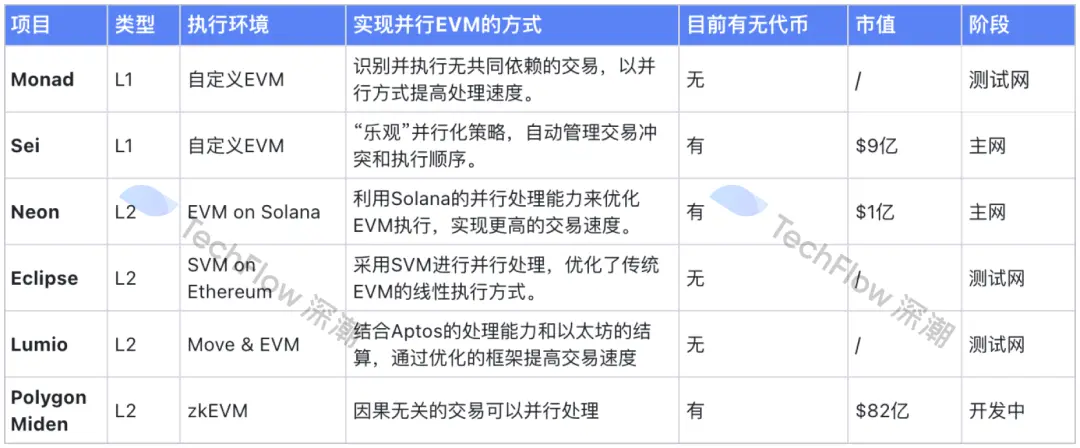
Finally, we can also use a table to compare all projects involving parallel EVM narratives to provide a reference for readers.
As mentioned at the beginning of the article, narrative is always in rotation.
The narrative of parallel EVM is showing signs of rising, but whether it can continue to be hot depends on the actual technical breakthroughs of different L1 and L2 on the one hand; on the other hand, it is also necessary to pay close attention to the trends of the project side, with the obstacles coming in the first quarter of next year. Kun upgrades and optimizes Ethereum’s actions, and parallel EVM’s narrative of optimizing its performance may also usher in a climax.


