The data availability of decentralized storage networks will give users more autonomy. Taken together, the author believes that Filecoin performs well in terms of data storage model, data consistency and economic model, and is one of the storage networks with the best data availability.
Written by Kyle Liu, Investment Manager at Bing Ventures
Data availability solutions for decentralized storage networks can be implemented in a variety of ways, such as sharding and storing data on different nodes, or adding more storage miners to improve data security. These solutions are all designed to ensure the availability of data in decentralized storage networks. At present, the data availability solutions of the two projects Filecoin and Arweave have their own characteristics, and more innovative solutions may appear in the future.
The meaning of data availability
Data availability is very important for decentralized storage networks. In a decentralized network, the security and reliability of data depend on the stability of storage nodes. If data becomes unavailable, the entire network will be affected and may even result in permanent data loss. Therefore, data availability is one of the core elements to ensure a decentralized storage network.
The two projects, Filecoin and Arweave, use different solutions to ensure data availability. Filecoin relies on incentives and intermediary roles to achieve storage redundancy and data retrieval, while providing an economic mechanism for storage financialization. Arweave naturally achieves storage redundancy and improves data retrieval and access speed through protocol design and SPoRA (Simple Proof of Random Access) consensus mechanism.

Evaluation metrics for data availability
Filecoin’s data availability solution is mainly based on IPFS technology. This scheme can verify that the storage miner indeed owns and stores all the data of the file. Filecoin’s data availability solution provides a high degree of reliability, but may impact performance due to high computational complexity. Arweave’s data availability solution is mainly based on the “Persistent Storage Protocol” (PermaWeb) technology. Arweave stores files in a “persistent storage layer on the blockchain” to ensure data security. Arweave’s data availability solutions deliver high performance.
Data storage model:
- Filecoin uses economic incentives to achieve storage redundancy. By introducing the roles of Replication Worker and Repair Worker, Filecoin establishes a storage network based on economic incentives. Storage demanders can generate storage orders on the Filecoin network through replication workers, and monitor and maintain data integrity through maintenance workers. This economic model gives storage providers incentives to preserve storage demanders’ data, thereby enhancing data availability.
- Arweave achieves storage redundancy through protocol design. Its SPoRA consensus mechanism encourages miners to save as much historical block and Blockweave data as possible to increase data redundancy and reliability. This protocol design enables storage demanders’ data to be distributed on multiple nodes in the network, improving data availability.
Data consistency:
- Filecoin’s economic incentive mechanism helps maintain data consistency and integrity. Through the role of maintenance worker, the Filecoin network can promptly update expired or terminated storage orders to ensure that the data saved by the storage provider is consistent with the data uploaded by the storage demander.
- Arweave’s SPoRA consensus mechanism requires miners to save the data of all recalled blocks to ensure the consistency of historical blocks and Blockweave data throughout the network. This consensus mechanism ensures that the data stored in the network is complete and consistent.
- Economic model:
- Filecoin’s economic model has high flexibility and scalability. Storage providers need to provide a certain amount of FIL tokens as collateral to provide storage services. By introducing mechanisms such as staking protocols and storage derivatives, FIL token holders can participate in storage services and obtain corresponding economic returns.
- Arweave’s economic model focuses on the incentive mechanism for storage miners, encouraging them to save more historical blocks and Blockweave data. However, Arweave’s value network may be slightly sluggish in development after Filecoin launches an EVM-compatible storage network.
The data availability of these two storage networks is affected by the storage model, data consistency, as well as the economic model and ecosystem construction. The difference between Filecoin and Arweave in terms of data availability mainly lies in the differences in data storage models and economic models. Filecoin achieves storage redundancy and data consistency through economic incentives, while Arweave naturally achieves storage redundancy and data consistency through protocol design and SPoRA consensus mechanism. The two also differ in data retrieval. Filecoin introduces a separate economic incentive system, while Arweave improves the speed of data retrieval and access by upgrading the SPoRA consensus mechanism. In terms of economic model and ecosystem construction, Filecoin and Arweave perform well. Both use incentive mechanisms to promote node participation and data storage, and have active communities and developer ecology.
The trend of decentralized storage
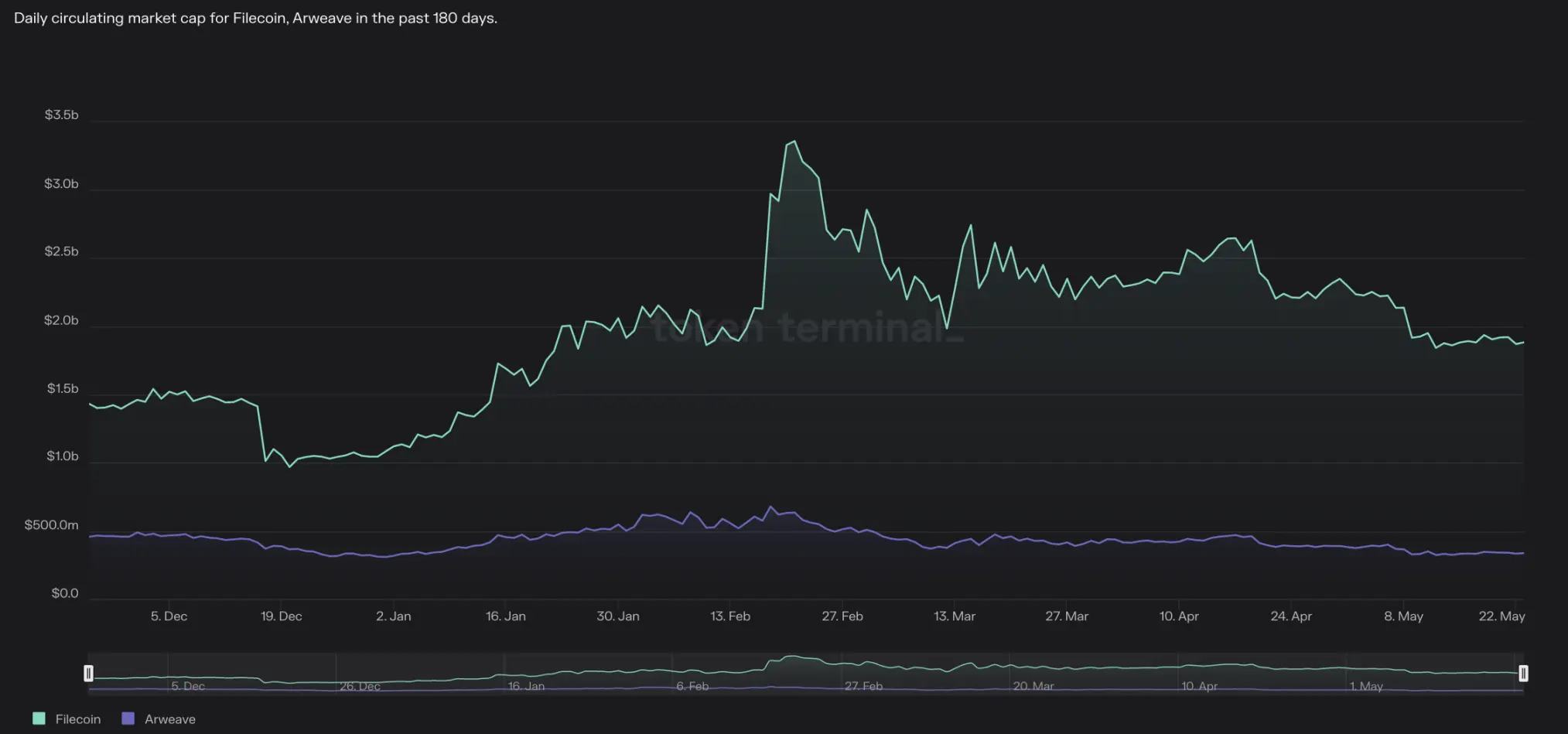
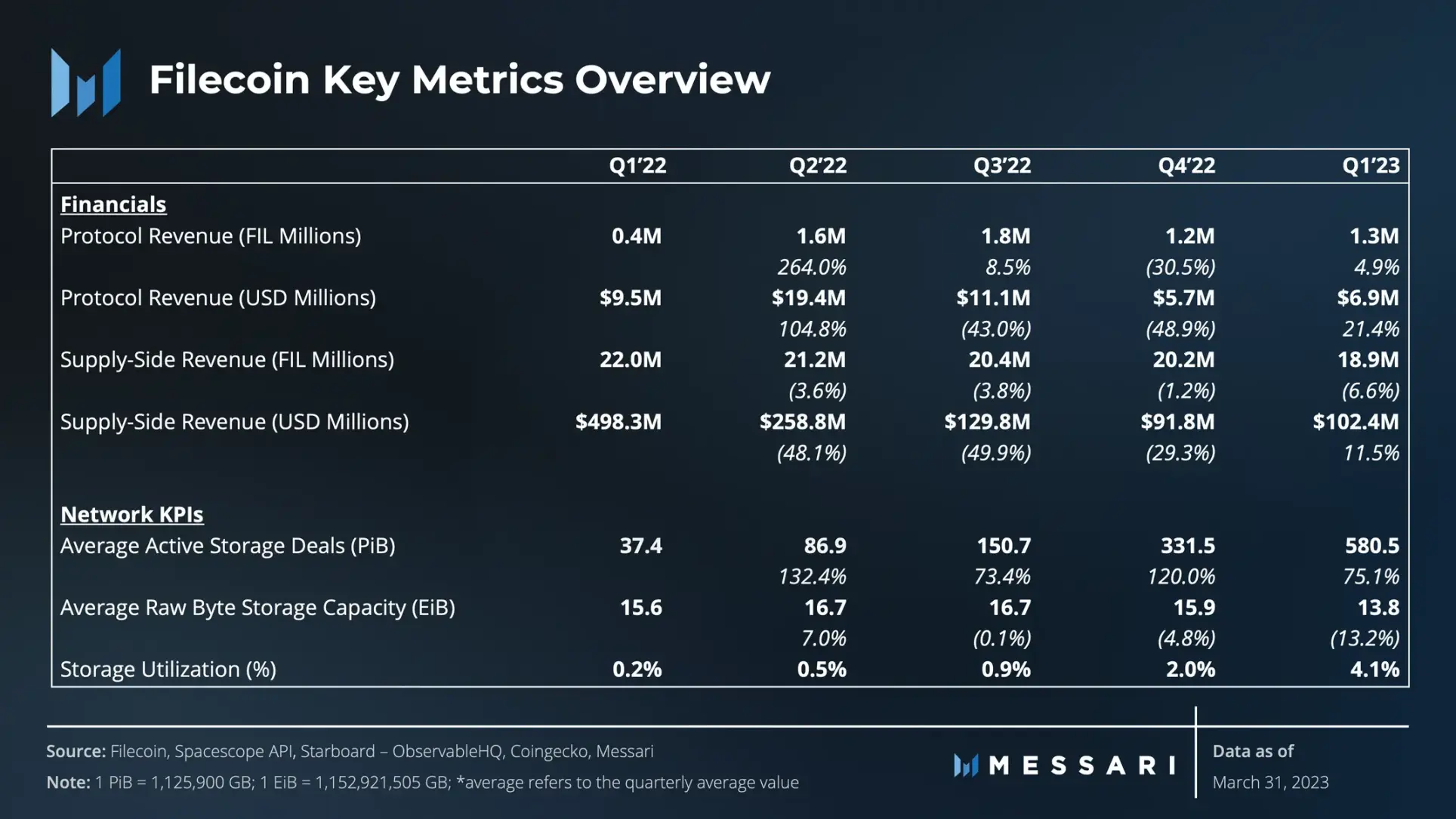
Arweave and Filecoin decentralized storage networks have formed two relatively independent head ecosystems. From the perspective of development scale, Filecoin is far ahead in terms of revenue, FDV and market share. Analyzing the current status and trends of decentralized storage networks from the perspective of data availability, we believe:
- Storage scalability in the era of capacity expansion: The development of Layer 1 storage expansion network is one of the important directions to solve the data availability challenge of decentralized storage network. By adding storage functions at the L1 level of the blockchain, the performance and capacity of the storage network can be improved, further enhancing the availability and security of data. In particular, the expansion of the data storage layer on mainstream blockchains such as Ethereum will have a profound impact on the entire decentralized storage ecosystem. Ethereum’s EthStorage project is an example. EthStorage aims to improve the performance and scalability of the storage network by adding storage capabilities at the L1 level of Ethereum. Such storage expansion can better meet data storage needs and improve data availability.
- Aggregation of storage networks: The emergence of DSN aggregators marks an important progress in decentralized storage networks in improving data availability. By aggregating different storage networks, effective utilization of resources and higher availability of data can be achieved. This aggregation model helps solve the problem of storage network fragmentation and improves user storage experience. Projects in this area such as 4EVERLAND, 4EVERLAND’s decentralized cloud computing platform integrates multiple storage networks, allowing users to access and manage data across networks. The project provides better data availability and storage efficiency, and users can get a more reliable data access experience from the aggregated storage network.
- Integration of computing and storage: The development of off-chain computing will further promote the data availability of decentralized storage networks. Combining computing power with storage capabilities can achieve more efficient data processing and storage services. This integration model can improve data processing speed and efficiency, providing users with more flexible and reliable data storage solutions. In addition, future solutions will involve storing data in a dedicated data availability layer, and only the Merkel roots calculated for these data will be recorded in the consensus layer. This design can not only ensure data security, but also improve performance and effectively solve the problem of increasingly centralized consensus nodes.
Conclusion and Outlook
In the future, the development trend of decentralized storage networks in improving data availability is multi-faceted, including the enhancement of aggregation of storage networks, the integration of computing and storage, the storage expansion of blockchain, and the strengthening of data security. These developments will further enhance the availability of data and promote the widespread application and development of decentralized storage networks. Based on the above considerations, we need to pay more attention to the following issues when selecting projects:
- The challenge of cross-chain data availability: With the development of cross-chain technology, data interoperability between different blockchains has become possible. However, ensuring the availability of cross-chain data faces many challenges, such as data consistency, privacy protection, and scalability. Future research and innovation will be dedicated to solving these challenges to achieve more efficient and reliable cross-chain data availability.
- Balance between data availability and blockchain performance: Blockchain performance limitations may have an impact on data availability. A high-throughput and low-latency storage network may excel in performance, but may have limitations in data availability. Future research can explore how to improve performance while ensuring data availability and find a balance between performance and availability.
- The impact of community governance on data availability: Community governance is an important part of the decentralized storage network and can affect the development of data availability. Establishing a sound community governance mechanism and encouraging community participation and consensus building can promote the improvement of data availability. Future research could focus on the impact of community governance on data availability and explore how to optimize community governance to promote stronger data availability.
- Combination of data availability and emerging technologies: With the emergence of emerging technologies, such as artificial intelligence, edge computing and the Internet of Things, the combination of these technologies with decentralized storage will bring new possibilities for data availability. In the future, we can explore how to use technologies such as artificial intelligence and smart contracts to improve data availability, and explore the application of data availability in the fields of edge computing and the Internet of Things.
As time goes by, the decentralized storage ecosystem will continue to grow, with the number of nodes and users increasing, more use cases emerging, further improving data availability, and allowing more people and organizations to benefit from decentralized storage. From the perspective of data availability, different decentralized storage projects can explore deeper ecosystem collaborative development. By establishing a cross-project data sharing and exchange mechanism, different projects can complement each other and improve data availability and synergy across the entire ecosystem. This collaborative development model helps build a more powerful and sustainable decentralized storage network.
To sum up, the author believes that future research and development will continue to explore aspects such as technological innovation, cross-chain data availability, performance and availability balance, community governance and emerging technology applications to further improve the data availability of decentralized storage networks. In the future, more storage network projects may appear, adopting more advanced technologies and protocols to provide more powerful data storage and access services.
Disclaimer: The information on this page may come from third parties and does not represent the views or opinions of Gate. The content displayed on this page is for reference only and does not constitute any financial, investment, or legal advice. Gate does not guarantee the accuracy or completeness of the information and shall not be liable for any losses arising from the use of this information. Virtual asset investments carry high risks and are subject to significant price volatility. You may lose all of your invested principal. Please fully understand the relevant risks and make prudent decisions based on your own financial situation and risk tolerance. For details, please refer to
Disclaimer.


