The cost advantage of ZKP does not exist absolutely, but depends on the specific application scenario.
Written by Kyle Liu, Investment Manager at Bing Ventures
*Introduction: With the continuous development of ZKP (Zero-Knowledge Proof) technology, people have become keenly interested in its relationship between cost and performance. Implementing and maintaining zero-knowledge proof systems requires extensive computing resources and algorithm optimization. These calculations can result in high costs, especially when dealing with large-scale data and complex calculations. Therefore, the cost advantage of ZKP does not exist absolutely, but depends on the specific application scenario. *
In the context of the news that Aztec Connect was forced to shut down, we believe that the claimed cost advantages of ZKP technology have to be re-evaluated. Although ZKP is billed as a solution that can provide a high degree of privacy, the temporary failure of Aztec Connect at least proves that this technology faces huge challenges in terms of cost at this stage.
If ZKP technology is truly cost-effective, why is Aztec Connect unable to achieve sustainability in its operations? Even more intriguingly, Aztec also encourages the community to fork, deploy and operate new versions of Aztec Connect. This implies the huge resources required to run Aztec Connect independently. This also further intensifies our doubts about the cost-effectiveness of ZKP. If the cost advantage of ZKP is real, then why does the community need such a large investment to keep the project running?
Therefore, we need to take a serious look at the claimed cost advantages of ZKP technology. Perhaps the cost advantage of ZKP is just an over-exaggerated illusion, and the actual situation may be more complicated. When pursuing cost advantages, not only the optimization of a single aspect must be considered, but the performance and cost balance of the overall system must also be considered comprehensively. For example, reducing computational costs may increase communication costs, or using more efficient algorithms may require more complex hardware support. Therefore, we need to conduct a comprehensive cost-benefit analysis for a specific project, weigh optimization strategies in all aspects, and find the best balance point.
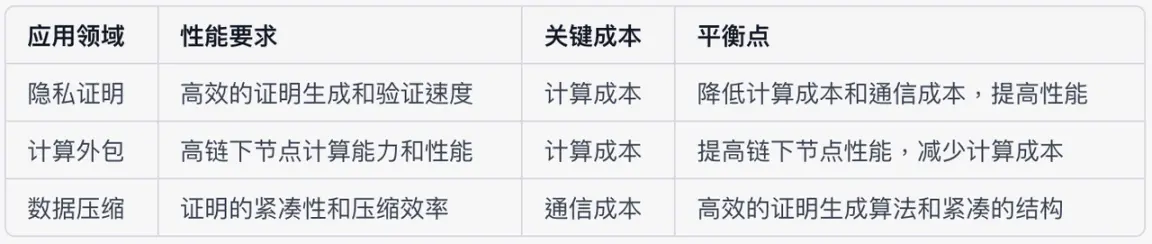
Cost Myths Broken
First, we need to define the cost structure of ZKP. Currently, various definition methods are complex and have different standards, which at least include hardware cost, computing cost, verification cost, storage cost, etc. But from the author’s perspective, following the native principles of ZKP, our definition of the cost structure in this article focuses on the two core costs of communication cost and computing cost. Communication cost refers to the cost of exchanging information between prover and verifier, while computational cost refers to the cost of prover and verifier to perform computation. These two major costs play a core competitive role in ZKP because they directly affect the efficiency and security of proof and verification. If the communication cost and computing cost are too high, the efficiency of proof and verification will be reduced, thus affecting the performance of the entire system.
Now returning to Aztec’s privacy architecture, we need to realize that there are significant differences between Aztec’s Rollup approach and other ZK-based Layer 2 solutions. Compared to aggregating and packaging multiple transactions to generate proofs, Aztec needs to generate proofs for each transaction separately and then package them. This approach results in the need to generate an independent proof for each transaction, which increases the calculation cost and gas fee, making Aztec’s gas fee higher than other Rollup schemes.
In addition, only the privacy proof generated locally by the user is a zero-knowledge proof that does not leak information, and the internal Rollup and external Rollup proofs on top of it are not necessarily zero-knowledge. This makes the privacy advantages of ZKP obscure and further questions the feasibility of ZKP’s cost advantage. Aztec Connect’s gateway method itself is relatively bloated. It aggregates transactions to Layer 1, and implements fund aggregation and Defi function calls through the Aztec Bridge Contract. However, this gateway approach may only be suitable for certain types of transactions in terms of fee sharing and imposes limitations on the flexibility of project deployment.
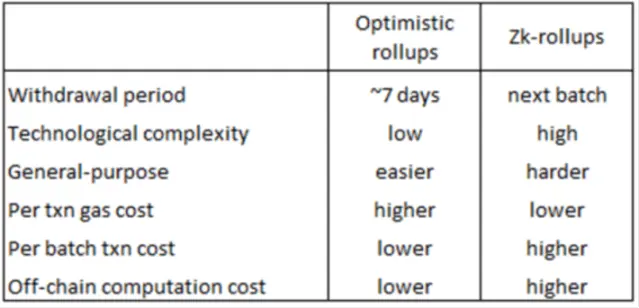
Hard to measure cost effectiveness
The relationship between cost and performance is complex and dynamic. Typically, lower cost improves performance because it reduces computational and communication overhead, thereby making the overall system more efficient. However, excessive pursuit of low cost will lead to performance degradation because certain computing and communication resources are sacrificed. Therefore, ZKP systems need to find a suitable balance between cost and performance to meet the needs of different application fields.
Zero-knowledge proofs involve verifying the correctness of a claim between different participants through message passing, so communication cost is a key factor. To reduce communication costs, consider using efficient communication protocols and compression algorithms to reduce message size and transmission time. Especially for Layer 2 projects like Aztec, cross-chain communication requires passing messages and data between different blockchain networks. Delivering messages involves network communication and interaction, which results in certain communication costs. Especially for large-scale full-chain DApp construction, the volume of message transmission will be greater, increasing the pressure on communication costs.
Zero-knowledge proofs require extensive computation to generate proofs and verify their correctness. In order to reduce computing costs, optimization algorithms and data structures can be used to reduce unnecessary computing steps and storage overhead. In addition, parallel computing and distributed computing technologies can also be used to distribute computing tasks to multiple nodes to improve computing efficiency. ZKP verification on the target chain is relatively cheap, but the process of generating proofs on the source chain requires large computational costs. Especially when using traditional methods for verification, the verification cost is high and users cannot afford it.
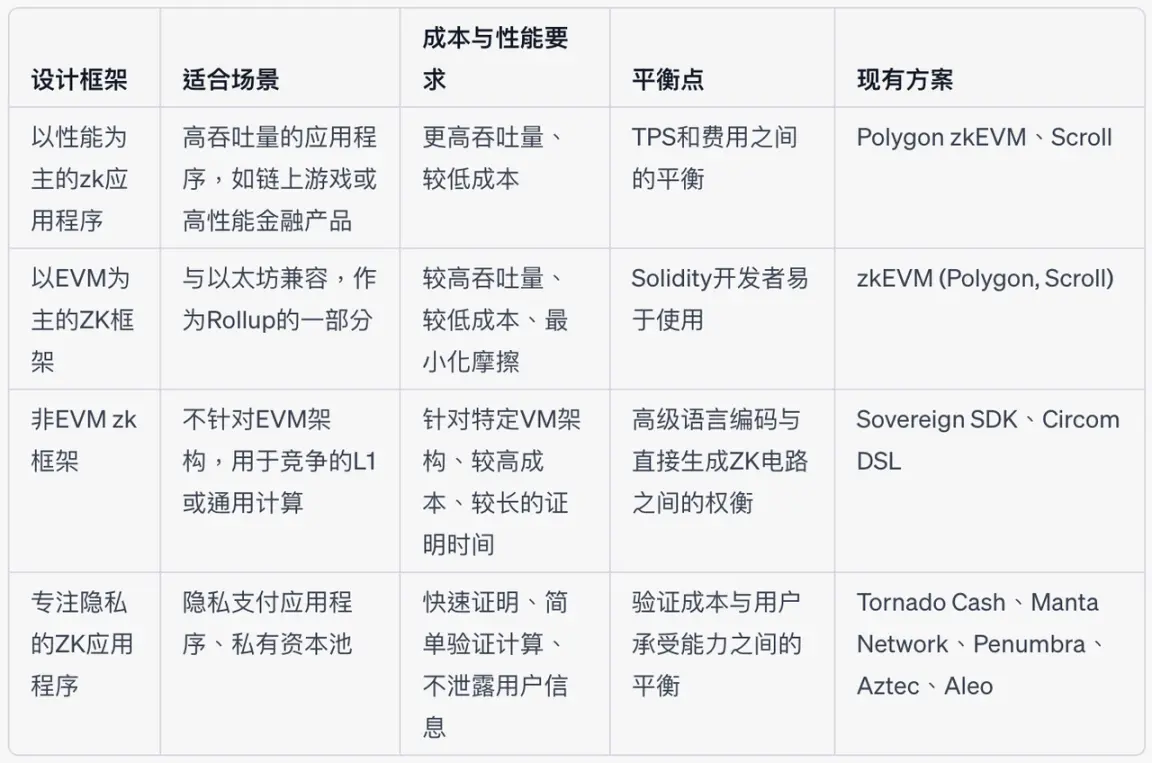
More effective cost control strategies
The author believes that with the development of technology, communication cost may no longer be the main limiting factor. The continuous advancement of modern communication technology means that communication costs are declining at a massive scale. Therefore, we need to focus more on the optimization of computational costs, which may be more meaningful. However, as the application scope of such protocols expands, communication cost may still be an important consideration, and continued attention needs to be paid to its specific scenarios for flexible use.
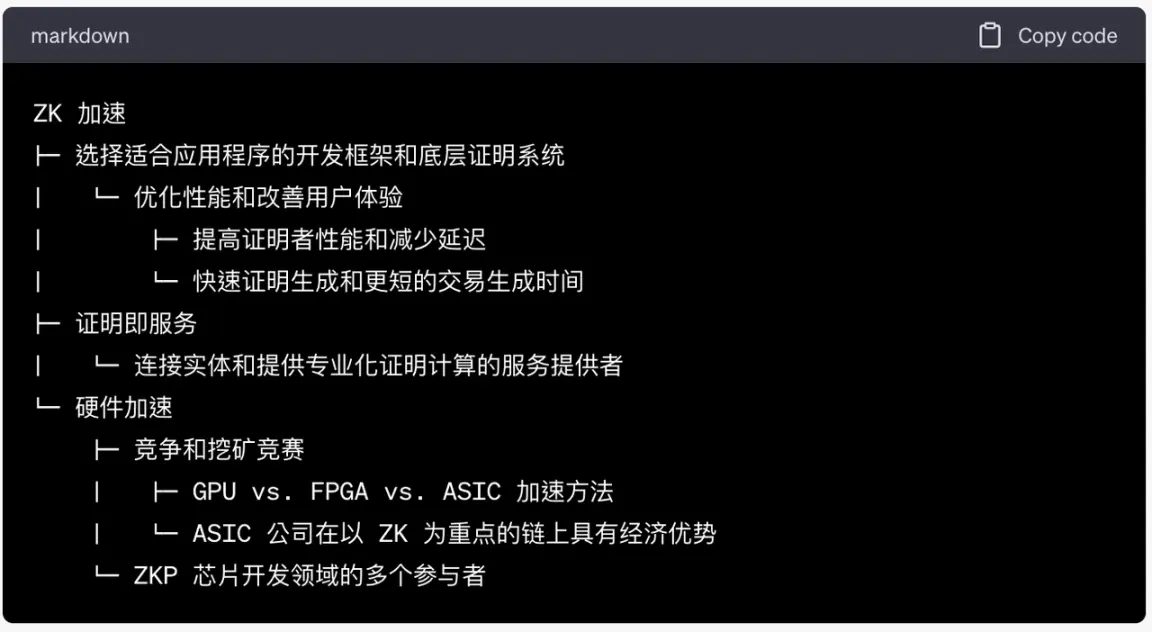
At the same time, we must also understand that the method of optimizing computing costs is not limited to algorithm optimization. In addition to improving the algorithm of the protocol, you can also consider reducing computing costs through technological innovations in areas such as dedicated hardware, distributed computing, or deep learning. These methods require more long-term research and demonstration, but will definitely bring breakthrough performance improvements and cost advantages. We believe that the following directions deserve more attention in the future ZKP competition:
- High performance and low computing cost: A ZKP project with high performance and low computing cost will be of great concern. This means that the project is able to generate and verify proofs in an efficient manner while maintaining security and privacy. Such a project would have broad application potential and be able to meet large-scale practical needs. There are currently many different ZKP proof systems, each with its own unique advantages and limitations. We are more optimistic about projects dedicated to improving and innovating proof systems to improve efficiency, reduce computational costs, and enhance security. Developers need to explore more efficient zero-knowledge proof construction and more optimized zero-knowledge proof verification algorithms to achieve faster and more reliable proof generation and verification processes.
- A successful ZKP project should have features that can be deployed in the real world. This means it needs to take into account constraints in real-world settings and provide practical solutions. For example, considerations such as compatibility with existing infrastructure and systems, ease of integration, and usability are all important. Utilizing dedicated hardware to accelerate ZKP calculations is an important research direction. Future research can focus on the innovation of hardware acceleration technology, such as the use of customized hardware such as FPGA (Field Programmable Gate Array) or ASIC (Application Specific Integrated Circuit). By using hardware acceleration, the performance and efficiency of the ZKP system can be improved, providing better support for large-scale applications and real-time scenarios.
- Solution to security issues: In the ZKP system, security is crucial. Security issues in the ZKP system are the biggest hidden costs, such as defense against attacks and vulnerabilities, security of parameter settings and guarantee of randomness, etc. Only by continuously improving the security of the ZKP system can such projects ensure its reliability and credibility in practical applications and provide users with a higher level of protection and privacy guarantees, which will run through the entire cost and performance design. process.
To sum up, a promising ZKP project should have the characteristics of high performance and low computing cost, oriented to practical applications, safe and trustworthy, deployable in the real world and secure throughout the process. We can foresee that the continuous development of ZKP technology will provide broader application prospects for privacy protection and verification performance. We also need to consider multiple factors when evaluating the cost-effectiveness of a ZKP project, including computing resources, security requirements, performance needs, and complexity of implementation and maintenance. In some cases, ZKP may provide significant privacy and security benefits that offset the increased cost. However, in other cases, the cost may exceed the actual value provided.
Disclaimer: The information on this page may come from third parties and does not represent the views or opinions of Gate. The content displayed on this page is for reference only and does not constitute any financial, investment, or legal advice. Gate does not guarantee the accuracy or completeness of the information and shall not be liable for any losses arising from the use of this information. Virtual asset investments carry high risks and are subject to significant price volatility. You may lose all of your invested principal. Please fully understand the relevant risks and make prudent decisions based on your own financial situation and risk tolerance. For details, please refer to
Disclaimer.


