Written by: veDAO
As the tide of BTC rises, the ecology of BTC is becoming more and more prosperous. A previous article by veDAO took stock of the Defi projects in the BTC ecosystem market and shared “BTC Ecosystem Booming: Inventory of New Opportunities in Defi”. veDAO Institute. In this article, we continue to focus on the BTC ecosystem, this time let’s focus on the functional markets of Ordinals.
NXHUB
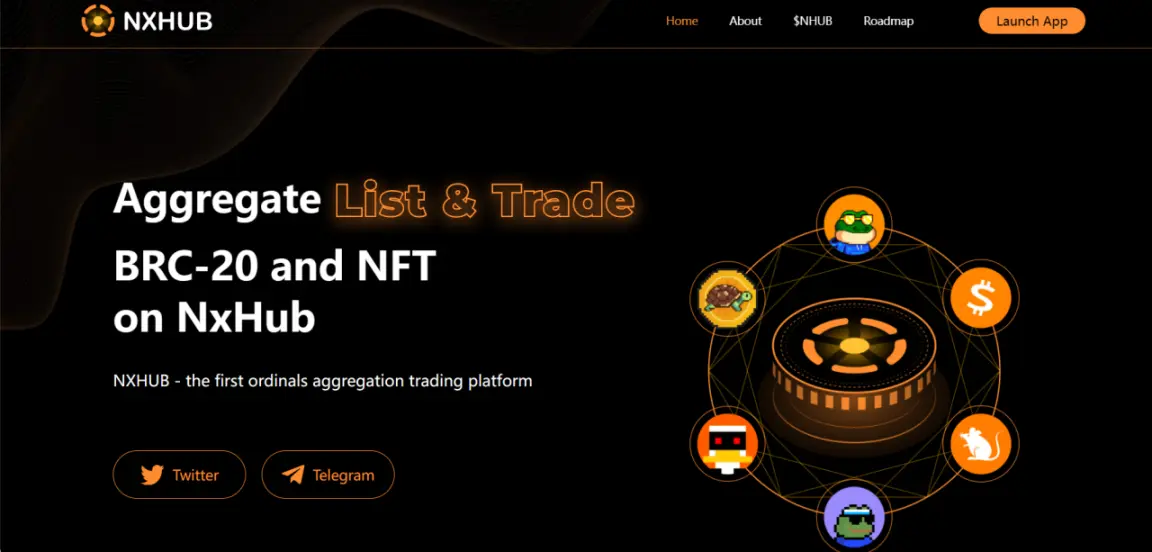
As the BRC-20 assets that are widely sought after by the community continue to emerge, there is a gap in the infrastructure and tools that meet the needs of Oridnals eco-traders in the short term. Last month, on TurtSat, IDO’s NxHub was born.
NxHub is an Ordinals-based aggregator marketplace that simplifies the order process by capturing and displaying listing order data from platforms such as UniSat, OKX, MagicEden, and OrdinalsWallet in an aggregated manner, allowing users to choose to list orders on multiple platforms and send requests to the corresponding marketplaces based on the user’s choice. So as to achieve multi-platform price updates, cancellations and other content. The goal of NxHub is to consolidate more Oridnals asset information, so that traders no longer have to repeatedly compare prices across platforms. By accessing NxHub, traders will quickly access information on the most popular assets in the current market, and access data such as price fluctuations, volume changes, and supply of these assets before trading to aid their investment decisions.
In addition to providing NFT trading, NxHub will also provide advanced features such as bulk listing and floor-sweeping (buying multiple lowest-priced NFTs at a time), allowing traders to send requests to place orders and cancel orders in the corresponding marketplaces according to their choice. By providing traders with more convenient bulk operations, NxHub simplifies the entire order placement process and makes it easier to operate. In addition, NxHub will allow traders to add multiple BRC-20 tokens to their shopping carts, and the platform will intelligently process them according to traders’ preferences and purchase needs, and package multiple UTXOs in the same block through technology, as shown below:
With the recent mushrooming of BRC-20 assets, including public chain inscriptions such as eths, bnbs, pols, sols, etc., the prices of some of the earliest listed inscription tokens have also been rising. Under such a craze, an Oridnals trading aggregation platform is particularly necessary. There is no doubt that the emergence of NxHub has brought further prosperity to the BTC ecosystem, and with its first-mover advantage, it is expected to become the first choice for BTC inscription traders.
LIQUIDIUM
NFTs can be said to be one of the contributors to the prosperity of the ETH Fang ecosystem, so part of the popularity of Ordinals this year is its significance to the BTC ecosystem. Like NFTs, Ordinals lending is an important part of the BTC ecosystem. After all, NFT lending unleashes liquidity, thus opening up the prosperity of the ecosystem. Liquidium is the first Ordinals lending protocol in the BTC ecosystem.
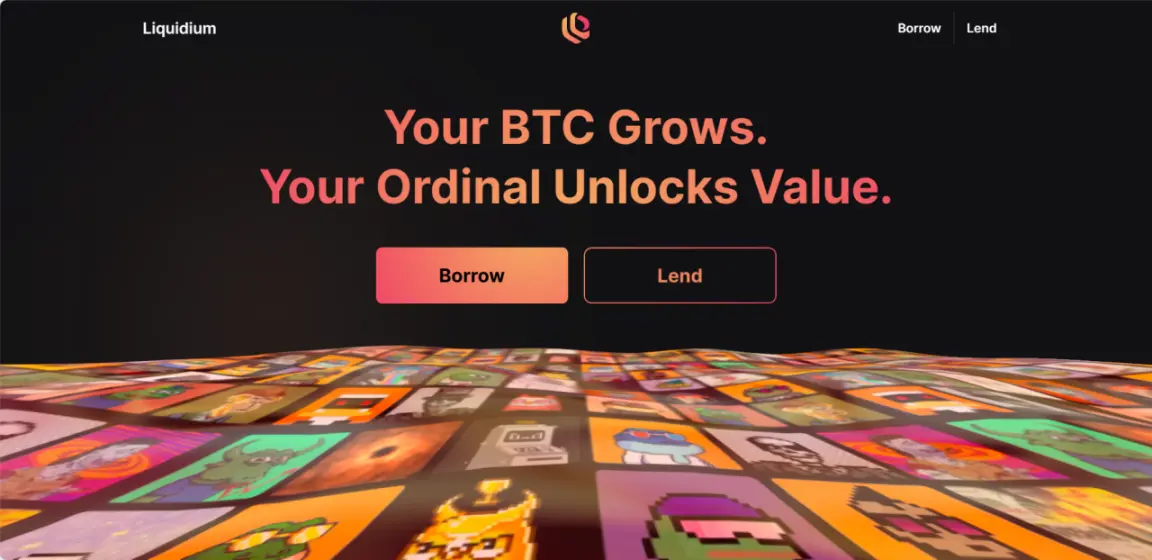
Liquidium is a peer-to-peer lending protocol that runs exclusively on BTC chains. This innovative solution allows users to lend and borrow native BTC using native Ordinals as collateral, eliminating the need for intermediaries or custodians. Transactions are securely conducted through partially signed BTC transactions (PSBT) and discrete log contracts (DLC). Instead of mapping their inscription to another chain, users can use borrowed BTC to purchase more Ordinals inscriptions or any other BTC eco-assets without having to change wallets, blockchains, or platforms. Currently, Liquidium is only compatible with Xverse wallets.
Liquidium’s mechanism is transparent and simple: first, the borrower applies for a loan by setting the desired loan terms, and locking their Ordinals inscription as collateral. The lender then reviews the loan request and provides a BTC to the borrower who meets the loan criteria, thereby initiating the loan. After that, if the borrower does not repay the loan on time, the loan defaults and the Ordinals inscription is transferred to the lender. To maintain fairness and security, Liquidium will utilize oracles to verify loan results by checking on-chain activity, allowing the protocol to ensure minimal trust issues and transparency of transactions.
LIQUIDIUM VS BLEND
When it comes to NFT lending, I have to mention that Blur launched a lending protocol called Blend in May this year, and the biggest difference between Blend and Liquidium is that Liquidium mainly provides lending for Ordinals. There are some subtle differences.
Blend has two models: peer-to-peer lending and peer-to-pool lending, while Liquidium currently only has a peer-to-peer lending model.
Blend is aimed at 3 main groups of people:1. NFT collectors, the purpose of which is to obtain ETH liquidity without selling NFTs;2. Traders who want to buy blue-chip NFTs at a very low cost3 Airdrops, in addition to listing and bidding, they can also get airdrops by lending NFTs. As far as Liquidium is concerned, Ordinals holders are benchmarked against the above-mentioned NFT collectors, and Liquidium currently does not have the ability to buy and aggregate Ordinals, which can be implemented by the aforementioned NxHub, and Liquidium has not released any news about the airdrop yet.
With Liquidium, Ordinals owners can access liquidity without giving up ownership of their assets. This is an important step in NFT lending, specifically catering to the needs of Ordinals owners. By providing a P2P lending platform that uses Ordinals as collateral for the BTC mainnet, Liquidium also realizes BTC DeFi and enriches the BTC ecosystem. This agreement has the potential to reshape the lending landscape and open up new opportunities in the world of Ordinals.
CHAMCHA
Chamcha is a platform based on the Ordinals Asset Liquidity Protocol that focuses on providing a secure and convenient environment for buying, selling, earning, and hosting NFT assets. It combines blockchain technology and smart contracts to combine traditional financial scenarios with the potential of circulating and streaming NFT assets.
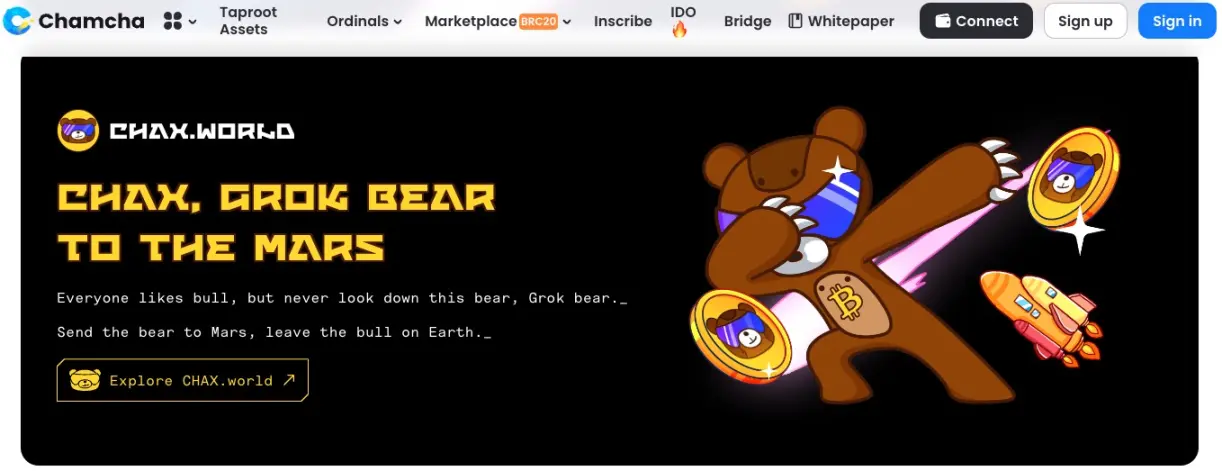
Chamcha has also adopted the BRC-20 cross-chain protocol and launched CHAX (Chamcha Token) to support the new cross-chain bridge. This new bridge aims to alleviate the congestion of old cross-chain bridges caused by excessive user withdrawal requests due to large spreads between MEXC and on-chain prices. Currently, more than 20 million CHAX tokens have been cross-chained to the ETH Network. CHAX tokens have a total supply of 2,100,000,000 and a current market cap of $15.7M. CHAX plays a key role in managing the platform, incentivizing liquidity provision, providing staking rewards, and various activities and transactions in the Chamcha ecosystem.
TURTSAT
TurtSat is an Ordinals-based project launch platform, similar to Gitcoin in the Ordinals ecosystem. It supports open source developers and communities to participate in the construction of the Ordinals ecosystem by establishing a basic PSBT donation protocol, so as to obtain benefits. TurtSat is committed to creating a positive, community-led Ordinals ecosystem and has partnered with a number of influential organizations to advance the development of the Ordinals protocol and BTC ecosystem.
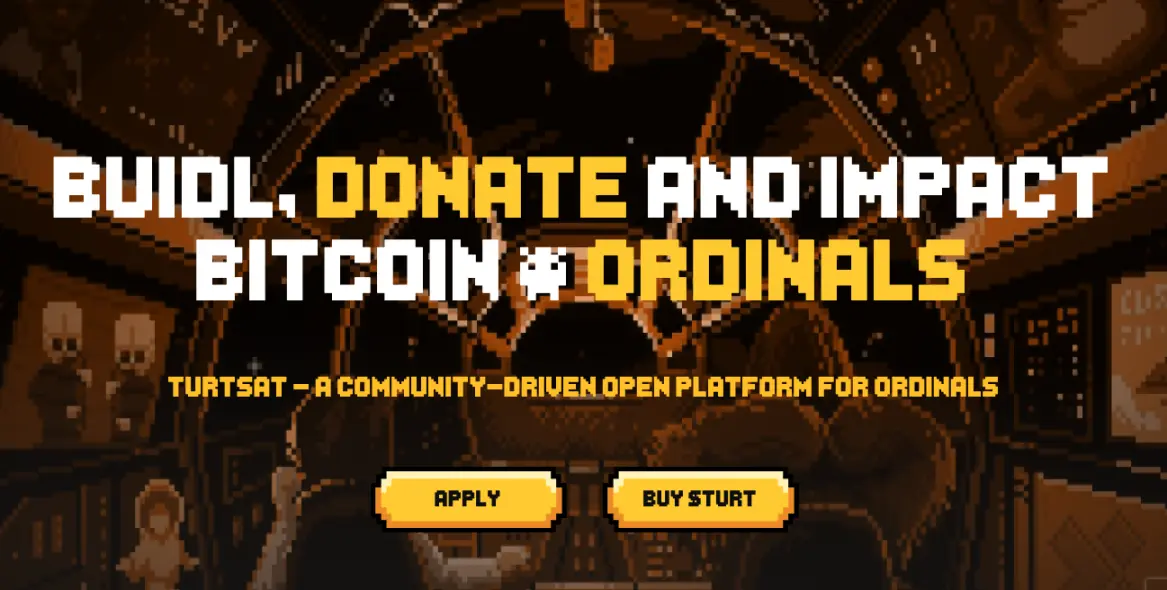
TurtSat already supports BRC-20 and ERC-20 two-sided markets, and BRC-20 users can trade through Unisat and OKX. Since its launch, the TurtSat platform has launched a total of 4 BRC-20 projects, including the asset protocol CHAX, the cross-chain bridge MUBI, the Ordinals aggregation platform NHUB, and the Ordinals lending platform DOVA. These projects were all early builders of the BRC-20 infrastructure, and the projects rose well after launch.
Conclusion
Recently, the momentum of ecological development in BTC has been strong, the price of leading ORDI has been rising, various inscriptions have emerged in an endless stream, and even the inscriptions of various public chains have become eye-catching. In this case, the needs of the BTC ecosystem, including lending and aggregation, have also become urgent. BRC-100, an extension protocol based on the Ordinals theory, designed to implement various decentralized applications on BTC Layer 1, has also become a hot topic of community attention. If BRC-100 is applied on a large scale, the BTC ecosystem will enter a new round of blowout period, and the market for various functions of the BTC ecosystem will become more prosperous.
BTC is currently the largest cryptocurrency by market capitalization, and the emergence of Ordinals opens a new chapter in the development of the BTC network and blockchain technology. The Ordinals protocol introduces new features to BTC that have never been implemented before, and as the underlying technology of BTC continues to evolve, we can expect new features to make inscriptions more efficient, secure, and versatile.
Source: veDAO


