Original article by Hal Press
Since we came up with the Stacks thesis, there have been several key developments that have made this theory clearer. We’ll elaborate on this later, but at a high level, the demand for BTC Bitcoin block-space has solidified, which will further increase the demand for what Stacks is building.
We are convinced that Stacks is creating a platform that will be used to explore more sophisticated and granular BTC-priced utilities, with the ultimate goal of turning it into a true BTC Layer 2 (L2) in the future, if the technology allows. **This vision has progressed gradually, and the Stacks development team plans to complete the Nakamoto upgrade before the BTC halving event next April.
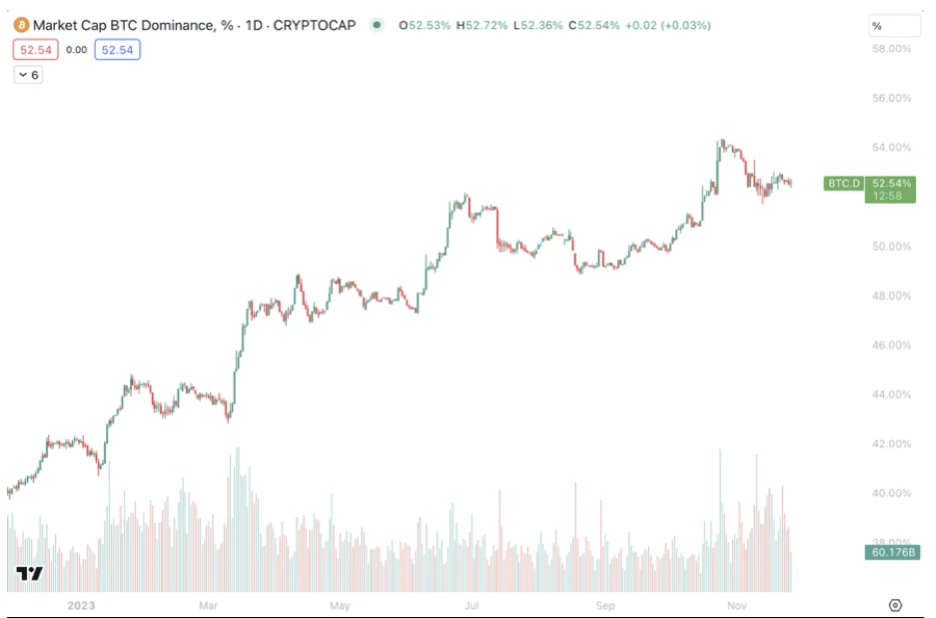
Despite these exciting developments, there has been a recent decline in interest in Stacks due to the increased attention of other, more immediate catalysts in the market, but the strength of Stacks has increased as several key milestones are near. This year, the average gas cost of the BTC network has soared by 50 times (compared to 2 times that of ETH), which shows that the demand for block space in the BTC sector remains strong. The continued growth of Ordinals further shows that people want to do more with BTC than simply hold it. BTC asset itself has strengthened its position as a global macro asset and the market demand for alternative stored value (SOV) has increased, so the dominance of BTC has risen. The demand for BTC is largely due to the more stable price performance of BTC as a store of value, as well as the broader regulatory clarity that comes with the expected approval of US spot-BTC exchange-traded funds (BTC ETFs). The combination of all these external forces has increased the need for what Stacks is building: a high-performance, flexible, and secure BTC-priced environment for exploring more complex BTC applications and completing true BTC Layer 2 (L2) transitions.
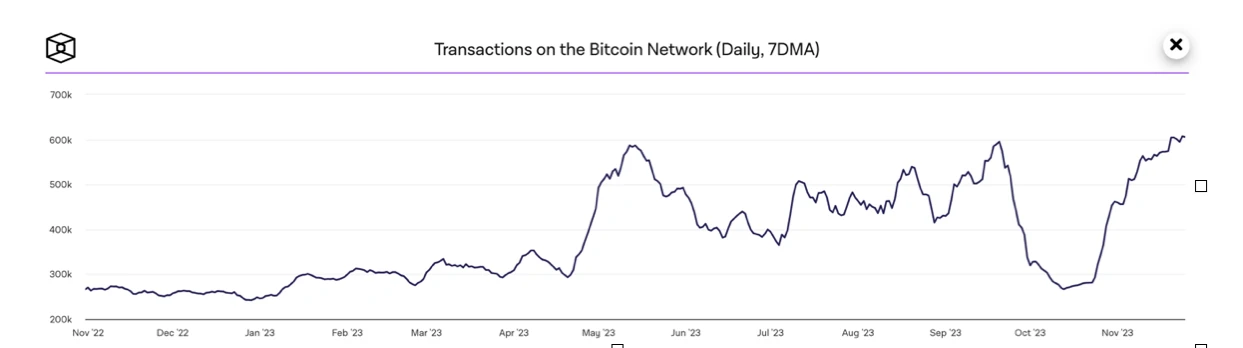
BTC number of transactions on the network
The resurgence of the BRC-20 and Ordinals deals
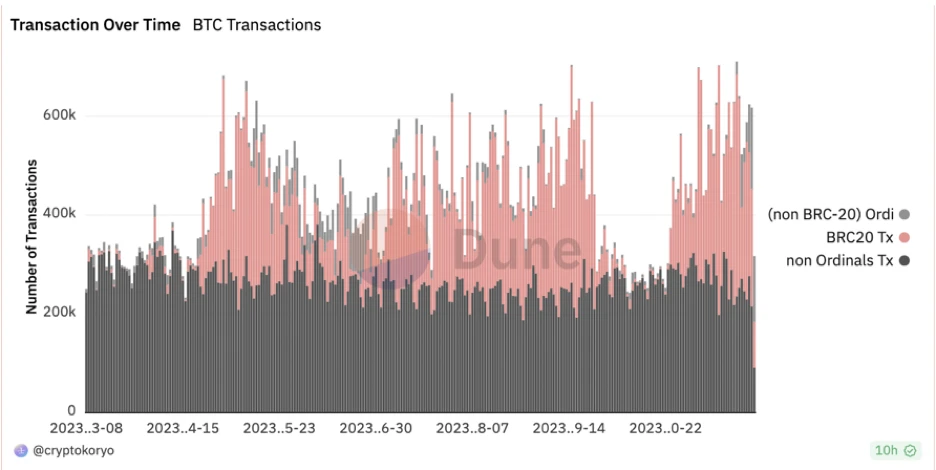
BTC Growth of the dominant bit
At the same time, despite the fact that the development of Nakomoto has absorbed all of Stacks’ resources, Stacks has been largely overlooked in the past few months. **The Stacks development team has now completed Mockamoto, which will be used to bring Satoshi nodes and RPC endpoints online. This is undeniably a very critical milestone that will allow the Stacks team to launch the Satoshi mainnet in April next year, as planned, in conjunction with the BTC halving.
In our opinion, this upgrade will be the most important of several compelling catalysts. The Stacks network is currently a bit cumbersome to use, as it has the same block time as BTC Layer 1 (L1) and does not support bridging BTC due to security concerns.
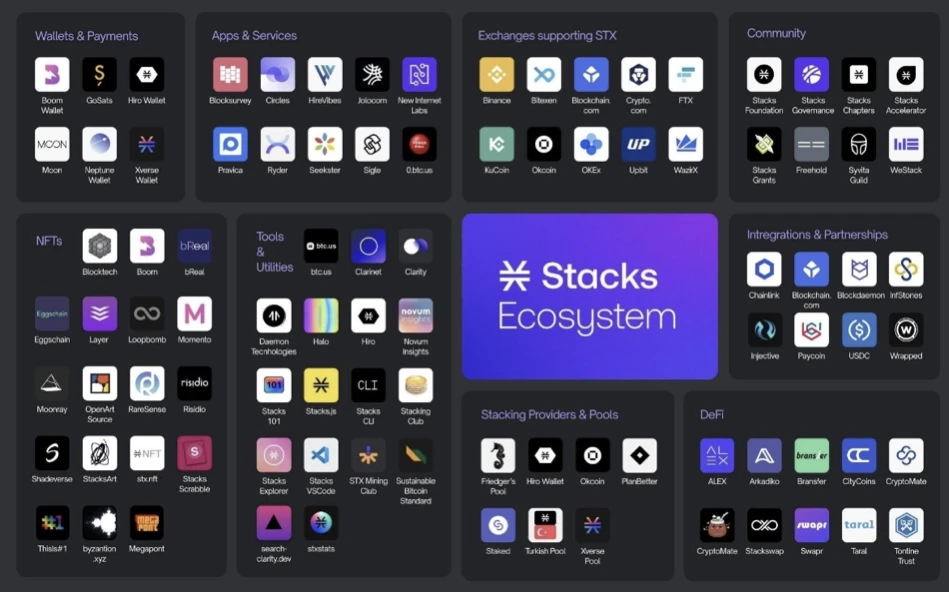
**After the upgrade, Stacks will be significantly accelerated, reducing the block time to 5 seconds (currently about 10 to 30 minutes), and will support sBTC, a secure and efficient wrapped version BTC of Bitcoin that naturally integrates with the Stacks consensus mechanism. Despite the current technical limitations, the Stacks ecosystem remains resilient, with several strong and expanding teams building in the space. Once the network is substantially upgraded along with Satoshi Nakamoto and sBTC, it will be something we are very much looking forward to seeing in the future. With this upgrade, Stacks will be fully secured by the BTC’s 100% hash rate, bringing it closer to BTC Layer 2 (L2).
Overview of the Stacks ecosystem
We strongly believe that there are a number of upcoming events that will greatly draw attention to STX.
First, we predict BTC approval of spot ETFs in January next year, which will lead to widespread discussion centered on BTC and overwhelming advertising by many of the world’s largest financial institutions. This hype will have a direct impact on the development of BTC, and may even affect other BTC derivatives, such as STX, the native cryptocurrency of the Stacks blockchain.
Second, Stacks is looking to expand its footprint globally through recent partnerships with Singapore’s Spartan Group and South Korea’s DeSpread. They will run a marketing campaign to raise awareness of BTC L2 in the first quarter of next year, with a focus on South Korea, Singapore, Hong Kong and Dubai.
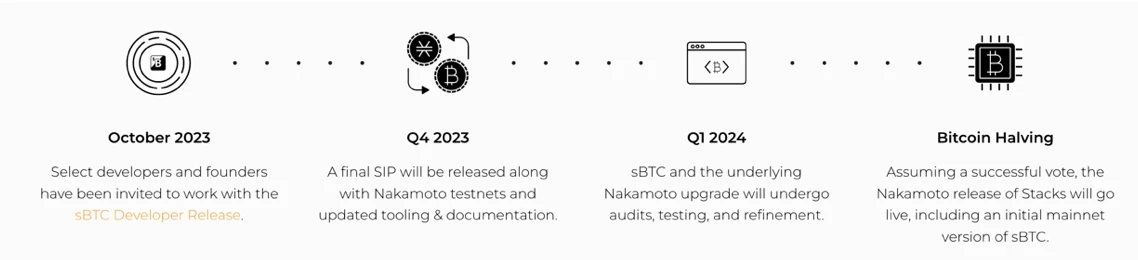
Third, Stacks will announce several key milestones ahead of Satoshi Nakamoto’s upgrade in March next year, which is expected to start gaining more traction in the coming weeks. The second testnet of the upgrade is expected to be launched by January next year.
Finally, new BTC L1 tools, such as BitVM, enable minimal trust transfer between BTC L1 and L2, bringing Stacks closer to the vision of becoming a true BTC L2. Previously BTC this support for L1 required changes to BTC L1 (which was difficult to implement), but with BitVM there is no need to make changes to BTC L1.
Satoshi Nakamoto upgrade milestones
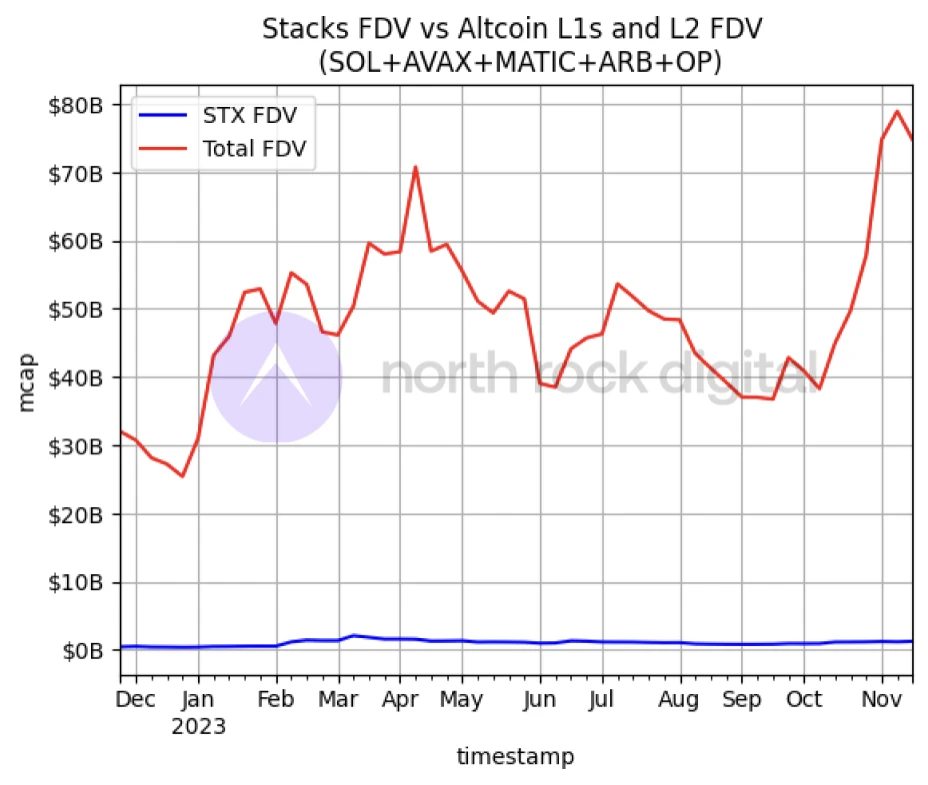
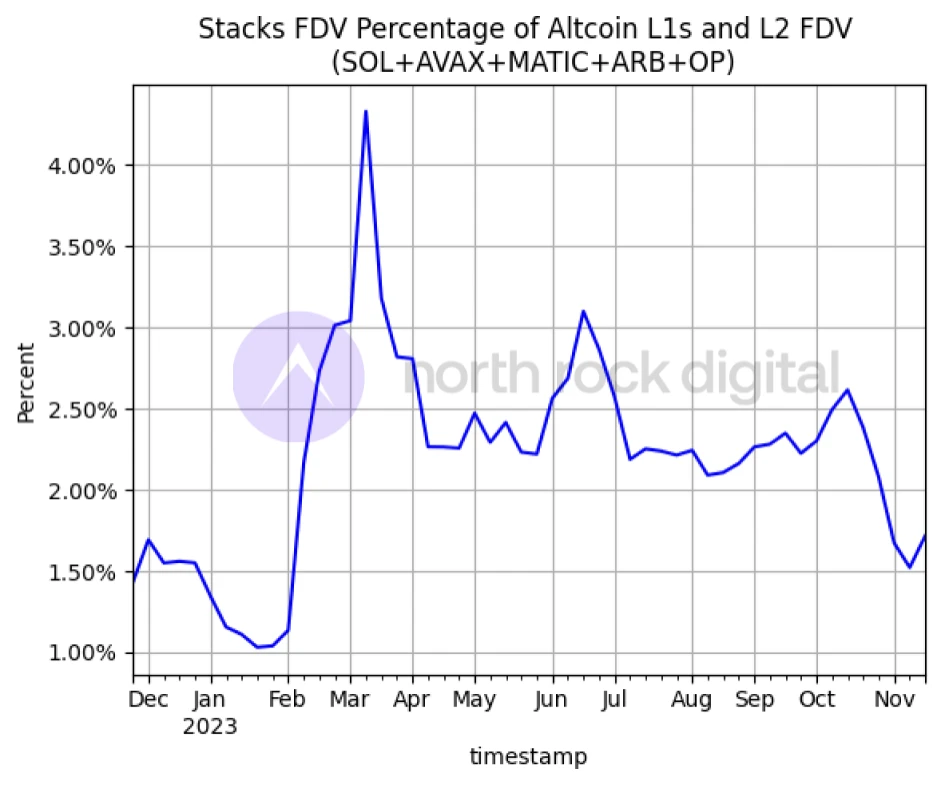
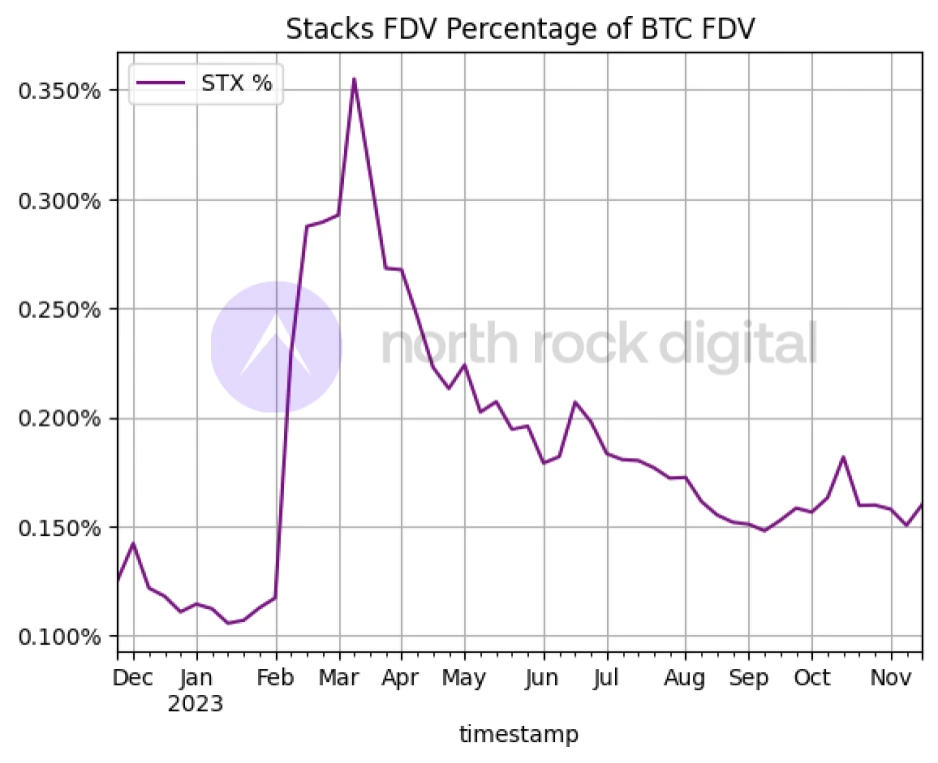
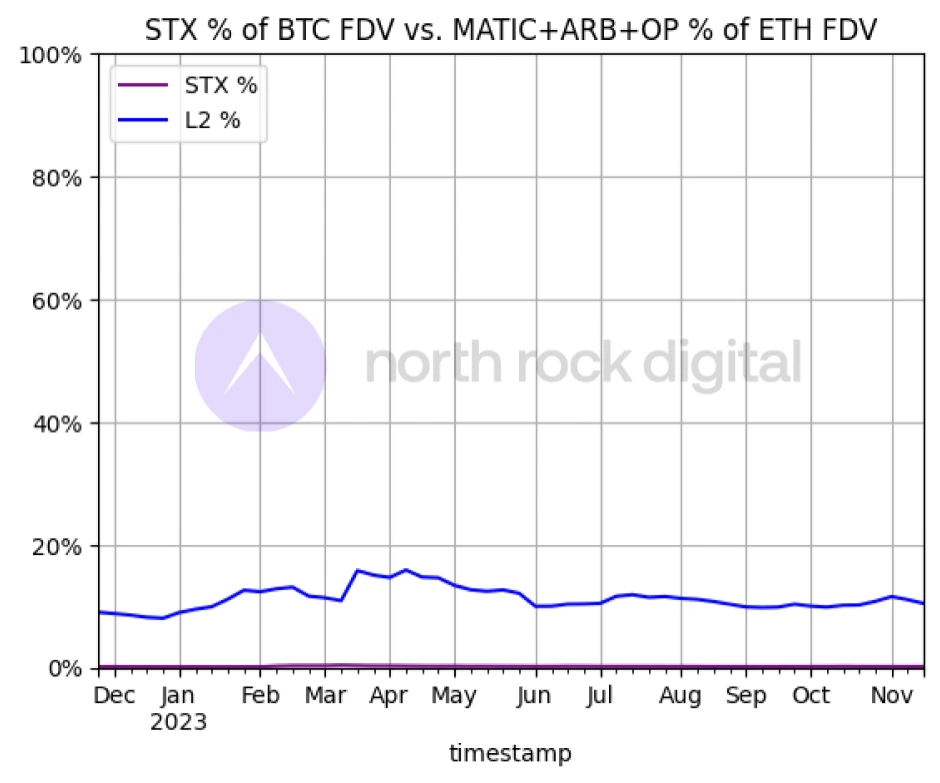
Relative valuations for STX and BTC and with other Layer 1/Layer 2 (L1/L2) ecosystems are also now at impressive levels. It is expected that by April next year, Stacks will likely finalize the Satoshi Nakamoto upgrade to enable it to offer its first fully operational BTC-priced ecosystem. At the same time, we will be approaching the BTC halving, and the Stacks ecosystem will be in the middle of its marketing campaign. This should provide a favorable environment for STX to narrow its valuation discount relative to these other assets.
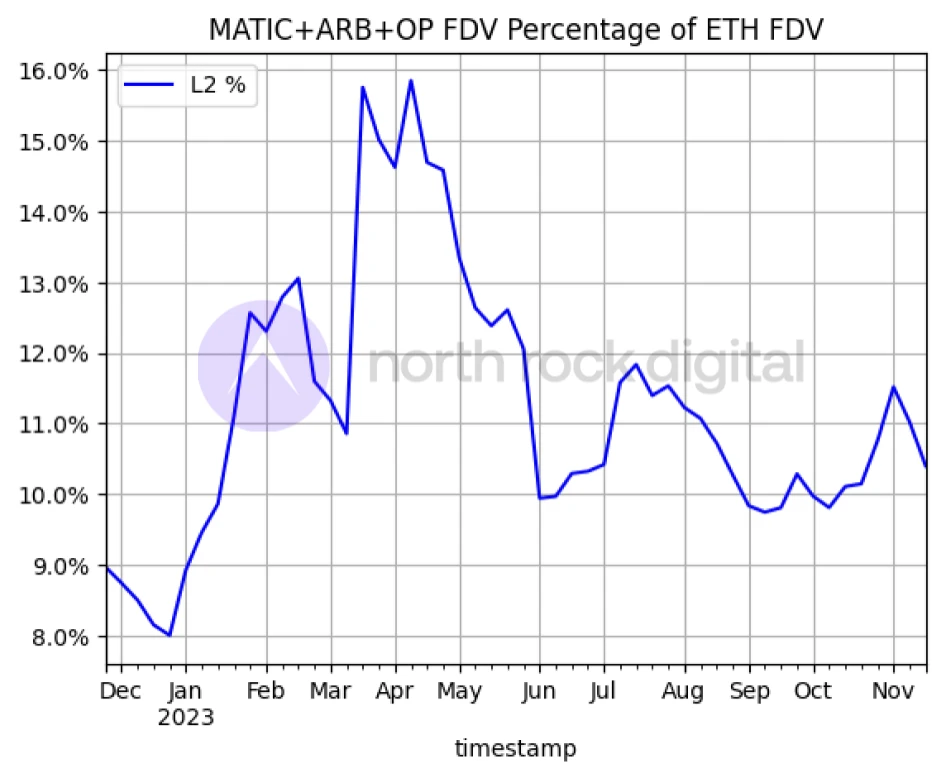
**STX is currently trading at 0.15% of the total diluted market capitalization (FDV) of BTC, while ETH L2 is trading at 10% of FDV of ETH. **While this difference is reasonable, the size of the current discount shows the infinite potential upside of STX as it dramatically increases its abilities with Satoshi Nakamoto upgrades and gradually becomes a true BTC tier 2 (L2) over time.
STX vs BTC vs L1/L2 ratio
Let’s imagine what Stacks can do.
Before going into detail about specific cases, there are some key factors that need to be highlighted. These applications, while possible in other forms, are not yet widely available. We believe that once these applications are implemented on Stacks, there are many reasons why they will be more successful.
The first is the community factor – Stacks has a strong BTC-centric community of users who have become accustomed to using BTC to experiment with all sorts of things, otherwise they wouldn’t be users of Stacks at all. This is in stark contrast to products like wBTC that exist on ETH but belong to the ETH community.
The second is incentives – organizations in the Stacks ecosystem are planning to launch a series of initial incentives to attract BTC users. One of the proposals is to provide an automated yield for all BTC moving to Stacks, which is enough to provide a yield of 2-3% on the initial $100 million in total value locked (TVL).
Finally, with the implementation of the Satoshi Nakamoto upgrade, Stacks will not only be able to process existing block transactions on the BTC, but will also be upgraded to 100% BTC reorg resistance, with plans to eventually transform into a true BTC layer 2 when technically feasible, providing additional impetus for BTC community members to explore applications within the Stacks ecosystem.
After the Satoshi Nakamoto upgrade, Stacks will be able to provide a high-performance BTC-denominated NFT marketplace once the fast block and sBTC features are implemented. This can be used not only for more efficient Ordinals transactions, but also for its exclusive L2 NFT collection. And through the sBTC mechanism, we can lock Ordinals on BTC L1 and then trade on L2 of Stacks, which is not only faster and cheaper, but also more flexible in the way of trading.
In addition, with sBTC, we can explore more traditional decentralized finance (DeFi) applications, such as lending, which the Zest team has already started on Stacks. Other sub-token swap markets based on sBTC will also be opened, and ALEX has already laid the groundwork for this. These different apps not only explore new features, but also automatically generate revenue. It is foreseeable that such products and services will gradually occupy the market, providing us with an ecosystem full of innovation and practicality.


