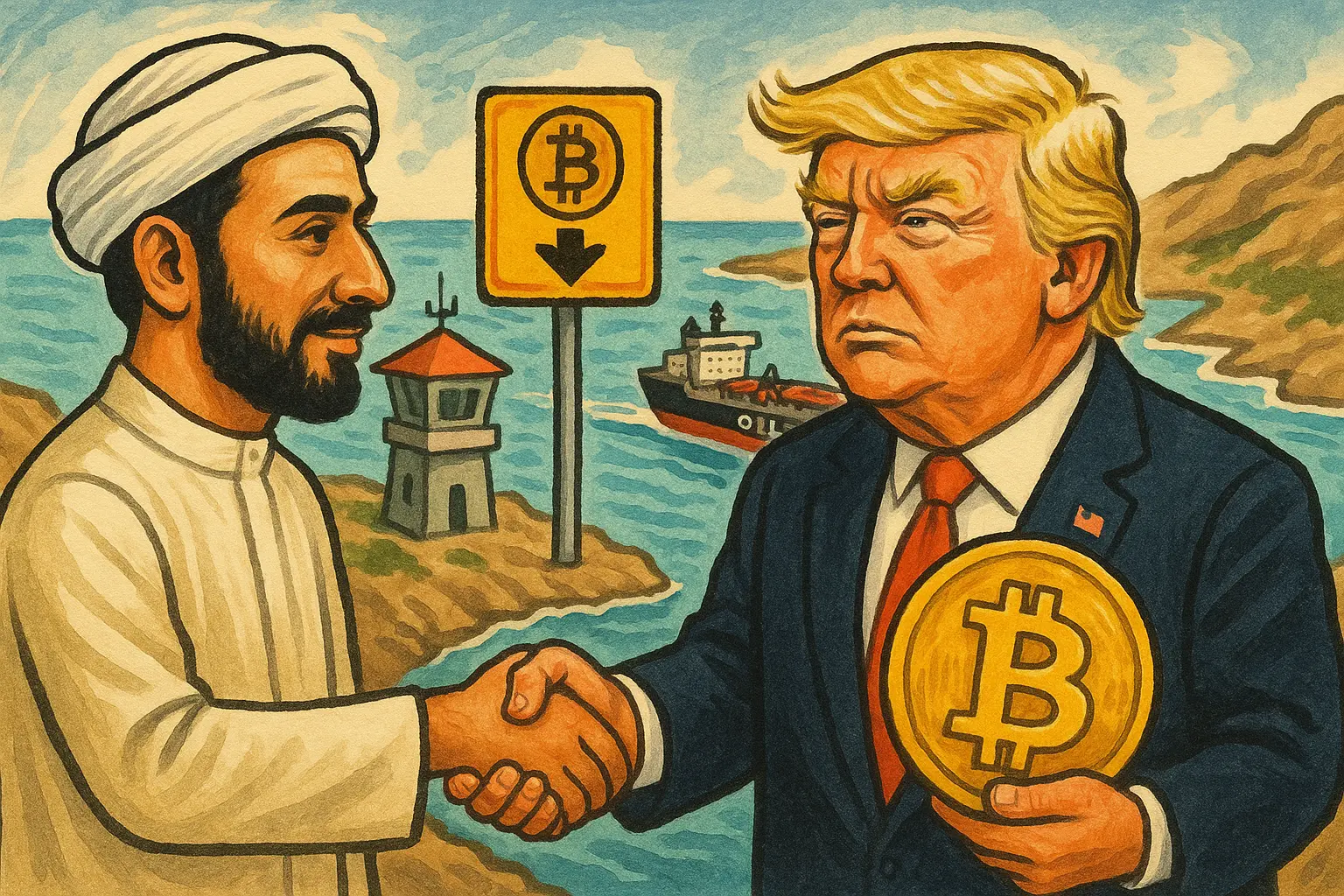
Hamid Hosseini, spokesperson for the Iranian Oil, Natural Gas and Petrochemical Products Exporters Union, confirmed to the British newspaper The Financial Times on April 8 that all vessels planning to transit the Strait of Hormuz during the ceasefire must pay a $1 toll per barrel based on the crude-oil quantity carried, with payment made via Bitcoin. In an interview with ABC News, Trump said the U.S. is considering setting up a Hormuz “joint-venture tolling mechanism” with Iran.
Iran’s Bitcoin Toll Plan: Process, Amounts, and Core Logic
According to Hosseini’s account, this tolling scheme involves three fixed steps:
Operational Process for the Strait of Hormuz Bitcoin Toll
Declaration step: Vessels planning to pass through the strait must send an email to Iranian authorities in advance, making a detailed declaration of the cargo they are carrying
Assessment step: After Iran completes the cargo assessment, it informs the vessel of the toll amount to be paid
Payment step: The vessel completes payment “within seconds” in Bitcoin, ensuring that the transaction is not tracked or seized by the sanctions system
The $1 per-barrel rate has limited impact on the cost for a single barrel, but for fully loaded ultra-large crude carriers, the total toll could reach about $2 million at most. Hosseini made it clear that the purpose of this mechanism is to ensure that no weapons can pass through the Strait of Hormuz, and he emphasized, “Everything can pass, but each ship needs time, and Iran isn’t in a hurry.”
Bitcoin Settlement: A Direct Challenge to the Petrodollar System
Iran’s requirement to pay the toll in Bitcoin rather than in U.S. dollars has been widely interpreted as a direct blow to the current “petrodollar” settlement system. Bitcoin transactions do not rely on traditional dollar settlement channels such as SWIFT, effectively bypassing the U.S.-led financial sanctions tracking mechanism. At the same time, it is also testing a new settlement model in global energy trade that sidesteps the traditional dollar route.
Given that the Strait of Hormuz carries about one-fifth of the world’s oil every day, if this arrangement were implemented broadly, its influence in financial and geopolitical terms would far exceed the cost significance of the toll itself—this is also the fundamental reason why the market is paying close attention.
Trump’s “Joint Venture” Signal: An Unexpected Overlap of U.S.-Iran Interests
Faced with Iran’s tolling demand, Trump’s response was unexpected. In an interview with Jonathan Karl, he said, “We’re considering making it a joint venture project. It’s a way to ensure security— and it also prevents a lot of other people. This is a wonderful thing.”
This statement shows that Trump did not completely oppose the strait tolling mechanism itself, and instead was more focused on whether the U.S. can have a role and influence within this system—an obvious contrast with his earlier hardline stance demanding that Iran “open the strait fully, immediately, and without impediment.” In fact, earlier this week, Trump also hinted that the U.S. may set up its own tolling system for vessels transiting the Strait of Hormuz, indicating that the controversy has evolved from “whether to open” into a more complex game over “who controls it, how tolls are charged, and who ensures security.”
The Ceasefire Doesn’t Resolve the Core Dispute; the Strait of Hormuz Remains the Biggest Variable
A senior Iranian official told Reuters that Iran may reopen the Strait of Hormuz as early as Thursday or Friday in a “limited and controlled by Iran” manner, to accommodate negotiations expected to be held with the United States. This means that even if the strait is reopened in name, the transit model would be a controlled framework of “vessel-by-vessel screening, encrypted toll payments, and military coordination,” rather than the “full, immediate, and unobstructed” passage Trump demanded.
With Trump calling for full opening and Iran offering limited, controlled opening, the gap between the two determines why the Strait of Hormuz is unlikely to restore wartime transportation conditions characterized by high efficiency and low friction in the short term. Whether conditions can truly improve in the future will still depend on the continuity of the ceasefire and substantive progress in U.S.-Iran negotiations.
Frequently Asked Questions
How is Iran’s Strait of Hormuz Bitcoin toll calculated?
Iran requires that all vessels transiting the Strait of Hormuz pay the toll at a rate of $1 per barrel based on the quantity of crude oil carried, with payment settled in Bitcoin. For fully loaded ultra-large crude carriers (VLCCs), the toll for a single transit can reach about $2 million at most.
Why does Iran require tolls to be collected in Bitcoin rather than U.S. dollars?
Hosseini said the purpose of using Bitcoin is to ensure that transactions “won’t be tracked or seized due to sanctions.” Bitcoin transactions do not go through the SWIFT system, which can effectively evade the U.S.-led financial sanctions. At the same time, they are also interpreted by outsiders as a direct challenge to the petrodollar settlement system.
What does the “U.S.-Iran joint venture toll” mechanism Trump is considering mean?
Trump said the U.S. is considering setting up a joint venture tolling mechanism with Iran regarding the Strait of Hormuz. This differs sharply from his earlier tough stance demanding that Iran fully and immediately open the strait, indicating that the U.S. may be exploring a compromise path regarding the issue of control over the Strait of Hormuz.
Disclaimer: The information on this page may come from third parties and does not represent the views or opinions of Gate. The content displayed on this page is for reference only and does not constitute any financial, investment, or legal advice. Gate does not guarantee the accuracy or completeness of the information and shall not be liable for any losses arising from the use of this information. Virtual asset investments carry high risks and are subject to significant price volatility. You may lose all of your invested principal. Please fully understand the relevant risks and make prudent decisions based on your own financial situation and risk tolerance. For details, please refer to
Disclaimer.


