Author: Gans
Recently, @RicardoPolyGuy mentioned during the “Prediction Tavern” live stream that LP rewards might serve as an indicator for Polymarket airdrops. Many friends showed interest but didn’t know where to start. The main difficulty lies in how to select suitable order markets. The purpose of this article is to solve that problem, teach you how to fish, and enable beginners to directly start earning Polymarket rewards on their own. 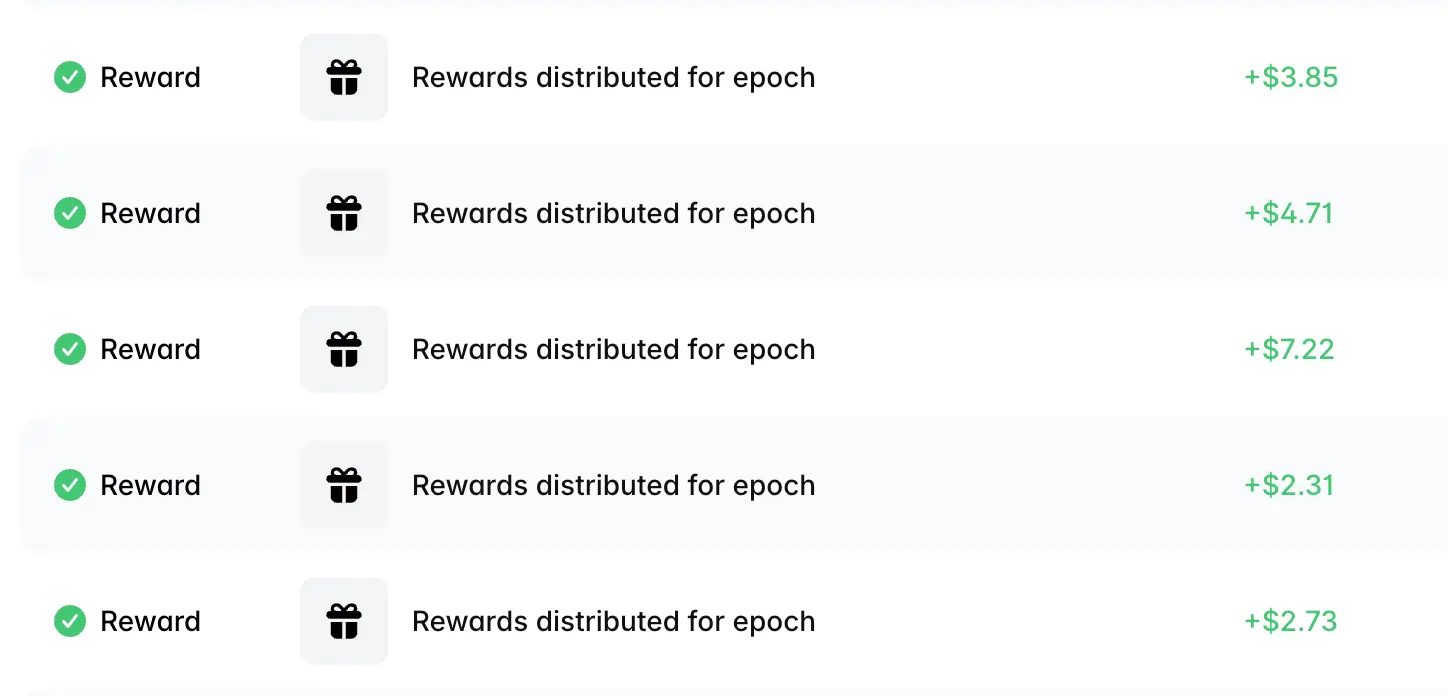
Maker vs Taker
Before starting, you need to understand a few concepts:
Order Book Polymarket supports limit orders, with bids and asks forming the order book. Market makers earn spreads by placing orders on both sides. With an order book, there are two behaviors: placing orders (maker) and taking orders (taker). 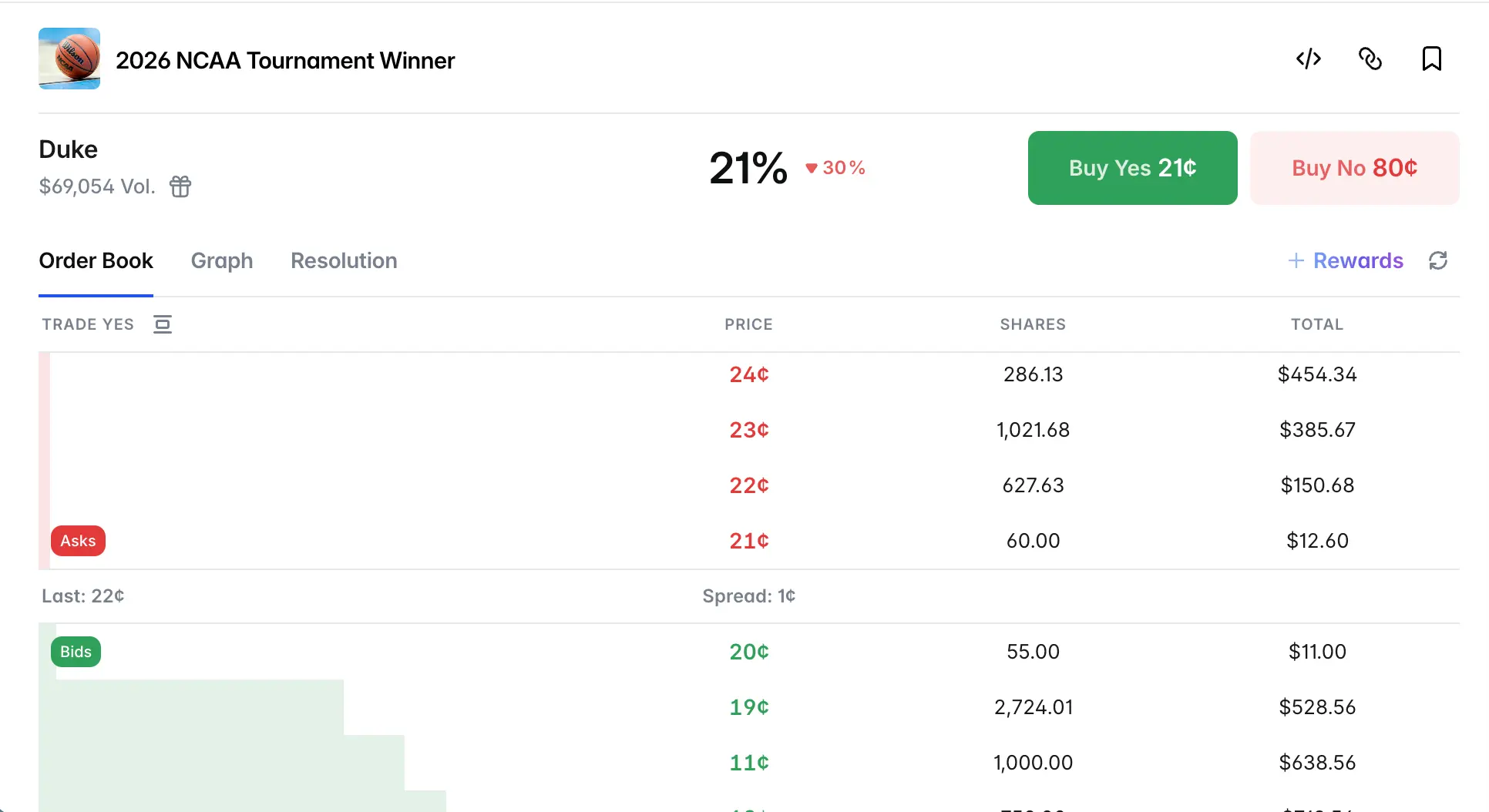
Maker vs Taker
- Maker: Places limit orders waiting to be filled. Some markets offer LP rewards for orders within certain ranges. On Crypto, NCAAB, and Serie A markets, makers can get fee rebates after their orders are filled. See: Maker Rebates Program.
- Taker: Executes trades at market price directly, consuming existing orders. Some markets require paying fees. Fee details: Understanding trading fees on Polymarket.
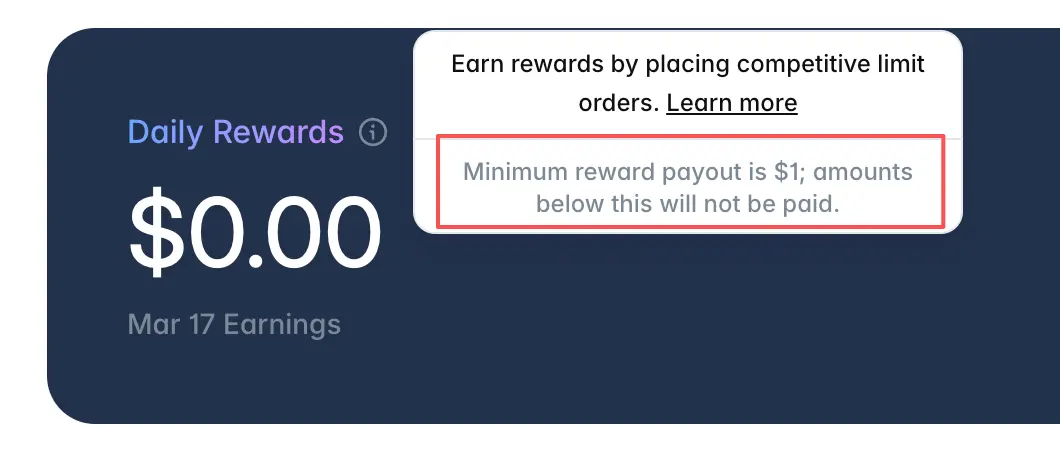
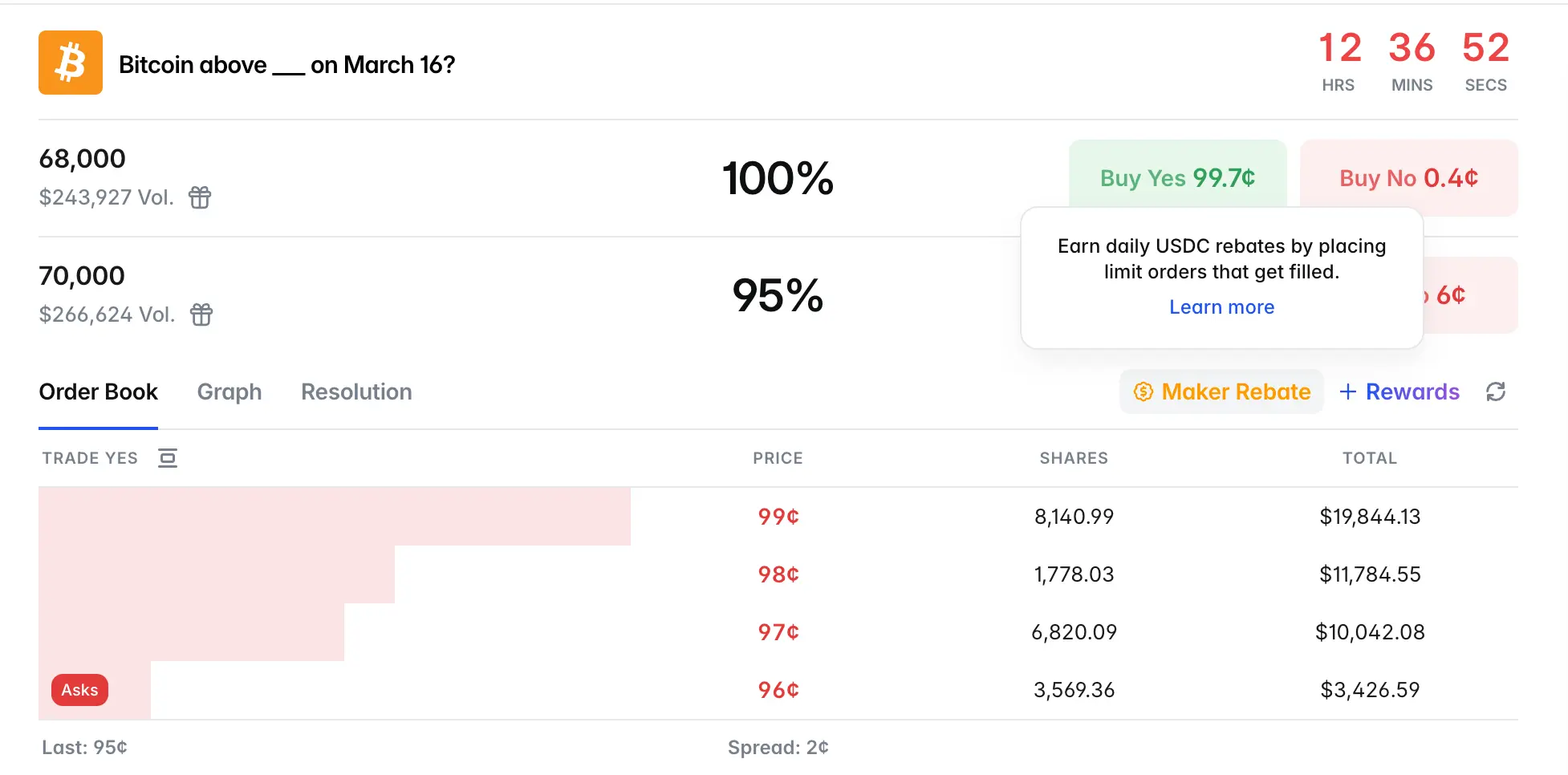 LP Reward Mechanism Polymarket distributes rewards daily to eligible users. The reward amount depends on factors like your order volume, order duration, and order price, but the minimum distribution is 1 USD. If your daily rewards are less than 1 USD, it’s not worth the effort.
| Factor |
Description |
| Order Volume |
Larger order amounts yield higher rewards |
| Order Duration |
Longer continuous order placement increases rewards |
| Order Price |
Closer to the mid-price yields higher rewards |
| Prize Pool |
Larger pools mean higher rewards |
Finding Suitable Markets for Market Making
Not all markets have LP rewards, and not all markets with LP rewards are worth market making. Here are my criteria, which you can adjust based on your preferences:
Characteristics of suitable markets:
- Sufficient order book depth
- Longer settlement times (>2 weeks)
- Avoid markets with high volatility
- LP rewards >20 USD
- Moderate or low competition
Once you have these rules, how to find such markets? It’s a three-step process:
Step 1: Filter by Competition Level
The idea is simple: lower competition makes it easier to earn rewards. Ignore markets with huge capital, but also avoid markets with extremely low competition—cheap isn’t always good. Find a moderate level. 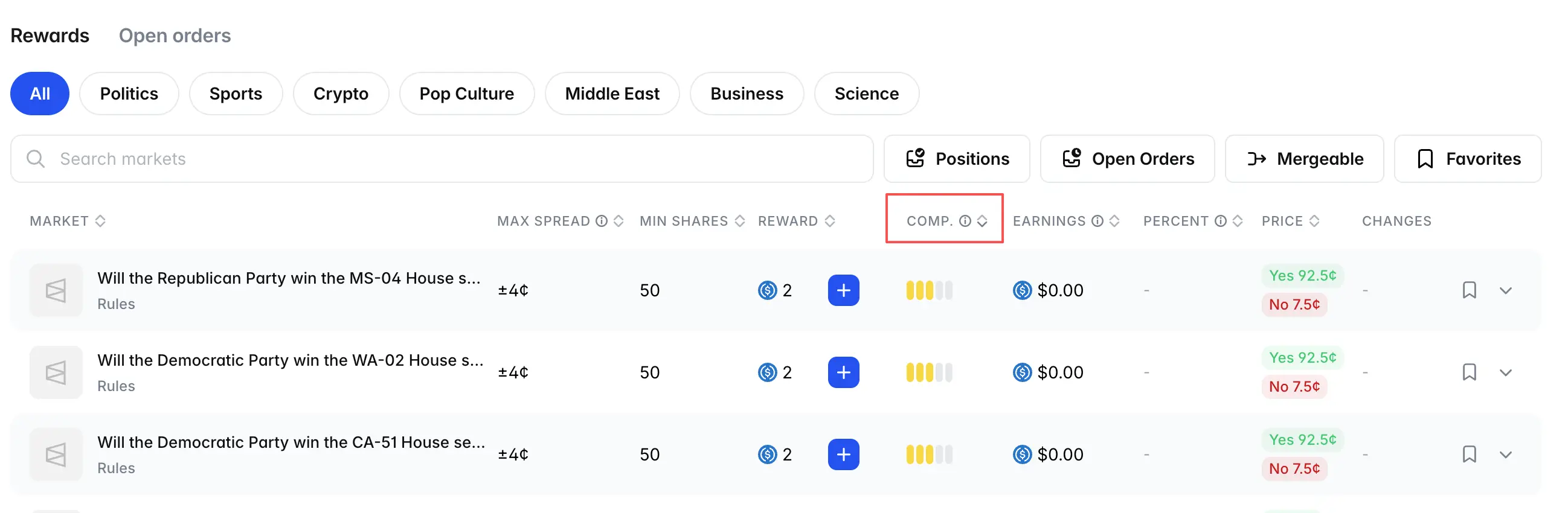
Step 2: Check Reward Amount
Identify markets with moderate competition, then look at the total daily reward pool. Generally, markets with a reward pool over $20 are worth participating in. Very small pools, even if you get a large share, limit your absolute earnings. 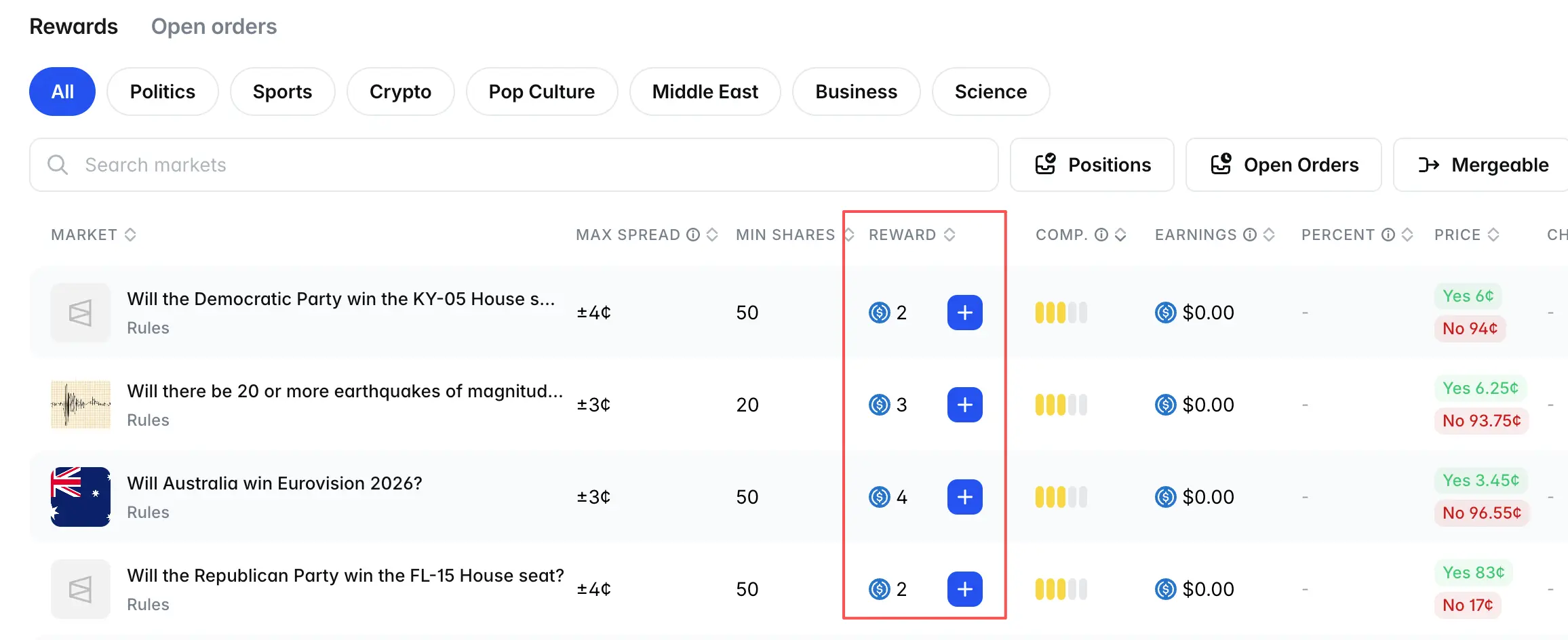
Step 3: Assess Order Book Thickness
This directly affects how much you can earn.
Rewards are distributed proportionally based on your order volume relative to the total order volume. If the order book is dominated by big players’ orders, your small investment will be heavily diluted in rewards. 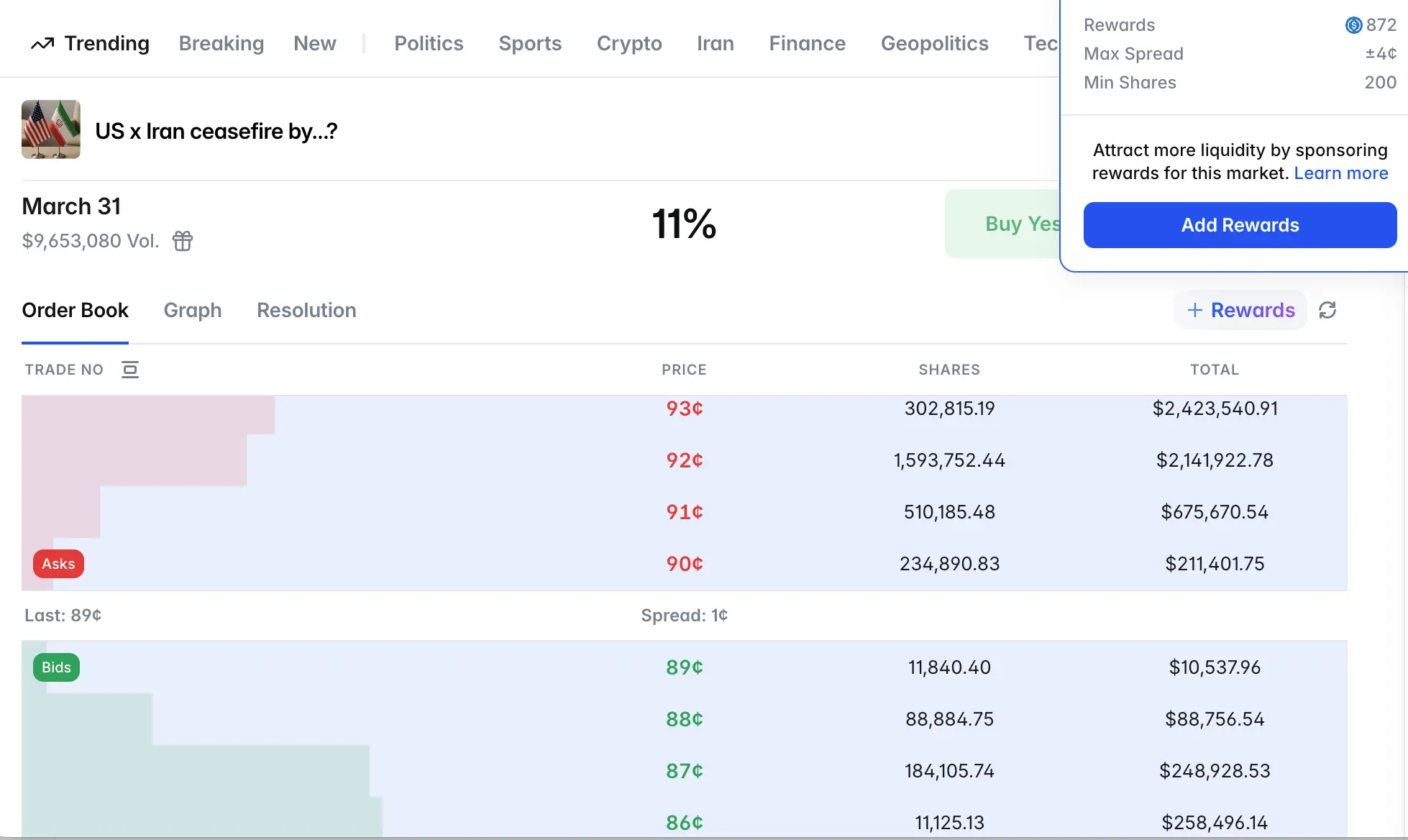
Placing Orders
Once you’ve found a suitable market, you can start placing orders within the specified price range. Effective orders will be highlighted with a blue circle indicating they are active. If not highlighted, your order is outside the range. 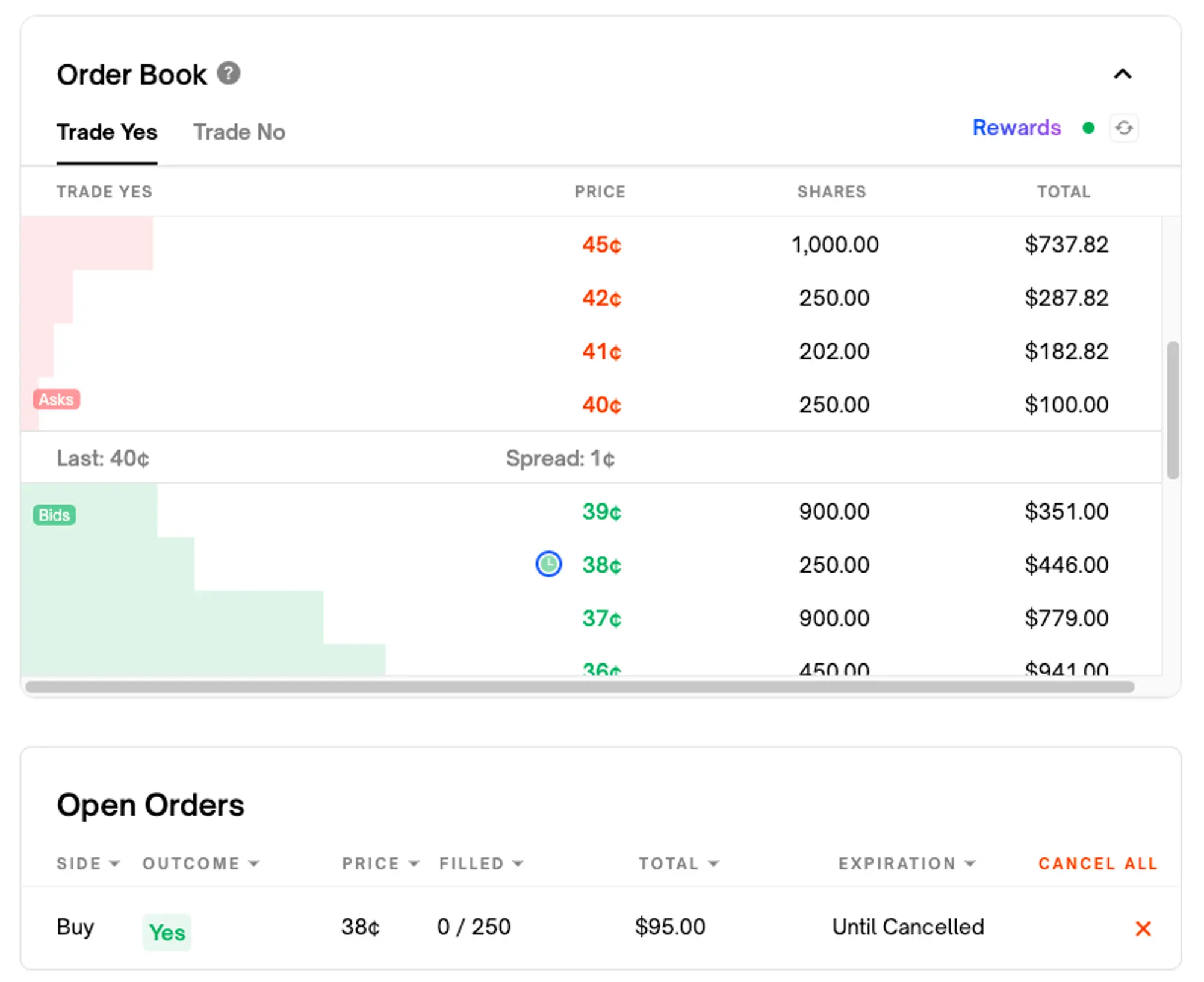
Note: If one side’s price drops below 10 cents, you must place orders on both sides for your order to be valid. Some say double-sided orders are three times more efficient than single-sided ones; I haven’t verified the exact calculation. 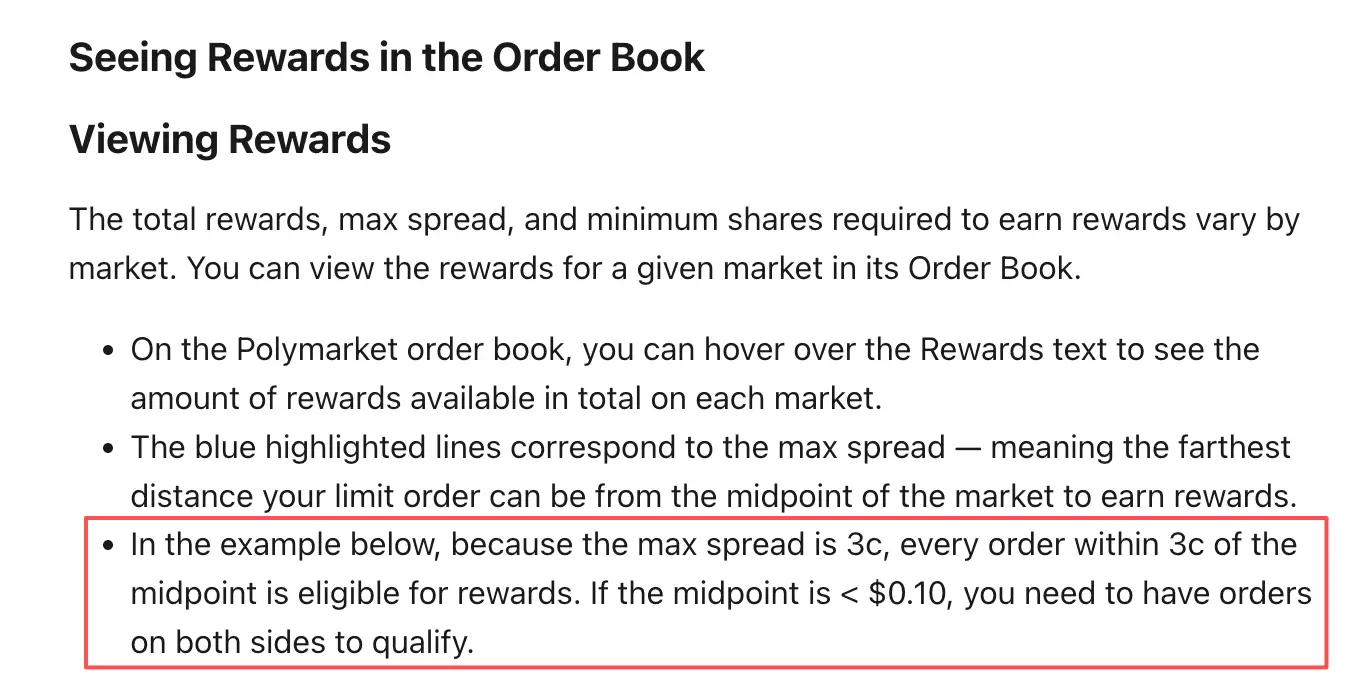
Finally, placing orders isn’t the end. You need to periodically check if your orders have been filled. Once filled, rewards stop accruing, and you might end up holding unwanted tokens. It’s best to sell or merge filled orders quickly. If the market moves significantly, decide whether to switch to another market for continued order placement.
This is just my experience sharing; it might be wrong. Please correct me if needed. This is not financial advice. Market making involves risks; profits and losses are your own responsibility.
Disclaimer: The information on this page may come from third parties and does not represent the views or opinions of Gate. The content displayed on this page is for reference only and does not constitute any financial, investment, or legal advice. Gate does not guarantee the accuracy or completeness of the information and shall not be liable for any losses arising from the use of this information. Virtual asset investments carry high risks and are subject to significant price volatility. You may lose all of your invested principal. Please fully understand the relevant risks and make prudent decisions based on your own financial situation and risk tolerance. For details, please refer to
Disclaimer.


