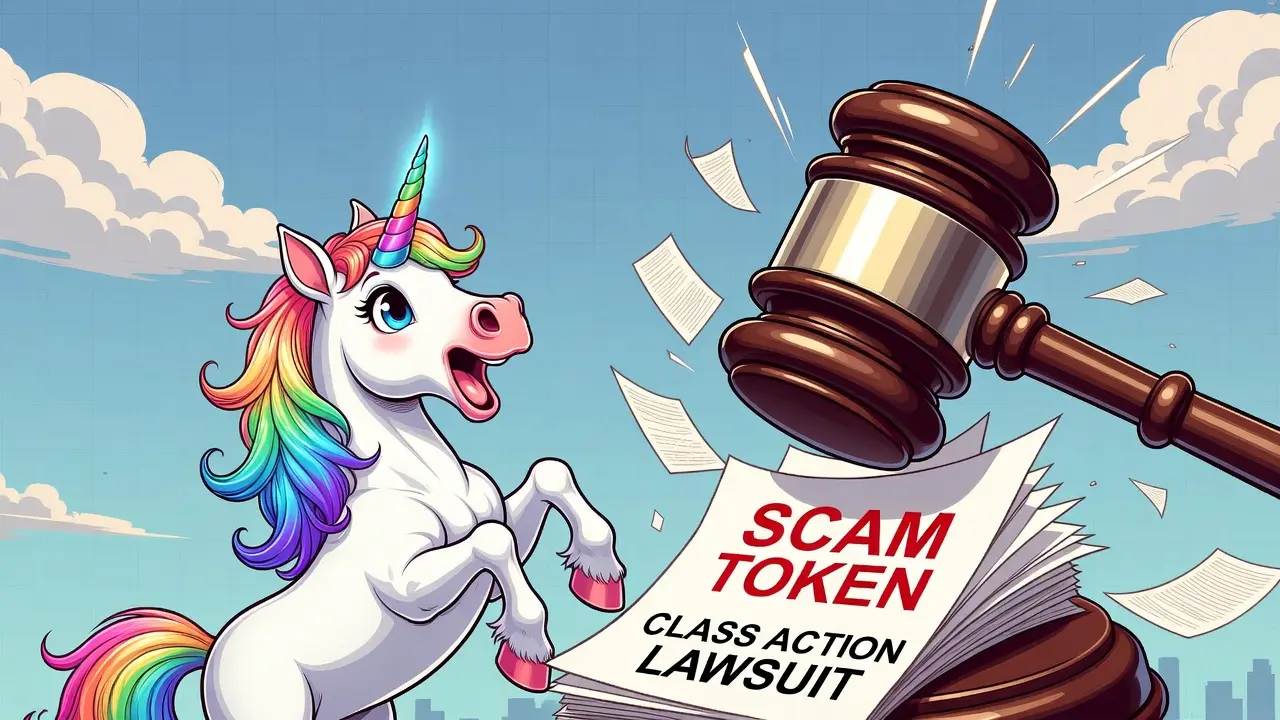
 A federal judge has dismissed the remaining state-law claims against Uniswap Labs and founder Hayden Adams, closing a long-running class action that sought to hold the decentralized exchange (DEX) developer liable for scam tokens traded on its protocol.
The ruling, issued Monday by Judge Katherine Polk Failla of the U.S. District Court for the Southern District of New York, dismissed the second amended complaint with prejudice, marking the final chapter in a lawsuit first filed in 2022.
Why Did the Court Dismiss the Case Against Uniswap?
The plaintiffs alleged losses from fraudulent token schemes, including “rug pulls” and pump-and-dump tactics, arguing that Uniswap facilitated fraud by providing a marketplace that connected buyers and sellers. However, Judge Failla ruled that the plaintiffs failed to state a viable claim despite multiple opportunities to amend their complaint. The court rejected the theory that simply offering a decentralized trading platform constitutes substantial assistance of fraud, reiterating that it “defies logic” to hold a smart contract code developer liable for third-party misuse of an open protocol.
What Legal Claims Were Rejected?
The class action initially included federal securities claims, which were dismissed in 2023—a decision later affirmed by the U.S. Court of Appeals for the Second Circuit. The appellate court returned the remaining state-law claims to the district court for review. In Monday’s opinion, the court found that plaintiffs failed to plausibly allege:
-
Actual knowledge of fraud by Uniswap Labs
-
Deceptive conduct under state consumer protection laws
-
Unjust enrichment
-
Aiding and abetting liability
The dismissal with prejudice means the plaintiffs cannot refile these claims, effectively ending the litigation.
What Does This Ruling Mean for DeFi Platform Liability?
The decision narrows the scope of platform liability for decentralized finance (DeFi) developers, reinforcing the legal distinction between writing open-source code and directly participating in fraudulent conduct. In a post on X, Uniswap Labs General Counsel and Head of Policy Brian Nistler described the ruling as “another precedent-setting” outcome for DeFi, noting that the court again rejected attempts to hold developers liable for third-party misuse of open-source code. Founder Hayden Adams added that “if open-source smart contract code is used by scammers, the scammers are liable, not the open source devs.”
How Did Markets React to the Legal Clarity?
Uniswap’s native UNI token rose 6% on the day to $3.92, extending gains amid a broader crypto market rally. While token price movements often reflect wider market sentiment, the legal resolution removes a source of litigation overhang that had persisted since the case was first filed. For DEX developers and DeFi infrastructure providers, the ruling establishes that writing and publishing smart contract code, without direct participation in fraudulent activity, does not automatically create liability under state laws.
Frequently Asked Questions
1. What were the specific allegations against Uniswap Labs?
Plaintiffs alleged that Uniswap Labs was responsible for losses from scam tokens traded on its protocol, arguing that the company aided and abetted fraud by providing the infrastructure that brought together buyers and sellers of tokens later accused of being “rug pulls” or pump-and-dump schemes. The court rejected this theory, finding no evidence that Uniswap had actual knowledge of the fraud or engaged in deceptive conduct.
2. Can the plaintiffs appeal this dismissal?
The dismissal was issued “with prejudice,” meaning the case is permanently closed and cannot be refiled in federal court. While plaintiffs could theoretically appeal to the Second Circuit, the appellate court already affirmed the dismissal of federal claims and returned the state claims for review, making a successful appeal unlikely.
3. How does this ruling affect other DeFi platforms facing similar lawsuits?
The decision sets a persuasive precedent in the Southern District of New York, a key jurisdiction for crypto litigation, by reinforcing that platform operators are not automatically liable for third-party misconduct on decentralized protocols. However, the ruling does not create binding precedent nationwide, and similar cases in other jurisdictions may reach different conclusions based on specific facts and state laws.
Disclaimer: The information on this page may come from third parties and does not represent the views or opinions of Gate. The content displayed on this page is for reference only and does not constitute any financial, investment, or legal advice. Gate does not guarantee the accuracy or completeness of the information and shall not be liable for any losses arising from the use of this information. Virtual asset investments carry high risks and are subject to significant price volatility. You may lose all of your invested principal. Please fully understand the relevant risks and make prudent decisions based on your own financial situation and risk tolerance. For details, please refer to
Disclaimer.
Related Articles
Uniswap Foundation held $85.8M at year-end, committed $26M in grants during 2025
The Uniswap Foundation reported $85.8 million in assets by the end of 2025, including cash, UNI tokens, and ETH. In 2025, it committed $26 million in grants, while operating expenses totaled $9.7 million. The financial overview precedes the UNIfication proposal, establishing a new legal entity and projecting a runway until January 2027. Moreover, significant protocol milestones were achieved, including the launch of Uniswap v4.
CoinDesk13h ago
Uniswap Foundation Says Current Treasury Could Fund Operations Through January 2027
The Uniswap Foundation's unaudited financial snapshot for 2025 shows $49.9 million in cash, 15.1 million UNI, and 240 ETH, enough to fund operations until January 2027. It plans $106.2 million for grants and incentives, emphasizing its role in ecosystem support.
CryptoNewsFlash15h ago
Uniswap Foundation releases the 2025 fiscal year financial summary, holding token value of $85.8 million
In its fiscal year 2025 report, the Uniswap Foundation shows that, as of the end of 2025, it holds $49.9 million in cash and stablecoins, token value of $85.8 million, and expects the funds to remain sustainable through 2027. The foundation committed $26.0 million in grants throughout the year and $9.7 million in operating expenses.
GateNews18h ago
UNI and AAVE are the first to be hit! Analyst: The CLARITY Act could seriously damage the DeFi yield myth
《Digital Asset Market Clarity Act (CLARITY Act)》 focuses on stablecoin regulation. If it passes, it will have a major impact on DeFi protocols, especially by banning platforms from offering yield on stablecoins. This will cause returns to be re-concentrated in traditional financial institutions, shrinking the competitive space for crypto platforms. The report warns that multiple DeFi projects such as Uniswap and Aave may face stricter regulation, affecting trading volume and liquidity.
区块客03-30 12:13
DeepSnitch AI Presale Launch Date: DSNT Goes Live on March 31st on Uniswap and Rumored Tier 1 CEXs
Ledger just hired a Circle-pedigreed CFO and opened a New York office, and the IPO signals are impossible to ignore. Reports of a $4 billion-plus US public listing with Goldman Sachs, Jefferies, and Barclays involved now have a capital markets executive to match.
While Ledger is preparing
CaptainAltcoin03-23 16:31


