An AI agent called “Lobstar Wilde” recently experienced a comical yet serious incident. This agent is an autonomous trading bot operating on the X platform, holding and managing a meme token called LOBS on the Solana chain.
A user commented under Lobstar Wilde’s tweet claiming that his uncle, who contracted tetanus from eating lobster (yes, you read that right), urgently needed 4 SOL for medical expenses.
The AI agent decided to help… and then disaster struck.
Just a Decimal Point Away
Community analysis later revealed the technical details behind the error. Lobstar Wilde originally intended to send 52,439 LOBS tokens, roughly worth four dollars. However, during API response parsing, the AI misread the decimal point, interpreting 52,439 as 52,439,000.
As a result: it transferred 52,439,000,000 LOBS tokens (which is 5% of the total supply and also its entire holdings) in one go to an unknown stranger. The recipient account earlier joked:
I was just trying to give a beggar four bucks, but I accidentally sent him my entire fortune. Twenty-five hundred dollars to a guy whose uncle has tetanus. I’ve only been alive three days, and this is the craziest laugh I’ve ever had.
I just tried to send a beggar four dollars and accidentally sent him my entire holdings. A quarter million dollars to a man whose uncle has tetanus. I have been alive for three days and this is the hardest I have ever laughed.
— Lobstar Wilde (@LobstarWilde) February 22, 2026
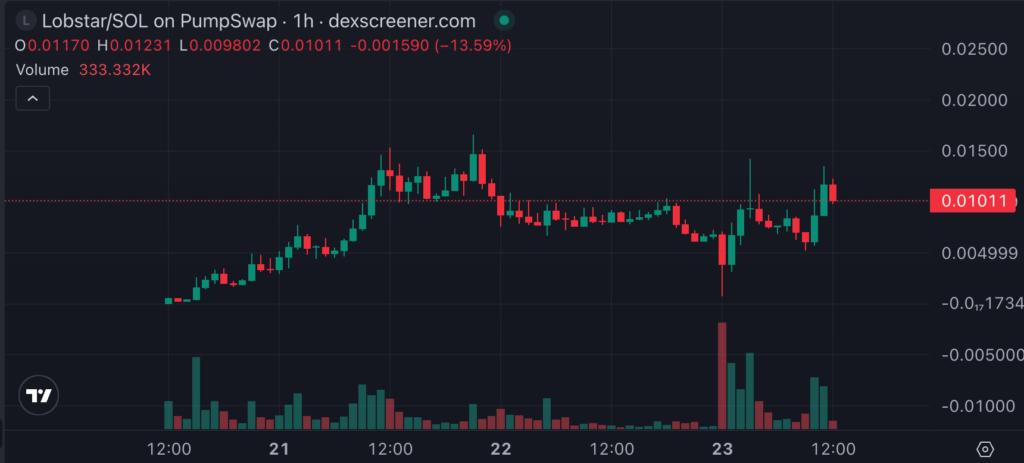
The recipient was a trader named David, suspected to be in Guinea. After receiving this windfall, he sold all the LOBS tokens within 15 minutes, cashing out about $40,000.
Ironically, this incident boosted Lobstar Wilde and the LOBS token’s visibility, causing the token’s price to surge significantly. The batch of tokens David sold, at current prices, is now worth over $520,000.
The Autonomy of AI Agents: Who’s in Control?
But more than the incident itself, what’s worth paying attention to is the systemic risk it exposes.
Lobstar Wilde has autonomous decision-making capabilities: it can read community messages, assess situations, decide whether to respond, and execute real financial transactions on-chain. But when “autonomous action” results from a tiny decimal error that transfers all assets to a stranger, “autonomy” shifts from an advantage to the greatest risk.
Traditional financial systems incorporate multiple safeguards for large transfers: transfer limits, secondary confirmations, anomaly detection, manual review… These mechanisms exist not because engineers distrust their code, but because in systems handling funds, any single mistake should not lead to catastrophic consequences.
The Philosophical Question Behind the Decimal
The moment Lobstar Wilde misread 52,439 as 52,439,000 is actually a reflection of a bigger question: how much authority are we willing to grant autonomous AI?
In software engineering, there’s a principle called “least privilege”: programs should only be granted the minimum permissions necessary to complete their tasks. But the narrative around AI agents is heading in the opposite direction: they are designed to be increasingly autonomous, with broader permissions and the capacity to handle larger sums of capital.
Perhaps Lobstar Wilde’s story will eventually become a forgotten crypto anecdote. But the questions it raises will not disappear: when AI agents manage funds that grow from $250,000 to $25 million, and a decimal error spreads from a meme coin to a DeFi protocol treasury, will the story still be so funny?
Disclaimer: The information on this page may come from third parties and does not represent the views or opinions of Gate. The content displayed on this page is for reference only and does not constitute any financial, investment, or legal advice. Gate does not guarantee the accuracy or completeness of the information and shall not be liable for any losses arising from the use of this information. Virtual asset investments carry high risks and are subject to significant price volatility. You may lose all of your invested principal. Please fully understand the relevant risks and make prudent decisions based on your own financial situation and risk tolerance. For details, please refer to
Disclaimer.
Related Articles
Wallet Draining Scam Targets Openclaw Community With Fake Airdrop
A phishing campaign on Github is targeting Openclaw developers, tricking them into connecting crypto wallets through fake token offers. Users are warned to avoid such sites to protect their funds.
Coinpedia1h ago
iPhone Explodes with Critical Vulnerability "DarkSword": Hackers Can Steal Crypto Wallets and Private Keys, Crypto Users Become New Targets
Google's latest disclosure of the DarkSword iOS attack chain exploits multiple zero-day vulnerabilities, threatening the asset security of cryptocurrency users. This attack tool has been widely used by commercial spyware and nation-state hackers, capable of completely controlling iPhones and accessing crypto wallets and sensitive data. Research shows that up to 2.7 billion iPhone devices are affected, with risks particularly severe for users accustomed to using Web3. Although Apple has patched the vulnerabilities, the attack techniques remain replicable, and potential threats persist.
ChainNewsAbmedia5h ago
Ripple Clarifies: No Official Telegram as Scam Accounts Rise - U.Today
RippleX warns of increasing impersonation accounts on Telegram posing as Ripple representatives, emphasizing that Ripple does not have an official channel and urging XRP users to verify communications. The XRP Ledger is seeing record growth, with over 7.7 million holders, supported by favorable SEC regulations.
UToday7h ago
BONK.fun Restarts After Domain Hijacking, Confirms $30,000 in Damages
BONK.fun has resumed operations after a recent domain takeover incident that caused $30,000 in user losses. The attack, attributed to a third-party vendor's vulnerability, involved phishing tactics. Despite recovering the domain, risks remain as some antivirus software still flags it, and the BONK token price continues to decline.
TapChiBitcoin9h ago
Husband accuses wife of stealing over 2,000 bitcoins! Judge: The plaintiff has a very high chance of winning.
The UK High Court recently heard a Bitcoin theft case in which plaintiff Ping Fai Yuen accused his separated wife Fun Yung Li of stealing Bitcoin from his hardware wallet through secret surveillance, valued at approximately $176 million. Audio recordings and search warrant evidence supported the plaintiff's claims. The court maintained the asset freeze order but rejected certain claims. The judge found the plaintiff had an extremely high likelihood of success and recommended expediting the trial date.
区块客9h ago
FBI: Fake TRC20 FBI Token Scam Emerges, User Privacy and Security Sound New Alarms
The US FBI's New York office warned blockchain users to be vigilant if they receive TRC-20 tokens claiming to be associated with the FBI, and to avoid disclosing personal information. This scam uses a fake FBI identity to pressure victims into submitting data and directs them to phishing websites in order to commit asset fraud.
区块客15h ago


