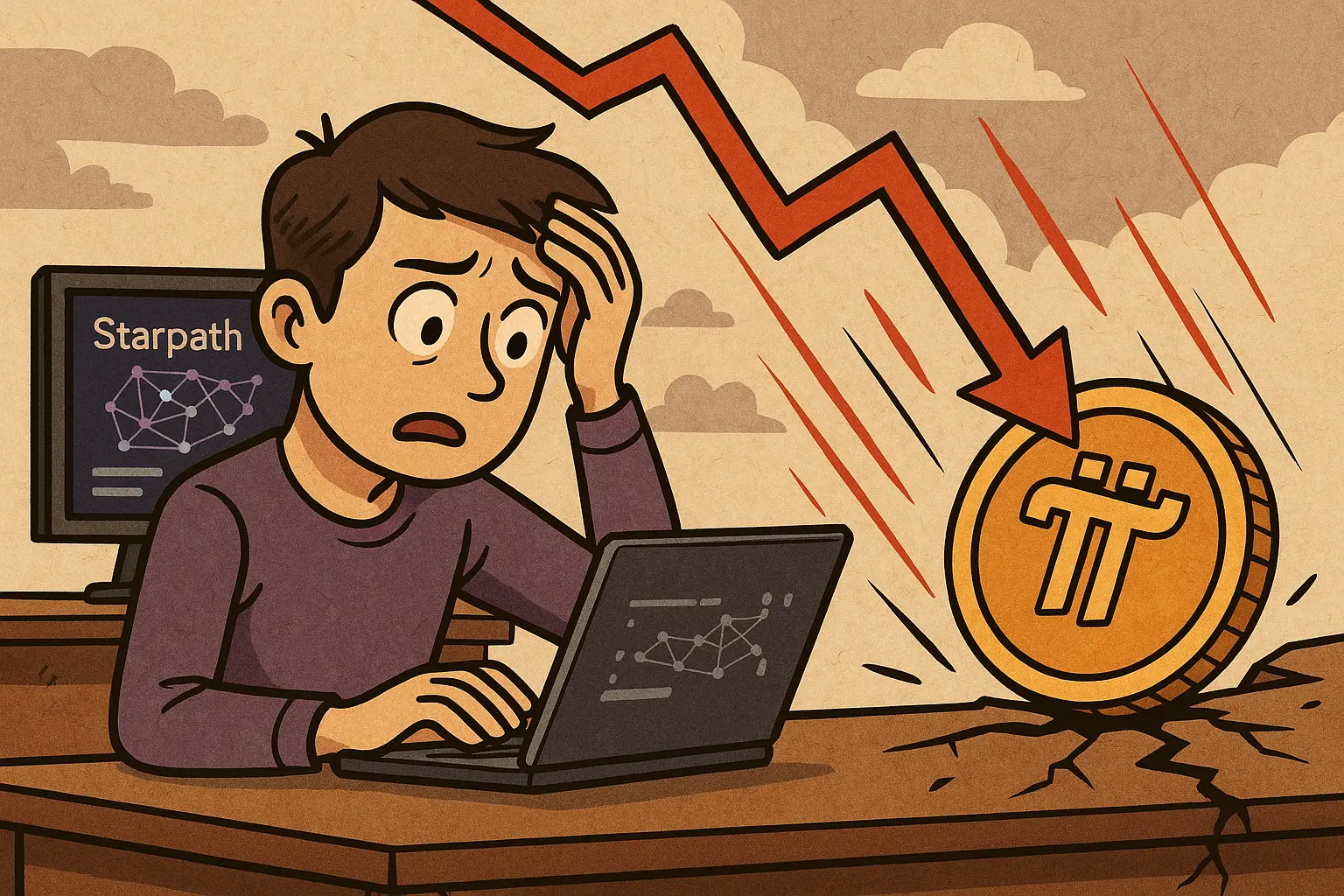
Starpath has launched on the Pi Network testnet, providing a risk-free environment for users to experiment with trading, familiarize themselves with Web3, and for developers to test applications. It serves as an educational bridge, translating complex concepts into practical experience. But the harsh reality remains: the February migration of 300 million coins caused the largest shock, with prices plummeting close to 0.14, and OTC selling surges lurking beneath the surface. Technological progress cannot change the fundamental reality: the flood of supply is overwhelming demand.
Educational and Experimental Value of the Starpath Testnet
One of Starpath’s most notable features is its risk-free testing environment. Running on the testnet means all activities incur no real economic consequences. Users can freely experiment with trading, understand how decentralized systems operate, and get familiar with Web3 applications without worrying about losses. This is especially valuable for newcomers to cryptocurrency, Web3, and the Pi ecosystem.
From a developer’s perspective, Starpath provides a crucial testing platform for decentralized applications. Developers can evaluate performance, security, and usability within the Pi Network infrastructure before deploying on the mainnet. This process helps ensure that applications launched on the mainnet are stable, secure, and scalable, contributing to a healthier, more reliable ecosystem.
Pi Network has always been known for its focus on mass adoption. Unlike many crypto projects requiring deep technical knowledge, Pi emphasizes ease of use and user-friendly participation. With the launch of Starpath, this vision becomes more tangible. The platform acts as an educational bridge, transforming complex blockchain concepts into accessible practical experiences.
Starpath is also a central hub for interaction and communication within the Pi Network ecosystem. Users can explore network mechanisms, observe node operations, and understand how decentralized consensus and transaction validation work in practice. These insights go beyond theory, allowing users to directly experience the fundamental principles of blockchain technology. In the broader context of Web3, Starpath represents an early step in realizing Pi Network’s long-term vision. Web3 emphasizes decentralization, transparency, and user data ownership. Through Starpath, these principles are no longer just conceptual promises but functional features that users can experience firsthand in a real environment.
Four Core Values of the Starpath Testnet
Zero-risk experimentation: Testnet operations without economic loss, allowing beginners to learn confidently
Developer testing ground: Verify applications before mainnet launch, reducing deployment risks
Educational bridge: Convert complex technology into practical experience, lowering the barrier to understanding
Ecosystem rehearsal: Build applications and user base in advance, preparing for the mainnet
Technological Progress Cannot Change the Reality of Supply Floods
However, the launch of Starpath cannot alter the harsh reality Pi 幣 currently facing. The mainnet migration in February involved 300 million coins, creating the largest supply shock in history. Pi prices have fallen for three consecutive days, approaching $0.14, with 320,000 coins flowing out of CEXs and OTC selling lurking beneath the surface. Technological progress cannot change the fundamental dilemma of supply overwhelming demand.
This contrast of “technological progress vs. price collapse” is common in crypto history. Many projects have achieved major technical breakthroughs only to see their prices not rise but crash. The reason is simple: technological progress takes time to translate into actual demand and applications, while increases in supply and market sentiment are immediate. Although Starpath lays a foundation for the future, it cannot instantly create buying pressure to absorb the 30 million coins migrating daily.
From a practical perspective, the impact of the Starpath testnet on Pi’s price is likely neutral or slightly negative. It accelerates the readiness of the mainnet, meaning more tokens will be unlocked and enter circulation faster. For early miners eager to cash out, the successful testing of Starpath signals that the mainnet is fully opening, possibly prompting them to accelerate selling before more supply floods in.
For investors, how should they interpret the launch of Starpath? In the long term, it shows that the Pi Network team is still committed to development and that the ecosystem is maturing, which is a positive signal. But in the short term, it cannot solve the current oversupply and lack of demand issues, and prices may continue to be under pressure. A rational attitude is to recognize the value of technological progress but not to ignore the severity of the fundamentals.
The launch of Starpath further consolidates Pi Network’s position in the global crypto market. Many blockchain projects compete by introducing advanced technical features, but Pi Network stands out with its focus on user education and gradual onboarding. Starpath empowers users to grow with the network, reinforcing this strategy. But the key question remains: can this “slow and steady” approach maintain market confidence amid ongoing supply pressure? That’s the biggest challenge Pi Network faces.
Disclaimer: The information on this page may come from third parties and does not represent the views or opinions of Gate. The content displayed on this page is for reference only and does not constitute any financial, investment, or legal advice. Gate does not guarantee the accuracy or completeness of the information and shall not be liable for any losses arising from the use of this information. Virtual asset investments carry high risks and are subject to significant price volatility. You may lose all of your invested principal. Please fully understand the relevant risks and make prudent decisions based on your own financial situation and risk tolerance. For details, please refer to
Disclaimer.


