


XRP 2026 Roadmap Announced This Week! Ripple Targets Capital Markets, ZK Privacy Launch
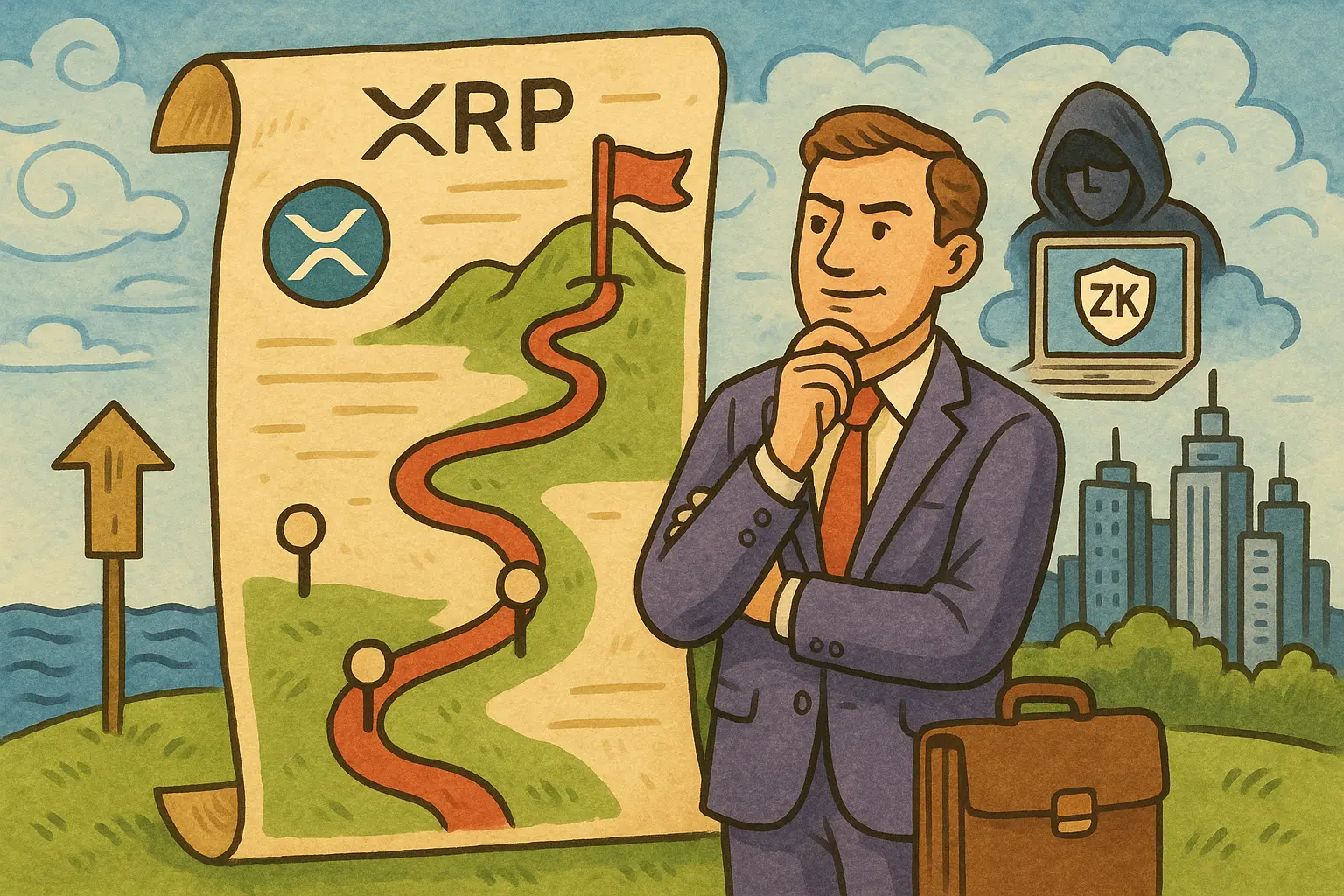
Ripple is set to release its roadmap on February 11th via X Spaces, themed “XRP Capital Markets Era.” Key focuses include smart contracts, ZK proof privacy, and cross-chain liquidity. The event will highlight regulated financial products and wrapped assets. XRP weekly inflows reach $45 million in ETFs, with Standard Chartered predicting a price of $8 by the end of the year.
February 11th Unveils the XRP Capital Markets Era
This week, Ripple will announce a significant update to the XRP ecosystem. Senior executives will officially unveil the highly anticipated 2026 application roadmap on February 11th via X Spaces. The event will kick off with a thought-provoking theme: “XRP in the Capital Markets Era,” to be presented by CEO Brad Garlinghouse. This theme clearly indicates Ripple’s plan to position XRP as a core component of regulated financial infrastructure.
The “Capital Markets Era” positioning marks a major strategic shift for Ripple. Previously, Ripple mainly focused on cross-border payments and remittances, serving banks and payment companies through RippleNet. While successful, this market is relatively limited in scale. Capital markets, on the other hand, encompass a multi-trillion to hundred-trillion dollar space, including stocks, bonds, derivatives, and securitized assets. If XRP can successfully penetrate this market, its application scenarios and demand could grow exponentially.
Combining Garlinghouse’s comments, the RippleX development team will interpret the functionalities already implemented on the XRP ledger and upcoming upgrade plans. The roadmap is expected to showcase activities related to smart contract enhancements, developer tools, and major protocol improvements. These updates aim to make XRPL more competitive with other Layer-1 networks while maintaining its main advantages: fast speed, low cost, and high reliability.
February 11th Roadmap Release Event
Time & Location: February 11th, online via X Spaces
Speakers: CEO Brad Garlinghouse, RippleX Development Team
Core Theme: XRP in the Capital Markets Era
Main Content: XRPL upgrades, smart contracts, ZK proofs, privacy tech
The timing of this roadmap release is highly strategic. XRP just experienced a deep correction in January, with market sentiment subdued. Releasing a major roadmap at this moment can boost market confidence and support the price. Additionally, February 11th is close to the Lunar New Year, when Asian investors may have new capital allocation needs. Ripple’s choice to announce at this time demonstrates precise market timing.
Dual Upgrades: ZK Proofs and Smart Contracts
Among many hot topics, the emergence of zero-knowledge proofs (ZK proofs) is noteworthy. This technology enables privacy-preserving transactions while remaining compliant with regulatory frameworks. Ripple has been committed to developing privacy features primarily for institutional users rather than retail. When combined with smart contracts, ZK proofs could open new avenues in payments, asset tokenization, and corporate financing.
ZK proofs are among the most cutting-edge research directions in blockchain technology. They allow one party to prove to another that a statement is true without revealing any additional information. In finance, this means proving “I have sufficient funds to complete this transaction” without disclosing specific amounts or sources. For privacy-conscious institutional clients, this technology is highly attractive.
Integrating ZK proofs into XRPL will enable it to match or even surpass other mainstream public chains in privacy protection. Ethereum, Solana, and other chains typically have transparent transactions, which aids auditing but exposes business secrets. Companies conducting large transactions on blockchain prefer not to reveal counterparties or amounts. ZK proofs address this pain point, maintaining verifiability while safeguarding commercial confidentiality.
Enhancing smart contracts is equally important. Currently, XRPL’s smart contract capabilities are relatively basic, far behind Ethereum’s EVM or Solana’s programming capacity. Ripple plans to upgrade this through developer tools and protocol improvements. More robust smart contract features will attract DeFi protocols, NFT projects, and gaming applications to deploy on XRPL, enriching its ecosystem.
According to reports, the 2026 roadmap will focus on regulated financial products, wrapped assets, and cross-chain liquidity. Regulated financial products refer to tokenized securities, commodities, and derivatives compliant with agencies like the SEC and CFTC. After settling its lawsuit with the SEC, Ripple’s regulatory clarity has significantly improved, clearing obstacles for launching regulated products. Wrapped assets involve encapsulating assets from other blockchains (like Bitcoin, Ethereum) for use on XRPL. Cross-chain liquidity aims to connect assets across different blockchains, making XRPL a hub for multi-chain interoperability.
Weekly ETF Inflows of $45 Million and Standard Chartered’s $8 Prediction
This news was released amid active market movements. Even during a market correction, XRP still attracted over $45 million weekly ETF inflows. Analysts at Standard Chartered predict that due to clearer regulations, ETF demand, and increased tokenized asset usage, the price could surpass $8 by the end of 2026. While these forecasts are speculative, they highlight institutional interest in XRP.
The weekly ETF inflow of $45 million is remarkable given the current market environment. Most crypto assets are experiencing outflows, yet XRP ETFs continue to see inflows, indicating that institutional investors’ confidence in XRP remains unshaken by price declines. This divergence—price dropping while funds are flowing in—is often a bottoming signal, suggesting smart money is accumulating at lows.
Standard Chartered’s $8 target by year-end implies a roughly 344% increase from the current approximately $1.80. This aggressive forecast is based on several assumptions: passage of market structure legislation, continued ETF inflows, widespread adoption of RLUSD stablecoin, and XRPL upgrades attracting developers. If these assumptions materialize, $8 is plausible. However, if any fail, the target could be significantly lowered.
Ripple’s upcoming roadmap could be a pivotal moment. It links vision with concrete long-term technological progress. Ripple states that XRP’s next phase is not hype but a practical scaling plan through XRPL upgrades combined with capital markets, compliance, and privacy features. If clearly presented, this roadmap could reshape institutional and market perceptions of XRP and help realize this vision by 2026.
Why is this week critical for the XRP ecosystem? The roadmap will provide a clear technical timetable and application scenarios, which are key for institutional decision-making. If Ripple demonstrates a solid execution plan and milestones, it will attract more capital to XRP. Conversely, a vague or overly idealistic roadmap could lead to disappointment. For XRP holders, February 11th is a crucial moment that could determine XRP’s trajectory in 2026.
From a competitive perspective, XRP is shifting from a payment-focused blockchain to a capital markets infrastructure, differentiating itself from Ethereum and Solana. Ethereum emphasizes versatile smart contracts and DeFi, Solana focuses on high performance and consumer apps, while XRP concentrates on regulated financial markets. If this differentiation succeeds, XRP could carve out a niche that is difficult for competitors to enter.
Related Articles
Ripple CEO: XRP Community Has Always Been Top Priority - U.Today
XRP Holders Slip Back Into Loss as On-Chain Capitulation Returns