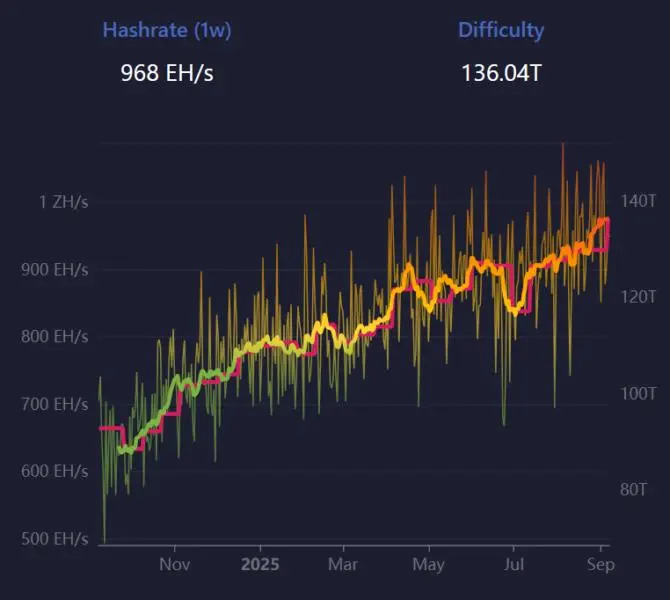
The Bitcoin (BTC) network difficulty has soared to a historical high of 136 trillion, continuing the trend of five consecutive increases since June. For miners who are already facing declining incomes, this means that competitive pressure and profitability challenges are intensifying simultaneously.
Difficulty Hits New High: More Hashrate Flooding into the Network
(Source: Mempool)
According to Mempool data, this difficulty adjustment occurred at block height 913,248, increasing by 4% from the previous 129.6 trillion.
The difficulty adjustment mechanism of Bitcoin occurs every 2,016 blocks (approximately every two weeks) to ensure that the block production time is close to 10 minutes. An increase in difficulty means more hashing power is joining the network, while a decrease reflects miners exiting.
Miner income has fallen to a multi-year low
(Source: Hashrate Index)
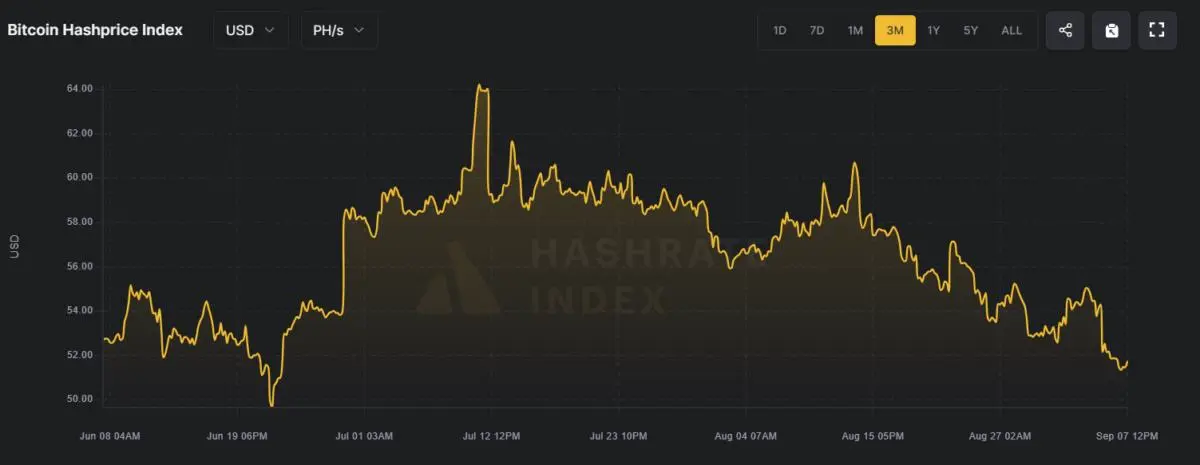
The Hashrate Index shows that the current miner hashrate price (revenue per unit of computing power) has dropped to $51, the lowest level since June.
The average hash price in August was $56.44, down about 5% from July. Worse still, transaction fee revenue provided almost no support—miners earned an average of only 0.025 BTC in fees per block, a decline of 19.6% from July, the lowest since the end of 2011.
Transaction fee revenue hits a ten-year low
In USD, miners' average daily fee income is only $2,904, a nearly 20% decrease from the previous quarter, the lowest level since early 2013.
This means that even as hash power and difficulty continue to rise, miners' sources of income are shrinking, and operating profits are being further compressed.
Future Outlook: Price and On-chain Activity Become Key
In the current situation, unless the price of Bitcoin sees a significant increase, or on-chain transaction activity rises significantly to push up fees, the profitability of miners will continue to be under pressure.
Some analysts warn that if this trend continues, small and medium-sized miners may be forced to shut down or sell their equipment, further concentrating the market towards large mining enterprises.
Conclusion
The Bitcoin network difficulty has reached a historic high, highlighting the intensity of the competition for computing power. However, the decline in transaction fee revenue and hash prices has posed the most severe profit challenges for miners in a decade. In the coming months, the price trends of Bitcoin and the on-chain activity will be key factors determining the survival pressure on miners.
Disclaimer: The information on this page may come from third parties and does not represent the views or opinions of Gate. The content displayed on this page is for reference only and does not constitute any financial, investment, or legal advice. Gate does not guarantee the accuracy or completeness of the information and shall not be liable for any losses arising from the use of this information. Virtual asset investments carry high risks and are subject to significant price volatility. You may lose all of your invested principal. Please fully understand the relevant risks and make prudent decisions based on your own financial situation and risk tolerance. For details, please refer to
Disclaimer.


