As two classic store of value assets, Bitcoin (BTC) and gold have long been seen by investors as tools for hedging against inflation and economic uncertainty. However, there are significant differences in the investment characteristics of the two, from return rates to fluctuations. Since Bitcoin’s inception in 2008, its cumulative return has exceeded 21,000%, while gold has only increased by about 150% during the same period. For long-term bullish investors, the answer seems to be increasingly leaning toward Bitcoin.
Bitcoin and Gold: Commonalities and Key Differences
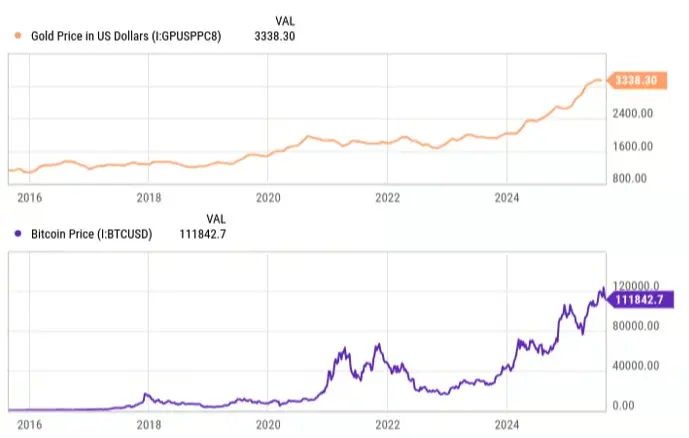
(Source: The Motley Fool)
Common Points:
-
Limited Supply: The Earth’s reserves of gold are finite, while the total amount of Bitcoin is capped at 21 million coins.
-
Store of value attribute: Both are considered assets for hedging against inflation and economic shocks.
-
Global Acceptance: Gold has a history of thousands of years as a currency and reserve asset, while Bitcoin has become the world’s largest cryptocurrency with a market value of over 2 trillion dollars in just over a decade.
Differences:
-
Volatility: Gold prices are relatively stable, while Bitcoin experiences severe short-term fluctuations.
-
Growth potential: The long-term pump of Bitcoin far exceeds that of gold, but the short-term decline can also exceed 50%.
-
Stability vs Growth: Gold is suitable for investors seeking stability, while Bitcoin is more suitable for long-term investors willing to accept fluctuations in exchange for high returns.
Return Rate vs. Fluctuation: Data Speaks
Since 2020: Bitcoin has increased by approximately 1,000%, while gold has increased by less than 200%.
Since 2008: Bitcoin has accumulated a return rate of over 21,000%, while gold is about 150%.
Fluctuation case: From March 2021 to November 2022, Bitcoin fell from about $65,000 to $16,000, a drop of more than 60%; during the same period, the maximum drop in gold was less than 25%.
The price curve of gold is smoother, making it more friendly for investors who need to liquidate in the short term; Bitcoin, on the other hand, shows overwhelming growth advantages in the long term.
Long-term Investment Perspective: Bitcoin may become the ‘next generation gold’
Several well-known investors, including Cathie Wood, believe that Bitcoin is gradually becoming a store of value that rivals gold, and they predict that by 2030, the price of Bitcoin could rise from under $150,000 to $710,000.
Reason:
-
Fluctuation decreases year by year
-
The adoption rate by global institutions is increasing.
-
The scarcity and decentralization characteristics solidify its value.
For long-term investors with a time horizon of more than 5 years, Bitcoin has the potential to surpass gold; for investors with lower risk tolerance, gold remains a stable choice.
Conclusion
Gold and Bitcoin can both play important roles in an investment portfolio, but if you’re pursuing long-term high returns, the advantages of Bitcoin have become increasingly clear. It not only possesses the safety and scarcity of gold but also has greater growth potential. For investors willing to bear Fluctuation and looking towards the next five to ten years, Bitcoin may just be the “surprising” correct answer.
Disclaimer: The information on this page may come from third parties and does not represent the views or opinions of Gate. The content displayed on this page is for reference only and does not constitute any financial, investment, or legal advice. Gate does not guarantee the accuracy or completeness of the information and shall not be liable for any losses arising from the use of this information. Virtual asset investments carry high risks and are subject to significant price volatility. You may lose all of your invested principal. Please fully understand the relevant risks and make prudent decisions based on your own financial situation and risk tolerance. For details, please refer to
Disclaimer.


