Ethereum (ETH) long positions are temporarily taking a breather, reporting at $3,724 during the Asian afternoon session today (23). The ETH withdrawal queue on the Ethereum network has surged to its highest level in over a year, raising concerns about potential dumping pressure after a significant price increase of ETH. However, the rising demand for staking has alleviated market panic.
According to the data from the Validator Queue, as of the afternoon of July 22nd, U.S. time, over 519,000 ETH (equivalent to 1.92 billion USD at current prices) are waiting to be withdrawn. The waiting time has exceeded 9 days, marking the longest waiting time since January 2024.
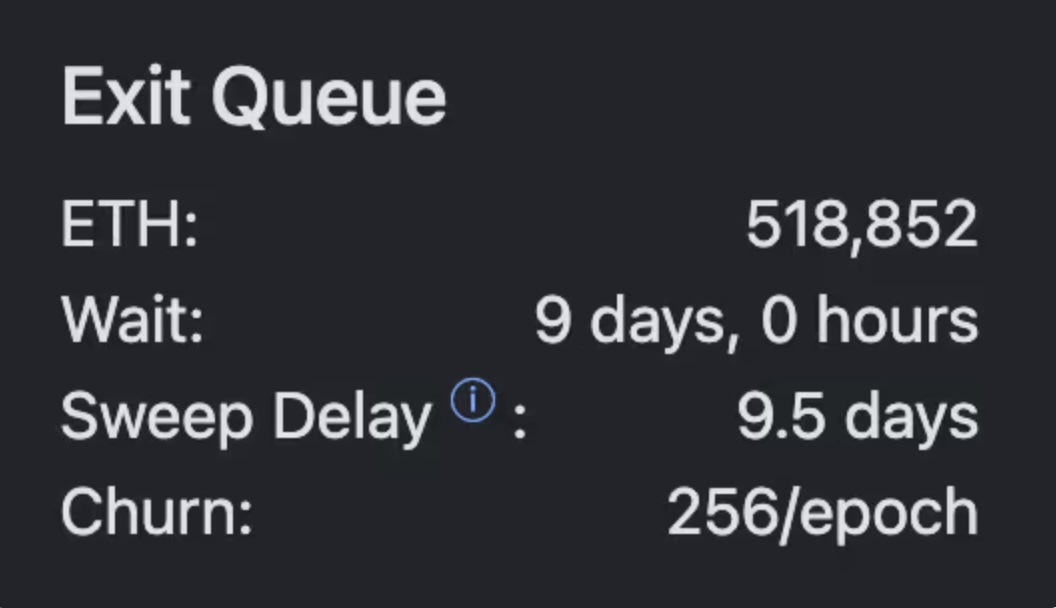
(Source: Validator Queue)
The main reason for this wave of ETH withdrawal is believed to be investors who staked ETH at low prices cashing out. Since hitting bottom in April, ETH has risen over 160%, leading many investors (both individuals and institutions) to decide to “unlock” their ETH to take profits.
“When prices rise, people often unstake and sell to lock in profits. We have seen this pattern repeat across multiple cycles,” said Andy Cronk, co-founder of the staking platform Figment.
He also stated that when large financial institutions change custodians or update their storage wallets, there may also be instances of large-scale staking withdrawals.
It is worth noting that during the period from March to early April (when the ETH price hovered around $1,500 to $2,000), a large number of new validators joined the network. Validators who participated in staking at that time may now take the opportunity to exit at the current high prices.
(Source: Validator Queue)
In addition, many institutional investors focused on ETH, such as SharpLink Gaming and BitMine, are actively acquiring ETH through recent financing deals. FalconX’s head of spot trading, Matthew Sheffield, stated that some trades also accept ETH deposits, which may require institutional investors to redeem ETH for “physical” deposits.
However, analysts say that due to the strong demand for new staking, the selling pressure may not be too great. Currently, over 357,000 ETH (equivalent to 1.3 billion dollars) are queued to join the network as validators. The new staking activation queue has exceeded 6 days, the longest since April 2024.
Some new staking demand comes from ETH asset management companies like SharpLink, which has accumulated over $1.3 billion in ETH since shifting to this model at the end of May. This ETH is staked to help the company earn passive income from network rewards.
Another important factor driving the development of Staking is the clarification from the United States Securities and Exchange Commission (SEC) on May 29, stating that Staking does not violate securities laws. This news paves the way for more institutional capital to flow into Ethereum.
Since the U.S. Securities and Exchange Commission released its guidelines, Figment has noted that institutional staking has grown by over 100%, the waiting time for staking queues has increased by more than 360%, which is consistent with the rising trend of ETH prices during the same period.
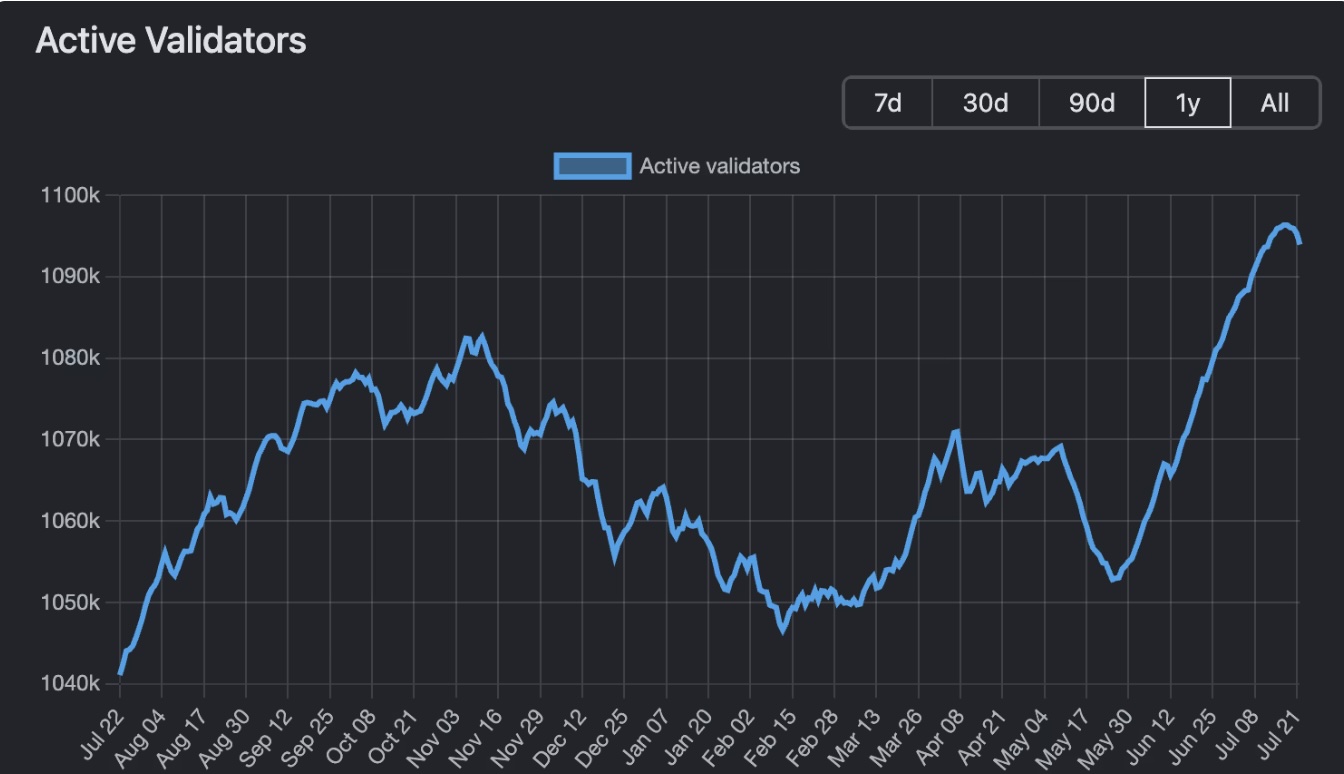
Since late May, the total number of active validators on the Ethereum network has increased by over 54,000, reaching a historical high of nearly 1.1 million validators, indicating that despite experiencing a wave of unstaking, the network continues to expand.
Disclaimer: The information on this page may come from third parties and does not represent the views or opinions of Gate. The content displayed on this page is for reference only and does not constitute any financial, investment, or legal advice. Gate does not guarantee the accuracy or completeness of the information and shall not be liable for any losses arising from the use of this information. Virtual asset investments carry high risks and are subject to significant price volatility. You may lose all of your invested principal. Please fully understand the relevant risks and make prudent decisions based on your own financial situation and risk tolerance. For details, please refer to
Disclaimer.


