Understanding APR and APY: A 3-Minute Guide to Common Return Metrics

Understanding APR and APY: A 3-Minute Guide to Common Return Metrics

This comprehensive guide clarifies the critical differences between APR (Annual Percentage Rate) and APY (Annual Percentage Yield) in cryptocurrency investments, including staking, lending, and yield farming. APR calculates simple annualized interest without compounding, while APY accounts for compounding effects, delivering more accurate return projections. The article details calculation methods, compares advantages and disadvantages of each metric, and provides practical guidance for selecting the appropriate metric based on investment structure and compounding frequency. By understanding these distinctions, investors on Gate and other platforms can make better-informed decisions, accurately compare yield opportunities across different products, and optimize their cryptocurrency investment strategies while managing associated risks.
2026-01-22 02:01:31
CPOOL vs ZIL: A Comprehensive Comparison of Two Leading Blockchain Staking Platforms

CPOOL vs ZIL: A Comprehensive Comparison of Two Leading Blockchain Staking Platforms

This comprehensive guide compares CPOOL and ZIL, two prominent blockchain staking platforms with distinct market positioning. CPOOL, launched in 2021, specializes in decentralized capital markets offering institutional borrowers uncollateralized liquidity from DeFi ecosystems. ZIL, introduced in 2018, operates as a high-throughput public blockchain utilizing sharding technology for thousands of transactions per second. As of January 2026, CPOOL trades at $0.02745 while ZIL stands at $0.005073. The article analyzes historical price trends, supply mechanisms, institutional adoption, and technological ecosystems. Long-term price predictions through 2031 project CPOOL ranging $0.0364-$0.0579 and ZIL at $0.00528-$0.00894. Investment strategies vary by risk tolerance: conservative investors favoring ZIL's established infrastructure, aggressive investors targeting CPOOL's emerging DeFi opportunity. Both assets present significant volatility risks requiring independent research on Gate before making investment decisi
2026-01-22 00:18:08
Kintsu, Monad, and the Decentralized Future of Liquid Staking in DeFi

Kintsu, Monad, and the Decentralized Future of Liquid Staking in DeFi

Explore the fundamentals of decentralized finance with Kintsu and Monad. Gain insights into liquid staking, the advantages of DeFi, potential risks, and participation strategies. This complete guide serves beginners and intermediate users in Web3 and crypto.
2026-01-22 00:16:10
Top 9 Trending PoS (Proof-of-Stake) Cryptocurrencies in Recent Years | In-Depth Review of Staking Rewards and Unique Features

Top 9 Trending PoS (Proof-of-Stake) Cryptocurrencies in Recent Years | In-Depth Review of Staking Rewards and Unique Features

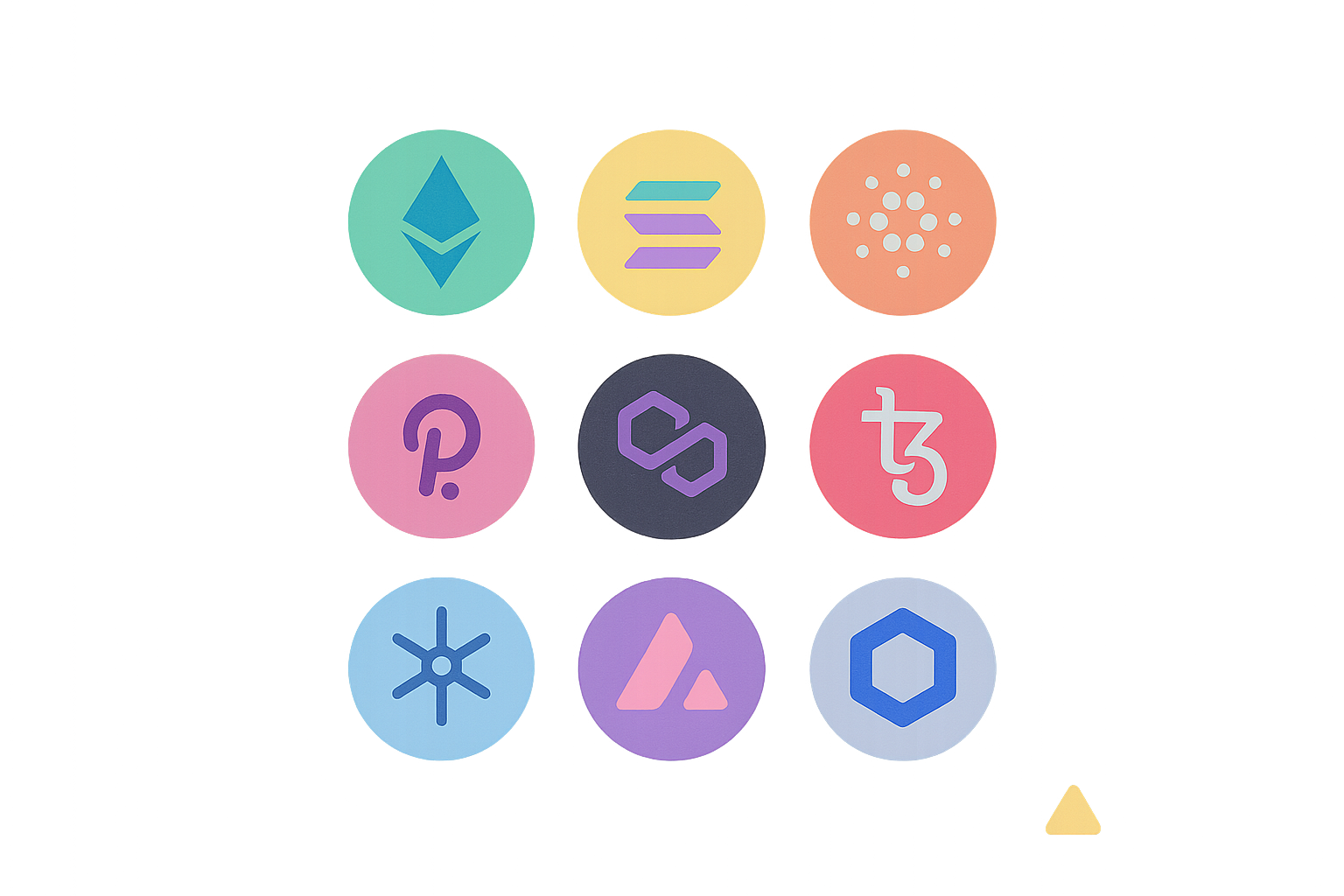
2024 Proof-of-Stake Token Rankings: In-Depth Analysis! Explore detailed comparisons of nine major PoS tokens—including Ethereum 2.0, Cardano, Solana, and Polkadot—covering staking yields from 5–20%, key technical attributes, and ecosystem growth. Discover how to generate passive income by staking through platforms like Gate, and gain expert insights into PoS token investment selection and risk management strategies.
2026-01-21 23:41:59
How Staking Infrastructure Is Revolutionizing Institutional Investments

How Staking Infrastructure Is Revolutionizing Institutional Investments

This comprehensive guide explores institutional-grade staking tools that combine advanced custody solutions with professional infrastructure for blockchain participation. Designed for institutional investors seeking yield optimization, the guide addresses key challenges including regulatory compliance, asset security, and operational scalability across multiple networks. It covers critical components including integrated staking platforms, non-custodial solutions, validator marketplace diversity, and liquid staking mechanisms that enhance capital efficiency. The article details automation capabilities, policy-based governance frameworks, and sophisticated reporting tools essential for institutional operations. By examining partnerships between traditional finance and blockchain infrastructure providers, it demonstrates how staking has evolved into a strategic treasury management tool. The guide concludes by outlining emerging trends and best practices for institutions implementing comprehensive staking strate
2026-01-21 21:05:54
Alpha Yield: Unlocking High Returns with Simplified DeFi on a Leading Exchange Platform

Alpha Yield: Unlocking High Returns with Simplified DeFi on a Leading Exchange Platform

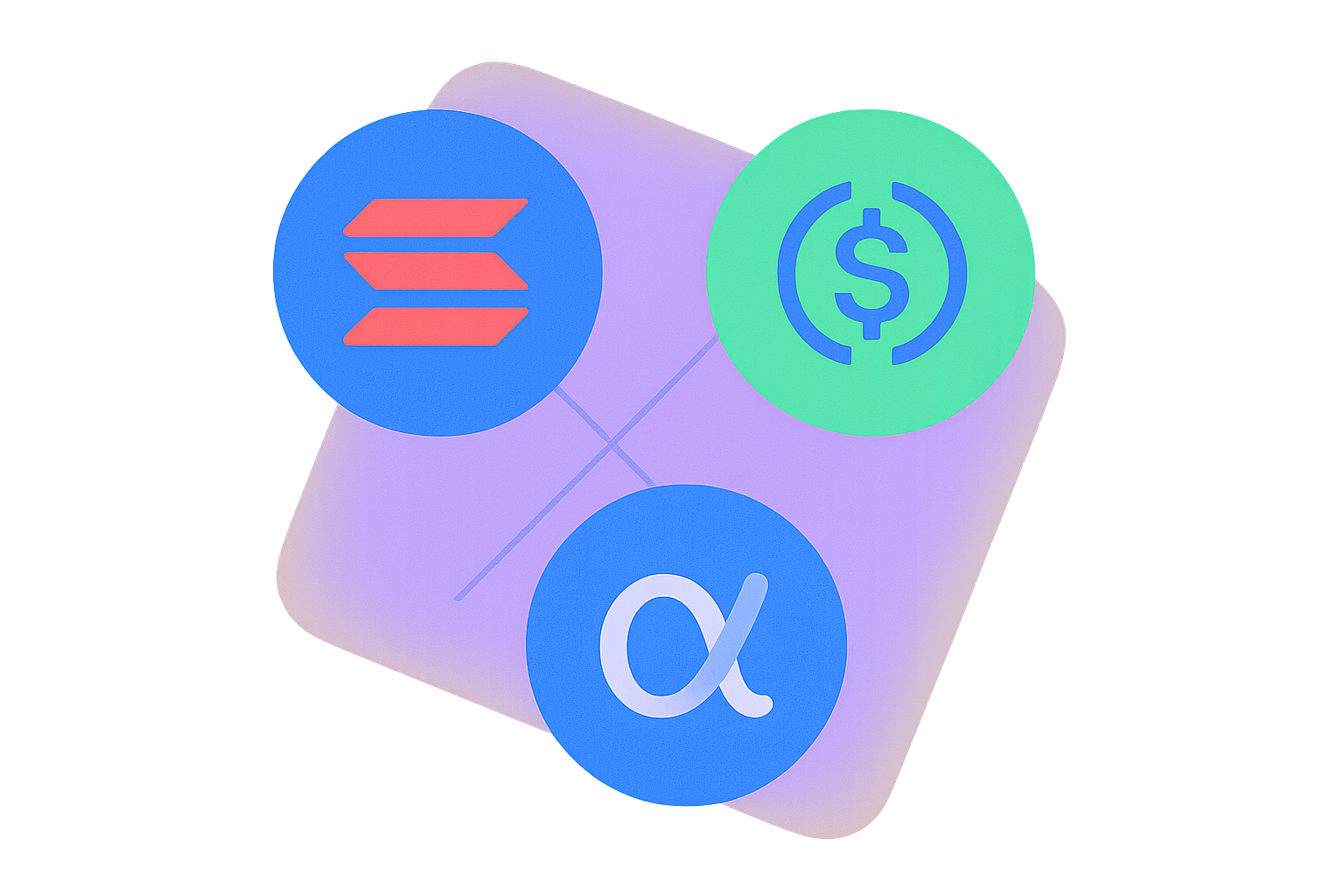
Alpha Yield on Gate represents a breakthrough DeFi platform that democratizes liquidity farming by eliminating traditional barriers such as wallet management, private keys, and gas fees. This article explores how the platform bridges centralized and decentralized finance through its innovative Concentrated Liquidity Market Maker (CLMM) model, delivering superior capital efficiency and high-yield opportunities. Discover featured liquidity pools including SOL-USDC with annual yields up to 91%, real-time position tracking on Alpha Assets, and how the platform simplifies DeFi access for both beginners and experienced investors. Learn why this CEX-DeFi integration drives mainstream adoption while maintaining security and transparency, positioning Alpha Yield as the future of accessible, high-return decentralized finance on Gate.
2026-01-21 20:43:34
How to Stake and Earn Seed SEED Rewards

How to Stake and Earn Seed SEED Rewards

This comprehensive guide demystifies earning Seed SEED rewards through staking within the Seed DAO ecosystem. Learn how Seed SEED functions as both a governance and utility token for XR/VR/AR content development. The guide covers four primary earning methods: token staking for passive income, governance participation, content creation collaboration, and periodic airdrops. Discover how to claim rewards, explore multiple use cases including reinvestment and trading on Gate, and implement secure storage solutions using compatible wallets. Whether you're a developer, investor, or blockchain enthusiast, this guide provides actionable steps to maximize your participation in Seed DAO's innovative decentralized community while earning sustainable financial returns.
2026-01-21 20:35:39
Hex, Richard, and ETH: How Richard Heart's Legal Victory Redefines Crypto Regulation

Hex, Richard, and ETH: How Richard Heart's Legal Victory Redefines Crypto Regulation

This comprehensive article explores Richard Heart's landmark legal victory against the SEC, establishing a precedent for decentralized blockchain projects. It examines HEX, a blockchain-based certificate of deposit with innovative staking mechanisms, and PulseChain, an Ethereum alternative designed to address scalability and environmental concerns. The article addresses criticisms surrounding both projects while analyzing the SEC's evolving regulatory approach and its implications for the cryptocurrency industry. Richard Heart emerges as a polarizing figure whose bold innovations challenge traditional finance and regulatory frameworks. The legal triumph validates decentralized systems and sets crucial benchmarks for how blockchain projects can operate within regulatory boundaries. This case demonstrates the critical balance between fostering innovation and ensuring compliance, reshaping expectations for crypto regulation on Gate and throughout the digital asset ecosystem.
2026-01-21 19:39:37
Digital Asset Staking: How to Maximize Rewards and Navigate an Evolving Landscape

Digital Asset Staking: How to Maximize Rewards and Navigate an Evolving Landscape

This comprehensive guide explores scalable token staking system architecture and implementation strategies for blockchain infrastructure. It covers how cryptocurrency holders lock tokens to validate network transactions and earn rewards through Proof of Stake mechanisms. The article addresses institutional adoption through staking-enabled ETFs, yield generation strategies, tax compliance, and regulatory frameworks from the SEC and IRS. It examines AI-driven optimization tools, multi-chain solutions, and Staking-as-a-Service models transforming participation. Key topics include operational efficiency improvements, geographic adoption trends, validator performance resilience, environmental benefits over energy-intensive mining, and critical risk management strategies including slashing penalties and liquidity constraints. Perfect for institutional investors, retail participants, and infrastructure providers seeking professional-grade staking solutions and compliance guidance.
2026-01-21 19:05:25
SOL Staking Whale: How Massive Whale Activity Is Shaping Solana's Market Dynamics

SOL Staking Whale: How Massive Whale Activity Is Shaping Solana's Market Dynamics

This comprehensive guide explores effective SOL staking strategies and whale activity dynamics shaping the Solana cryptocurrency market. The article examines how large-scale investors influence network security, liquidity, and price movements through strategic staking decisions. Key sections analyze Solana's competitive advantages over Ethereum, including lower transaction fees, higher throughput, and superior energy efficiency. The guide covers institutional adoption trends, VanEck's groundbreaking Solana staking ETF, and real-world whale behavior patterns as market indicators. Readers gain actionable insights into staking yields, liquidity implications, and decentralization concerns while understanding how whale movements signal broader market trends. Ideal for investors seeking to optimize SOL staking returns and anticipate market dynamics in the evolving blockchain landscape.
2026-01-21 16:15:50
What is LAYER: A Comprehensive Guide to Understanding Layered Architecture in Modern Software Development

What is LAYER: A Comprehensive Guide to Understanding Layered Architecture in Modern Software Development

This comprehensive guide explores Solayer (LAYER), a restaking platform transforming Solana's DeFi ecosystem since 2025. Solayer addresses security and yield optimization through innovative restaking mechanisms, enabling validators and token holders to enhance network security while maximizing returns. The platform operates on Solana's decentralized infrastructure, leveraging Proof of Stake consensus and advanced cryptography for transaction security. With 65,000+ token holders and listings on 41 exchanges including Gate, Solayer demonstrates growing market adoption despite price volatility. The article examines technical architecture, market performance metrics, ecosystem applications, and community engagement while addressing regulatory challenges and competition. Whether exploring restaking opportunities or understanding modern DeFi infrastructure, readers gain actionable insights into Solayer's role as a leading restaking solution for Solana participants.
2026-01-21 14:44:28
Is Solayer (LAYER) a good investment?: A Comprehensive Analysis of Performance, Risks, and Future Potential in the Solana Ecosystem

Is Solayer (LAYER) a good investment?: A Comprehensive Analysis of Performance, Risks, and Future Potential in the Solana Ecosystem

Solayer (LAYER) is a restaking platform built on the Solana blockchain, currently trading at $0.1394 with a $29.27 million market cap and 210 million circulating tokens (21% of total supply). This comprehensive analysis examines whether LAYER represents a viable investment opportunity by evaluating its historical price performance, ranging from $3.42 highs to $0.08 lows in 2025, and projecting potential 2026-2031 valuations between $0.08 and $0.30 depending on adoption scenarios. The platform generates investment value through enhanced network security and yield optimization via restaking mechanisms on Solana. Key investment considerations include significant supply dilution risk from remaining 79% locked tokens, high volatility with 87% annual decline, and limited liquidity despite 41 exchange listings. Suitable allocation ranges from 1-3% for conservative investors to 5-10% for aggressive traders. While LAYER offers exposure to emerging restaking infrastructure, investors must carefully manage risks through
2026-01-21 14:22:45
LAYER vs OP: A Comprehensive Comparison of Two Revolutionary Blockchain Scaling Solutions

LAYER vs OP: A Comprehensive Comparison of Two Revolutionary Blockchain Scaling Solutions

This comprehensive guide compares LAYER and OP, two revolutionary blockchain scaling solutions with distinct positioning in the crypto market. LAYER, launched in 2025, operates as a Solana-based restaking platform focused on security and yield generation, while OP, established since 2022, serves as an Ethereum Layer 2 solution offering low-cost, fast transactions. The article analyzes historical price trends, current market status, tokenomics, institutional adoption, and technical ecosystems to address investor concerns about which asset presents better value. Through 2031 price forecasts ranging from $0.18-$0.33 for LAYER and $0.37-$0.75 for OP, alongside risk management strategies and allocation recommendations, this analysis helps differentiate investment approaches for conservative and aggressive investors. Key differentiators include OP's superior liquidity ($2.1M daily volume versus LAYER's $65K), distinct ecosystem positioning, and varying risk profiles. Whether seeking Solana restaking exposure or Eth
2026-01-21 14:13:42
Is Solayer (LAYER) a good investment?: A Comprehensive Analysis of Risk, Potential Returns, and Market Opportunities

Is Solayer (LAYER) a good investment?: A Comprehensive Analysis of Risk, Potential Returns, and Market Opportunities

This comprehensive guide evaluates Solayer (LAYER) as an investment opportunity, analyzing the Solana-based restaking platform's market position and potential. With a current market capitalization of $29.11 million and trading at $0.1386, LAYER presents both significant volatility and growth prospects. The article examines LAYER's 87.35% price decline since launch while assessing future potential through 2031, supported by detailed price forecasts and scenario analysis. Key investment considerations include supply mechanics with 79% of tokens unreleased, institutional adoption across 41 exchanges, and technological infrastructure built on Solana blockchain. Risk management strategies are provided for conservative, aggressive, and professional investors, with allocation recommendations of 1-3%, 5-10%, and strategic positioning respectively. The guide addresses market risks, regulatory uncertainties, and technical vulnerabilities while offering practical investment methodologies and security recommendations. Su
2026-01-21 12:24:50
What Happened on Ethereum Merge Date and Why It Matters

What Happened on Ethereum Merge Date and Why It Matters

The Ethereum Merge, completed on September 15, 2022, represents one of blockchain's most significant upgrades, transitioning the network from energy-intensive Proof of Work to efficient Proof of Stake consensus. This transformation reduced Ethereum's energy consumption by over 99%, addressing sustainability concerns while enhancing network security and establishing foundations for future scalability improvements. The upgrade replaced miners with validators who stake ETH, eliminating computational mining and creating stronger economic incentives for honest participation. For regular users and ETH holders, the Merge was seamless—no action required, balances remained safe, and token functionality continued unchanged. Post-Merge upgrades including Shanghai and Cancun further optimized the network, enabling staking rewards and Layer 2 scaling solutions. Today, Ethereum operates as a more sustainable, secure, and scalable platform positioned for continued development and institutional adoption.
2026-01-21 10:55:09