Законопроект «Законодавство про національні інновації та створення стейблкоїнів США» (GENIUS Act), прийнятий у липні 2025 року, вважається важливою віхою в історії регулювання криптоактивів в США. Цей законопроект надає чітку правову основу для стейблкоїнів і може спровокувати нову хвилю інвестицій у стартапи, пов’язані зі стейблкоїнами та застосуваннями Web3. Оскільки ринкова капіталізація вже досягла 272 мільярдів доларів, інвестори та підприємці уважно стежать за приходом цієї «нової ери криптофінансів».
Законопроект набирає обертів: стейблкоїни потрапляють під регулювання
Основна суть законопроекту GENIUS полягає в вимозі, щоб стабільні монети, що використовуються для платежів, були повністю забезпечені високоякісними, низькоризиковими активами (такими як готівка, державні облігації або резерви Федеральної резервної системи) і працювали в рамках регуляторної системи США. Цей крок не тільки забезпечує стабільність ринку, а й відкриває двері для конкуренції між банками, фінансовими технологічними компаніями та стартапами.
Наразі Tether (USDT) з ринковою капіталізацією 165 мільярдів доларів очолює ринок, за ним йдуть USDC від Circle (67 мільярдів доларів) та Ethena (11 мільярдів доларів). Аналітики вважають, що з урахуванням чіткішого регулювання, ринкова капіталізація стейблкоїнів може отримати новий сплеск зростання та стати основним платіжним шаром екосистеми Web3.
Інвестиційні кошти надходять: банки повільно, стартапи швидко
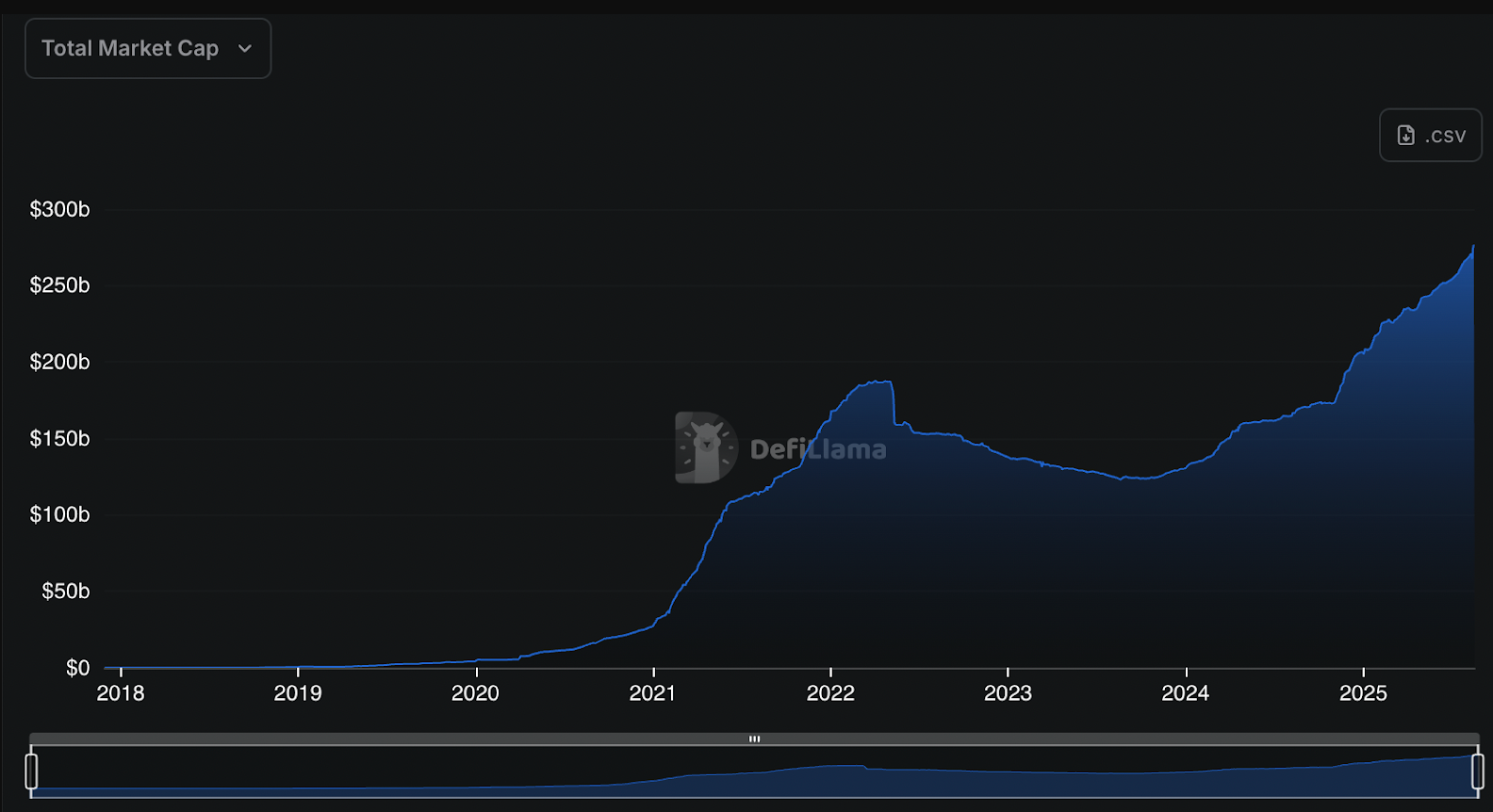
(джерело: DefiLlama)
Партнер Propel VC Девід Морт зазначив, що в наступні п’ять років обсяги державних облігацій та депозитів, що прив’язані до стейблкоїнів, можуть зрости експоненційно.
Хоча великі банки мають переваги на стороні активів, їхня швидкість дій часто не може зрівнятися з гнучкістю стартапів. Консультант Techstars Артем Гордадзе вважає, що “Закон GENIUS” забезпечує стабільність базових платіжних систем, що дозволяє підприємцям зосередитися на досвіді користувачів та інноваціях у продуктах.
Це означає, що від малих платежів, транзакцій через кордон до позик і стейкінгу на блокчейні, нові стартапи у сфері стейблкоїнів можуть стати центром уваги для венчурного капіталу в найближчі кілька кварталів. У другому кварталі 2025 року обсяги венчурного фінансування в криптоактиви вже перевищили 10 мільярдів доларів, а в четвертому кварталі, можливо, досягнуть піку завдяки подвійній підтримці GENIUS і незабаром анонсованого Закону CLARITY.
AI + Web3: наступна точка вибуху
Крім стейблкоїнів, поєднання штучного інтелекту (AI) та Web3 стає золотою трасою в очах інвесторів. Партнер Anagram Девід Александер II зазначив, що регуляторна ясність, надана законом GENIUS, спонукатиме більше підприємців досліджувати додатки Web3 на основі AI, такі як інтелектуальні гаманці, управління ризиками, аналіз поведінки користувачів та автоматизовані торгові стратегії.
Гордадзе додав, що ШІ може спростити складні концепції DeFi, знизити бар’єри для входу користувачів, зробивши застосунки Web3 такими ж зрозумілими та зручними, як Web2. Це не лише сприятиме прискоренню масового прийняття, але й підвищить технічні вимоги для засновників, утворюючи вищі бар’єри для входу в галузь.
Заключення
Прийняття закону «GENIUS» принесло інституційні гарантії на ринок стейблкоїнів і відкрило можливості фінансування та інновацій для стартапів. З прискоренням інтеграції AI та Web3, у найближчі роки ми можемо стати свідками виникнення нового покоління додатків, які поєднують фінансову стабільність та технологічні інновації. Для інвесторів четвертий квартал 2025 року може стати критичним моментом для розміщення в стейблкоїнах та AI-Web3. Для більш детального аналізу ринку та галузевих інсайтів, будь ласка, підписуйтеся на офіційну платформу Gate.
Застереження: Інформація на цій сторінці може походити від третіх осіб і не відображає погляди або думки Gate. Вміст, що відображається на цій сторінці, є лише довідковим і не є фінансовою, інвестиційною або юридичною порадою. Gate не гарантує точність або повноту інформації і не несе відповідальності за будь-які збитки, що виникли в результаті використання цієї інформації. Інвестиції у віртуальні активи пов'язані з високим ризиком і піддаються значній ціновій волатильності. Ви можете втратити весь вкладений капітал. Будь ласка, повністю усвідомлюйте відповідні ризики та приймайте обережні рішення, виходячи з вашого фінансового становища та толерантності до ризику. Для отримання детальної інформації, будь ласка, зверніться до
Застереження.


