Qu’est-ce que le trading de devises ?
Le trading de devises consiste à échanger différentes monnaies afin de profiter des variations de prix. Sur les marchés forex traditionnels, les actifs négociés sont des monnaies fiduciaires nationales telles que le dollar américain ou l’euro.
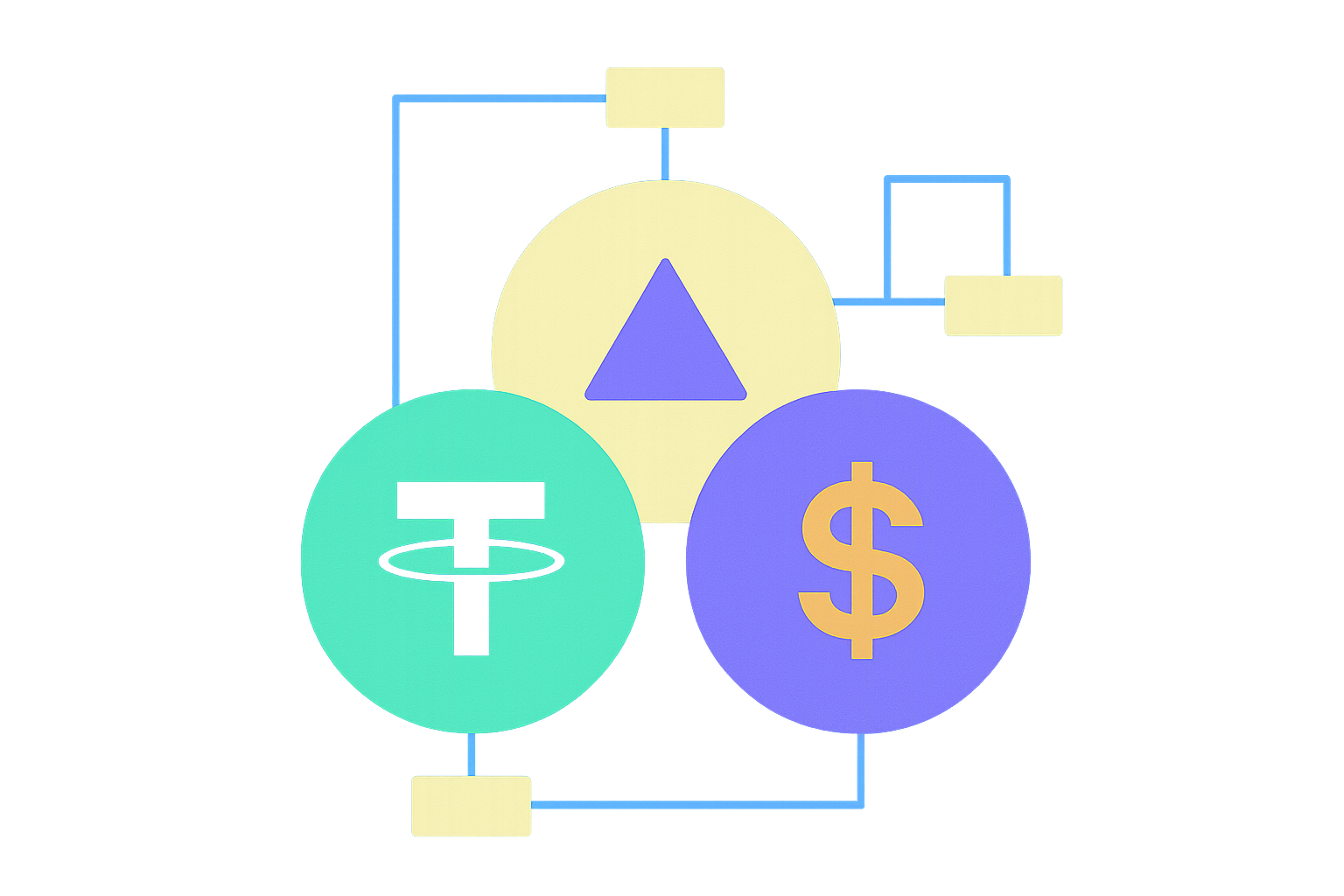
Une « monnaie fiduciaire » désigne une devise émise et reconnue légalement par un gouvernement ou une région. Dans l’écosystème Web3, le trading de devises s’appuie généralement sur des stablecoins : des jetons crypto indexés sur des monnaies fiduciaires (par exemple, des jetons indexés sur le dollar américain), permettant des conversions et des opérations de couverture sur blockchain ou via des plateformes d’échange.
Les situations courantes incluent l’échange de devises avant un déplacement, la gestion de paiements internationaux ou l’investissement selon des anticipations sur les taux de change ou pour la couverture du risque.
En quoi le trading de devises est-il différent dans le Web3 ?
Le trading de devises dans le Web3 se distingue par ses outils et la structure du marché : il est possible de négocier en continu à l’aide de stablecoins et de protocoles on-chain, avec des règlements accélérés.
Sur les plateformes d’échange, vous pouvez échanger des stablecoins comme USDT contre d’autres stablecoins indexés sur des monnaies fiduciaires, reproduisant ainsi le trading forex dans l’environnement crypto. Sur blockchain, les exchanges décentralisés utilisent des smart contracts pour l’appariement des ordres ou des mécanismes de tarification automatisée via des pools de liquidité, ce qui limite l’intervention d’intermédiaires manuels.
Contrairement au forex traditionnel, généralement ouvert cinq jours par semaine, le trading de devises dans le Web3 est accessible en principe 24h/24 et 7j/7. Cependant, il existe des différences en matière de conformité, de gestion du risque et de conservation des actifs.
Comment fonctionne le trading de devises ?
Les prix dans le trading de devises sont déterminés par l’offre et la demande ainsi que par les anticipations du marché. Les taux d’intérêt, l’inflation, les statistiques sur l’emploi et les événements géopolitiques influencent ces dynamiques. Les capitaux circulent entre les devises à la recherche de rendement ou de sécurité, ce qui provoque des fluctuations des taux de change.
Sur blockchain, de nombreux échanges sont facilités par des Automated Market Makers (AMM). Un AMM fonctionne comme un guichet automatisé : il ajuste les prix selon la proportion des deux actifs dans un pool ; lorsque ce ratio évolue, le prix varie également.
Sur les exchanges centralisés, les carnets d’ordres établissent les prix via des ordres d’achat et de vente. Les market makers assurent la liquidité en affichant un « spread » – la différence entre le prix d’achat (bid) et le prix de vente (ask). Un spread serré réduit les coûts de transaction.
Comment commencer le trading de devises sur Gate ?
La procédure pour trader des devises sur Gate est claire :
Étape 1 : Créez un compte Gate et effectuez la vérification d’identité (KYC) pour garantir la conformité réglementaire et la gestion des risques.
Étape 2 : Déposez des fonds ou achetez de l’USDT. L’USDT est un stablecoin indexé sur le dollar américain et sert de devise de base sur la plateforme.
Étape 3 : Rendez-vous dans la section spot trading et sélectionnez une paire de devises. Les paires courantes associent l’USDT à d’autres stablecoins adossés à des monnaies fiduciaires, comme ceux indexés sur l’euro ou le yen japonais, pour établir ou rééquilibrer votre exposition.
Étape 4 : Définissez les types d’ordres et gérez le risque. Les ordres au marché visent une exécution immédiate ; les ordres limit permettent de maîtriser le prix d’exécution. Configurez des alertes de prix et des limites de position pour limiter l’exposition.
Étape 5 : Conservez vos historiques et analysez vos opérations. Exportez votre historique de transactions, surveillez les frais et les spreads, et examinez votre logique de trading pour optimiser vos décisions futures.
Conseil de sécurité : Toute opération de trading comporte un risque de perte. Activez la double authentification, évitez les liens frauduleux et gérez vos positions avec prudence.
Quelles sont les stratégies courantes en trading de devises ?
Les stratégies fréquemment utilisées incluent la couverture et le suivi de tendance ; il est conseillé aux débutants de privilégier les approches simples.
Couverture : Si vous prévoyez des dépenses futures en devises étrangères (frais de scolarité, budget voyage), vous pouvez acheter à l’avance le stablecoin correspondant pour verrouiller le taux de change et réduire l’incertitude.
Trading en range : Si deux devises évoluent dans une fourchette relativement stable, achetez au plus bas et vendez au plus haut dans cette zone ; il est impératif de placer des stop-loss pour éviter les pertes lors de ruptures soudaines.
Suivi de tendance : Quand des données macroéconomiques ou des politiques font évoluer une devise à la hausse ou à la baisse sur une période, suivez la tendance et utilisez des stops suiveurs pour sécuriser les gains.
Arbitrage : Profitez des écarts de prix entre plateformes en achetant bas et en vendant haut. Toutefois, prenez en compte les frais, les délais de retrait et le slippage ; évaluez attentivement les coûts d’exécution.
Quels sont les coûts et les risques du trading de devises ?
Les principaux coûts du trading de devises incluent le spread, les frais de transaction et le slippage. Le slippage désigne la différence entre le prix visé pour un ordre et le prix réel d’exécution : il est généralement plus élevé en période de volatilité ou de faible liquidité.
L’effet de levier amplifie à la fois les gains et les pertes. Il consiste à emprunter des fonds pour augmenter la taille de la position ; en cas d’évolution défavorable du marché, une liquidation forcée peut survenir si la marge devient insuffisante. Il est conseillé aux débutants de commencer sans levier ou avec un levier faible.
Lors du trading de stablecoins indexés sur des monnaies fiduciaires, surveillez la stabilité de l’indexation et la conformité de l’émetteur, ainsi que la transparence sur les réserves. Les évolutions réglementaires, les risques liés aux projets ou des événements imprévus peuvent influencer le prix et la disponibilité.
Comment fonctionne le trading de devises sur blockchain ?
Les échanges de devises sur blockchain sont généralement réalisés via des exchanges décentralisés (DEX), permettant d’interagir directement avec des smart contracts depuis votre wallet.
Étape 1 : Préparez votre wallet et déposez des stablecoins. Votre wallet sert de compte sur blockchain ; sécurisez soigneusement votre seed phrase et votre clé privée.
Étape 2 : Sélectionnez un pool de liquidité et définissez la tolérance au slippage. Les pools de liquidité regroupent deux actifs pour l’échange ; fixer une tolérance au slippage limite les coûts inattendus en cas de variations rapides des prix.
Étape 3 : Exécutez l’échange et sauvegardez le hash de transaction, qui fait office de preuve sur blockchain pour toute vérification ou audit ultérieur.
Pour les échanges inter-chaînes, utilisez un bridge cross-chain : ces canaux entre blockchains comportent des risques techniques et de sécurité. Pour les montants importants, procédez par lots et testez d’abord avec de petites sommes.
En quoi le trading de devises diffère-t-il du trading d’actifs crypto ?
Le trading de devises repose principalement sur les fondamentaux économiques nationaux et l’évolution des taux d’intérêt. À l’inverse, les prix des actifs crypto sont davantage influencés par les innovations technologiques, l’activité réseau et le sentiment du marché.
Les paires de devises sont généralement moins volatiles que la plupart des actifs crypto, mais peuvent connaître des mouvements brusques en cas d’événement. Les actifs crypto sont en général plus volatils, ce qui impose une gestion plus rigoureuse de la taille des positions et du risque.
Dans le Web3, les deux types d’actifs se croisent souvent : il est possible d’utiliser des stablecoins pour le trading de devises tout en conservant d’autres actifs crypto pour la gestion de portefeuille. Il est essentiel de clarifier vos objectifs et vos sources de risque.
Quelles données et quels événements sont déterminants en trading de devises ?
Suivez les décisions sur les taux d’intérêt, les chiffres de l’inflation et les rapports sur l’emploi : ces éléments déterminent fortement la direction et l’intensité des taux de change.
Dans le Web3, surveillez également les informations sur les réserves des stablecoins, les annonces de conformité et l’évolution de la liquidité sur blockchain. Les données publiques montrent que le volume mondial du trading de devises reste élevé ; l’adoption des stablecoins a fortement progressé ces dernières années (sources : rapports institutionnels internationaux, tendances observées sur les deux dernières années).
Concrètement, élaborez votre propre calendrier de données, paramétrez des alertes de prix et réduisez le levier ou les positions concentrées avant les événements majeurs.
Points clés sur le trading de devises
Le cœur du trading de devises est la gestion du risque de prix et des variations de valeur entre différentes monnaies, à l’aide d’outils adaptés. Les marchés forex traditionnels complètent les solutions Web3 : sur Gate, il est possible de trader facilement l’USDT contre d’autres stablecoins adossés à des monnaies fiduciaires ; les AMM sur blockchain permettent des échanges 24h/24 et 7j/7. Quelle que soit la méthode, gérez systématiquement les frais, spreads, slippage, utilisation du levier, exigences de conformité, risques de projet – et analysez régulièrement vos historiques pour améliorer vos décisions. Ce contenu est fourni à titre éducatif uniquement et ne constitue pas un conseil en investissement.
FAQ
Quelles démarches pour débuter le trading de devises ?
Les nouveaux traders doivent effectuer trois étapes : sélectionner une plateforme reconnue (comme Gate), compléter la vérification d’identité (KYC) et déposer des fonds initiaux. Commencez par de petits montants pour vous familiariser avec le processus ; apprenez les bases de la lecture des chandeliers et la gestion du risque ; évitez de vous précipiter sur des opérations importantes. Préparez votre adresse de wallet pour les retraits et priorisez la sécurité de votre compte.
Qu’est-ce que le trading à effet de levier sur les marchés de devises ?
Le trading à effet de levier consiste à emprunter des fonds pour augmenter la taille de votre position, ce qui amplifie autant les gains potentiels que les pertes. Par exemple, avec 1 000 $ à un levier de 2x, vous contrôlez 2 000 $ d’actifs. Les profits sont doublés en cas de gain, mais les pertes peuvent aussi doubler ou entraîner une liquidation (perte totale du capital). Les débutants doivent éviter l’effet de levier avant de maîtriser le trading spot.
Qu’est-ce qu’une paire de trading en devises ? Comment choisir ?
Une paire de trading réunit deux actifs : par exemple BTC/USDT signifie échanger du Bitcoin contre des stablecoins. Privilégiez les paires principales avec une forte liquidité (comme BTC ou ETH avec USDT) pour une exécution rapide et un slippage minimal. Les débutants doivent éviter les paires peu liquides, difficiles à quitter rapidement. Gate propose un large choix de paires.
Comment placer des stop-loss et prendre des profits en trading de devises ?
Un stop-loss vend automatiquement lorsque les pertes atteignent un seuil fixé ; le take profit clôture la position une fois le gain cible atteint : ce sont des outils essentiels de gestion du risque. Placez les stop-loss environ 3–5 % sous le prix d’entrée ; les take profits 5–10 % au-dessus – ajustez selon votre tolérance au risque. Utiliser ces ordres permet d’éviter le trading émotionnel et de protéger votre capital.
Quels frais sont liés au trading de devises ? Comment réduire les coûts ?
Les frais de trading incluent généralement les frais maker (apport de liquidité) et taker (retrait de liquidité) ; des plateformes comme Gate proposent des niveaux d’adhésion pour des tarifs réduits. Pour réduire les coûts : utilisez les tokens de la plateforme pour des remises, améliorez votre niveau de compte, privilégiez les ordres maker (limite) au lieu des ordres taker (marché). Choisir une plateforme à faibles frais et optimiser la fréquence des trades peut réduire significativement les coûts globaux.