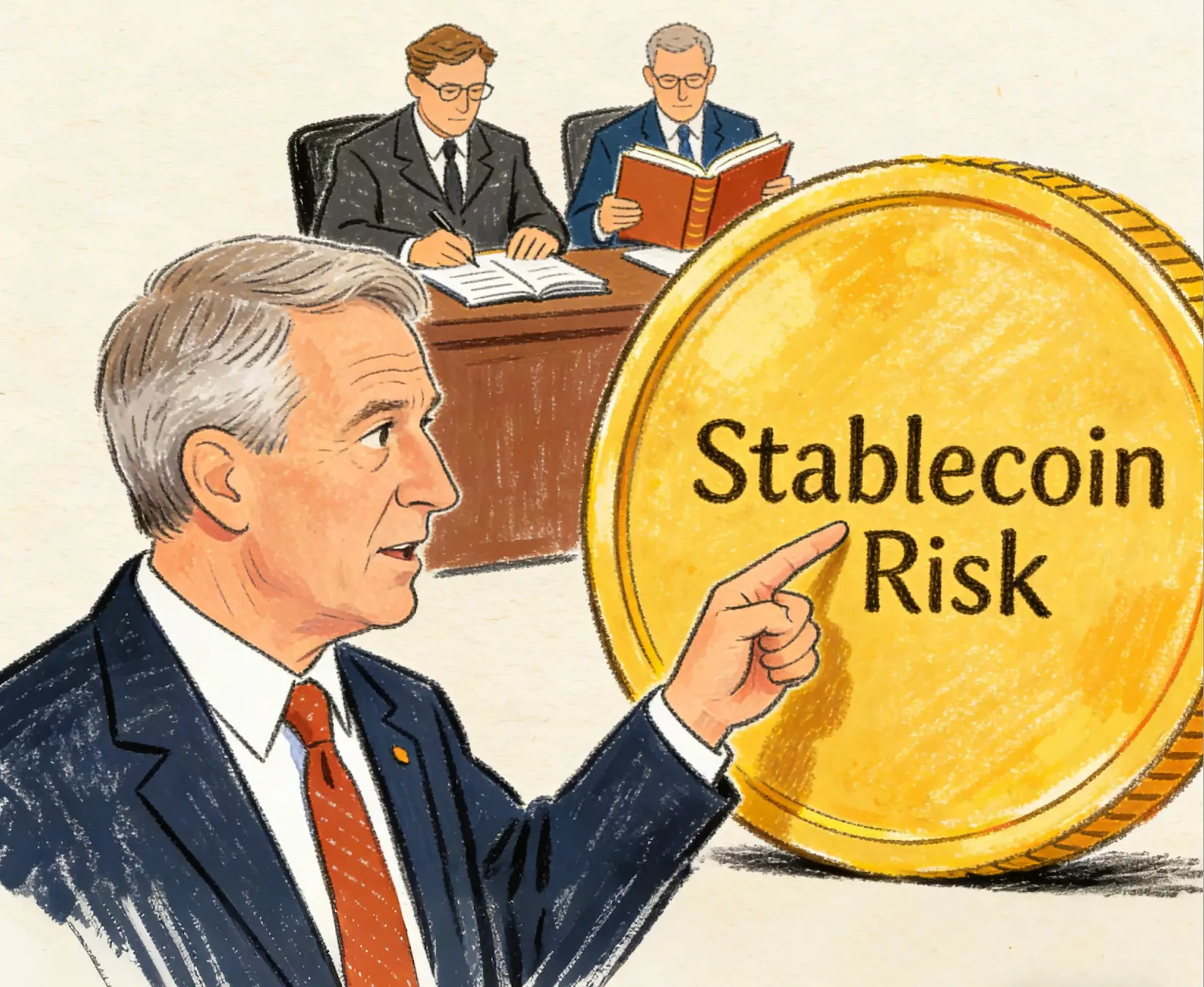
 Federal Reserve Governor Michael Barr stated on April 1, 2026 that stablecoins present potential money laundering and financial stability risks, emphasizing that the quality and liquidity of reserve assets are critical to their long-term viability, as banking agencies work to implement the GENIUS Act regulatory framework.
Barr noted that stablecoin issuers face inherent incentives to maximize returns on reserve assets by extending risk profiles, and warned that robust oversight will determine whether stablecoins can become stable, reliable payment instruments.
Barr Highlights Risk of Reserve Asset Quality and Liquidity Shortfalls
Barr delivered prepared remarks to the Federalist Society addressing the Guiding and Establishing Innovation for US Stablecoins Act (GENIUS Act), which was passed in 2025 and requires stablecoin issuers to formally register and hold dollar-for-dollar reserves. He stated that stablecoins will be stable only if they can be reliably and promptly redeemed at par under a wide range of conditions, including during market stress that can pressure the value of government debt and during episodes of strain on individual issuers or related entities.
The Governor noted that stablecoin issuers have financial incentives to maximize returns on reserve assets, which could lead them to extend risk profiles as far as possible. Tight control over reserve assets, combined with supervision, capital and liquidity requirements, and other measures, could enhance stablecoin stability and make them more viable payment instruments, he said, but added that success will depend on the details of regulatory implementation.
Barr also acknowledged potential benefits of digital assets, including assistance with corporate treasury functions and remittance transfers. He noted that stablecoins offer faster payment settlement compared to wire transfers, which can take several business days.
GENIUS Act Implementation Faces Interagency Coordination Requirements
The GENIUS Act provides a regulatory framework requiring stablecoin issuers to register and maintain dollar-for-dollar reserves. Barr stated that federal banking agencies and states must work together on implementing rules to fill significant gaps, protect users, and reduce risks to the financial system. The Governor previously noted in October 2025 that passing the GENIUS Act would help alleviate risks of runs, but that implementation details remain critical.
Barr recalled what he described as a “long and painful history of private money created with insufficient safeguards,” framing the need for robust oversight within historical context. He called for both regulatory and technological measures to ensure stablecoins are not used for illicit activities, including money laundering.
The Federal Reserve and other regulators are currently in the process of writing rules tied to the GENIUS Act. Banks and crypto firms have recently clashed over digital asset regulations, including disputes over access to bank charters and the treatment of stablecoin issuers under the banking framework.
Stablecoin Debate Intersects with Broader Crypto Legislation
Barr’s comments come as issues related to stablecoins appear to be delaying agreement among lawmakers on new drafts of the CLARITY Act, a separate bill designed to provide regulatory certainty around digital assets. The CLARITY Act has stalled in the Senate as banks, crypto firms, and lawmakers continue debating key provisions.
The Governor’s remarks emphasized that regulatory implementation will determine whether stablecoins can achieve long-term viability as payment instruments. He noted that the quality and liquidity of stablecoin reserve assets are critical to their long-run viability, and that tight oversight combined with capital and liquidity requirements could help achieve stability goals.
FAQ
What stablecoin risks did Fed Governor Michael Barr identify?
Barr identified potential money laundering and financial stability risks associated with stablecoins, emphasizing that the quality and liquidity of reserve assets are critical to their viability. He warned that stablecoin issuers have incentives to maximize returns by extending risk profiles, which could undermine stability without proper oversight.
What is the GENIUS Act and what is its status?
The GENIUS Act (Guiding and Establishing Innovation for US Stablecoins Act) was passed in 2025 and requires stablecoin issuers to formally register and hold dollar-for-dollar reserves. Federal banking agencies and states are currently working on implementing rules, with Barr stating that success will depend on the details of regulatory implementation.
How does stablecoin regulation relate to the broader crypto legislative landscape?
Barr’s comments on stablecoin implementation come as lawmakers continue debating the CLARITY Act, a separate bill stalled in the Senate that would provide broader regulatory certainty for digital assets. Disagreements over stablecoin-related provisions have been cited as one factor delaying agreement on the CLARITY Act.
Disclaimer: The information on this page may come from third parties and does not represent the views or opinions of Gate. The content displayed on this page is for reference only and does not constitute any financial, investment, or legal advice. Gate does not guarantee the accuracy or completeness of the information and shall not be liable for any losses arising from the use of this information. Virtual asset investments carry high risks and are subject to significant price volatility. You may lose all of your invested principal. Please fully understand the relevant risks and make prudent decisions based on your own financial situation and risk tolerance. For details, please refer to
Disclaimer.


