


Futures
Access hundreds of perpetual contracts
TradFi
Gold
One platform for global traditional assets
Options
Hot
Trade European-style vanilla options
Unified Account
Maximize your capital efficiency
Demo Trading
Introduction to Futures Trading
Learn the basics of futures trading
Futures Events
Join events to earn rewards
Demo Trading
Use virtual funds to practice risk-free trading
Launch
CandyDrop
Collect candies to earn airdrops
Launchpool
Quick staking, earn potential new tokens
HODLer Airdrop
Hold GT and get massive airdrops for free
Launchpad
Be early to the next big token project
Alpha Points
Trade on-chain assets and earn airdrops
Futures Points
Earn futures points and claim airdrop rewards


More



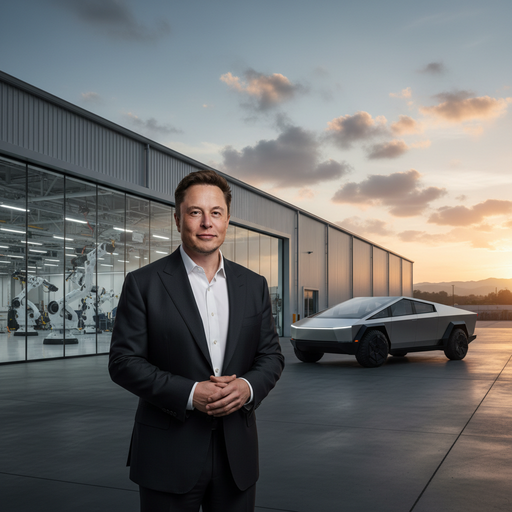


The Extraordinary Pace of Elon Musk's Wealth Accumulation: Earning Billions Per Second
Elon Musk stands as one of the world’s most visible entrepreneurs, with a financial trajectory that defies conventional understanding. Beyond his revolutionary ventures in electric vehicles, space exploration, and social media, Musk’s wealth itself has become a subject of fascination and debate. As society grapples with questions about wealth inequality and the responsibilities of billionaires, examining exactly how Elon Musk’s fortune per second translates into real economic power offers compelling insights into both his financial dominance and the broader economic landscape.
Calculating Elon Musk’s Astronomical Earnings Per Second
The mathematics of Elon Musk’s wealth generation is nothing short of breathtaking. Based on calculations derived from official financial data, this tech visionary accumulates approximately $656 every single second. To contextualize this figure: an average full-time American worker earning roughly $53,490 annually would need to work an entire year to match what Musk generates in just 90 seconds. This staggering reality fundamentally illustrates the vast chasm separating ultra-high-net-worth individuals from the general population.
These extraordinary per-second earnings are grounded in Musk’s reported net worth of approximately $194.4 billion as of March 2024. Remarkably, this represents just a fraction of his wealth’s peak, which soared to $340 billion in November 2021. The fluctuations in his fortune demonstrate how closely tied billionaire wealth is to market valuations and company performance—a relationship that adds considerable volatility to even incomprehensible sums of money.
From Seconds to Minutes: Scaling Up the Magnitude
When extrapolated to broader time intervals, Musk’s earning capacity becomes even more surreal. Per minute, he accumulates more than $43,000—an amount that exceeds the annual median income of numerous countries’ workers. In just one week, his wealth expansion surpasses $100 million, a milestone most individuals will never approach in their entire lifetime. These time-scaled calculations aren’t merely mathematical curiosities; they illuminate the exponential nature of wealth compounding at the billionaire level, where growth feeds growth in a feedback loop inaccessible to ordinary investors.
The Foundation: Diversified Ventures Building Musk’s Fortune
Elon Musk’s extraordinary financial position stems from his extensive portfolio of groundbreaking enterprises. Tesla dominates this portfolio, revolutionizing the automotive industry through electric vehicle innovation and renewable energy solutions. SpaceX represents his ventures into commercial space exploration, fundamentally reshaping humanity’s relationship with space travel. His social media platform X (formerly Twitter), which he acquired for $44 billion in 2022, adds significant valuation to his overall holdings. Additionally, Neuralink focuses on brain-computer interface technology, while The Boring Company tackles urban infrastructure through tunnel construction.
Importantly, Musk’s wealth exists primarily as stock holdings rather than liquid cash. He ranks as the third wealthiest person globally, positioned behind Jeff Bezos and Bernard Arnault (LVMH CEO). This ranking, while impressive, also underscores how concentrated ultra-wealth has become among founders and long-term equity holders in transformative technology companies.
The Stock Holdings Paradox: Tax Efficiency Versus Liquidity Constraints
The mechanics of Musk’s fortune reveal a complex financial reality often overlooked in casual wealth discussions. By maintaining majority or substantial stakes in his companies rather than drawing large salaries, Musk potentially benefits from favorable tax treatment on capital gains. However, this structure creates a significant liquidity limitation: he cannot simply convert his stock wealth into spending power without regulatory scrutiny. Any share sales must be pre-announced, a transparency requirement designed to protect market integrity but which simultaneously restricts his financial flexibility and can impact investor confidence in his companies’ valuations.
This paradox highlights a fundamental truth about billionaire wealth in the tech sector: enormous net worth doesn’t automatically translate to accessible capital. Musk’s per-second earnings may appear limitless on paper, but accessing this wealth requires navigating complex regulatory frameworks and potential market consequences.
Philanthropic Commitments: Between Promise and Practice
Despite accumulating wealth at an unprecedented pace, Musk’s charitable contributions have sparked controversy and debate. In 2022, he publicly committed to addressing global hunger with a promised $6 billion donation—yet this pledge faced significant scrutiny when he redirected the commitment through a donor-advised fund (DAF), transferring approximately $5.7 billion in Tesla shares rather than delivering direct assistance to organizations like the United Nations.
This approach, while legally permissible, raises ethical questions about the relationship between extraordinary wealth accumulation and social responsibility. Donor-advised funds represent a popular strategy among the ultra-wealthy, offering tax efficiency by allowing donors to claim charitable deductions while retaining substantial control over distribution timing. Such mechanisms, though not illegal, highlight tensions between personal tax optimization and urgent global needs.
The Broader Context: Wealth, Responsibility, and Economic Disparity
The reality of how Elon Musk’s fortune per second operates serves as a powerful lens through which to examine contemporary economic structures. His wealth accumulation rate underscores the exponential nature of billionaire-level financial growth, where traditional income measures become almost meaningless. Simultaneously, it illuminates persistent global inequality, raising philosophical questions about wealth distribution, the role of innovation-driven billionaires in addressing collective challenges, and the ethical frameworks governing extreme wealth concentration.
Musk’s position as a leading innovator generates undeniable economic value through technological advancement, employment creation, and disruption of stagnant industries. Yet this same position invites scrutiny regarding philanthropic commitments, tax optimization strategies, and whether wealth of this magnitude carries implicit responsibilities toward broader societal problems. The gap between earnings that accumulate relentlessly each second and the ability or willingness to deploy them toward global challenges remains a central tension in contemporary capitalism.
Conclusion: Understanding Wealth at Incomprehensible Scales
Examining how Elon Musk’s earnings unfold—$656 per second, $43,000 per minute, billions per year—provides more than just impressive numerical trivia. It offers a window into how modern wealth functions at scales that challenge human intuition and traditional economic frameworks. His fortune represents genuine economic power derived from transformative innovation, yet also embodies the structural inequalities and complex responsibilities inherent to billionaire status. As discussions about wealth distribution, philanthropic obligation, and economic fairness continue evolving globally, Musk’s financial trajectory remains a compelling case study in the relationship between innovation, accumulation, and social responsibility in the 21st century.