
Futures
Access hundreds of perpetual contracts
TradFi
Gold
One platform for global traditional assets
Options
Hot
Trade European-style vanilla options
Unified Account
Maximize your capital efficiency
Demo Trading
Introduction to Futures Trading
Learn the basics of futures trading
Futures Events
Join events to earn rewards
Demo Trading
Use virtual funds to practice risk-free trading
Launch
CandyDrop
Collect candies to earn airdrops
Launchpool
Quick staking, earn potential new tokens
HODLer Airdrop
Hold GT and get massive airdrops for free
Launchpad
Be early to the next big token project
Alpha Points
Trade on-chain assets and earn airdrops
Futures Points
Earn futures points and claim airdrop rewards


More


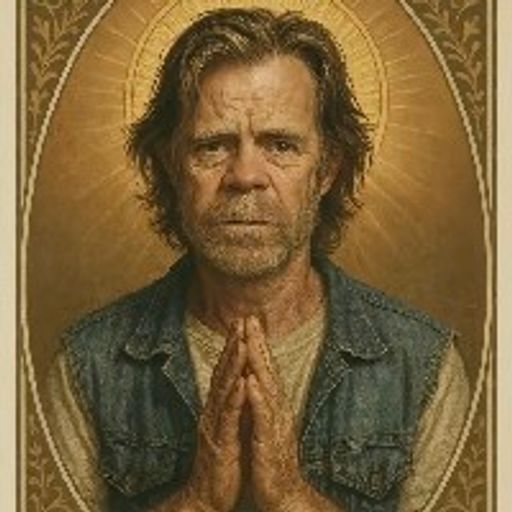

The Most Expensive NFT Records That Reshaped Digital Art Markets
The world of blockchain-based digital assets has witnessed unprecedented value creation, with the most expensive NFT transactions reaching into the tens of millions of dollars. These landmark sales represent more than mere financial speculation—they mark pivotal moments in the evolution of digital ownership and artistic expression. From Pak’s groundbreaking collaborative piece to the CryptoPunk phenomenon, this exploration reveals why certain digital assets command such astronomical prices and what these trends tell us about the future of art and technology.
Pak’s The Merge: Why One Most Expensive NFT Commands $91.8 Million
When Pak’s The Merge sold for $91.8 million on December 2, 2021, it shattered previous records and redefined what digital art could achieve in the market. What makes this transaction particularly significant is its innovative sales mechanism that fundamentally differs from traditional NFT auctions.
Rather than a single purchaser acquiring one monolithic piece, The Merge employed a revolutionary model where 28,893 collectors each purchased individual “masses,” with the artwork expanding based on total units sold. Participants acquired 312,686 units at $575 each, with their ownership share determined by the quantity purchased. This decentralized ownership structure initially sparked debate about whether to classify it as one artwork or multiple artworks combined—yet the market clearly demonstrated the appetite for such innovation.
The artist Pak, who maintains anonymity while wielding significant influence across digital art circles, engineered this model to combine scarcity with community participation. The timing proved crucial, as this transaction occurred when institutional interest in NFTs was reaching critical mass. Pak’s subsequent collaboration with Sotheby’s on “The Fungible Collection” further demonstrated sustained market confidence, with that project generating $16.8 million.
Beeple’s Digital Evolution: Most Expensive NFT Pioneer
Digital artist Michael Winkelmann, known worldwide as Beeple, occupies a unique position as the creator behind multiple entries on the most expensive NFT list. His “Everydays: The First 5000 Days” claimed the second position at $69 million when Christie’s auctioned it in March 2021, despite starting with a mere $100 opening bid.
The artwork represents an extraordinary technical and conceptual achievement: a vast collage containing 5,000 individual digital pieces created across thirteen years of daily creative output beginning in May 2007. Singapore-based programmer Vignesh Sundaresan, operating under the pseudonym MetaKovan, secured the piece by deploying 42,329 Ethereum tokens in what became a watershed moment for digital art legitimacy.
Beeple’s later work “HUMAN ONE” demonstrates the artist’s commitment to bridging physical and digital realms. This kinetic sculpture—standing over seven feet tall with a 16K resolution display—generated $29 million at Christie’s in November 2021. The artwork continuously evolves as Beeple remotely updates its video content, creating what he describes as “the first human portrait born in the metaverse.” The ever-changing nature of HUMAN ONE exemplifies how most expensive NFT pieces often transcend static digital files.
Earlier in his career, Beeple’s “Crossroad” commanded $6.6 million on Nifty Gateway in February 2021, featuring a 10-second animation responding to the 2020 U.S. presidential election. The work’s political dimension underscored NFTs’ capacity to carry cultural meaning alongside monetary value.
The Political Intersection: Pak’s Clock and Activist NFTs
Pak’s collaboration with WikiLeaks founder Julian Assange produced another most expensive NFT in February 2022: “The Clock,” which sold for $52.7 million. This work transcends pure aesthetics—it functions as a real-time counter tracking Assange’s imprisonment duration, updating automatically each day.
The AssangeDAO, a collective exceeding 10,000 supporters committed to Assange’s release, mobilized to acquire the piece by pooling 16,593 Ethereum. This purchase mechanism transformed the most expensive NFT into a political statement, with proceeds directed toward Assange’s legal defense. Pak’s creation demonstrated NFTs’ potential to function simultaneously as artistic expression, technological innovation, and instruments for social change.
CryptoPunk Dominance: Most Expensive Avatar-Based NFTs
Among avatar-based digital collectibles, CryptoPunks consistently occupy the highest valuation tier. Created by Larva Labs and launched on Ethereum in 2017, these 10,000 procedurally-generated characters pioneered NFT collectibility before “NFT” became household terminology.
CryptoPunk #5822—a rare alien-themed avatar—exemplifies the premium pricing within this series. Deepak.eth, CEO of blockchain technology firm Chain, acquired this specimen for approximately $23 million, making it the most expensive CryptoPunk individual sale. The NFT’s extreme scarcity (only nine alien variants exist within the series) combined with the collection’s historical significance as an earliest NFT project drives valuations.
Other notable high-value CryptoPunks include:
The CryptoPunk ecosystem demonstrates how most expensive NFT markets reward historical precedence, artistic heritage, and attribute scarcity in combination.
Emerging Heavyweights: TPunk and Beyond
Beyond CryptoPunks, alternative avatar series have achieved remarkable valuations. Tron CEO Justin Sun’s August 2021 acquisition of TPunk #3442 for $10.5 million (120 million TRX) marked a significant moment in cross-blockchain NFT development. Dubbed “The Joker” for its resemblance to Batman’s villain, this TPunk transaction remained the most expensive NFT ever sold on the Tron blockchain.
The TPunk series itself—a 10,000-piece derivative collection of CryptoPunk—initially minted at 1,000 TRX (~$123) per NFT. Sun’s purchase triggered dramatic value appreciation, illustrating how most expensive NFT status can accelerate when prominent figures enter the market.
Generative Art and Rarity: The Ringers Phenomenon
Beyond avatar-based collections, algorithmic and generative art has produced extraordinarily valuable assets. Dmitri Cherniak’s “Ringers #109” sold for $6.93 million on the Art Blocks platform, standing as the most expensive NFT generated through algorithmic art creation.
The Ringers series comprises 1,000 procedurally-generated artworks featuring “strings and nails” compositions. Even entry-level Ringers currently command approximately $88,000, reflecting sustained market confidence in Cherniak’s technical artistry. The most expensive NFT within this series demonstrates how generative art—despite its computational origins—captures collector enthusiasm through the combination of mathematical beauty and limited supply.
The XCOPY School: Conceptual Art in Digital Form
Digital artist XCOPY’s “Right-click and Save As Guy” captured $7 million when acquired by prestigious collector Cozomo de’ Medici. Originally minted December 6, 2018, for 1 Ethereum (then ~$90), this work transforms the community’s most common NFT misconception into artistic commentary. The piece’s title itself jokes about the widespread belief that right-clicking enables NFT downloads—a fundamental misunderstanding that XCOPY weaponized into cultural critique.
XCOPY’s dystopian and mortality-themed portfolio appeals to collectors seeking conceptual depth within most expensive NFT acquisitions, proving that market-leading prices reflect artistic vision rather than mere technical innovation.
Market Structure: Collections vs. Individual Assets
While individual pieces dominate headlines, aggregate collection valuations tell a different market story. Based on cumulative sales volume across all transactions:
These ecosystem-level figures dwarf even the most expensive NFT individual sales, suggesting that sustainable value derives from community, utility, and recurring engagement rather than speculation alone.
Why Scarcity Commands the Highest Prices
The most expensive NFT assets consistently share architectural similarities: extreme rarity, creator prestige, and temporal significance. CryptoPunk’s alien variants (nine total), BAYC’s perceived exclusivity, and Beeple’s chronological achievement all leverage scarcity as fundamental valuation drivers.
Pak’s works benefit from artistic anonymity paired with technical innovation. The artist’s willingness to experiment with novel sale mechanics (The Merge) and collaborative frameworks (Clock with Assange) reinforces perceived forward-thinking, thereby sustaining premium valuations.
Creator reputation functions as the most reliable predictor of most expensive NFT status. Early adopters like Beeple and Pak essentially bootstrapped the market’s legitimacy, establishing themselves as “blue-chip” digital artists whose new releases command immediate institutional attention.
Market Evolution and Current Landscape
The NFT market’s trajectory reveals distinct phases. The 2021 bull run—when most of these record prices were established—reflected speculative euphoria combined with genuine technological novelty. Subsequent market consolidation has shifted buyer composition from pure speculators to collectors seeking artistic merit and proven utility.
As of January 2026, the aggregate NFT market capitalization stands near $2.6 billion, reflecting substantial contraction from peak enthusiasm yet demonstrating persistent demand for established collections. CryptoSlam data indicates certain projects maintain surprising resilience, though valuation volatility remains extreme.
The most expensive NFT phenomenon increasingly reflects market maturation rather than speculative excess. Buyers acquiring multi-million-dollar pieces typically demonstrate deep technical understanding, aesthetic appreciation, or strategic ecosystem positioning rather than simple financial speculation.
Frequently Asked Questions About Most Expensive NFTs
What determines the most expensive NFT valuations?
Creator reputation, scarcity, temporal significance, and community infrastructure combine to drive prices. Assets created by early innovators (Pak, Beeple) and exceptional pieces within established series (rare CryptoPunks) command maximum premiums.
Could most expensive NFT records fall from the top positions?
Potentially, though less likely. The specific pieces discussed—The Merge, Everydays: The First 5000 Days—achieved historical significance that prices alone cannot replicate. Technological maturation and institutional adoption might produce new record prices, but displacing these landmarks requires extraordinary circumstances.
Are most expensive NFT markets sustainable?
For established collections and renowned creators, yes. The aggregate market shifted toward quality and utility in 2022-2025, suggesting that most expensive NFT status increasingly reflects genuine artistic achievement rather than speculation cycles.
Which emerging collections might produce future record-breaking most expensive NFTs?
Innovation in fractional ownership, utility integration, and AI-generated art creates possibilities. Projects combining proven artist credibility with novel mechanics could generate new ceiling prices, though identifying future records remains speculative by definition.
How do most expensive NFTs compare to traditional art investments?
Most expensive NFT transactions already rival fine art auction records in gross value. The distinction lies in market maturity: traditional art markets developed across centuries while NFTs emerged within five years, suggesting rapid value compression and volatility.
Conclusion: The Permanence of Digital Ownership
The most expensive NFT transactions documented here—from Pak’s The Merge through CryptoPunk’s avatar empire—represent more than market phenomena. They mark the moment when digital creation achieved parity with physical artworks in collector consciousness and monetary valuation.
Each record-breaking most expensive NFT tells a distinct story: Pak’s innovation, Beeple’s persistence, CryptoPunk’s historical precedence, and experimental artists’ conceptual ambition all contributed to reshaping how humanity values digital goods. As artificial intelligence increasingly participates in creative processes and blockchain infrastructure matures, the most expensive NFT landmarks documented here will likely retain historical significance while new records emerge.
The fundamental shift these transactions represent—digital scarcity becoming economically meaningful, creator autonomy bypassing traditional gatekeepers, and community value recognition through transparent markets—transcends temporary market cycles. Regardless of future price fluctuations, the most expensive NFT phenomenon permanently altered humanity’s relationship with digital ownership and artistic patronage.