

Trade
Basic
Futures
Futures
Hundreds of contracts settled in USDT or BTC
TradFi
Gold
Trade global traditional assets with USDT in one place
Options
Hot
Trade European-style vanilla options
Unified Account
Maximize your capital efficiency
Demo Trading
Futures Kickoff
Get prepared for your futures trading
Futures Events
Participate in events to win generous rewards
Demo Trading
Use virtual funds to experience risk-free trading
Earn
Launch
CandyDrop
Collect candies to earn airdrops
Launchpool
Quick staking, earn potential new tokens
HODLer Airdrop
Hold GT and get massive airdrops for free
Launchpad
Be early to the next big token project
Alpha Points
Trade on-chain assets and enjoy airdrop rewards!
Futures Points
Earn futures points and claim airdrop rewards
Investment
Simple Earn
Earn interests with idle tokens
Auto-Invest
Auto-invest on a regular basis
Dual Investment
Buy low and sell high to take profits from price fluctuations
Soft Staking
Earn rewards with flexible staking
Crypto Loan
0 Fees
Pledge one crypto to borrow another
Lending Center
One-stop lending hub
VIP Wealth Hub
Customized wealth management empowers your assets growth
Private Wealth Management
Customized asset management to grow your digital assets
Quant Fund
Top asset management team helps you profit without hassle
Staking
Stake cryptos to earn in PoS products
Smart Leverage
New
No forced liquidation before maturity, worry-free leveraged gains
GUSD Minting
Use USDT/USDC to mint GUSD for treasury-level yields

More




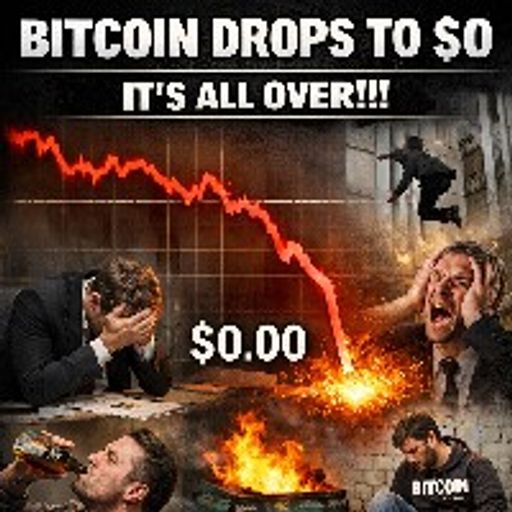

The economy: the engine that drives the world
Economy is one of the fundamental pillars supporting contemporary society. From the simplest daily decisions to national government policies, economics permeates every aspect of our existence. It is the invisible mechanism that determines how much a cup of coffee costs, what employment opportunities are available, and how a nation prospers in the global context.
Despite its omnipresence and profound impact on our lives, many people consider economics to be an intimidating and difficult field to understand. However, understanding the basic principles of how economics works is not only fascinating but also empowering for making informed decisions in our daily lives.
The Fundamental Pillars of Economics
At its core, economics is about how societies manage limited resources to satisfy unlimited needs and desires. It involves the production, exchange, distribution, and consumption of goods and services. This complex network of economic activities involves all members of society: individuals, businesses, governments, and financial institutions.
Economics operates through a central principle: the interaction between supply and demand. Producers create goods and services, while consumers demand them. This interaction determines prices, production volumes, and ultimately the overall health of the economy at all levels.
To illustrate how economics functions in practice, consider a typical value chain. A manufacturer obtains raw materials from suppliers, transforms them into finished products, sells them to distributors who then make them available to end consumers. At each link in this chain, jobs are created, income generated, and economic value added.
The Three Sectors of the Economy
The structure of the economy is traditionally divided into three interdependent sectors:
Primary Sector: Extraction of Natural Resources
This sector forms the foundation of all economic activity, dedicated to the direct extraction of resources from the environment. It includes agriculture, mining, fishing, livestock, and forestry. The primary sector produces the essential raw materials that feed the rest of the economy. Without resources extracted here, no other sector could operate.
Secondary Sector: Manufacturing and Processing
The secondary sector takes raw materials from the primary sector and transforms them into manufactured products. This is where manufacturing, industrial processing, and construction occur. Examples include automobile manufacturers, oil refineries, and textile factories. This sector adds significant value to natural resources.
Tertiary Sector: Services and Distribution
The tertiary sector encompasses all service activities: retail trade, transportation, communications, finance, education, healthcare, and advertising. This sector has experienced considerable growth in modern developed economies. Some economists subdivide this sector into quaternary (information and technology services) and quinary (high-level services and consulting), although the three-sector model remains the most widely accepted.
The Business Cycle: Expansion, Boom, Recession, and Depression
A key feature of economics is that it does not evolve in a straight line. Instead, the economy operates in cyclical phases of growth and contraction, known as economic cycles. Understanding these phases is crucial for anticipating economic changes and preparing accordingly.
Expansion: The Economic Revival
Expansion is the initial recovery phase following a previous crisis. During this period, optimism permeates the market. Demand for goods and services increases significantly, stock prices rise, unemployment falls, and businesses invest more in production and growth. It is a phase characterized by hope, job creation, and increased consumer purchasing power.
Boom: The Peak of Prosperity
During the boom, the economy operates at full capacity. Businesses fully utilize their production facilities. However, despite superficial market optimism, warning signs begin to emerge. Price growth slows, sales volumes stagnate slightly, and smaller companies start to disappear through mergers and acquisitions. This is the point where the economy reaches its maximum before the inevitable downturn.
Recession: The Turning Point Downward
During a recession, negative expectations formed during the boom begin to materialize. Costs for companies suddenly increase, while consumer demand decreases. With profit margins under pressure, many firms start to cut expenses, lay off workers, or increase part-time employment. Stock indices fall, unemployment rises, and consumer spending contracts sharply. Investment nearly halts.
Depression: The Lowest Point
Depression represents the most severe stage of economic weakness. Widespread pessimism affects even when there are positive signals for the future. Companies face severe difficulties, their stock values plummet, and many go bankrupt. Unemployment reaches alarming levels, market values crash dramatically, and investment is virtually nil. It is during these phases that economic intervention and recovery policies are needed.
Variations in Economic Cycles
Although these four phases occur repeatedly, their durations vary considerably. Economists have identified three main types of economic cycles:
Seasonal Cycles: These are the shortest, typically lasting only a few months. Although brief, they can have substantial impacts on certain sectors. Changes in demand according to the season, such as increased Christmas shopping, exemplify this type of cycle. Their relative predictability allows companies to prepare in advance.
Economic Fluctuations: These cycles usually last several years and result from imbalances between supply and demand that manifest with a delay. Their impact spans the entire economy, with recovery periods that can extend over years. They are characterized by unpredictability, irregular ups and downs, and the potential to trigger serious economic crises.
Structural Fluctuations: The longest-lasting cycles, typically spanning decades, result from profound technological and social changes. They are generational cycles that transform the very structure of the economy. They can lead to temporary catastrophic unemployment but also open opportunities for innovation and long-term growth.
Factors Shaping the Economy
Countless variables influence how the economy behaves at any given time. From individual consumption decisions to macro-regional government policies, all factors impact the overall health of the economy:
Government Policies: The Steering Wheel of the Economy
Governments possess powerful tools to influence the trajectory of the economy. Fiscal policy allows governments to make decisions about taxes and public spending, affecting the flow of money in the economy. Monetary policy, managed by central banks, controls the amount of money and credit available. Through these tools, governments can stimulate weak economies or cool overheated ones.
Interest Rates: The Price of Money
Interest rates determine how much it costs to borrow money, having a profound effect on consumer behavior and business investment. In many modern economies, borrowing is a daily reality. Loans enable people to buy homes, finance vehicles, pay for education, or start businesses. Lower interest rates make borrowing more affordable, stimulating spending and investment. Conversely, high interest rates discourage borrowing and slow economic growth.
International Trade: Global Connections
International trade is another vital factor shaping the modern economy. When countries exchange goods and services based on comparative advantages, both can benefit from economic growth. However, globalization can also have negative consequences, such as job displacement in certain local industries.
Microeconomic and Macroeconomic Perspectives
To analyze the economy comprehensively, economists examine it on two complementary scales:
Microeconomics: Focuses on individual actors within the economy—consumers, workers, specific companies. It examines how prices of individual products are determined, how consumers respond to price changes, and how companies compete in specific markets. It is the study of individual parts of the economic system.
Macroeconomics: Considers the entire economic landscape, analyzing broad aggregates such as gross domestic product, national unemployment rates, inflation, international trade balances, and exchange rates. Macroeconomics studies how these large forces interact at the national and international levels.
Both perspectives are essential. While microeconomics explains local mechanisms, macroeconomics reveals how these mechanisms are amplified at the systemic level.
Conclusion: Navigating the Complexity of Economics
Claiming that economics is complex is an understatement. It is a living, dynamic organism in constant evolution that determines the well-being of individuals, communities, nations, and the entire world. Exploring how economics operates reveals an intricately interconnected system where every decision has repercussions.
Knowledge of these fundamental principles empowers citizens, entrepreneurs, and policymakers to make more informed decisions. Whether understanding why prices rise, anticipating economic cycles, or evaluating the impact of public policies, a solid understanding of economics is an indispensable tool in the modern world. As the world continues to evolve, the need to understand economics becomes even more critical for successfully navigating the future.