

Trade
Basic
Futures
Futures
Hundreds of contracts settled in USDT or BTC
Options
HOT
Trade European-style vanilla options
Unified Account
Maximize your capital efficiency
Demo Trading
Futures Kickoff
Get prepared for your futures trading
Futures Events
Participate in events to win generous rewards
Demo Trading
Use virtual funds to experience risk-free trading
Earn
Launch
CandyDrop
Collect candies to earn airdrops
Launchpool
Quick staking, earn potential new tokens
HODLer Airdrop
Hold GT and get massive airdrops for free
Launchpad
Be early to the next big token project
Alpha Points
NEW
Trade on-chain assets and enjoy airdrop rewards!
Futures Points
NEW
Earn futures points and claim airdrop rewards
Investment
Simple Earn
Earn interests with idle tokens
Auto-Invest
Auto-invest on a regular basis
Dual Investment
Buy low and sell high to take profits from price fluctuations
Soft Staking
Earn rewards with flexible staking
Crypto Loan
0 Fees
Pledge one crypto to borrow another
Lending Center
One-stop lending hub
VIP Wealth Hub
Customized wealth management empowers your assets growth
Private Wealth Management
Customized asset management to grow your digital assets
Quant Fund
Top asset management team helps you profit without hassle
Staking
Stake cryptos to earn in PoS products
Smart Leverage
NEW
No forced liquidation before maturity, worry-free leveraged gains
GUSD Minting
Use USDT/USDC to mint GUSD for treasury-level yields

More


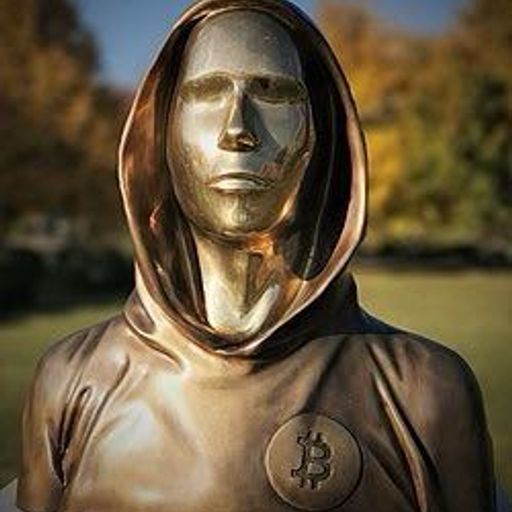


Musk has never stopped believing in Bitcoin: the real revolution is energy
Elon Musk firmly believes that energy is the foundation of true wealth. In a podcast interview a few weeks ago, the magnate articulated a fascinating vision: human progress should be measured by our ability to master energy, a concept known as the Kardashev scale. According to this perspective, Bitcoin is not just a cryptocurrency but a physical embodiment of this energy philosophy.
Why Musk sees Bitcoin as the true currency
Musk explicitly linked his posts about the “true currency” to Bitcoin’s role in the global economic system. What makes this observation fascinating is the mechanics of proof-of-work: Bitcoin is literally “anchored” to real energy consumption. Unlike fiat money, which governments can print at will, Bitcoin’s supply remains tied to computational work and thus to the energy expended. There is no way to legislate more Bitcoin into circulation without increasing actual energy consumption.
For Musk, this rigidity represents a return to “honest” money, where value reflects real energy costs, not the arbitrary decisions of central banks.
The 2021 paradox and the redemption of 2025
In 2021, Tesla invested $1.5 billion in Bitcoin and began accepting it as a payment method. However, a few months later, the company reversed course. The reason? A crisis of conscience: how could Tesla, a champion of energy sustainability, accept a payment based on mining infrastructure primarily powered by coal?
At that time, much of Bitcoin mining was concentrated in Chinese Xinjiang, where coal dominated the energy mix. Musk could not publicly reconcile this contradiction.
However, between 2021 and today, the landscape has radically changed. China banned cryptocurrency mining in mid-2021, forcing miners to migrate to regions with renewable energy: Texas with its wind and solar farms, Iceland with geothermal energy. By 2025, a study by the Cambridge Centre for Alternative Finance documented that Bitcoin mining had surpassed 50% sustainable energy.
What it means today
With Bitcoin (BTC) currently trading at $90.79K, Musk’s narrative gains new credibility. The “true energy-based money” Musk described was not superficial endorsement but a consistent belief in the convergence of solid currency and global energy transition.
Paradoxically, past environmental criticisms have pushed the mining industry toward genuine transformation. Today, Musk’s philosophy no longer appears inconsistent but prophetic: a currency whose value is rooted in renewable and sustainable energy truly represents the money of the future, at least according to the Kardashev scale he embraces.
Meanwhile, Musk has also suggested that money itself could become obsolete in an era of advanced artificial intelligence and robotics, when resource scarcity will cease to be the main economic driver. But until then, Bitcoin remains the most coherent candidate to embody the vision of a currency tied to the physical reality of available energy.