

Trade
Basic
Futures
Futures
Hundreds of contracts settled in USDT or BTC
Options
HOT
Trade European-style vanilla options
Unified Account
Maximize your capital efficiency
Demo Trading
Futures Kickoff
Get prepared for your futures trading
Futures Events
Participate in events to win generous rewards
Demo Trading
Use virtual funds to experience risk-free trading
Earn
Launch
CandyDrop
Collect candies to earn airdrops
Launchpool
Quick staking, earn potential new tokens
HODLer Airdrop
Hold GT and get massive airdrops for free
Launchpad
Be early to the next big token project
Alpha Points
NEW
Trade on-chain assets and enjoy airdrop rewards!
Futures Points
NEW
Earn futures points and claim airdrop rewards
Investment
Simple Earn
Earn interests with idle tokens
Auto-Invest
Auto-invest on a regular basis
Dual Investment
Buy low and sell high to take profits from price fluctuations
Soft Staking
Earn rewards with flexible staking
Crypto Loan
0 Fees
Pledge one crypto to borrow another
Lending Center
One-stop lending hub
VIP Wealth Hub
Customized wealth management empowers your assets growth
Private Wealth Management
Customized asset management to grow your digital assets
Quant Fund
Top asset management team helps you profit without hassle
Staking
Stake cryptos to earn in PoS products
Smart Leverage
NEW
No forced liquidation before maturity, worry-free leveraged gains
GUSD Minting
Use USDT/USDC to mint GUSD for treasury-level yields

More

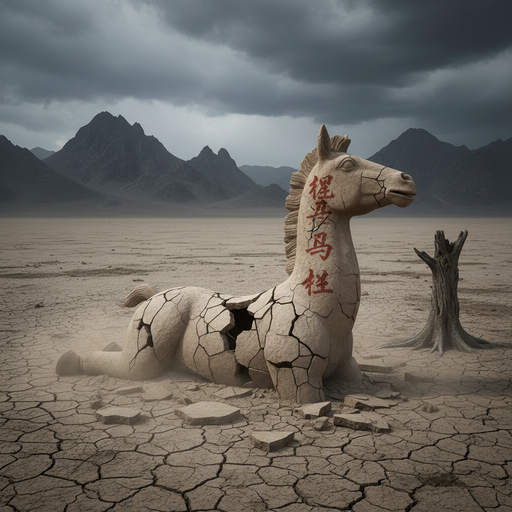



Terra and LUNA: From Blockchain Revolution to $45 Billion Disaster
In the ever-vibrant universe of cryptocurrency, few projects have garnered attention and ambition like Terra (LUNA). However, Terra’s story is not just about technological innovation and rapid growth; it also serves as a cautionary lesson about the hidden dangers behind complex financial mechanisms. This guide will take you through the entire journey from its revolutionary inception to its dramatic collapse in May 2022, and the current state of Terra Classic (LUNC).
Explanation of Terra: What Is It and Why Is It Different?
Terra is a blockchain protocol designed specifically for fully algorithmic stablecoins, not backed by traditional asset reserves. Founded in 2018 by Do Kwon and Daniel Shin under Terraform Labs, Terra aimed to solve the longstanding industry problem: how to create a currency that is both stable and decentralized?
LUNA is the native token of this ecosystem. Unlike other stablecoins, LUNA is not collateralized by USD reserves or real assets. Instead, it functions as an active price adjustment mechanism, absorbing volatility from Terra’s stablecoins (such as UST). When demand for UST increases, LUNA is burned to create new stablecoins. When demand decreases, the process reverses. This mechanism is called the “dual token system” – an ambitious idea that ultimately proved unsustainable.
At its peak, LUNA reached a price of $119.51 and ranked among the top 10 cryptocurrencies by market capitalization. Terra’s ecosystem had established partnerships with mobile payment applications like Chai in South Korea, expected to process transactions for over 45 million users across 10 countries.
From Inception to Growth: The Story of Expansion
Do Kwon, a former software engineer who worked at Microsoft and Apple, along with Daniel Shin—an experienced e-commerce entrepreneur—launched Terraform Labs with a clear vision: blockchain needs a truly stable currency for widespread adoption.
Terra’s mainnet officially launched in April 2019. The project quickly attracted major investors such as Coinbase Ventures, Galaxy Digital, and Lightspeed Venture Partners, raising over $200 million. By February 2022, Terraform Labs had also signed a sponsorship deal worth $38.15 million over five years with the Washington Nationals baseball team—a sign of strong confidence in the project at that time.
Decentralized applications (dApps) like Anchor Protocol and Mirror Protocol rapidly developed on this platform. Anchor was especially famous for offering a 19.45% yield to UST depositors—a figure that captivated investors. All of this created a sense that Terra was building a truly decentralized financial ecosystem.
How It Works: Strengths and Weaknesses
###Strengths
Terra employs a Tendermint-based Proof-of-Stake consensus mechanism, enabling fast transaction processing. Its dual token system is cleverly designed: 1 USD worth of LUNA can always be exchanged for 1 UST. This creates a self-regulating price mechanism driven by market forces, eliminating the need for excess asset reserves like other stablecoins.
Terra also offers unprecedented flexibility with support for multiple fiat currencies (USD, KRW, SDR…), allowing for quick and low-cost international transactions.
###Weaknesses
However, these vulnerabilities were not apparent until it was too late. Terra’s pure algorithmic model only functions well in normal market conditions. It has no real assets to defend its peg during crises. Additionally, the Luna Foundation Guard (LFG)—established with Bitcoin reserves worth approximately $2.4 billion—proved completely insufficient to withstand selling pressure.
The Collapse: What Happened in May 2022?
May 9, 2022, marked a turning point. UST began to lose its $1 peg, an event called “depegging” (depegging). What triggered this event remains debated—possibly coordinated attacks on liquidity pools, mass withdrawals from Anchor Protocol, or both.
As UST fell below $1, Terra’s algorithm automatically started minting (creating) new LUNA tokens to try to restore the peg. But the selling frenzy caused LUNA’s supply to skyrocket. Within days, LUNA plummeted from $119.51 to nearly $0. UST dropped to $0.044.
The reserve fund could not intervene. Terraform Labs had to halt the blockchain on May 13 in desperation, but the damage was irreparable. Nearly $45 billion in value vanished within a week—worse than many consecutive failures in traditional finance history.
This collapse shook the entire crypto industry, sparking deep discussions about the safety of algorithmic stablecoins and the need for more robust safeguards.
After the Disaster: Terra Classic and Terra 2.0
The Terra community faced a tough decision. On May 25, 2022, they approved a proposal to create a completely new Terra blockchain (Terra 2.0) while retaining the original chain under the name Terra Classic.
Terra Classic (LUNC) continues as a community-managed experiment. It implements a burn mechanism on every transaction—permanently removing a portion of tokens from circulation to curb extreme inflation. LUNC holders now own tokens valued at very low prices (around $0.00), but with the hope that the burn mechanism will gradually increase its value.
Terra 2.0 launched on May 27, 2022, with 1 billion new LUNA tokens distributed to those affected. 30% allocated to the community fund, 35% to original LUNA holders, and the rest to UST holders and other participants. Most allocations are locked with monthly vesting schedules to prevent mass sell-offs.
Currently, LUNA (version 2.0) trades around $0.09 with a market cap of approximately $62.31 million. LUNC trades around $0.00 with a market cap of $236.30 million, with many investors still holding Terra Classic as a weakened asset with some recovery potential.
Comparing with Other Stablecoins: Pros and Cons
Terra directly competed with DAI (DAI) from MakerDAO, USDC from Circle, and USDT from Tether. Each has a different approach.
DAI uses excess assets—you need to lock ETH to generate DAI. Less capital-efficient than Terra but much safer. DAI currently trades at $1.00 with a market cap of $4.25 billion.
USDC is a centralized stablecoin—Circle holds actual USD reserves. USDC trades at $1.00 with a market cap of $74.92 billion. It is less flexible than Terra but extremely safe.
Terra promised better capital efficiency than DAI without the centralization of USDC. But its collapse proved that a purely algorithmic system is insufficient to withstand coordinated attacks or extreme market crises. Every stablecoin system is a balance of risk and reward—Terra simply underestimated the risks.
Lessons for Investors
The Terra story offers important lessons:
Understanding Mechanisms Is Critical: Many investors were lured by Anchor’s 19.45% yield without realizing it was sustained by artificial incentives, not real cash flow.
Algorithms Are Not Magic: Terra’s dual token system was clever, but it cannot withstand large shocks or coordinated attacks.
Risk Management Is Key: Never allocate your entire portfolio to a single project, no matter how safe it seems.
Real Reserves Still Matter: Stablecoins backed by actual reserves $150 like USDC$100 have proven to be more resilient than purely algorithmic ones.
The Future of Terra and LUNA
Terra 2.0 is trying to rebuild its reputation by focusing on multi-purpose blockchain applications rather than just a stablecoin platform. LUNA continues with its burn mechanism, hoping to recover some value over time.
However, both are operating under the shadow of a devastating event. Trust has been broken, and no matter how many innovations are attempted, it remains difficult for investors to forget the lessons of May 2022.
Conclusion: A Costly Lesson
Terra is proof that even the smartest ideas can fail if not sufficiently secure. Its collapse is not just about a project—it’s about a developing industry learning from its mistakes.
For those still holding assets from the Terra era, the journey continues with Terra Classic as a mirror reflecting what was lost. But it also serves as a reminder that in crypto, nothing is too big to fail, and deep understanding of protocols is key to survival.