By | Sleepy.md
In April 1976, three men signed Apple’s partnership agreement in a garage in California. Twelve days later, one of the men left the partnership. If he hadn’t, and had endured through the long half century, then today the value of his 10% stake would be worth $400 billion. That money would be enough for him to buy a half of the Middle East’s oil empire, or alternatively to pin Elon Musk down twice over on Forbes’ billionaire list.
That man’s name was Ronald Wayne. When the public talks about Apple’s 50-year history, they always instinctively glorify Steve Jobs and Steve Wozniak’s persistence, and then, as an aside, mock Wayne’s cowardice and shortsightedness when he sold his shares for $800 back then.
But at the time, 41-year-old Wayne was the only adult among the three who had a “proper” job, assets, and even a family. Meanwhile, Jobs at the time was willing to pledge everything to get money to buy parts. Wayne looked at that young man with long hair and a vacant, unfocused gaze, and all he felt in his gut was unease. Because if the company went bankrupt, under the partnership laws at the time, creditors would not spare those two penniless young boys—then they would legally seize every car, every house, and every last dollar in savings that Wayne had in his name.
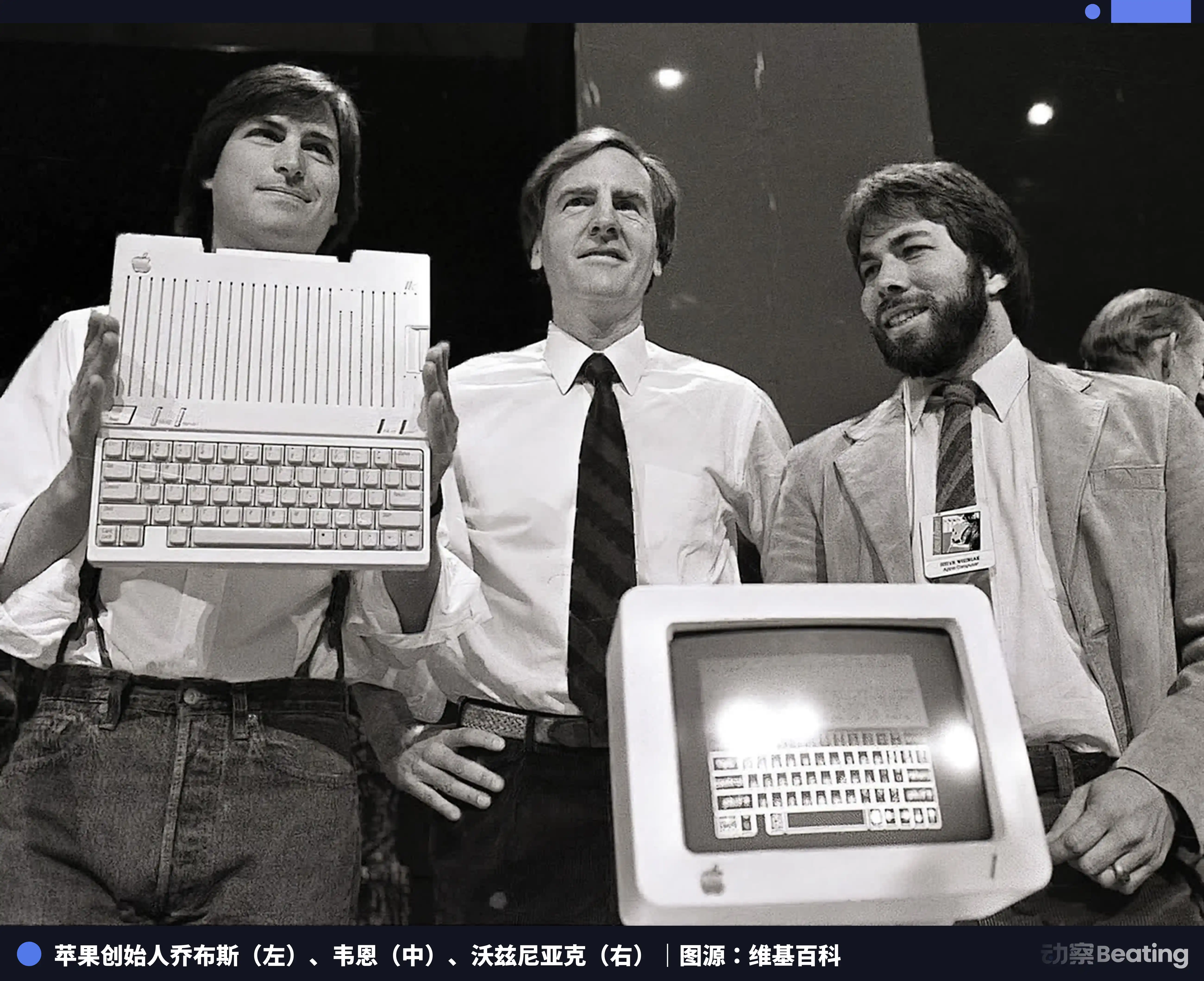
Wayne’s exit was the rational calculation of an ordinary person facing “extreme uncertainty.” He fled back to a life he considered safe.
Wayne pulled out of Apple out of fear of risk, and the strange twist of history is that over the next 50 years, Apple went on to become another Wayne.
On the surface, the company loudly proclaims “Think Different,” but deep down it is extremely averse to risk. Wayne left Apple because it disliked risk; ever since then, geniuses have been responsible for manufacturing myths, while systems are responsible for strangling uncertainty. Apple’s 50 years is not just a story about “geniuses changing the world”—it’s a victory where the system defeats the individual, and calculation replaces inspiration.
In Apple’s early days, it still had to rely on Jobs’ personal heroics to fight risk. But once this giant beast truly matured, how did it use tens of billions of dollars in real cash to buy absolute security in the capital markets?
A “hedge fund” disguised as a technology company
Jobs hated dividends and share buybacks to an extreme. In his view, every cent Apple earned should be continuously reinvested into R&D. Even in 2010, when Apple’s cash reserves were already piled up, facing pressure from Wall Street, Jobs still clung tightly and refused to budge.
But after Jobs died, the newly appointed CEO, Tim Cook, couldn’t withstand the pressure from shareholders. On March 19, 2012, he announced Apple’s first-ever dividend and a share buyback plan in the scale of $10 billion. From that day on, in Wall Street’s eyes, Apple gradually changed from a technology company that changes the world into a “hedge fund” disguised as a technology company.
According to statistics from Creative Planning and major financial institutions, from 2013 to the end of 2024, Apple’s total share buyback amount reached $700.6 billion.
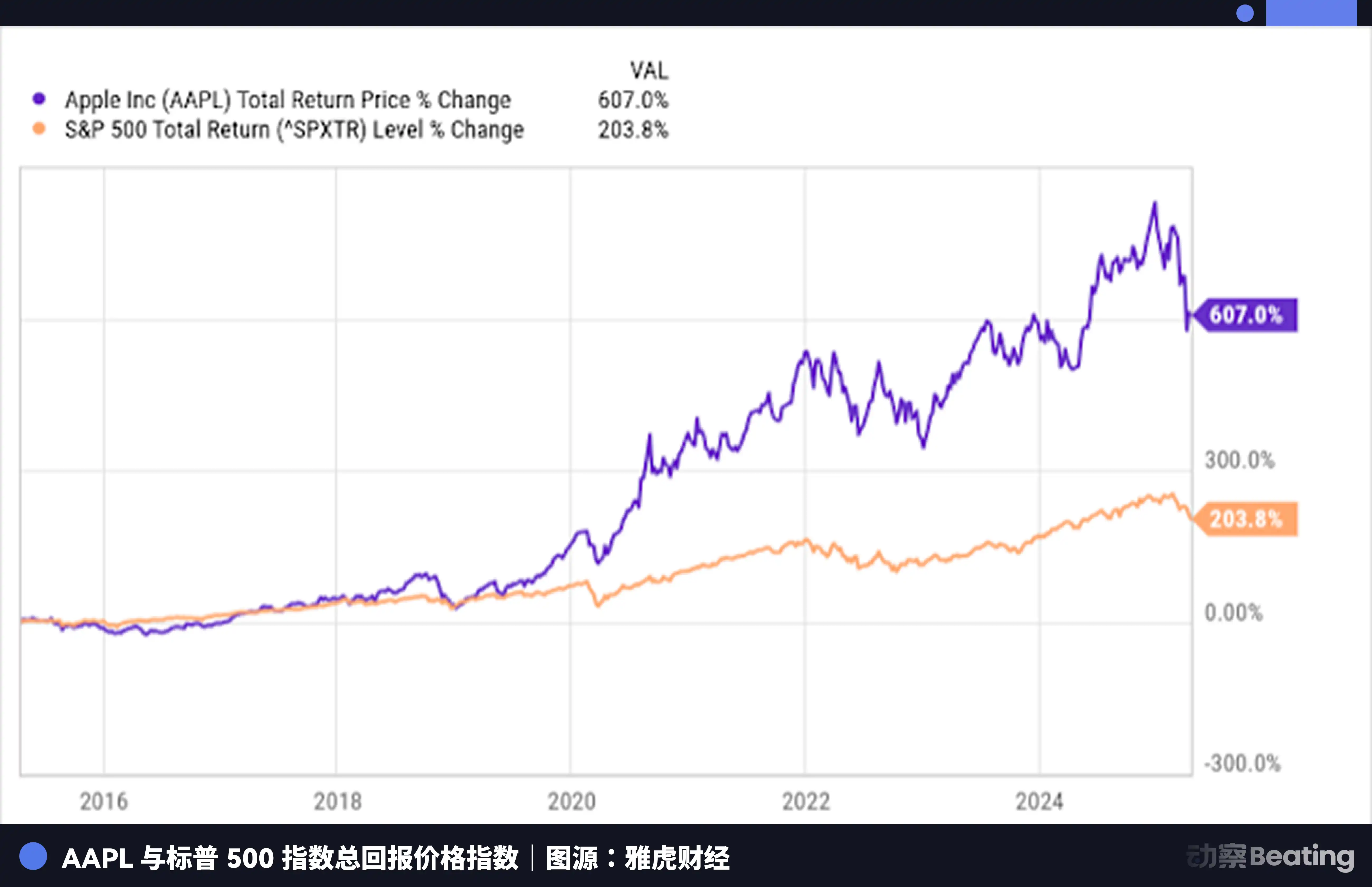
Among the constituents of the S&P 500, this figure exceeds the combined market caps of 488 companies in the index. In other words, the money Apple used to buy back its own shares is enough to directly buy any publicly traded company outside the No. 13 spot on the global market capitalization ranking—for example, Eli Lilly, Visa, or Netflix.
And when we pull the timeline to the current AI frenzy—while Amazon, Google, and Meta are疯狂ly burning money on AI foundation models and computing power, with total investment approaching $700 billion as they try to bet an uncertain future at a poker table where you can’t see the cards—Apple, meanwhile, uses money of the same scale to buy its own stock.
Technological innovation is risky. If you pour in $100 billion, you might not even hear a sound. But cutting the float and boosting earnings per share is 100% certain on the financial statements. Over the past decade, even though Apple’s net profit growth slowed down, through crazy buybacks, its EPS was pushed up by nearly 280% anyway.
In recent years, Buffett has held a heavy position in Apple, at one point making it an absolute top holding in Berkshire Hathaway’s investment portfolio, with a weight exceeding 20%. What the old man bought wasn’t the growth potential of a technology stock—he bought absolute certainty that this precision machine delivers during periods when technology is mediocre. In the mature stage of an industry cycle, making financial engineering tends to bring money faster and is far steadier than doing technological R&D.
It no longer needs to shock the world with a once-in-a-lifetime, jaw-dropping product. It only needs to behave like an tireless bilge pump, siphoning up profits, and then precisely funneling them into Wall Street’s reservoir.
In financial statements, Apple bought absolute certainty with $700 billion. But in the physical world, how were the profits supporting such a massive numbers game squeezed out from one assembly line after another?
A mass migration of the supply chain
In March, Tim Cook once again appeared in China with a spring breeze smile. Over Chinese-style afternoon tea, he smiled at the camera and said, “China’s supply chain is crucial to Apple. Without Chinese suppliers, we couldn’t achieve what we have today.”
But behind these warm and affectionate public-relations talking points, Apple is quietly conducting an epic reshuffling of its supply chain.
In 2025, the number of iPhones assembled in India reached 55 million units—up 53% from the previous year. That means that now, for every 4 iPhones produced globally, 1 comes from India.
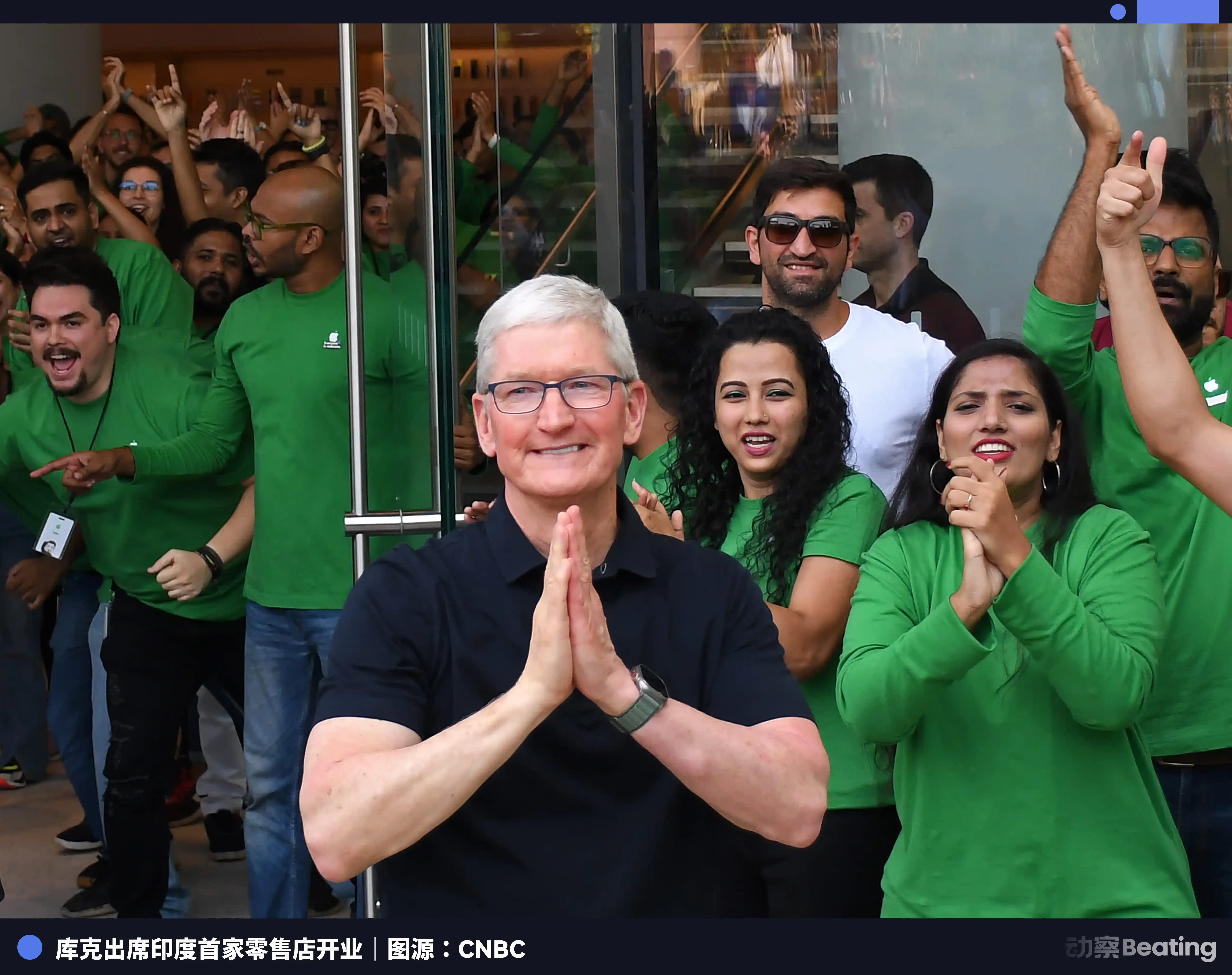
Tata Group has just built a huge new factory in Hosur in the southern Indian state of Tamil Nadu, planning to double its workforce to 40,000 people. Meanwhile, Foxconn’s factories in India, in just the first five months of 2025, exported iPhones worth $4.4 billion to the United States. And the latest iPhone 17 series has already achieved the breakthrough of being assembled in India across all models.
The reasons behind the supply-chain shift are not as simple as “finding cheaper labor.” It’s a surgery performed by Apple’s system to eliminate geopolitical uncertainty and the risk of a single node. Apple treats the global supply chain like a motherboard in its design. Wherever there is risk, it removes that capacitor and plugs it into another safer place.
In this process, whether the workers on China’s Foxconn assembly lines—those who once created “Zhengzhou speed”—or the young workforce in India’s Hosur factory just putting on anti-static suits, within Apple’s system there is essentially no difference. They are merely gears on this vast machine that get swapped out by the season.
What Apple cares about is the stability of gear operation and cost. It tightly holds onto product design rights in its spaceship headquarters in California, but it perfectly outsources the dirty, heavy production work and the management contradictions to Foxconn and Tata. In this supply-chain system like a wall of copper and steel, all suppliers and workers are only consumables that can be replaced at any time.
After it finishes this suffocating control in the physical world, facing the fiercest AI wave in the digital world, how will this giant beast repeat the trick?
Toll booths on the road to the gold mine
In 2024, the wave of generative AI swept through. ChatGPT made the entire Silicon Valley exclaim that the “iPhone moment” was back again. Analysts mocked Apple: Siri is like an idiot, Apple is behind in the AI era, and Apple is going to be doomed.
But by 2026, when AI model companies have burned money on compute to the point of bleeding out, and when they can’t even figure out how to monetize and are pulling their hair out, data from AppMagic left everyone extremely surprised.
In 2025, generative AI applications paid Apple nearly $900 million in commissions just to get listed on the App Store—what people commonly call the “Apple tax.” Of this, about 75% of the money was paid by ChatGPT alone. Musk’s Grok ranked second, contributing 5%.
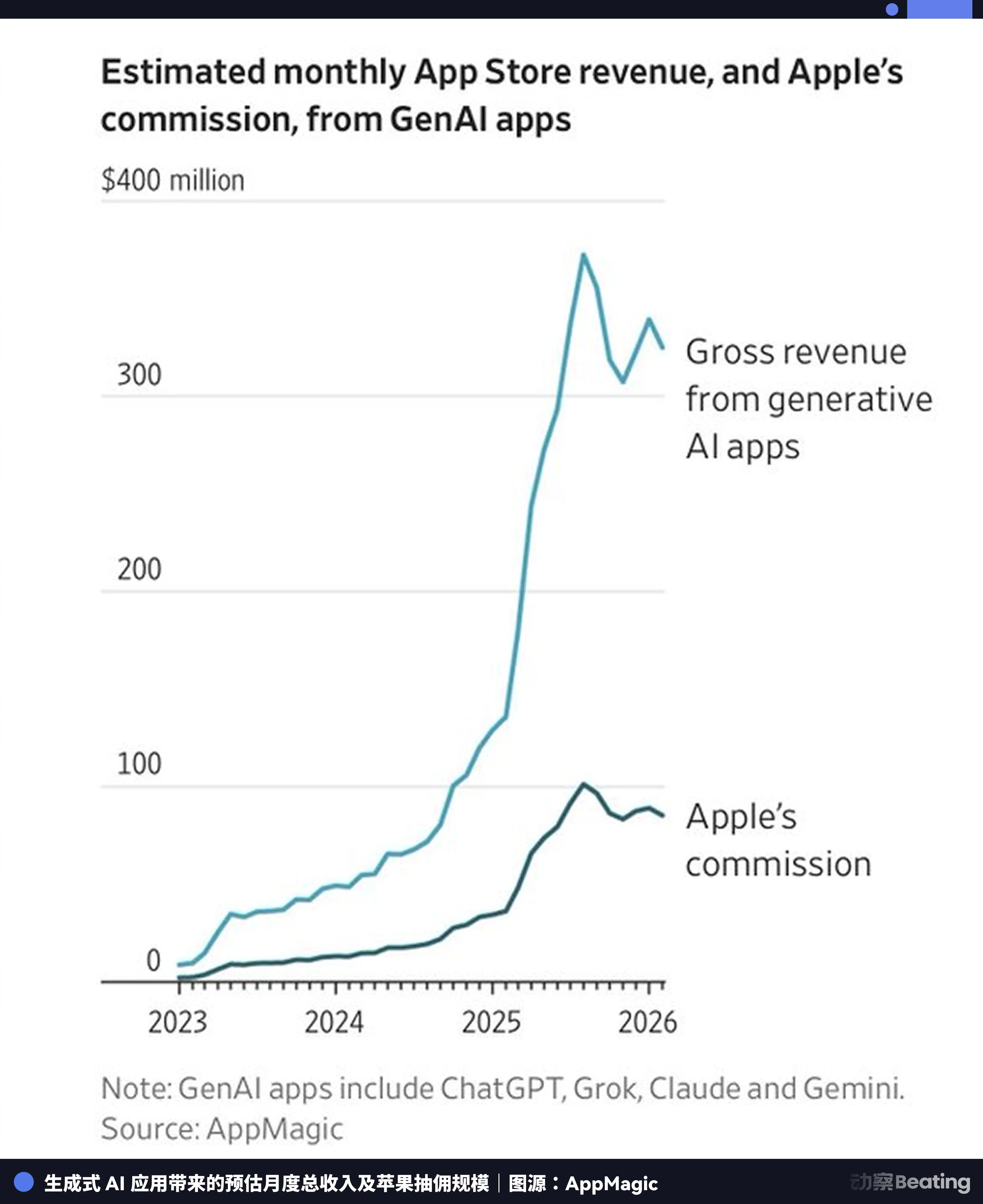
This is what’s most terrifying about Apple. It may not have built the shovel that digs up gold, but it directly controls the only road leading to the gold mine—and then it built toll booths.
No matter whether you’re Claude or OpenAI—if you want to reach the hundreds of millions of high-net-worth iOS users worldwide, you have to obediently listen to Apple and hand over 30% (or 15%) of your revenue to Cook. In the feverish AI bubble, Apple uses an almost thug-like force of ecosystem monopoly to forcibly convert AI innovations trying to upend it into service revenue that grows steadily on its financial reports.
In the fourth quarter of fiscal year 2025, Apple’s services revenue hit a record high of $28.8 billion, up 15% year over year. Among it, those AI applications that the outside world regards as would-be disruptors of Apple contributed the fattiest chunk of profit.
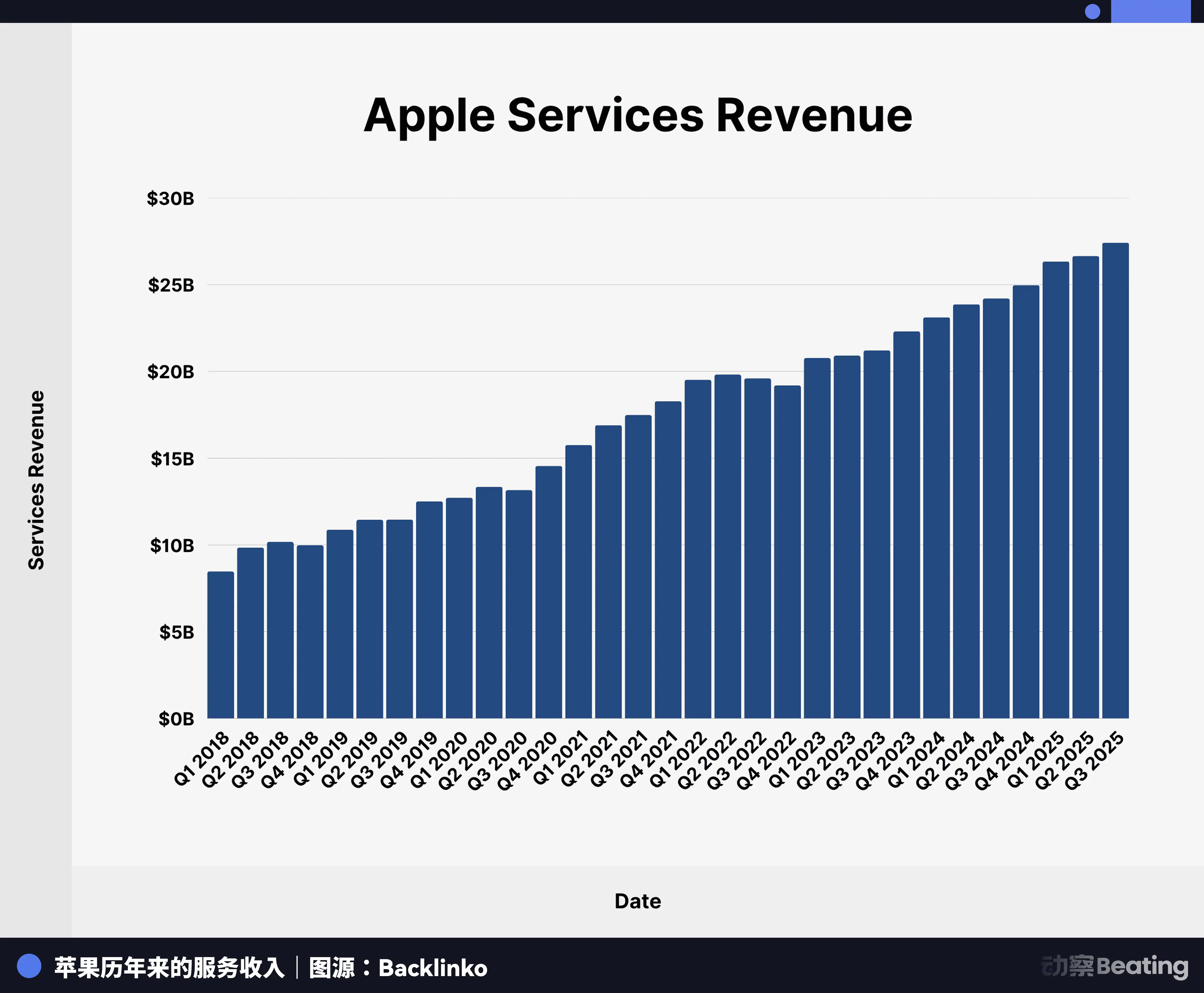
Of course, this kind of appetite also attracted the iron hammer of antitrust. On March 15, 2026, under massive regulatory pressure, Apple made a rare concession in the Chinese market: it reduced the standard commission rate of the App Store from 30% to 25%, and reduced the commission rate for small and micro developers from 15% to 12%. But that doesn’t really hurt its bones.
From the supply chain in the physical world to the App Store in the digital world, Apple has taken systemic control to the extreme. When this machine is so precise as to reach perfection, does the person sitting in the cockpit still have to be a genius?
Cook’s final victory
At the 50th anniversary milestone of Apple, the biggest Silicon Valley gossip isn’t about a revolutionary new product, but about Cook’s successor.
All the clues point to one name: John Ternus.
This 50-year-old Apple senior vice president of hardware engineering is basically another copy of Tim Cook. He graduated in 1997 from the University of Pennsylvania with a degree in mechanical engineering, joined Apple in 2001, and stayed for 24 years straight. His resume is very clean—no Jobs-style craziness of going to India to find a spiritual mentor, and no heretical, off-the-wall anecdotes.
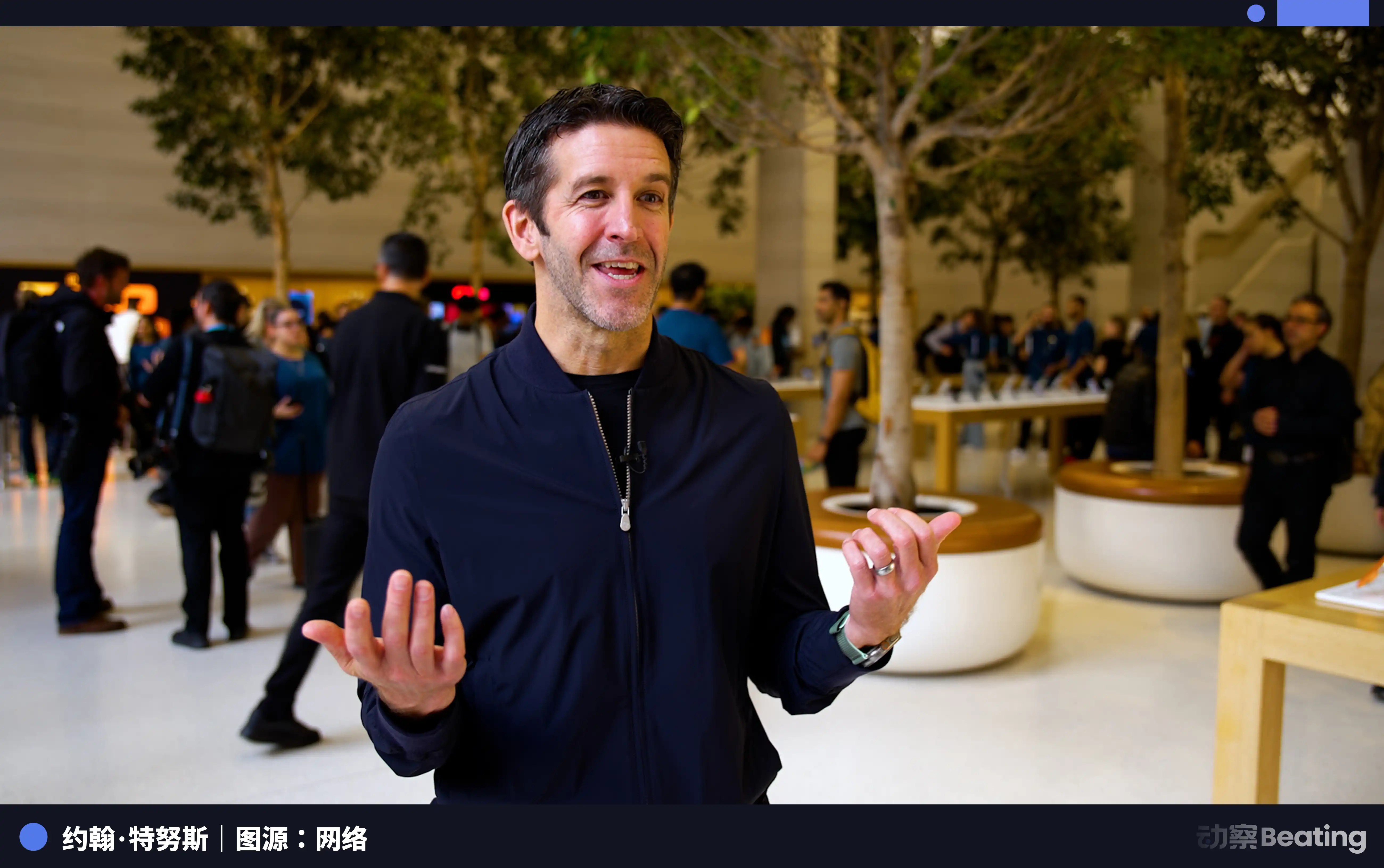
A deep-dive report by The New York Times wrote that when Ternus got promoted back then, the company arranged him an independent office with a door, but he refused it. He chose to keep sitting in an open-plan office like a big dorm with everyone together, mixing in with his engineering team. He’s practical, low-key, and extremely focused on teamwork coordination. Even when pushing key decisions like LiDAR radar for iPadOS and iPhone Pro, he has shown a merchant’s calculation of “seeking absolute balance between product definition and commercial interests.”
If Ternus takes over smoothly, this will be Apple’s last physical cut of “personal heroism.”
The market is always obsessed with dreamers like Jobs. They descend like gods, splitting the chaos with glaring light and telling you what the future looks like. But what truly supports a trillion-dollar empire fitting together seamlessly are those Tim Cooks who carry an abacus, squeezing every last cent and every screw to the extreme.
When Cook took over Apple, the company’s market cap was $349 billion. Fifteen years later, amid a chorus of “no innovation” criticism, he pushed Apple’s market cap to a peak of nearly $4 trillion—more than ten times. He didn’t rely on flashes of brilliance. He relied on squeezing the supply chain down to the millimeter, on the extreme use of financial buyback tools, and on essentially overbearing rent-collecting from the App Store ecosystem.
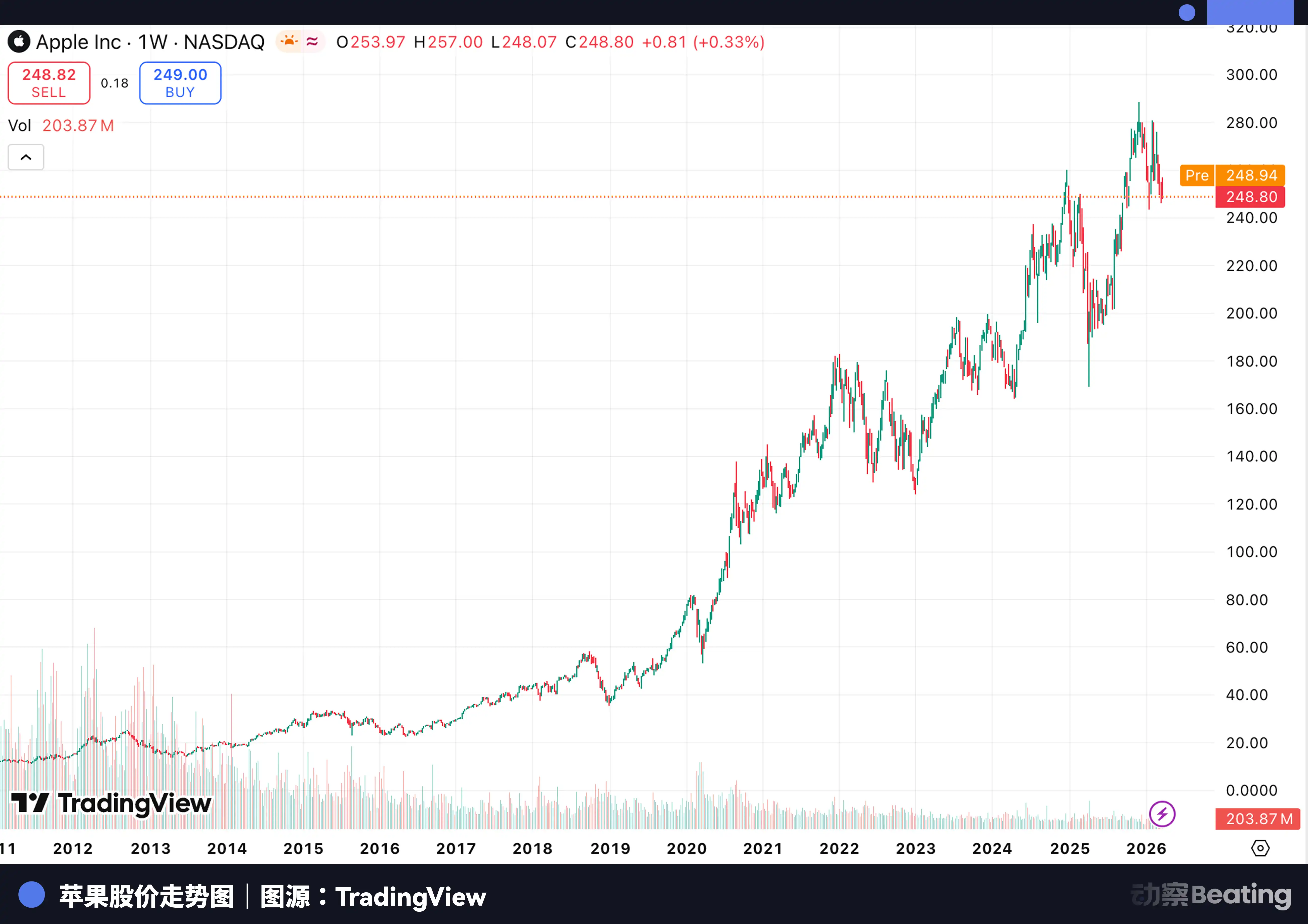
Ternus’s rise means Apple has completely given up on searching for the next dreamer. This company has already fully embraced Cook’s philosophy. In the maturity stage of the tech industry, ordinary operational genius is more important than brilliant product genius.
We miss Jobs because we miss the era when technology could still make your heart race. We can’t do without Cook because we’ve gotten used to technology being as stable as tap water—boring but indispensable.
Apple’s 50 years began with Wayne, an ordinary person who feared taking risks, and ultimately ended with an extremely precise, massive super system that hates every kind of uncertainty. With $700 billion in buybacks, it eliminated the risk of capital. Through a global mass migration of the supply chain, it eliminated manufacturing risk. Through App Store tolls, it eliminated the risk of technological change. Finally, by having Ternus replace Cook, it eliminated the risk of “the people.”
At 50 years old, Apple finally became the big brother who was the coldest, most precise, and most profitable—inside the screen it had smashed to pieces in 1984.
Genius exits, the machine lives forever.
Click to learn about job openings for LüDòng BlockBeats
Welcome to join LüDòng BlockBeats’ official community:
Telegram subscription group: https://t.me/theblockbeats
Telegram discussion group: https://t.me/BlockBeats_App
Twitter official account: https://twitter.com/BlockBeatsAsia


