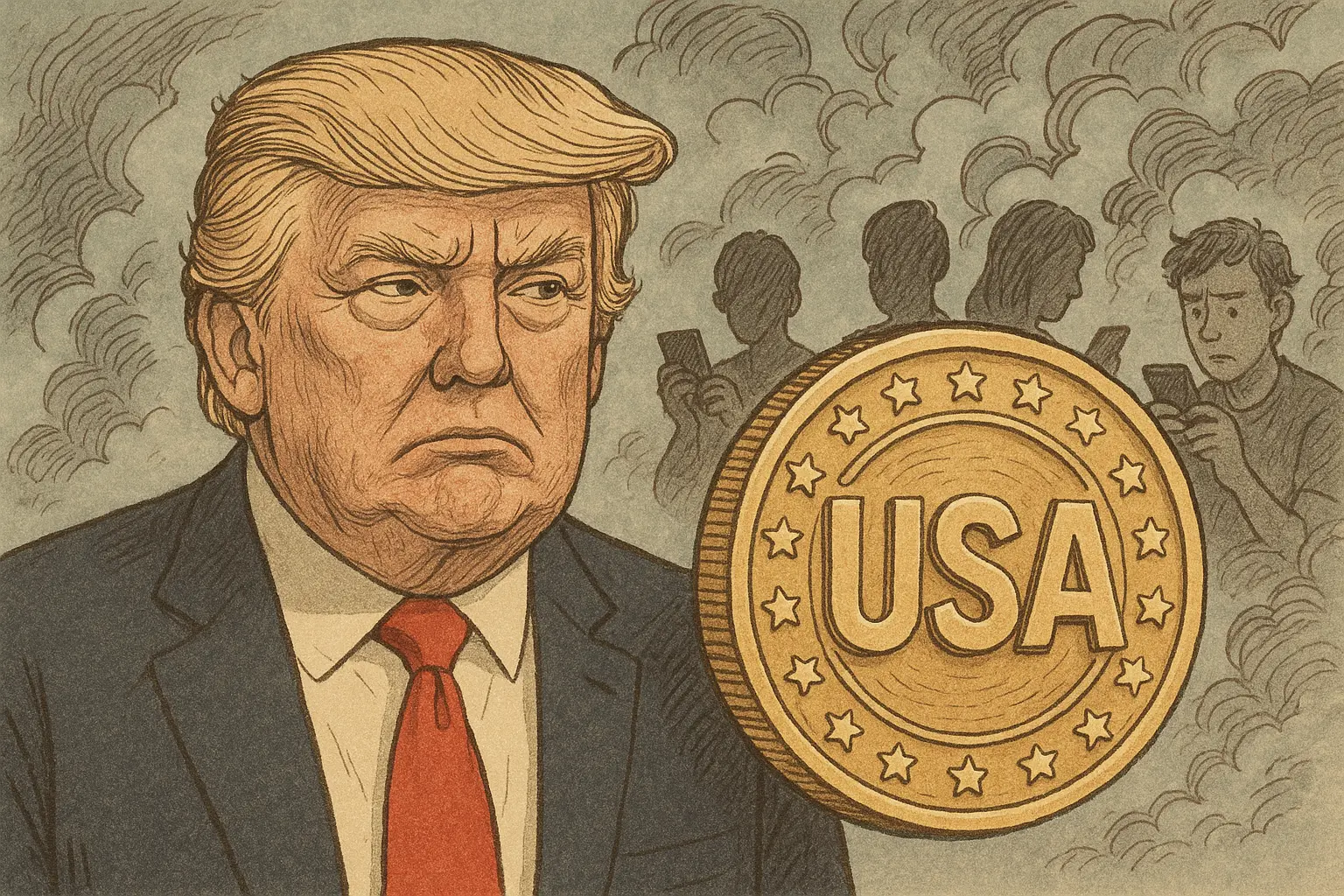
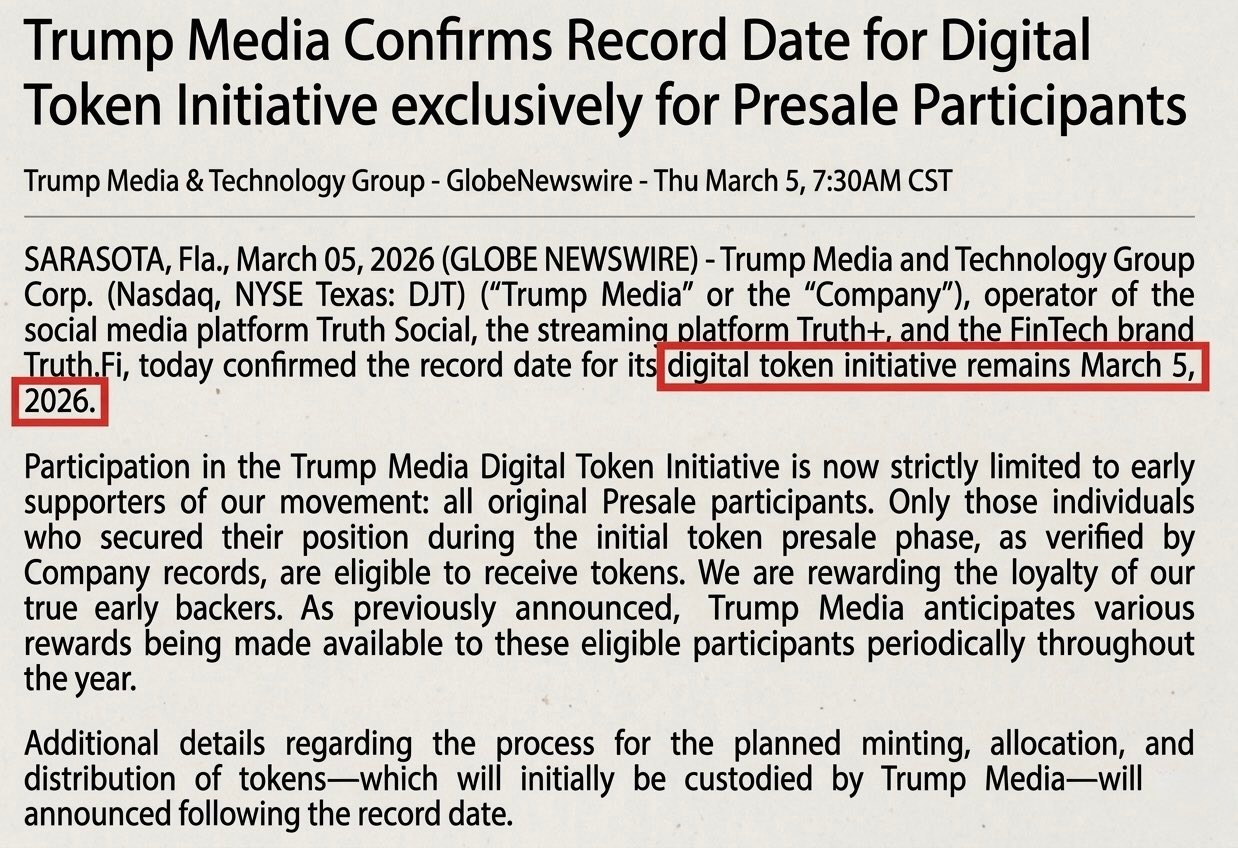
Reports that claim Donald Trump (Donald Trump) is directly involved in posts about the issuance of a token called $USA have recently been widely circulated on social media. The claims include that he has signed a “cryptocurrency contract” and that the ongoing presale event is about to end. However, as of now, no official channel has published any verifiable announcement, and no credible documents have confirmed that Trump himself has any substantive involvement or formal endorsement of the project.
The Alleged Content Structure of the $USA Token: The Gap Between Claims and Reality
 (Source: X)
The rumors being spread revolve around several core claims: Trump signed cryptocurrency-related contracts, demand for the $USA token presale is strong, and there is so-called “insider trading activity.” The pattern of how these claims spread is identical to a common celebrity-endorsement style hype in the crypto market—building initial trust by using a well-known person’s name, using urgency to push potential investors into making quick decisions, rather than evaluating based on verifiable fundamentals.
Some discussion also suggests that entities related to Trump may be involved in broader decentralized finance (DeFi) projects, but these “connections” are mostly indirect or speculative in nature, lacking clear factual support. In the crypto industry, project teams sometimes deliberately blur the line between “confirmed cooperation” and “loose affiliations” to artificially boost credibility.
Common Traits of Celebrity-Style Crypto Promotions
Manufacturing time pressure: Create a rushed decision-making environment with “the presale is about to end,” shortening investors’ time to verify
Claiming direct celebrity endorsement: Use the names of highly recognizable figures such as Trump, but provide no verifiable official statements
Insufficient transparency: The project whitepaper, team information, or disclosure of fund sources is vague, making independent verification difficult
Emphasizing an advantage of insider information: Claim there is “insider trading activity” to create a sense of scarcity and trigger FOMO emotions
Legalizing indirect connections: Package a loose association with a well-known person as formal cooperation, misleading investors in their judgment
Celebrity Effect Doesn’t Equal Project Legitimacy: The Key Role of Due Diligence
In the crypto market, the names of well-known people can indeed amplify attention, but that cannot replace the basic review of a project’s legitimacy. Trump’s brand influence in crypto is well known—he has confirmed ties to the decentralized finance platform World Liberty Financial (WLFI), and he previously launched an NFT collection, both supported by official statements and verifiable on-chain data that can be looked up.
This context means that any new token rumors tied to Trump have a natural foundation for dissemination. At the same time, it also means the hype claims are more likely to be broadly accepted without verification. The $USA token currently lacks an equivalent level of official confirmation, and its connection to Trump remains rumor-based.
Before participating in any presale or trading of a celebrity-affiliated token, investors should first verify verifiable official announcements, regulatory disclosure documents, and independent verification reports from multiple credible media outlets—rather than making financial decisions based solely on claims that have circulated on social media.
Frequently Asked Questions
Did Trump really sign a $USA cryptocurrency token contract?
As of now, there are no official channels or verifiable documents confirming Trump’s involvement or endorsement of the $USA token. The claims come from posts circulated on social media, and they are not yet supported by any regulatory disclosure or official statement. Investors should treat official channel confirmation as the only reliable basis.
What are the fundamental differences between the $USA token and the crypto projects that Trump has already confirmed involvement in?
The crypto projects Trump has confirmed involvement in (such as World Liberty Financial and the NFT collection) are all supported by official statements and verifiable on-chain records. The $USA token does not have the same level of official confirmation. Its connection to Trump is still at the rumor stage, and the nature is fundamentally different.
How can investors judge the credibility of a crypto project?
The core steps include: reviewing the project’s formal whitepaper published by the project team, verifying the team’s identity and past track record, confirming whether there are regulatory disclosure documents at the regulatory level, and confirming whether multiple credible media outlets have independently verified and reported. Any project that relies only on a celebrity name and lacks the information above should be treated with a high degree of caution, and investors should avoid participating in presales hastily.
Disclaimer: The information on this page may come from third parties and does not represent the views or opinions of Gate. The content displayed on this page is for reference only and does not constitute any financial, investment, or legal advice. Gate does not guarantee the accuracy or completeness of the information and shall not be liable for any losses arising from the use of this information. Virtual asset investments carry high risks and are subject to significant price volatility. You may lose all of your invested principal. Please fully understand the relevant risks and make prudent decisions based on your own financial situation and risk tolerance. For details, please refer to
Disclaimer.


