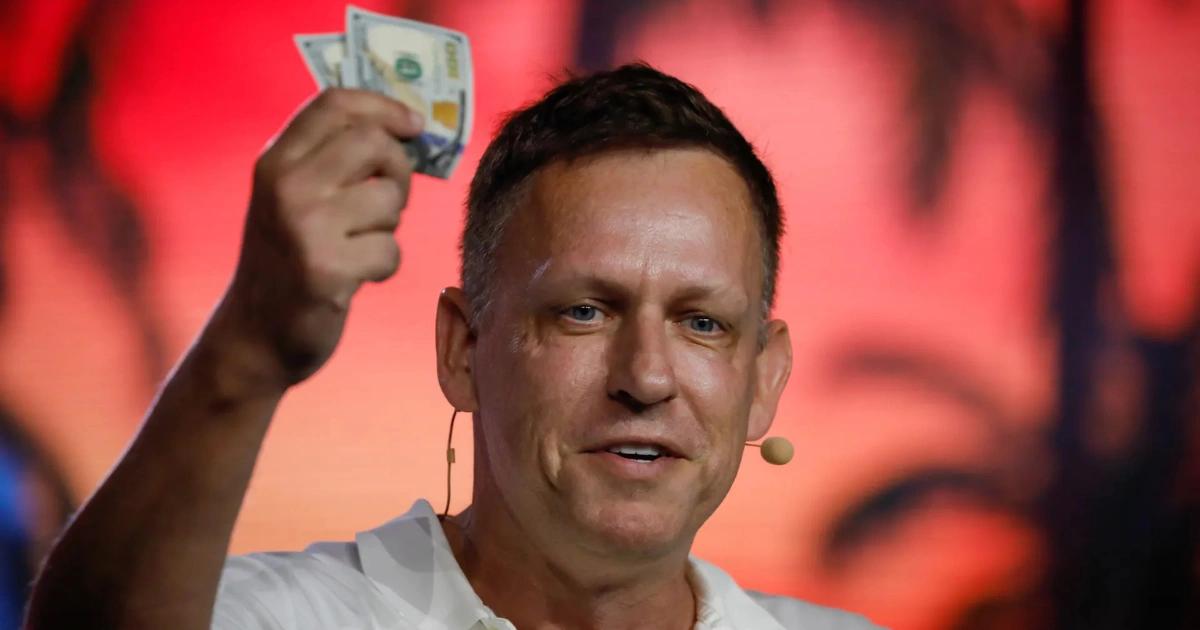
Founders Fund has completed a $6 billion Growth IV fund, betting on AI and defense technology, with capital increasingly concentrated in a few platforms, deeply binding technology and national capabilities.
Less than a year after raising a $4.6 billion growth fund, Peter Thiel’s Founders Fund has essentially finalized a new fund, “Growth IV,” of about $6 billion. Reports indicate that approximately $1.5 billion of this new fund comes from the personal contributions of Founders Fund partners, attracting significant institutional and investor interest, with external LP subscription demand surpassing the fund’s capacity.
Beyond the capital logic that top funds enjoy strong bargaining power, as one of Silicon Valley’s most ideologically driven capital entities, Founders Fund’s fundraising once again signals a declaration: AI, defense technology, aerospace, and “national capabilities” have become the central themes of capital.
What makes Founders Fund unique is its embedding of a very explicit vision of politically linked technology into its investment practices. From SpaceX, Palantir, and Anduril to Stripe and OpenAI, Founders Fund is orchestrating a portfolio that spans national foundational capabilities and platform technologies, which can be directly integrated into national security, intelligence, aerospace, industry, and infrastructure.
“Returning to the original mission”: The Cold War-style tech-state model reemerges
In recent years, Silicon Valley’s tech elites have increasingly aligned with the right, becoming a new trend. These tech-right groups are characterized by a belief that technological progress, capital, and high-capacity elites should lead societal direction, while harboring hostility toward progressive cultural politics, disapproval of heavy regulation, and a growing willingness to bind technology with national power.
Many describe this phenomenon as Silicon Valley’s “invasion” of the Pentagon. But in reality, Silicon Valley and the U.S. national machinery have never truly been separated; what is happening today is merely a reassertion of that relationship.
In the internet age, the public has long imagined Silicon Valley as a mythic garage full of tech geniuses, anti-bureaucratic, anti-government, and a world that grew entirely through free markets. However, historically, the birth of Silicon Valley was deeply rooted in the defense industrial complex and national research systems.
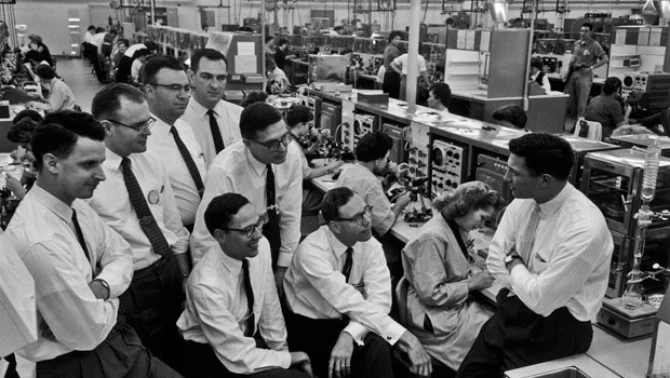
Source: “PANews” In the 1960s, Fairchild Semiconductor helped the U.S. become a leader in space exploration and the computer revolution.
During the Cold War, top universities like Stanford undertook numerous defense-related research projects, and many early high-tech startups served military and government clients as their main customers. Consequently, the innovation and growth of early high-tech industries were closely intertwined with the U.S. national security apparatus. For example, the roots of the modern internet trace back to a project by the U.S. Department of Defense’s Advanced Research Projects Agency (ARPA) in the 1960s.
Additionally, NASA’s Apollo program significantly advanced semiconductor manufacturing by demanding specific specifications and procurement needs, which spurred innovation and technological maturation, leading to rapid cost reductions once manufacturing processes matured. In other words, early chips did not first prove themselves in the civilian market and then naturally enter the national system; rather, they were initially driven by national needs, which then gradually transitioned into commercial applications.
This explains why Peter Thiel and his allies’ current strategic layout is described as a revival of a “Cold War-style tech-state model.” The difference is that during the Cold War, the main actors were government laboratories, DARPA, NASA, and traditional defense contractors, whereas today’s new protagonists are risk capital-backed dual-use technology platforms. The Pentagon has not exited; instead, it is actively transferring the source of innovation to the commercial tech ecosystem.
Peter Thiel embraced this shift earlier and more explicitly than most venture capitalists. Founders Fund has long been an investor in Palantir, the “AI arms dealer” (Thiel himself is a co-founder), and has been a core supporter of “AI defense” company Anduril, leading a $1 billion investment last year to help Anduril raise $2.5 billion at a valuation of $30.5 billion.
Meanwhile, SpaceX, which controls commercial space, military satellites, battlefield communications, and launch capabilities, exemplifies private capital’s entry into critical national infrastructure. It secures large contracts from NASA and the U.S. National Reconnaissance Office, while establishing a global commercial footprint through launch services, commercial satellites, and Starlink broadband. Notably, Starlink not only provides communication services to remote areas, maritime, and aviation sectors but has also effectively served as a basic communications infrastructure on the battlefield in Ukraine.
Internal Divergence within the Tech Right
Similarly influential in the tech-right camp, a16z has become more dominant in the capital markets. Its massive $15 billion fundraising earlier this year captured nearly 18% of all venture capital funds in the U.S.
In recent years, a16z has shifted noticeably to the right; it no longer confines itself to consumer internet investments but has begun to incorporate “national interest” into its investment language. It has established a dedicated “U.S. Momentum” initiative aimed at investing in companies that support national interests, covering defense, manufacturing, supply chains, education, housing, and public safety.
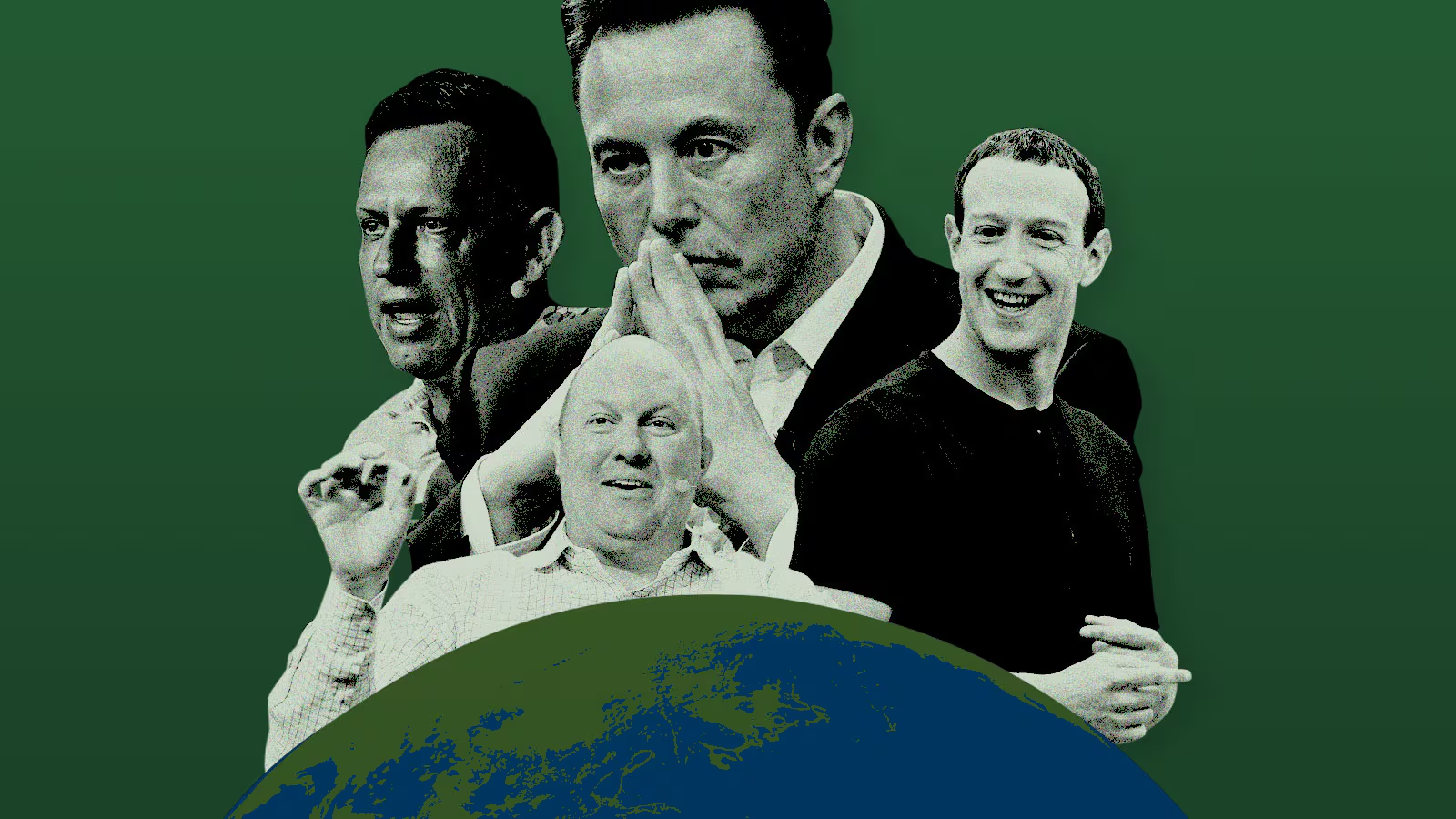
However, grouping Thiel and Marc Andreessen of a16z into the same camp masks internal differences; their strategic orientations are not identical.
a16z’s core remains more aligned with technological accelerationism rather than Thiel’s elite nationalism. Andreessen emphasizes concerns over excessive regulation, suppressed innovation, and the need for America to rebuild. Consequently, a16z invests heavily in AI, crypto, enterprise software, biotech, and defense tech—more akin to betting on “the wave of technology itself”—rather than explicitly favoring security states, geopolitical rivalry, or high-threshold platforms like Thiel.
According to a Reuters report last year, a16z even planned to raise a $20 billion AI mega-fund, primarily to capitalize on global capital flows into U.S. AI companies. In contrast, Thiel’s Founders Fund tends to concentrate investments on a very small number of “civilization-level” companies, willing to make large, ongoing bets on a select few winners.
This is the key distinction between the two paths. a16z favors broad technological freedom and expansion, while Thiel advocates for a handful of strategic companies to dominate; underlying this is a fundamentally different political philosophy. “To create and capture lasting value, companies should pursue monopolies,” Thiel’s approach always carries a pronounced, even stark, elitist tone. In investment terms, he prefers companies that structurally reduce competition, raise barriers, and control critical nodes, rather than simply seeking growth.
Because of this, the entire tech-right aligned with Trump, and the MAGA alliance, are inherently fragile. Their common ground is rooted in mutual opposition to the traditional establishment, disdain for recent Democratic regulation and cultural politics, and a shared language of “great power competition,” “U.S. industrial resurgence,” and “rebuilding national capabilities.”
Source: “PANews”
Yet, the divide between elites and populists remains stark and irreconcilable. MAGA’s social base leans toward populist protectionism, anti-immigration, and anti-globalization sentiments. Conversely, Silicon Valley capital’s tech-right relies heavily on high-skilled immigration, global talent networks, and cross-border capital flows. When Trump’s administration increased H-1B costs and tightened scrutiny, it directly impacted U.S. tech companies, which depend heavily on engineers from India, China, and around the world in the AI race.
The AI issue further amplifies this divide. Tech-right tends to see AI as the core engine of U.S. growth and national competition, opposing regulation and security constraints. Trump’s efforts to limit state AI regulation through federal funding align with the preferences of this tech capital. However, grassroots MAGA supporters’ attitudes toward AI are far less uniform; they worry about job displacement and instinctively distrust the cultural stance and power expansion of Silicon Valley giants.
The Growing Distance of Tech Innovation Benefits from Ordinary People
Recently, besides the news that Founders Fund is set to complete a $6 billion fund, venture capital firm General Catalyst is also raising about $10 billion. The brewing of massive financings among top funds reflects a more tangible trend: capital and technology are increasingly flowing into a few dominant platforms. According to the FT, in 2024, over half of U.S. venture capital fundraising will go to just nine firms, with the number of active VCs dropping more than 25% from the 2021 peak.
This results in two main consequences—the centralization of the startup ecosystem and the retreat of high-potential tech companies from public markets.
On one hand, top funds are better able to hold onto their leading portfolio companies, while the capital required for subsequent rounds grows larger, reducing the number of players capable of participating in later-stage financing. On the other hand, large unicorns like Databricks, Stripe, SpaceX, and OpenAI are seeking ways to stay in the private market long-term; their large private financings are often called “private IPOs.” Without the pressures of public disclosure and media scrutiny, these companies can achieve expansion through massive private funding that would otherwise only be possible via secondary markets.
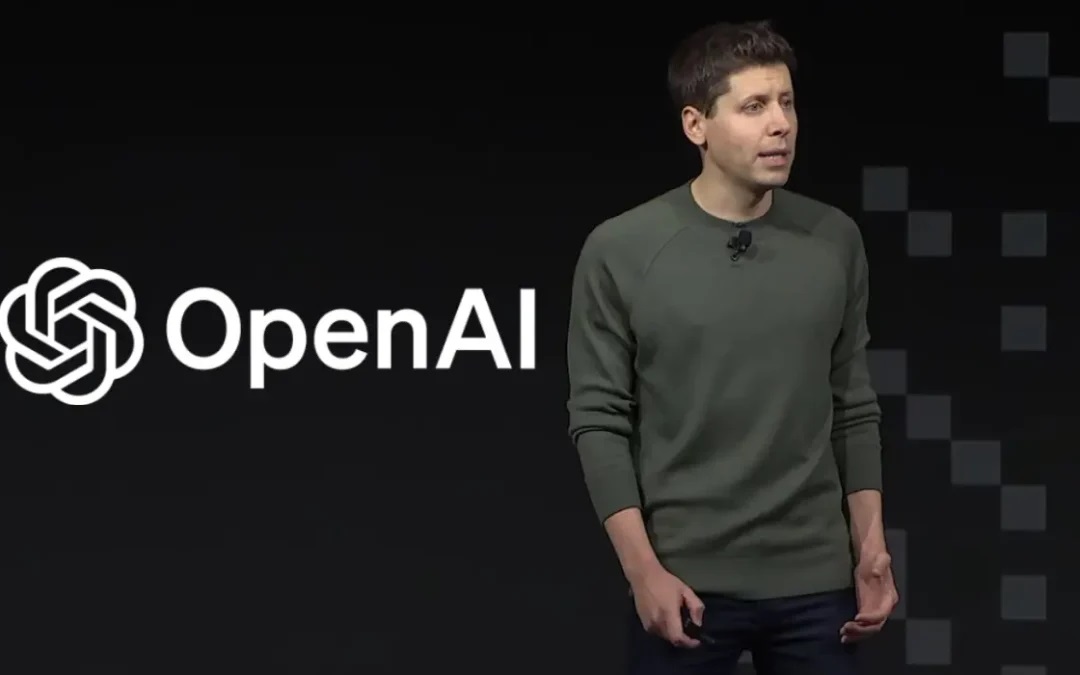
Source: “PANews” OpenAI is preparing for the largest IPO in history, with a valuation possibly approaching $1 trillion.
As a result, the most aggressive early-stage valuation expansions are increasingly absorbed by the private market, pushing the “public offering” points for ordinary investors further into the future. Many of the greatest tech companies in history have achieved most of their market value growth after going public. Extending the timeline, U.S. venture capital as a whole has not consistently outperformed the Nasdaq.
This means that ordinary investors will likely participate more in later-stage, more moderate growth in the public markets; the most explosive early dividends are increasingly locked behind private markets.
The problem is deeper. Once these companies’ offerings extend beyond consumer applications to include national data platforms, government software, or satellite networks, they gradually become part of institutional and infrastructural systems. The issue then shifts from whether ordinary investors can share in growth dividends to whether private capital is preemptively occupying critical interfaces for future national and societal operations with limited public oversight.
The example of Palantir illustrates this well, as its business has accelerated significantly in recent years, largely based on a series of government contracts. While companies have the right to sell software to governments, when the same platform deeply integrates into sensitive military, intelligence, and immigration enforcement systems, public governance faces a complex challenge. The public’s concern is whether government procurement is merely acquiring tools or whether it is gradually binding governance capabilities, data structures, and decision-making processes to private platforms.
Therefore, the real concern is not some mysterious “shadow controller” narrative, but the simultaneous realities of capital centralization, platformization of national capabilities, and lagging technological regulation. And Peter Thiel is not simply betting on the next unicorn; he appears to be betting on the future of the U.S. power structure itself, increasingly relying on private-capital nurtured technological platforms to realize this vision.
This process may not necessarily lead to an uncontrollable “technological Leviathan,” but it will at least pose a more difficult question for democracies: when infrastructure, national capabilities, and capital returns are more tightly intertwined, who has the institutional capacity to impose constraints before they cross critical boundaries?
- This article is authorized reprint from: “PANews”
- Original title: “When Tech Capital Shifts Right, Ordinary People Are Accelerating Away from Growth Dividends”
- Original author: Zen, PANews


