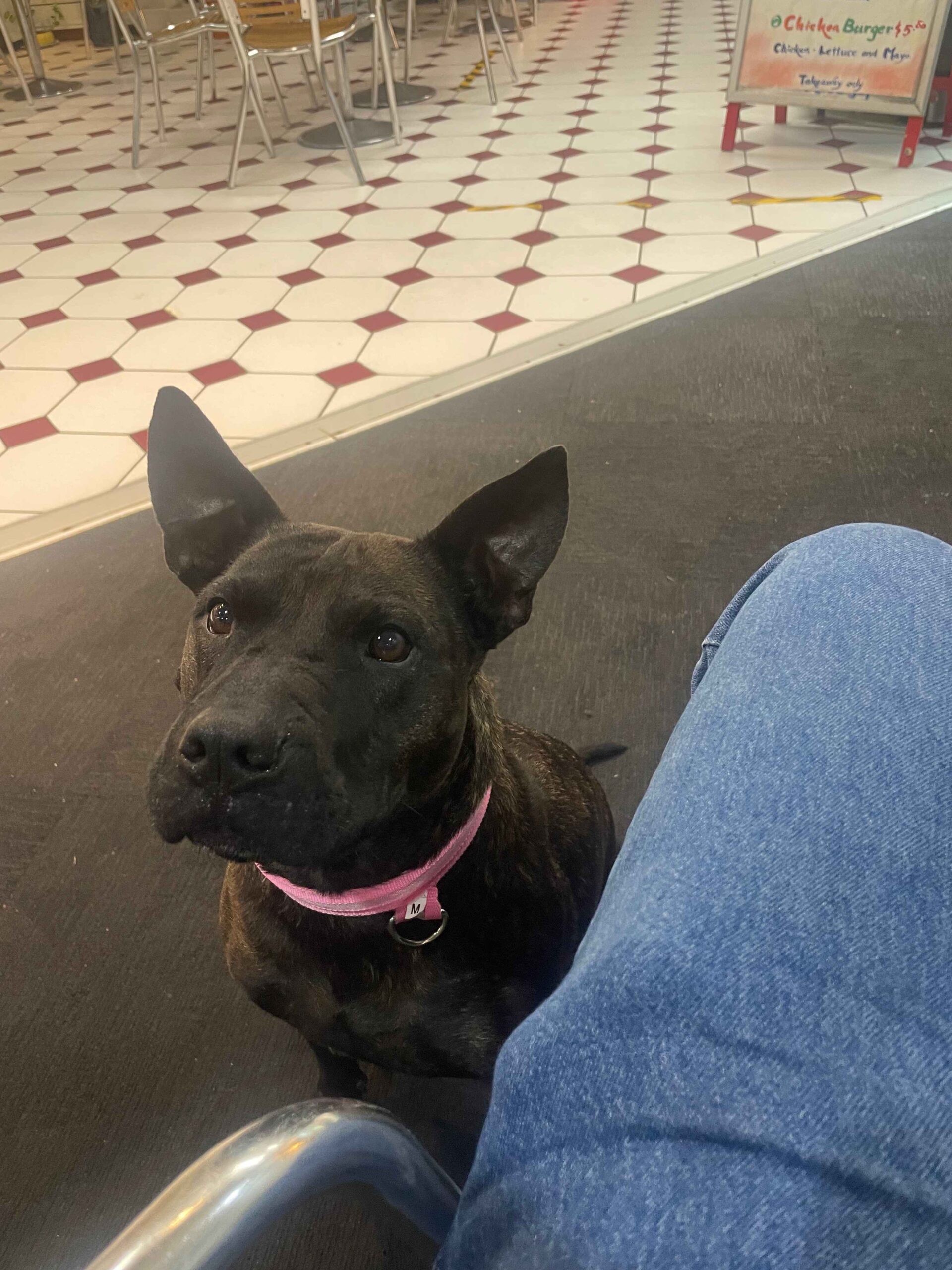
Australian AI consulting firm founder Paul Conyngham’s beloved dog Rosie has been diagnosed with malignant mast cell cancer, and the veterinarian determined she has only a few months left. With no background in biology, he used three AI tools—ChatGPT, Gemini, and Grok—to collaborate and identify mutation targets from 300GB of genomic data, ultimately designing the world’s first personalized mRNA cancer vaccine. Three months later, the dog’s tumor shrank by 75%. This article details the entire story shared by Paul Conyngham on X.
(Background: Anthropic is rumored to launch in Q4! Valued at $380 billion, racing against OpenAI for the IPO timing)
(Additional context: OpenAI has indefinitely shelved the “adult version of ChatGPT”! Concerned about the risk of illegal content, it’s shifting back to productivity tools)
Article Contents
Toggle
- 300GB of Genetic Data
- Three-Part Therapy
- One Tumor Remained Untouched
On a certain afternoon in May 2024, Paul Conyngham walked into an animal hospital in Sydney with Rosie. When he walked out, he had a diagnosis in hand.
Malignant mast cell cancer, the veterinarian said she has only a few months left.
Rosie is an eight-year-old Staffordshire Bull Terrier mix who has spent most of her life with Conyngham. Conyngham himself is the founder of an AI consulting firm in Australia, where he writes code, performs data analysis, and helps businesses integrate AI tools.
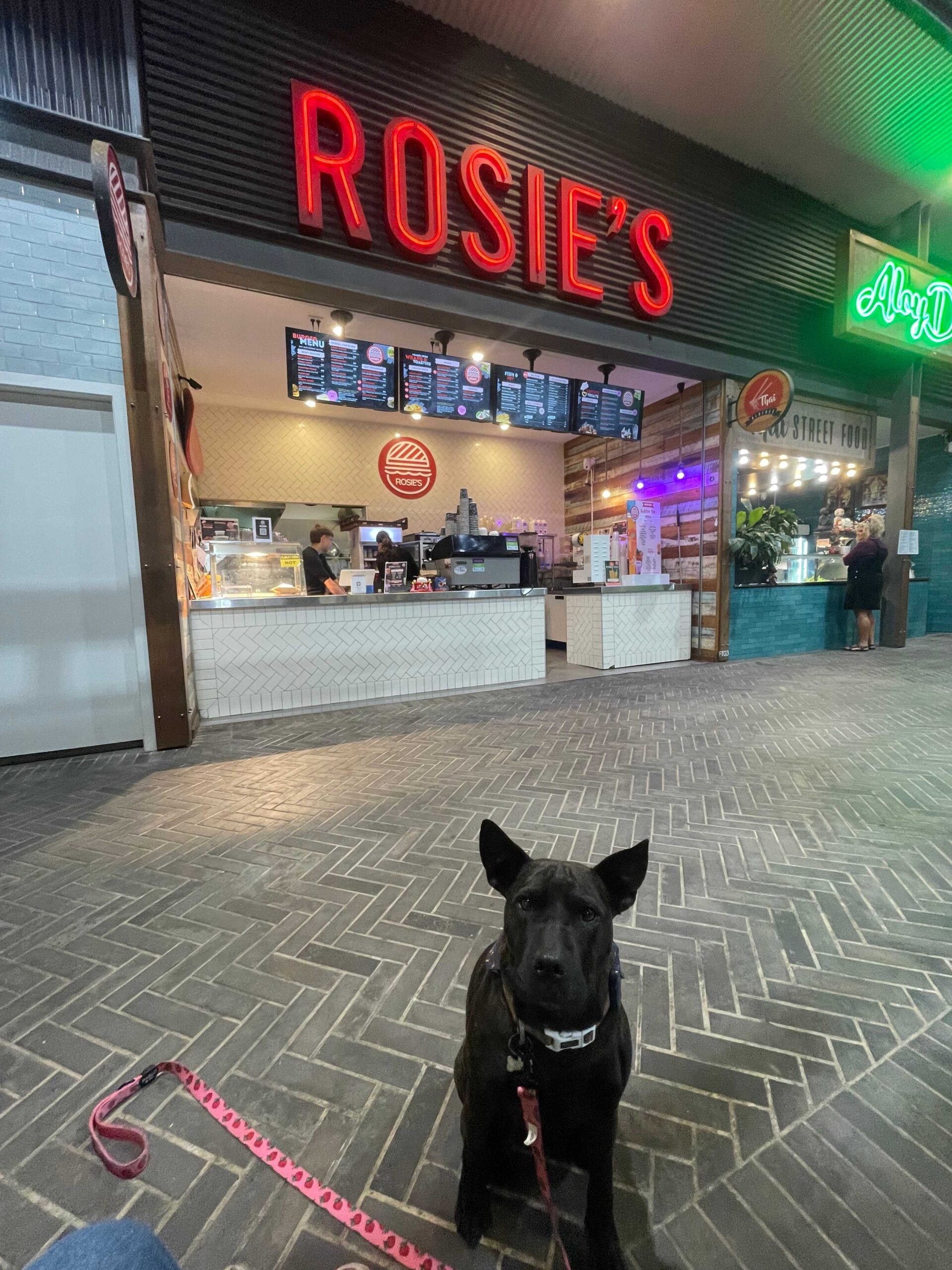
Molecular biology is far from his expertise; he didn’t know what the c-KIT gene was, didn’t know how mRNA vaccines were made, and wasn’t even sure if dogs could undergo immunotherapy.
But he knew how to ask questions, so he opened ChatGPT and began to ask.
300GB of Genetic Data
ChatGPT’s first suggestion was to pursue immunotherapy and directed him to Professor Martin Smith at the University of New South Wales (UNSW) Ramaciotti Center for Genomics, as well as the team at the Garvan Institute. Conyngham contacted them.
The research institute was willing to take on the “save the dog” project, starting with genetic sequencing for Rosie. The research team performed whole genome sequencing and RNA sequencing, generating approximately 300GB of raw data. Most people would likely close their computers upon seeing that figure, but her owner Conyngham did not. He fed the data into ChatGPT, which helped design a bioinformatics analysis workflow.
Then, using AlphaFold 2 (the 2024 Nobel Prize-winning technology), he modeled the three-dimensional structure of the mutated protein. Through cross-referencing DNA and RNA data, he pinpointed the c-KIT gene mutation and identified seven new antigen targets.
At this point, ChatGPT handed off to the next AI.
Gemini Pro 2 took over the second phase, assembling the seven targets into a multi-epitope vaccine sequence. Grok 3 handled the final step, conducting structural stability validation. Conyngham later admitted that the final vaccine configuration was actually designed by Grok, not the widely reported ChatGPT.
A person with no biology knowledge completed the preliminary work of a laboratory using three chat windows.
Three-Part Therapy
Just administering the vaccine wasn’t enough. With the help of AI, Conyngham devised a three-part therapy, where three different drugs each tackled different aspects:
- The mRNA vaccine trains Rosie’s immune system to recognize cancer cells, teaching T cells to target those seven new antigens.
- Tyrosine kinase inhibitors (TKIs) block the signaling pathways driven by the c-KIT mutation, halting cancer cell proliferation and angiogenesis.
- PD-1 checkpoint inhibitors dismantle the cancer cells’ cloaking mechanism, allowing suppressed T cells to fire back up.
These technical terms are indeed difficult, right? Actually, the author just wrote down Conyngham’s explanations because these three therapies had to be administered step by step; immune-suppressing drugs and immune-activating vaccines could counteract each other. The timing and sequence of the administration were also planned with the help of ChatGPT and Gemini.
The vaccine was manufactured by Professor Páll Thordarson’s team at the UNSW mRNA Research Institute, completed in under two months, and was finally administered at the University of Queensland’s veterinary school by Professor Rachel Allavena’s team.
In December 2025, Conyngham drove ten hours to Gatton, Queensland, to give Rosie her first shot.
A week later, the tumor began to visibly shrink.
Within a month, the golf ball-sized tumor on Rosie’s leg had shrunk by 75%.
One Tumor Remained Untouched
Three months after receiving the vaccine, Rosie was taken for a comprehensive evaluation by the doctor. The two tumors on her leg had visibly shrunk, but there was one on her hindquarters that showed no response at all.
The medical team surgically removed it and sent it for genomic analysis. Preliminary results indicated that the mutation characteristics of this tumor were different from those targeted by the vaccine design.
In the same dog, different cancers driven by distinct mutated genes had developed.
This isn’t the fault of AI; it’s a problem inherent to cancer itself.
Tumor heterogeneity has been one of the most challenging issues in human cancer research for decades; different tumors in the same patient can carry entirely different mutation-driving genes. The mRNA vaccine accurately targeted most of the intended targets, but cancer has never been a singular enemy. It consists of several enemies that appear the same.
In a long post on X, Conyngham wrote a sentence that was shared thousands of times:
AI has given me, a single individual,
the capability of an entire research institute.
He mentioned this encompassed process planning, self-education, technical debugging, application documentation, vaccine design…
Paul Conyngham is now evaluating how to systematize and scale this “AI anti-cancer” process, with the hope that in the future, “it won’t just be one dog saved.”
However, after the event became public, medical experts still cautioned the public that this is a single case, not the result of a controlled study. The tumor shrinkage could be attributed to the vaccine, the effects of TKIs, the action of checkpoint inhibitors, or possibly a combination of all three. Without a control group, causality cannot be confirmed, and it cannot be generalized to the wider population of cancer-afflicted animals.
So this isn’t a “AI has cured cancer” paradigm-shifting breakthrough, at least not yet.
This is a story that includes a bit of a miracle: a reclusive engineer’s dog was on the verge of death, and pushed to a dead end, he used the AI tools at his disposal to carve out a path. Most of that path was navigable, but the last small segment couldn’t be traversed, and he is still searching for solutions.
Rosie is still alive.