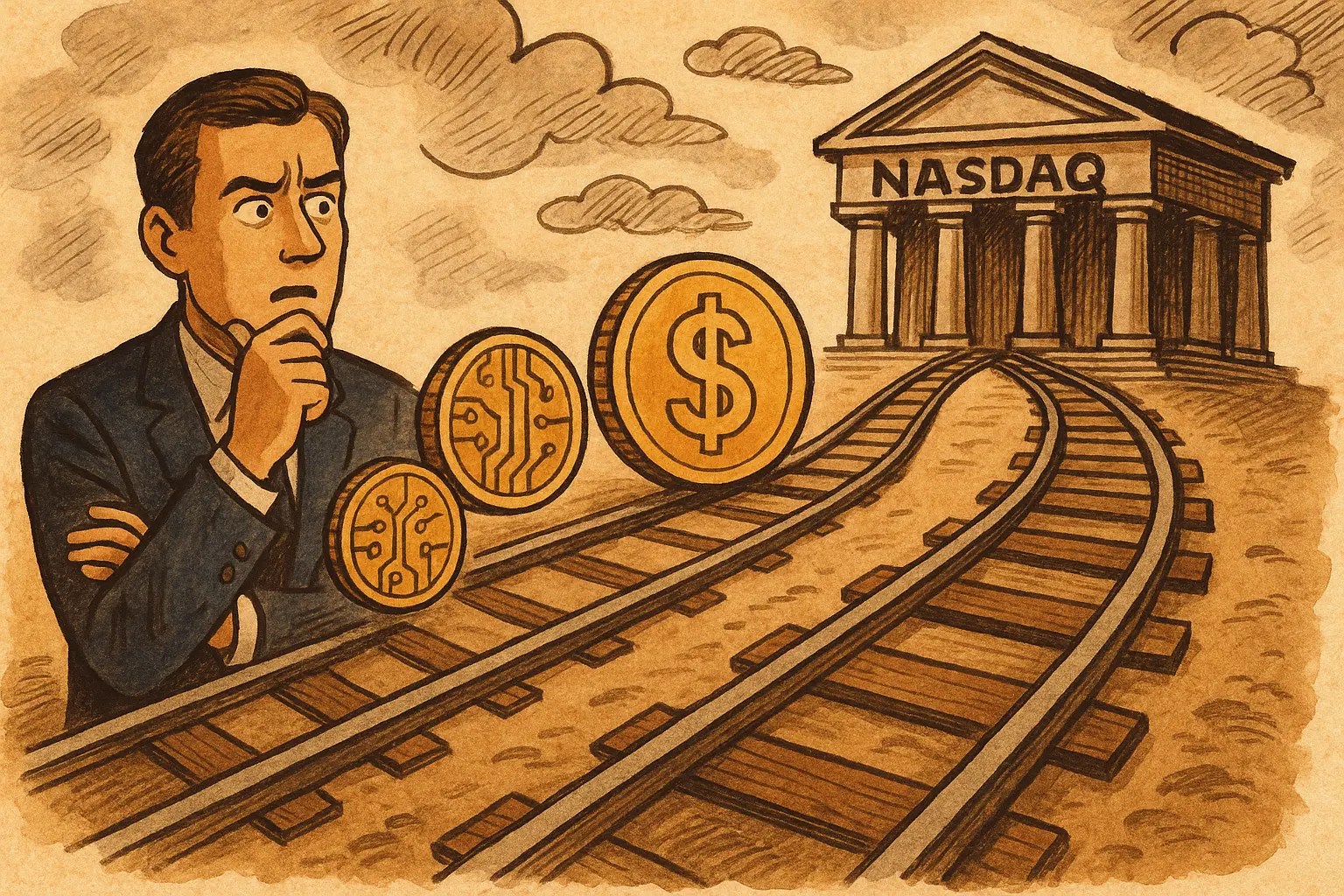
Bank of America Securities (TD Securities) warned in a recent report that Nasdaq’s ongoing tokenized stock initiative could lead to a dual-track market structure in the U.S., resulting in a coexistence of regulated traditional exchanges and offshore blockchain-based platforms. Reid Noch, Vice President of U.S. Equity Market Structure, pointed out that this market segmentation could cause the same stock to trade at different prices on different platforms, increasing the risk of market fragmentation.
TD Securities’ Core Warning: Systemic Risks of a Dual-Track Market Structure
TD Securities’ warning focuses on the potential systemic consequences of Nasdaq’s three parallel tokenization initiatives. Their main concern is that the emerging dual trading systems will create competitive pricing mechanisms for the same underlying assets.
Offshore tokenized shares, although backed by real stocks, operate outside the U.S. regulatory framework and differ structurally from traditional stock holdings. If the same stock trades at different prices on different platforms simultaneously, market transparency will decline, creating arbitrage opportunities that could ultimately harm overall market efficiency and retail investor protections.
Nasdaq’s Three Parallel Tokenization Initiatives
Post-Trade Settlement Upgrade: Improving existing settlement infrastructure to enhance efficiency and security.
Tokenized Stock Issuance Support: Enabling listed companies to directly issue tokenized shares through technical and legal means.
Offshore Platform Trading Integration: Supporting trading of tokenized U.S. listed stocks on offshore crypto platforms like Kraken.
The New York Stock Exchange is also exploring tokenization platforms through a partnership with Securitize, aiming to develop infrastructure that supports extended or 24/7 trading, but this does not currently involve core issues related to Nasdaq’s offshore trading venues.
Rapid Expansion of the Tokenized Stock Market: Key Players’ Movements
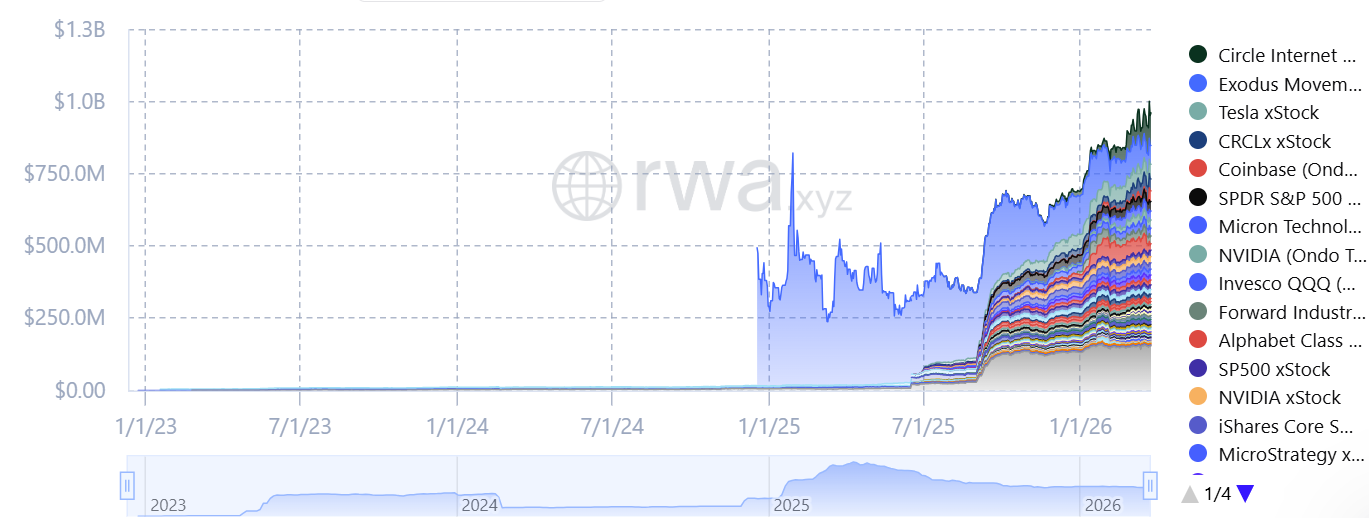 (Source: RWA.xyz)
The tokenized stock market is experiencing rapid growth. Kraken’s xStocks platform has surpassed $25 billion in total trading volume, increasing by approximately 150% since November 2025, making it one of the largest tokenized stock trading platforms to date.
Coinbase has also announced expansion into tokenized stocks as part of its broader “universal exchange” strategy, marking the formal emergence of direct competition between crypto platforms and traditional exchanges in the stock trading space.
For traders, the most attractive aspect of tokenized stocks is the possibility of 24/7 trading—stocks are no longer limited to traditional exchange hours. However, TD Securities’ warning reveals another side: the decentralization of trading activity could reduce liquidity in any single market, widen bid-ask spreads, and negatively impact retail investors.
Frequently Asked Questions
What are the fundamental differences between tokenized stocks and traditional stocks?
Tokenized stocks are backed by real stocks and circulate as blockchain tokens. Holders have exposure to the value of the shares, but tokens issued and traded outside the U.S. regulatory framework differ structurally and legally from traditional stocks. Investors should be aware of the associated risks.
What exactly does TD Securities mean by a “dual-track market structure”?
It refers to the same underlying stock being traded simultaneously on two different markets: one is the regulated traditional U.S. exchange, and the other is an offshore blockchain-based trading venue. Due to differences in supply, demand, liquidity, and regulation, this can lead to persistent price discrepancies for the same asset across platforms, increasing market complexity.
How large is Kraken xStocks’ tokenized stock trading volume?
Kraken xStocks’ total trading volume has exceeded $25 billion, with approximately 150% growth since November 2025. It is currently one of the highest-volume platforms in the tokenized stock market, reflecting rapidly growing market demand.
Disclaimer: The information on this page may come from third parties and does not represent the views or opinions of Gate. The content displayed on this page is for reference only and does not constitute any financial, investment, or legal advice. Gate does not guarantee the accuracy or completeness of the information and shall not be liable for any losses arising from the use of this information. Virtual asset investments carry high risks and are subject to significant price volatility. You may lose all of your invested principal. Please fully understand the relevant risks and make prudent decisions based on your own financial situation and risk tolerance. For details, please refer to
Disclaimer.


