The U.S. Department of the Treasury announced that to commemorate the 250th anniversary of the founding of the country, $100 bills featuring President Trump’s signature will be printed starting this June. This marks the first time a sitting president’s signature appears on U.S. currency, ending the tradition of Treasury signatures that has lasted since 1861.
(Background: Goldman Sachs predicts a 30% chance of a recession in the U.S. this year and insists on two rate cuts by the end of the year)
(Additional context: Bloomberg warns that escalating tensions from the Iran conflict are prompting traders to bet on emergency rate hikes by the Federal Reserve within weeks)
The U.S. Department of the Treasury announced that President Trump’s signature will unprecedentedly appear on U.S. currency. The first batch of $100 bills bearing signatures from President Trump and Treasury Secretary Steven Mnuchin is scheduled to begin printing this June, with other denominations to follow.
This decision also marks the end of a 165-year-old tradition: since 1861, U.S. banknotes have always featured signatures from two officials:
- Secretary of the Treasury: The head of the cabinet.
- Treasurer of the United States: The official responsible for overseeing the Bureau of Engraving and Printing and the U.S. Mint.
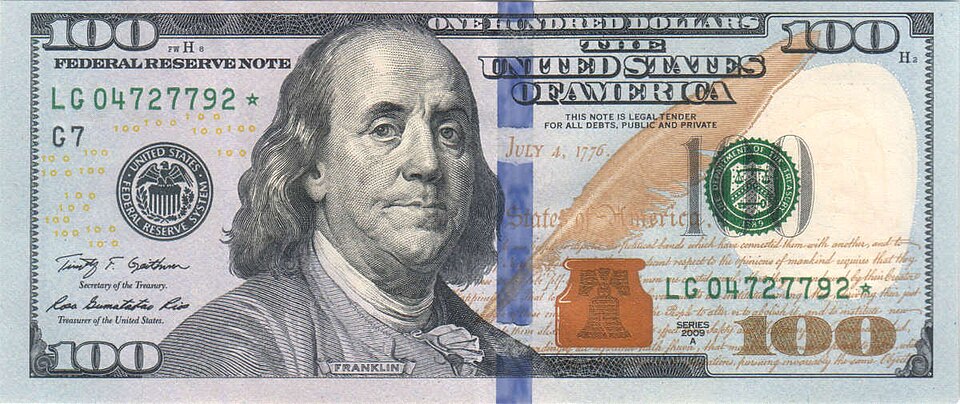
In the image, signatures of the Treasury Secretary and the Treasurer of the United States can be seen on the left side.
Mnuchin: A Strong Dollar Deserves the President’s Name
Treasury Secretary Mnuchin issued a statement:
“During President Trump’s second term, coinciding with the 250th anniversary of America’s founding, the U.S. economy is experiencing strong growth, financial stability, and the dollar continues to dominate globally. Printing our great nation’s and President Trump’s names on the currency is the best way to showcase this historic achievement.”
Legally, U.S. law allows the Treasury to modify currency designs to prevent counterfeiting, provided certain elements like “In God We Trust” are maintained. Portraits of deceased individuals are permitted on currency, but images of living persons are restricted. However, signatures are not subject to these restrictions, so including Trump’s signature on the bill is not illegal.
$1 Coin Plan Runs Into Legal Boundaries
The signature on the banknotes is just the latest chapter in the White House’s “naming campaign.” Since Trump took office, there has been a series of federal buildings, ships, and arts centers named after him. Previously, plans to feature Trump’s portrait on a $1 coin ran into legal issues, as U.S. law explicitly prohibits the use of living persons’ images on coins, leading to the plan being scrapped.
This time, the currency and coins are governed by different legal frameworks. It seems White House officials are willing to go to great lengths to flatter Trump.
Disclaimer: The information on this page may come from third parties and does not represent the views or opinions of Gate. The content displayed on this page is for reference only and does not constitute any financial, investment, or legal advice. Gate does not guarantee the accuracy or completeness of the information and shall not be liable for any losses arising from the use of this information. Virtual asset investments carry high risks and are subject to significant price volatility. You may lose all of your invested principal. Please fully understand the relevant risks and make prudent decisions based on your own financial situation and risk tolerance. For details, please refer to
Disclaimer.


