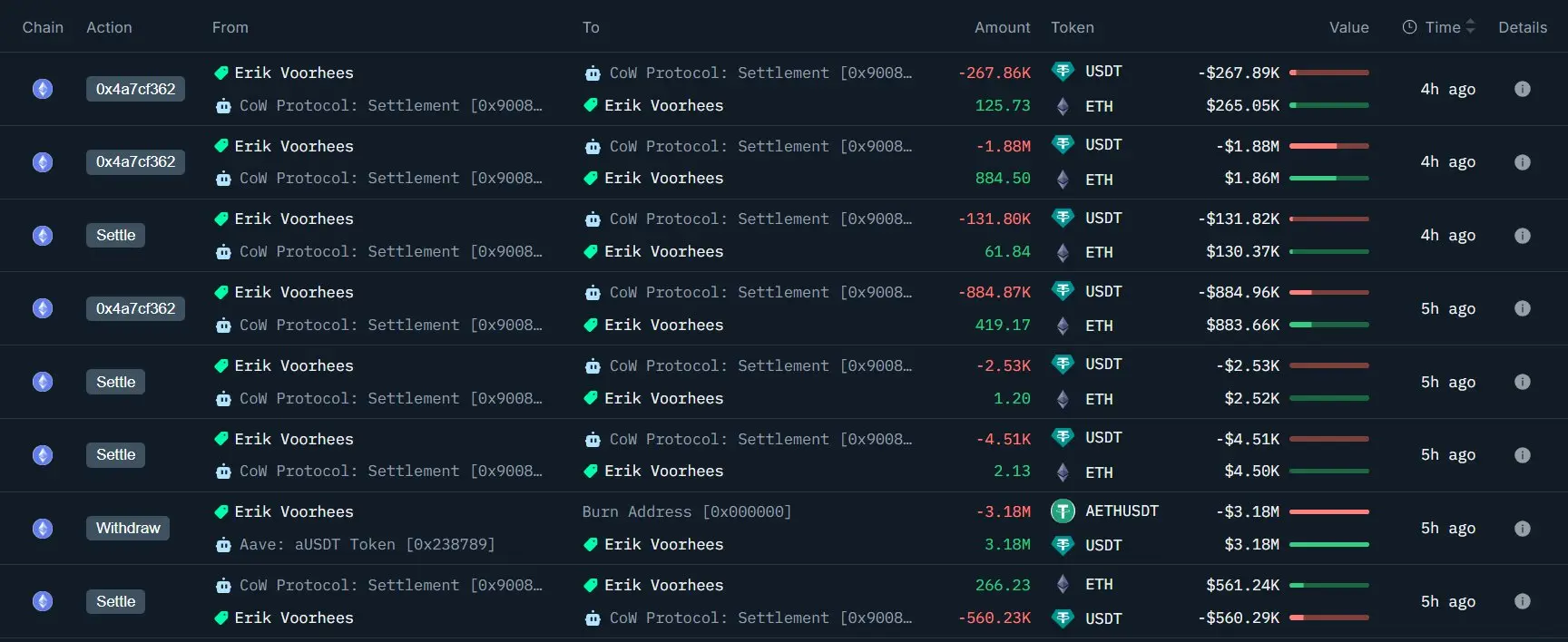
According to on-chain monitoring platform Onchain Lens, ShapeShift founder Erik Voorhees has invested 29.44 million USDT in the past 24 hours to purchase 13,986 ETH. Looking back over the past six days, Voorhees has accumulated a total of 21,293 ETH at an average price of $2,091.
Voorhees’ ETH Accumulation: Scale and Timeline
Erik Voorhees is the founder of the decentralized cryptocurrency exchange ShapeShift and also the founder of Venice AI. The details of this large-scale ETH accumulation are as follows:
Past 24 hours: Bought 13,986 ETH using 29.44 million USDT
Past six days total: Bought 21,293 ETH at an average cost of $2,091, totaling approximately 44.52 million USDT
Buying approach: Continually increased holdings over six days, indicating this is not a one-time large transaction but a planned, phased accumulation strategy
Voorhees has previously publicly expressed confidence in Ethereum’s long-term fundamentals. He actively advocates for ETH ecosystem applications through Venice AI. This large-scale purchase timing is noteworthy—ETH is currently around $2,176, rebounding after a significant correction from its 2025 peak.
Ethereum Foundation OTC Sale: A New Model for Corporate Reserves
The Ethereum Foundation’s recent OTC sale to BitMine is part of EF’s decentralized fund management framework and is the second enterprise-level OTC direct sale following the July 2025 sale to SharpLink Gaming:
BitMine purchase: 5,000 ETH at $2,042.96 per ETH, totaling about $10.2 million
SharpLink Gaming precedent (July 2025): 10,000 ETH at $2,572.37 per ETH, totaling about $25.7 million
EF fund management goal: Spend roughly 15% of reserves annually to sustain long-term operations; proceeds used for protocol R&D, ecosystem development, and community grants
BitMine is chaired by Tom Lee, co-founder of Fundstrat, which currently holds over 4.5 million ETH valued at approximately $9.3 billion, making it one of the largest corporate ETH holders globally. This week, the Ethereum Foundation also released a new charter emphasizing its role in promoting decentralization, user asset sovereignty, censorship resistance, and open-source values within the Ethereum ecosystem. Notably, EF has recently begun staking some of its holdings, planning to deploy about 70,000 ETH to validators via open-source infrastructure.
Frequently Asked Questions
Why did Erik Voorhees choose to make a large ETH purchase at this time?
Voorhees has not publicly explained the specific timing of this purchase. Market context shows ETH is currently in a rebound zone after a significant correction from its 2025 peak, with an average price of $2,091 representing a notable discount from the year’s high. The six-day phased accumulation suggests a long-term holding intent rather than short-term speculation, also reducing the risk of a single-entry price. Given his long-term advocacy for Ethereum’s ecosystem through Venice AI, this accumulation may also align with his view of ETH as a foundational layer for AI infrastructure and settlement.
Why did the Ethereum Foundation choose OTC sales instead of selling ETH on public markets?
OTC direct sales help avoid market impact from large sell-offs and ensure more predictable transaction prices. Selling directly to institutional buyers like BitMine can also strengthen ETH’s institutional holding base, supporting EF’s long-term strategy to promote enterprise adoption of ETH. Compared to selling on DEX or CEX, OTC transactions have a more neutral immediate impact on ETH market prices.
What is the structural impact of BitMine’s large ETH holdings (over 4.5 million ETH) on the market?
BitMine’s holdings amount to about 3.7% of ETH’s circulating supply. Since these holdings are not frequently moved outside of staking, they effectively remove a significant portion of supply from the market. If more enterprises adopt similar “ETH treasury strategies,” it could reduce the effective circulating supply over the long term, potentially creating supply-side support for prices if demand remains stable or grows.
Disclaimer: The information on this page may come from third parties and does not represent the views or opinions of Gate. The content displayed on this page is for reference only and does not constitute any financial, investment, or legal advice. Gate does not guarantee the accuracy or completeness of the information and shall not be liable for any losses arising from the use of this information. Virtual asset investments carry high risks and are subject to significant price volatility. You may lose all of your invested principal. Please fully understand the relevant risks and make prudent decisions based on your own financial situation and risk tolerance. For details, please refer to
Disclaimer.


