economic token
What Is an Economic Token (EconomicToken)?
An economic token serves as a digital asset designed to drive collaboration and value exchange within a network.
It is issued and circulated on a blockchain, connecting user activity to the overall value of the ecosystem. Common use cases include paying on-chain operational fees (Gas), participating in governance voting, staking for network security and rewards, and acting as a medium for incentives or settlements. Unlike “virtual points,” economic tokens are typically freely tradable on exchanges, with their price fluctuating based on supply and demand.
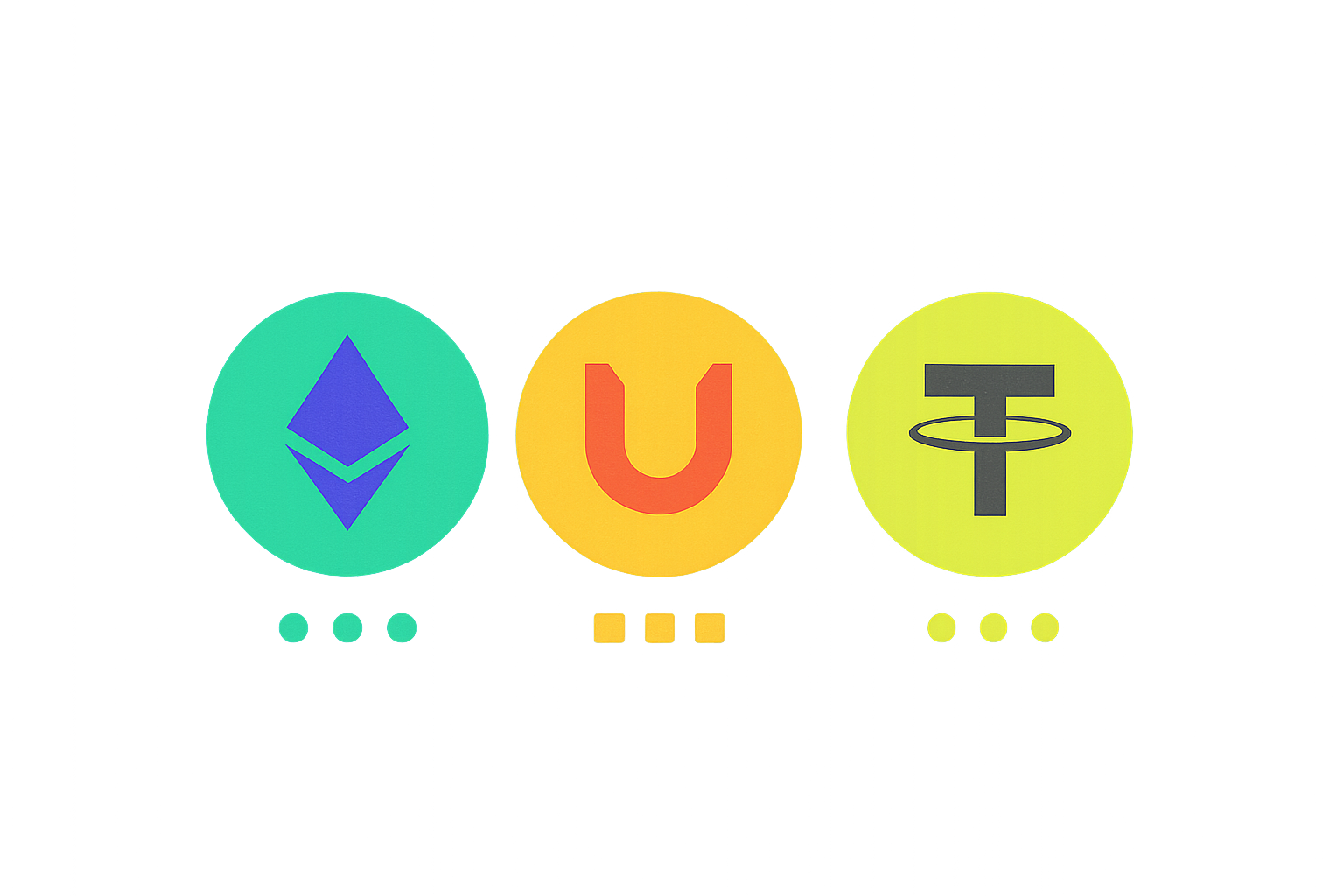
Economic tokens are not a single category—they encompass various forms such as utility tokens, governance tokens, incentive tokens, and stablecoins. For example: ETH functions for Gas payments and settlements; UNI is used for governance votes and ecosystem incentives; USDT acts as a stable payment medium; SOL serves both as a network fee token and as an ecosystem asset.
Why Is It Important to Understand Economic Tokens?
Understanding economic tokens helps assess the sustainability and value proposition of a Web3 project.
First, tokens define what you can do: whether you can pay transaction fees, exercise governance rights, or stake for rewards—all directly impacting user experience and potential returns.
Second, tokens also determine your exposure to risk: aspects like total supply, unlocking schedule, inflation design, buyback and burn mechanisms all influence price volatility and yield stability. For instance, if a project has significant token unlocks without matching demand over the past six months, downward price pressure becomes more likely.
Finally, tokens serve as ecosystem coordinators: developers, users, liquidity providers, and governance participants are all connected through the same value credential. Understanding the token means understanding how a project attracts and retains value.
How Do Economic Tokens Work?
They operate through a closed loop of “supply—utility—demand.”
On the supply side: Projects set total issuance or inflation rules and arrange unlocking schedules. Unlocking means previously non-circulating tokens are released monthly or quarterly into the market. Without offsetting mechanisms (like burns or expanded utility), continuous net supply growth dilutes holder value.
On the utility side: Tokens need to have real uses. Typical utilities include: paying on-chain operational fees (Gas), participating in governance votes (determining parameters and fund allocation), staking (locking up tokens for network security and rewards), and consumption within applications (such as GameFi in-app purchases or NFT minting). The more diverse and indispensable the utilities, the more stable the demand.
On the demand side: Genuine users and developers acquire or hold tokens for their functions and rewards. For example, using Ethereum requires ETH for Gas; earning protocol rewards or voting requires holding its governance token. Secondary market liquidity and outside capital also affect short-term demand.
A simple closed-loop example: A social dApp rewards posting and moderating with tokens; users spend tokens for premium features; some tokens are burned or sent to treasury; governance holders vote to adjust reward rates. This establishes a sustainable cycle of issuance, consumption, recycling, and governance.
How Do Economic Tokens Typically Function in Crypto?
Economic tokens play roles in payment, governance, staking, and settlement across various scenarios.
On public blockchains, they’re used to pay Gas fees and serve as ecosystem assets. Examples include ETH, SOL, AVAX—users pay transaction fees with these tokens for each transfer or interaction, creating baseline demand.
In DeFi, tokens are often used for staking or liquidity mining, where rewards are paid in the same or related token. Protocols need capital and participation incentives—tokens provide flexible motivation. For instance, depositing stablecoins in a lending protocol might earn governance token rewards, which can then be used to vote on interest rates or reward allocations.
On exchanges, economic tokens act as trading pairs and fee deduction instruments. At Gate, users can: trade project tokens on spot markets; join Launchpad events to purchase new tokens early; stake or subscribe to yield products; use platform tokens to offset transaction fees during events. These use cases connect participation, earning, and spending.
At the application level: In GameFi, tokens enable in-app purchases, upgrades, and task rewards; on NFT marketplaces, tokens pay minting fees and royalties; stablecoins like USDT or USDC serve for payments and hedging due to their USD peg and low volatility.
How Do You Buy Economic Tokens?
Taking Gate as an example, the process is straightforward for beginners:
Step 1: Register and complete identity verification. This increases limits and security levels, ensuring smooth fiat and crypto deposits and withdrawals.
Step 2: Deposit funds or top up your account. You can deposit fiat currency or transfer from another wallet. Always confirm network compatibility and address accuracy before transferring to avoid asset loss from mismatched chains.
Step 3: Select a trading pair and place an order. In Gate’s spot market, search for your target token (e.g., ETH/USDT, UNI/USDT) and place a limit or market order according to your plan. Beginners are advised to start with small amounts in batches to mitigate volatility.
Step 4: Secure storage and utility management. For short-term trading, you may keep tokens on the exchange; for long-term holding, consider transferring to self-custody wallets. If you want to participate in governance or on-chain interactions, reserve some tokens for Gas fees; for yield products or staking, review product rules and redemption limitations.
Step 5: Monitor tokenomics and unlocking schedules. Visit the project’s official site or announcements to track unlock timelines, burn plans, fund usage, and governance proposals—all of which influence mid- to long-term performance.
What Are Recent Trends or Notable Data About Economic Tokens?
In the past year, both supply and demand have seen structural changes.
Unlocks & Supply: According to TokenUnlocks and multiple project disclosures for Q3 2025, major and mid-sized projects are unlocking tens of billions of dollars worth of tokens monthly. The average monthly unlock ranges from $5–8 billion over the past year—more spread out than in 2024. This is due to projects launched in 2021–2022 entering late-stage releases and more linear unlocks replacing concentrated cliff releases.
Stablecoin Supply & Share: CoinGecko and Messari’s Q3 2025 market reports show stablecoin total supply has grown slightly in the past six months. USDT and USDC together consistently account for over 80% of the stablecoin market. High stablecoin share reflects strong transaction and settlement demand while providing liquidity support for other tokens and risk assets.
On-Chain Fees & Activity: Ethereum and several high-performance blockchains have seen increased activity this year. Fees spike during peak periods but fall during quiet periods thanks to compression and scaling tech. For economic tokens, higher Gas spending boosts rigid demand but may drive users toward lower-fee Layer 2 networks.
Staking & Governance Participation: Ethereum’s staking ratio has remained in the high 20% to low 30% range over the past year (based on various sources). New projects often use “staking—points—airdrop” strategies for growth. This raises “locked token demand,” but insufficient utility can lead to sell pressure when rewards end.
Trading Structure: Reports from Kaiko, CoinGecko (Q3 2025) indicate decentralized trading’s share has slightly increased compared to all of 2024—especially during hot launches and airdrop periods. For economic tokens, this signals more native on-chain trading and liquidity activity.
Note: Data sources may differ in methodology—the above is based on public reports. For accurate tracking, follow specific projects’ current announcements.
What’s the Difference Between Economic Tokens and Utility Tokens?
The two are related but not identical; economic tokens represent a broader category that includes utility tokens as one type.
Economic tokens are “value credentials that drive network collaboration,” encompassing roles such as payment, governance, staking, rewards, etc. Utility tokens focus on specific functions within an application—like paying fees or unlocking special services or permissions.
Examples: ETH is both an economic token (serving settlement/ecosystem value) and a utility token (paying Gas); UNI coordinates governance/incentives as an economic token—its functional use lies in voting/rewards; USDT is used for payments/settlements as an economic token but also serves utility roles in specific apps.
Other types include governance tokens (offering voting rights without necessarily paying dividends) and stablecoins (used for payments/hedging but not always governance). Understanding these distinctions helps you assess participation strategies and risk tolerance.
This content does not constitute investment advice. Please thoroughly research tokenomics, unlock schedules, and actual utilities before engaging with any project.
Related Terms
- Tokenomics: The design of token supply, allocation, and incentive mechanisms to regulate ecosystem participant behavior.
- Inflation: The phenomenon where increasing token supply leads to a decline in per-token value.
- Staking Rewards: Extra token incentives given to holders who lock up assets to participate in network consensus or governance.
- Liquidity Mining: Providing liquidity on decentralized exchanges in exchange for token incentives.
- Governance Voting: A mechanism where token holders use voting rights to help decide project policies or parameter changes.
FAQ
What Is Tokenomics?
Tokenomics refers to the design and management of a crypto token’s economic rules and incentive structures. It covers total supply, distribution methods, release schedules, and holder reward models. Well-designed tokenomics foster long-term project growth; poorly designed systems can trigger sharp price declines.
What’s the Difference Between Economic Tokens and Governance Tokens?
Economic tokens are mainly used for incentives, payments, and value storage—holders earn returns through usage. Governance tokens grant voting rights for key project decisions. Some projects issue both types; others combine both functions into one token.
How Should Beginners Evaluate an Economic Token’s Quality?
Focus on three key aspects: check if token distribution is balanced (high concentration risks price dumps); review unlock schedules (large unlocks can impact price); analyze whether incentive mechanisms align with holder interests. Major exchanges like Gate provide transparency on circulating data.
Why Do Some Economic Tokens Keep Losing Value?
Three main reasons: large early unlocks flood supply; lack of real utility inflates perceived value; poorly designed incentive systems fail to attract genuine users. Always research a project’s long-term value support before investing.
How Do You Buy and Trade Economic Tokens on Gate?
Search for the token name or contract address on Gate, select your trading pair, and place an order. Beginners should start with small test amounts to learn about liquidity and price volatility. Always verify contract addresses to avoid counterfeit coins—and set stop-loss points to protect funds.
References & Further Reading
- https://en.wikipedia.org/wiki/Token_economy
- https://www.ebsco.com/research-starters/psychology/token-economy
- https://www.mayinstitute.org/news/acl/asd-and-dd-child-focused/use-token-economies-to-provide-positive-reinforcement-and-modify-behavior/
- https://www.pacificautism.org/what-is-a-token-economy-system/
- https://www.oreilly.com/library/view/what-is-the/9781492072973/ch01.html
- https://walton.uark.edu/insights/posts/the-token-economy-and-the-future-of-individual-empowerment.php
- https://coinmarketcap.com/academy/glossary/token-economy
Related Articles
What Are Altcoins?

What is Blum? All You Need to Know About BLUM in 2025