


Futures
Access hundreds of perpetual contracts
TradFi
Gold
One platform for global traditional assets
Options
Hot
Trade European-style vanilla options
Unified Account
Maximize your capital efficiency
Demo Trading
Futures Kickoff
Get prepared for your futures trading
Futures Events
Join events to earn rewards
Demo Trading
Use virtual funds to experience risk-free trading
Launch
CandyDrop
Collect candies to earn airdrops
Launchpool
Quick staking, earn potential new tokens
HODLer Airdrop
Hold GT and get massive airdrops for free
Launchpad
Be early to the next big token project
Alpha Points
Trade on-chain assets and earn airdrops
Futures Points
Earn futures points and claim airdrop rewards





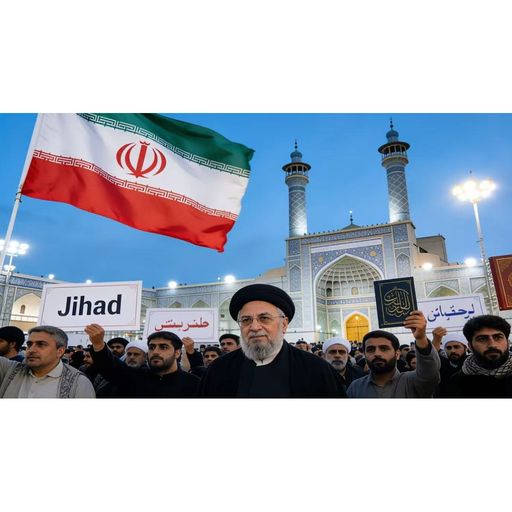
Gulf Oil Producers "Tank Explosion" Countdown: Qatar Warns Oil Prices Could Surge to $150
Oil prices are no longer calm, but accelerating rapidly—markets are gradually realizing that the Strait of Hormuz is not experiencing a temporary disruption. With 20% of global oil flow halted, a massive chain reaction is underway, and traders are beginning to price in extreme scenarios.
According to Xinhua News Agency, the US and Israel have been conducting military strikes against Iran for a week, with the conflict showing signs of ongoing escalation and spreading. The impact on regional security and the global economy continues to spill over. Currently, while the US and Israel hold tactical advantages, they have not been able to paralyze Iran’s military command system or fully curb Iran’s retaliatory capabilities. A long-term conflict trend is emerging.
On March 6, as the situation showed no signs of easing, international oil prices surged. Intercontinental Exchange’s May delivery of London Brent crude once soared by 12%, approaching $95 per barrel. WTI crude for April delivery on the New York Mercantile Exchange rose even faster, jumping over 17% intraday to surpass $92 per barrel. By the close on the 6th, Brent and WTI were at $92.69 and $90.90 per barrel, up 8.52% and 12.21%, respectively, both reaching their highest levels since September 2023.
Pengpai News estimates that this week, WTI crude prices have increased by over 35%, and Brent crude nearly 28%, approaching the sharp fluctuations seen early in the Russia-Ukraine conflict in 2022. Since geopolitical risk premiums were already factored in before the conflict erupted, the price increases from March 2 were relatively moderate. It wasn’t until the risk of larger production cuts grew imminent that market calm dissipated, leading to a significant surge in oil prices on Friday.
As time passes, the closure of the strategic Strait of Hormuz has sharply increased market disruption risks, as Gulf oil-producing countries’ storage capacities are running out. Once storage facilities are full, producers will be forced to shut down operations, and restarting will take time.
Kuwait’s some oil fields have begun reducing output due to storage capacity shortages. Commodity analysis firm Kpler indicates signs that Kuwait has started cutting production, and the country will be forced to further reduce output in the coming days, or storage facilities will fill up in about 12 days. Shutting down wells could cause long-term damage to reservoir pressure and incur high restart costs, typically a last resort, with restarting potentially taking days or weeks.
Kpler also states that major storage facilities in Saudi Arabia and the UAE are rapidly filling, expected to reach capacity in less than three weeks.
If more oil fields are forced offline in the coming days, it will trigger another round of oil price increases. An increasing number of analysts are confident that international oil prices are pushing toward the $100 mark.
Qatar’s energy minister warned that Middle East conflict could “drag down the global economy,” predicting all Gulf energy exporters will halt production within weeks, pushing oil prices to $150 per barrel, and natural gas prices to $40 per million British thermal units ($117 per MWh).
Barclays Bank said on Friday that if the Middle East conflict persists for several weeks, Brent crude could test $120 per barrel. “These figures may seem high, especially considering the generally pessimistic outlook for oil earlier this year. But we reaffirm that the current fundamentals are stronger, and risks are greater than during the Russia-Ukraine conflict—we saw oil prices reach these levels during that period.”
The impact has far exceeded the energy sector. Since the escalation in the Middle East, the VLCC index has soared and remained high, and Suezmax tanker rates are also at historic highs.
“We have already seen production shut-ins. The closure of the Strait of Hormuz has been more dramatic than I expected—every day counts,” said David Wehe, chief economist at energy and shipping market analysis firm Vortexa, quoted by Lloyd’s List.
According to Xinhua, Iran’s Mehr News Agency reported on the 6th that a US oil tanker was hit and caught fire near Kuwaiti waters. Additionally, a facility at Bahrain’s national oil company’s main refinery was struck by Iranian missiles on the 5th, causing a fire.
CCTV News reports that IEA Director Fatih Birol said on the 6th that logistics disruptions caused by the Middle East conflict are posing challenges for many countries, but global oil supply remains sufficient. When asked whether the IEA is considering releasing emergency oil reserves, Birol said, “All options are under discussion,” but there are no plans to do so at this stage. He added, “We do not face an oil shortage; the current issue is temporary logistical disruptions.”
Xinhua analysis states that the risk of a prolonged US-Israel-Iran conflict is rising. This year is an US midterm election year, with economic and livelihood issues at the forefront for voters. If the conflict continues and the Strait of Hormuz remains closed long-term, oil prices will inevitably rise, and inflation will accelerate, directly impacting the midterm elections for the Republican Party. Former Homeland Security official Thomas Worrick said that the Trump administration’s military action against Iran is “a gamble concerning Iran issues and American public opinion.”
A few days ago, Trump hinted to US media that he is not worried about rising gasoline prices, emphasizing that military action is far more important than a “slight increase in gasoline prices.”
However, the latest data from AAA shows that the retail price of gasoline in the US has risen to $3.32 per gallon, the highest since September 2024, up nearly 27 cents since last week.