Tap and CBRC-20, then the former is the BRC-20 “classic server” and the latter is the “magic modified server”.
Written by:
The CBRC-20 protocol is the new star of the “BRC-20” series in the past half month. This phenomenon is actually quite special and interesting. The reason is that in the past half month, a lot of attention has actually shifted to the inscriptions of various public chains outside the Bitcoin ecosystem. In terms of hype, such as Solana, AVAX, INJ, etc. Within the Bitcoin ecosystem, even though the market value of BRC-20 related assets is still large enough to have a relatively dominant position, other protocols such as Atomics and NostrAssets have actually diverted a considerable amount of attention and funds.
In my definition, the pure “BRC-20” series includes, in addition to BRC-20 itself, Tap Protocol and CBRC-20. Interestingly, both protocols have a strong influence in the English-speaking community, so strong that players in the Chinese-speaking community will emphasize that “many foreigners like it”. However, the innovation degree of Tap Protocol and CBRC-20 is much different, and the ins and outs of the project are also mild and full of twists and turns.
Tap and CBRC-20, one is a “patch” and the other is a “magic modification”
Before talking about CBRC-20, let’s briefly talk about Tap Protocol. The nature of Tap is generally a BRC-20 enhancement patch. It’s like a game already has a very fun version. Just add some patches to make the experience stronger. In general, Tap’s functions such as relaxing the ticker 4 character limit, batch airdrops, Swap inscriptions, etc. are actually more updates at the index level - how to express some pain points/unimplemented functions of BRC-20 using JSON. Straighten it out and let the indexer support understanding these behaviors and it will be OK.
Tap belongs to beny’s TRAC ecosystem. TRAC has many loyal foreign fans along the way, and generally speaking, there have been no accidents. Foreigners have always liked “Marshal B” to make various remarks that criticize centralized indexes and go crazy.
The magic modification of CBRC-20 is actually based on the fact that the BRC-20 protocol uses the Ordinals v0.9.0 version as the unified standard version of the index in order to maintain the stability of the index - the new features of the Ordinals protocol v0.9.0 and later, BRC The -20 protocol can no longer be played, so let’s make a brand new version using the basic functional logic and combining it with new features. If both Tap and CBRC-20 are regarded as “private servers” of BRC-20, then the former is a “classic server” that is fully patched, and the latter is a “modified server” that has many new contents.
v The Ordinals protocol after version 0.10.0 introduces fields for defining “metaprotocol” and “metadata” for inscriptions. The most direct effect of these two new fields is to greatly shorten the deployment/casting/transfer of the BRC-20 protocol. This reduces costs and simplifies indexing.
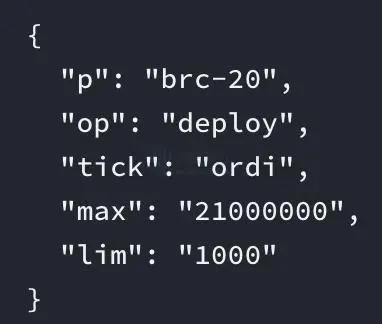
The picture above is an example of a BRC-20 deployment inscription. For CBRC-20, which introduces “metadata”, it is actually only necessary to leave the three lines of “tick”, “max” and “lim” within the curly brackets, and then compress the reduced amount of information. It has become a smaller .cbor file for use.
The “metaprotocol” directly lets the index know which protocol specification to understand the instructions according to. For casting and transferring, the instructions are simplified to this:

Compare the content size with BRC-20:
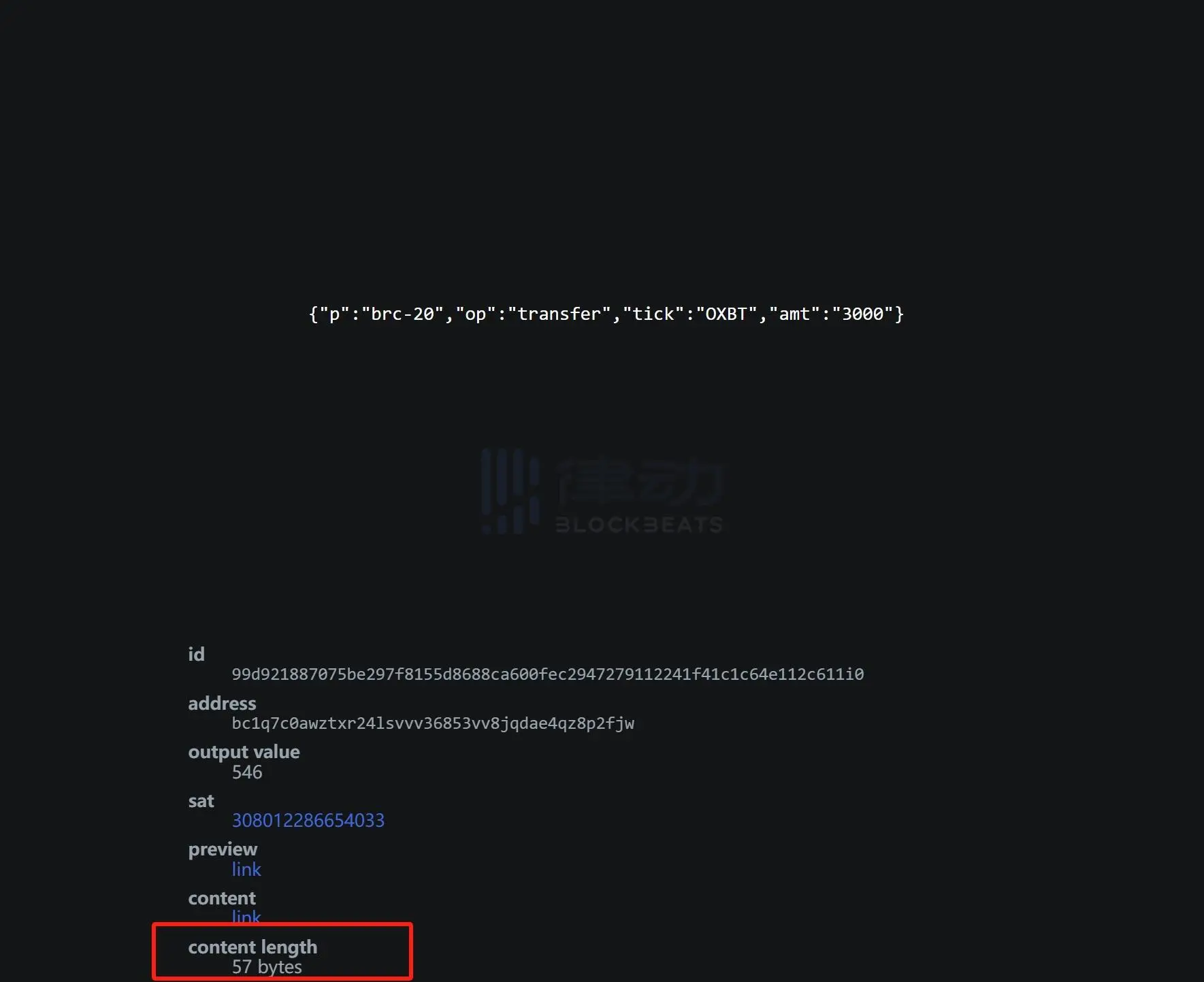
BRC-20, transfer operation content size 57 bytes
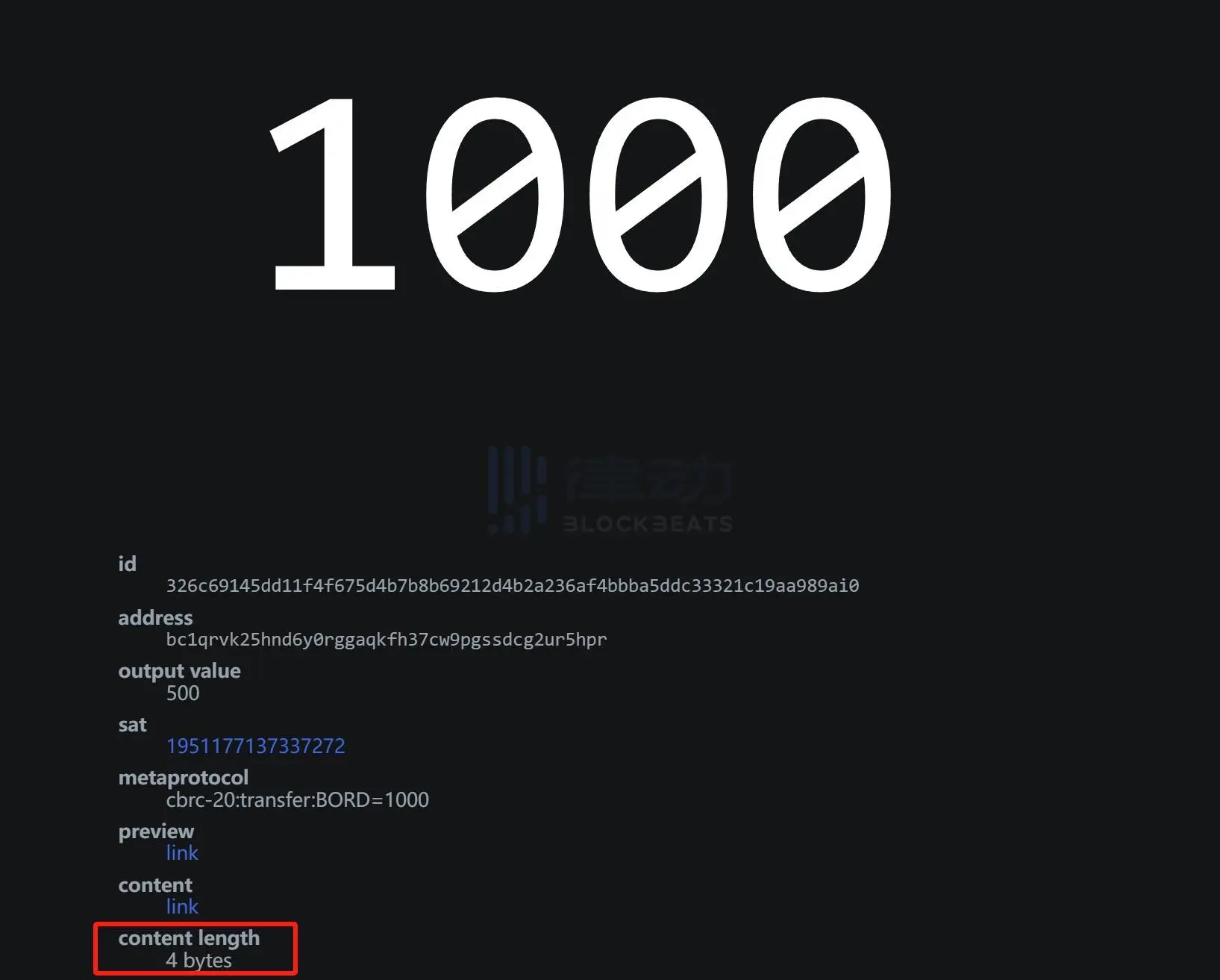
CBRC-20, transfer operation content size 4 bytes
Another interesting thing brought about by “metaprotocol” and “metadata” is that CBRC-20 Token has no type restrictions, which creates the feeling of “transformation” of weapons and equipment in the game - for example, you can cast 1,000 pieces of a certain CBRC -20 Token, and then attach a picture of CryptoPunks when executing the casting command, so it can be either 1000 CBRC-20 Token or 1 Punk. Tap has actually made a similar attempt, adding a Logo field to Token, which can reference the Inion ID and let the index handle it. But Tap relies on its own index, and CBRC relies on the new Ordinals protocol feature.

–file can be attached with the specified file
CBRC-20 is the “appetizer” made by the original OSHI team after the split. In addition to CBRC-20, this part of the original OSHI team also needs to make a larger universal index called Moto. In short, it is any Developers can submit their own FT standards to Moto, and then Moto combines and stacks these standards to achieve asset interaction across FT protocols.
CBRC-20 Popular Token Inventory
EDGE
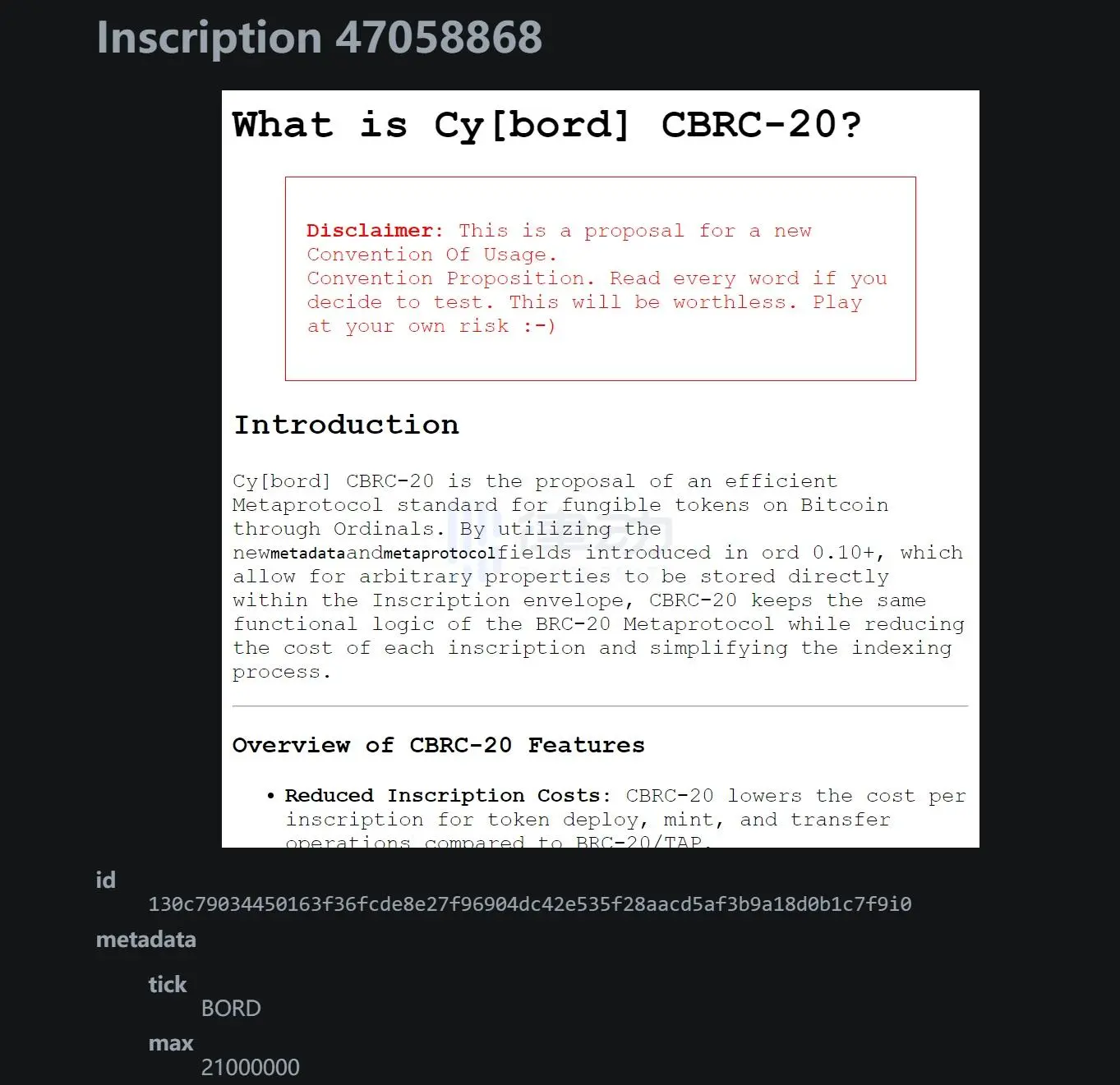
CBRC-20 is the first Token, with a total supply of 21 million. The current minimum value of a Token is about 2.2 U, corresponding to a market value of about 46.2 million U. We mentioned earlier that one of the major features of CBRC-20 is that there is no type restriction. It can be a currency or not. For example, the deployment inscription of $BORD is not in text format, but an HTML file introducing CBRC-20.
NODE
Known as the first practical Token on CBRC-20, it provides CBRC-20 Token batch casting service on Discord. The total amount is 10,000. The current minimum price of one Token is about 200 U, which corresponds to a market value of about 2 million U.
SYMM
A double-sided inscription that claims to be recognized by both the CBRC-20 protocol and the BRC-20 protocol. The total amount is 21 million. The current minimum price of one Token is about 0.12 U, which corresponds to a market value of about 2.52 million U.
You may be a little confused here - instead of saying one v 0.10.0 and one v 0.9.0, how can two different versions of Ordinals protocol indexes be compatible? Let me give you an analogy to help you understand.
The original inscription seems to be packed in an “envelope” (OP_FALSE OP_IF OP_PUSH content content content and content… OP_ENDIF). The index has to be opened and read word for word to know that it is contained in What is the inscription of the agreement in the envelope (which index is required to work), what does this inscription represent, what is to be done…
“Metaprotocol” is like it is clearly written on the envelope. I am the inscription of a certain protocol, and the index can interpret my instructions according to the instructions of the certain protocol. The index of v 0.10.0 knows that this is a CBRC-20 inscription. Then I read on and found that the text was written in the BRC-20 index. At this time, the v 0.9.0 index knew that this was a BRC-20 inscription. It’s true that I can’t deal with it, but there are parts that I can understand.
9999
Performance art, 9. As for the mechanism, just look at the picture below to understand:
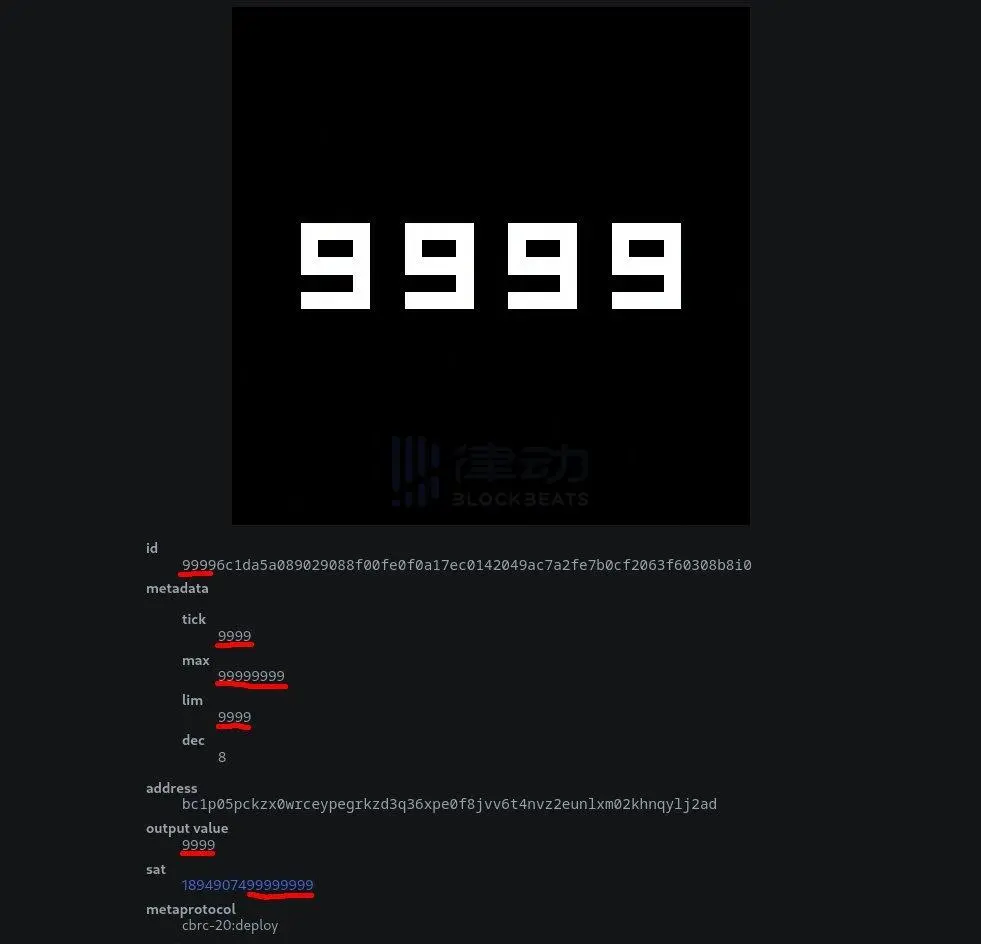
At present, it has a market value of more than 1 million U.
CBRC-20 Common Tools
Engraving - (You can also mint without tipping)
Market - (There are still many things that have not been done well, such as not being able to sort by ascending and descending unit price, which looks very messy)
Conclusion
Judging from the current market performance, except for the first Token $BORD, the others are still relatively mediocre, which is almost the same as Tap…
Although the market performance is similar, compared to Tap, CBRC-20’s underlying positioning has been upgraded from patch to magic modification, which is a relatively big improvement. Of course, the greater value is actually at the level of Moto (formerly part of the Oshi team). Moto’s new CBRC-20 Token has been deployed, and the snapshot of Oshi’s old BRC-20 Token has been completed, and we are ready to issue a new Token and start again. Tap Unless $TRAC is also invited to its own agreement, CBRC-20 will have a suppressive narrative at this stage.


