What Is BFIC Coin?
BFIC Coin is the native cryptocurrency of the Blockchain Foundation for Innovation & Collaboration. Classified as a coin, BFIC operates on its own mainnet or base network, unlike tokens that are issued through smart contracts on other blockchains. With a fixed total supply of 21 million, BFIC is designed primarily for value settlement and payments within its ecosystem.
To understand BFIC, it is essential to distinguish between two common terms: coin and token. A coin typically refers to the native asset of a blockchain, while tokens are usually issued via smart contracts on existing chains. The designation of BFIC as a coin indicates its status as a mainnet asset.
BFIC Coin (BFIC) – Current Price, Market Cap, and Circulating Supply
As of 2026-01-26 (data source: provided market summary), the latest price of BFIC is approximately $0.309589. The circulating supply stands at 10,578,424 coins, with both the total and maximum supply capped at 21,000,000. This results in a circulating market cap of roughly $3,274,958.63 and a fully diluted market cap of about $6,501,358.92.
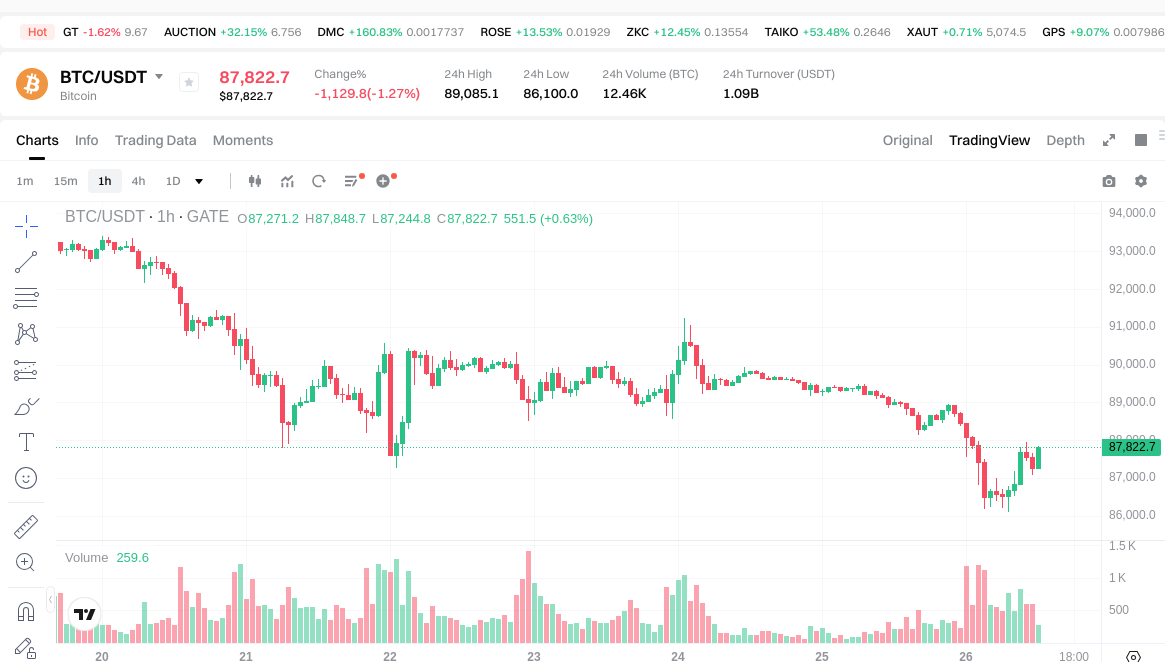
Click to view BFIC USDT Price
Recent price fluctuations show a 1-hour change of approximately -0.0002 (-0.02%), a 24-hour increase of about 0.0205 (+2.05%), a 7-day change of around -4.0122 (-4.01%), and a 30-day decline of roughly -17.5185 (-17.52%). The 24-hour trading volume is approximately $709.13 across 20 trading pairs. Lower trading volume may indicate limited liquidity, where sparse order books can cause slippage—meaning the executed price may differ significantly from the expected price.
Terminology:
- Circulating Supply: The number of coins currently available for trading in the market.
- Fully Diluted Market Cap: The estimated market value if all possible coins were in circulation, calculated by multiplying the maximum supply by the current price.
Who Created BFIC Coin (BFIC) and When?
BFIC was launched on 2021-11-19 (source: project summary and official website bficoin.io). Its full name is Blockchain Foundation for Innovation & Collaboration, with an ecosystem built around themes of innovation and collaboration. The fixed supply of 21 million mirrors Bitcoin’s capped model, helping establish clear supply boundaries and inflation expectations.
Official website: http://bficoin.io/. Before participating, it is recommended to review the official site or whitepaper for the latest disclosures on the team, roadmap, and technical details.
How Does BFIC Coin (BFIC) Work?
As a coin, BFIC relies on blockchain consensus mechanisms to confirm transactions and generate blocks. Consensus mechanisms allow network participants to agree on transaction ordering, with common types including Proof of Work (PoW) and Proof of Stake (PoS). The specific mechanism used by BFIC is not disclosed in public summaries; refer to the official technical documentation for details.
The fixed supply of 21 million means new coins will not be created indefinitely; future increases in circulating supply typically result from scheduled releases or ecosystem allocations. Transactions are validated by network nodes and recorded on an immutable ledger. Users manage assets using wallet addresses and private keys. Private keys are crucial for controlling assets; anyone with access can transfer your coins, so they must be stored securely.
What Can BFIC Coin (BFIC) Be Used For?
- Payments and Settlements Within the Ecosystem: Use BFIC for value exchange within its ecosystem or with partners, such as merchant payments or in-app purchases.
- Transfers and Clearing: Quickly transfer assets on-chain with transparent and traceable records.
- Community Participation: If governance or incentive mechanisms are enabled in the future, holders may participate in proposals or receive rewards (subject to official announcements).
Actual use cases depend on ecosystem adoption and partnership progress. For example, small online communities might use BFIC for membership payments or tipping, reducing friction in cross-border payments.
Key Risks and Regulatory Considerations for BFIC Coin (BFIC)
- Liquidity Risk: As of 2026-01-26, the 24-hour trading volume is around $709.13; sparse order books can lead to slippage and significant price differences.
- Price Volatility: Crypto assets are generally highly volatile; short-term movements do not indicate long-term trends.
- Information Transparency: Limited disclosure on technical mechanisms or roadmaps increases investment decision difficulty; ongoing monitoring of official information is advised.
- Regulatory Compliance: Different jurisdictions have varying regulations on crypto trading and ownership; Gate users must complete KYC (identity verification) and comply with local laws and tax requirements.
- Security and Custody: Exchange accounts are at risk of hacks—enable two-factor authentication (2FA). For self-custody wallets, securely store private keys and mnemonic phrases to prevent loss or theft.
What Is the Long-Term Value Proposition of BFIC Coin (BFIC)?
Long-term value typically depends on three factors:
- Supply and Demand Structure: The fixed supply cap sets boundaries, but real demand must be driven by practical applications and ecosystem growth.
- Ecosystem Adoption: Greater numbers of partners, active developers, and use cases provide stronger value support.
- Liquidity and Market Awareness: Higher trading volume and broader market attention reduce transaction costs and improve price discovery.
Consistently following official channels and community updates to assess ecosystem progress is crucial for evaluating mid- to long-term value.
How Do I Buy and Securely Store BFIC (BFIC) on Gate?
Step 1: Registration & Security Settings
Create an account on Gate’s official website, set a strong password, and enable two-factor authentication (2FA) for enhanced account security.
Step 2: Complete KYC
Submit identity documents as required by the platform to increase withdrawal and trading limits and meet regulatory standards.
Step 3: Fund Your Account
Deposit fiat currency or cryptocurrencies such as USDT into your Gate account. Pay attention to deposit networks and minimum amounts to avoid errors.
Step 4: Search and Place Orders
Search “BFIC” in the spot market. If trading pairs (such as BFIC/USDT) are available, choose between limit or market orders based on your strategy. For sparse order books, use limit orders to control slippage and execution price.
Step 5: Secure Storage
For short-term holding, keep assets in your Gate account with 2FA and withdrawal whitelist enabled. For long-term holding, withdraw to a self-custody wallet; back up your mnemonic phrase and private key offline in multiple secure locations—avoid digital/cloud storage or photos.
Tip: If BFIC trading pairs are not yet listed on Gate, add them to your watchlist and await listing announcements, or follow project updates for further information.
How Does BFIC Coin (BFIC) Compare to Bitcoin (BTC)?
- Supply Cap: Both have a maximum supply of 21 million coins. However, Bitcoin’s issuance schedule and halving mechanism are well-defined and have operated for years; BFIC’s release rules should be referenced from official documentation.
- Market Cap & Liquidity: Bitcoin boasts significantly higher market cap and trading volume with more efficient price discovery. As of 2026-01-26, BFIC’s 24-hour trading volume is about $709.13—indicating weaker liquidity prone to slippage.
- Technology & Ecosystem: Bitcoin features a mature network with extensive nodes, developer communities, and infrastructure. BFIC’s ecosystem development depends on future adoption and partnerships.
- Use Case Positioning: Bitcoin is viewed as digital gold or a store of value; BFIC focuses on payments and collaborative settlement within its specific ecosystem.
In summary, their stages and objectives differ—directly comparing potential returns is inappropriate. Choose based on your needs and risk tolerance.
Summary of BFIC Coin (BFIC)
BFIC has a fixed supply of 21 million coins as a mainnet coin aimed at value settlement and payments within an innovation-centric ecosystem. With a relatively small current market cap and limited trading volume, slippage is possible—investors should exercise caution. For those interested in its ecosystem potential, ongoing monitoring of official disclosures is key. On Gate, complete KYC, use limit orders to manage pricing, enable security features, start with small amounts for trial trades; for long-term holding, use self-custody wallets with careful private key management. Ultimately, both opportunity and risk coexist—patience and transparency are essential for evaluating future value.
FAQ
What Type of Investor Is BFIC Suitable For?
BFIC is suited for mid-to-long-term investors interested in ecosystem applications as well as community members wishing to participate in governance mechanisms. Early investors should understand project fundamentals and assess their risk tolerance; it is recommended to start with small amounts before scaling up based on experience. Gate offers BFIC trading pairs for easy onboarding.
What Are the Benefits or Rights of Holding BFIC?
BFIC holders may participate in project governance voting, receive ecosystem incentives or dividends (subject to project design), as well as enjoy potential privileges or discounts within ecosystem applications. Note that these benefits can vary based on market conditions and project progress—monitor official announcements for updates.
What Trading Pairs Does BFIC Have? How Is Its Liquidity?
BFIC's primary trading pairs include BFIC/USDT among others on Gate to suit different needs. Liquidity depends on market demand and trading activity—check real-time order book depth for spread analysis. Trading during high-liquidity periods can secure better prices.
Is BFIC's Total Supply Fixed? Will There Be Unlimited Issuance?
BFIC’s supply mechanism is set by smart contract—total supply is usually fixed or capped. Some tokens may include inflationary or burn mechanisms; consult the whitepaper for full tokenomics details. Supply directly impacts long-term value—review rules carefully before investing.
How Should I Safely Store BFIC After Purchasing on Gate?
After purchase, you can either custody assets in your Gate wallet for convenience or withdraw them to a self-custody wallet such as a hardware wallet for enhanced security. For large holdings, use hardware wallets; for small daily amounts, Gate wallet suffices. Always double-check wallet addresses and network types during withdrawal to avoid loss.
BFIC (BFIC) Key Terms Overview
- Supply Cap: BFIC has a fixed total supply of 21 million coins—designed for scarcity akin to Bitcoin—supporting long-term value.
- Circulating Supply: Approximately 10.57 million BFIC coins are currently in circulation—about 50% of total supply.
- Market Cap: Circulating market cap is around $3.27 million—reflecting aggregate market valuation.
- Trading Liquidity: BFIC trades actively across 20 pairs with a 24-hour volume around $709—providing baseline liquidity.
- Price Volatility: Over the past 30 days, BFIC declined by 17.52%, indicating short-term market adjustments; monitor ongoing developments closely.